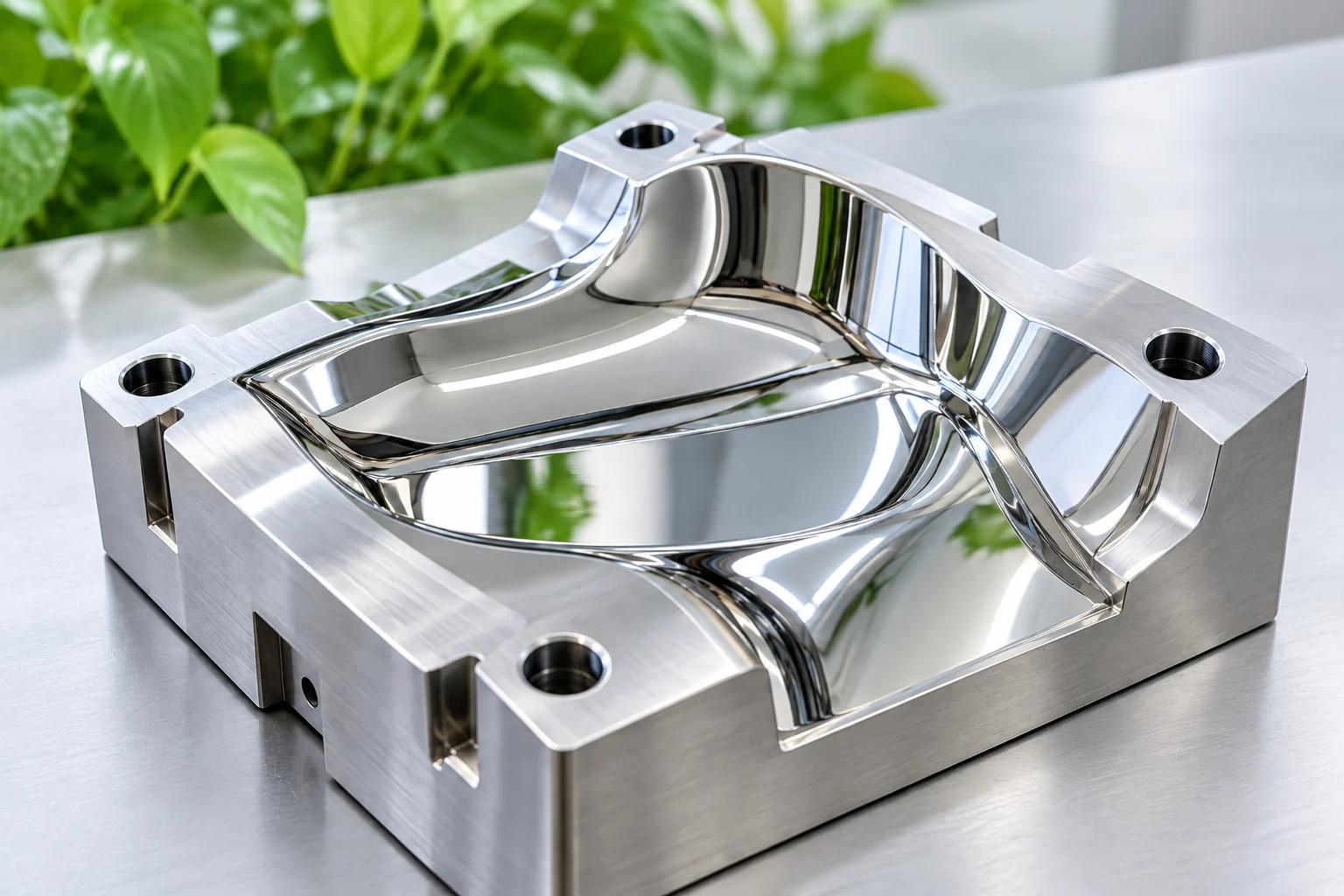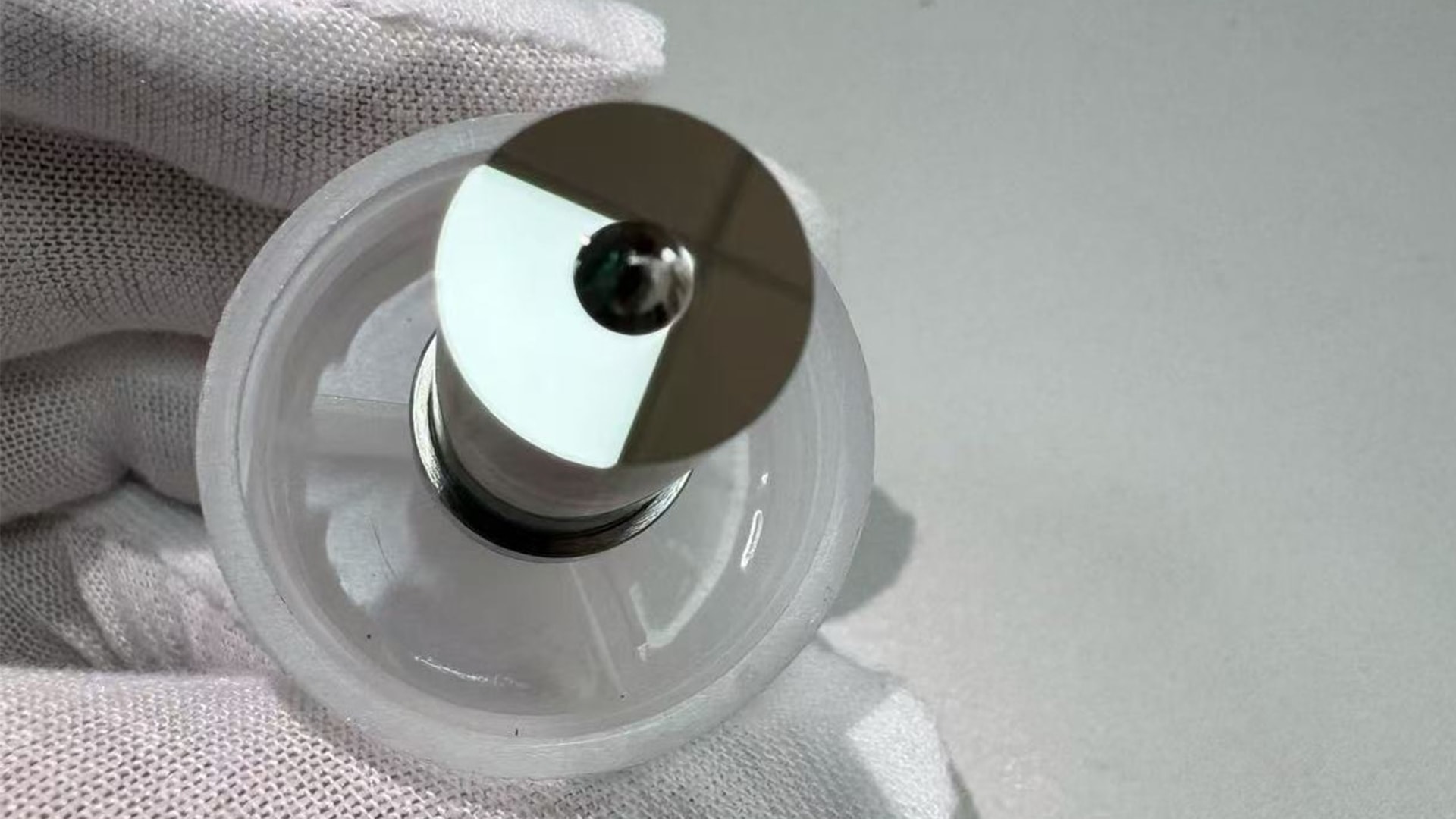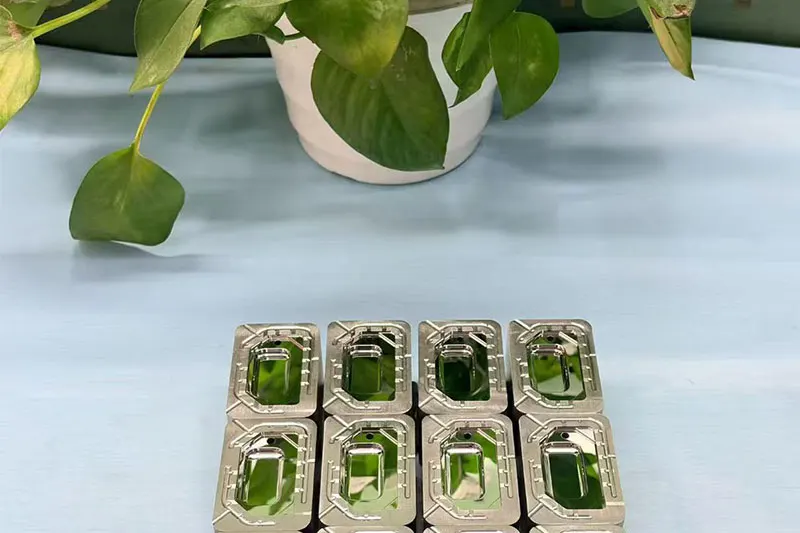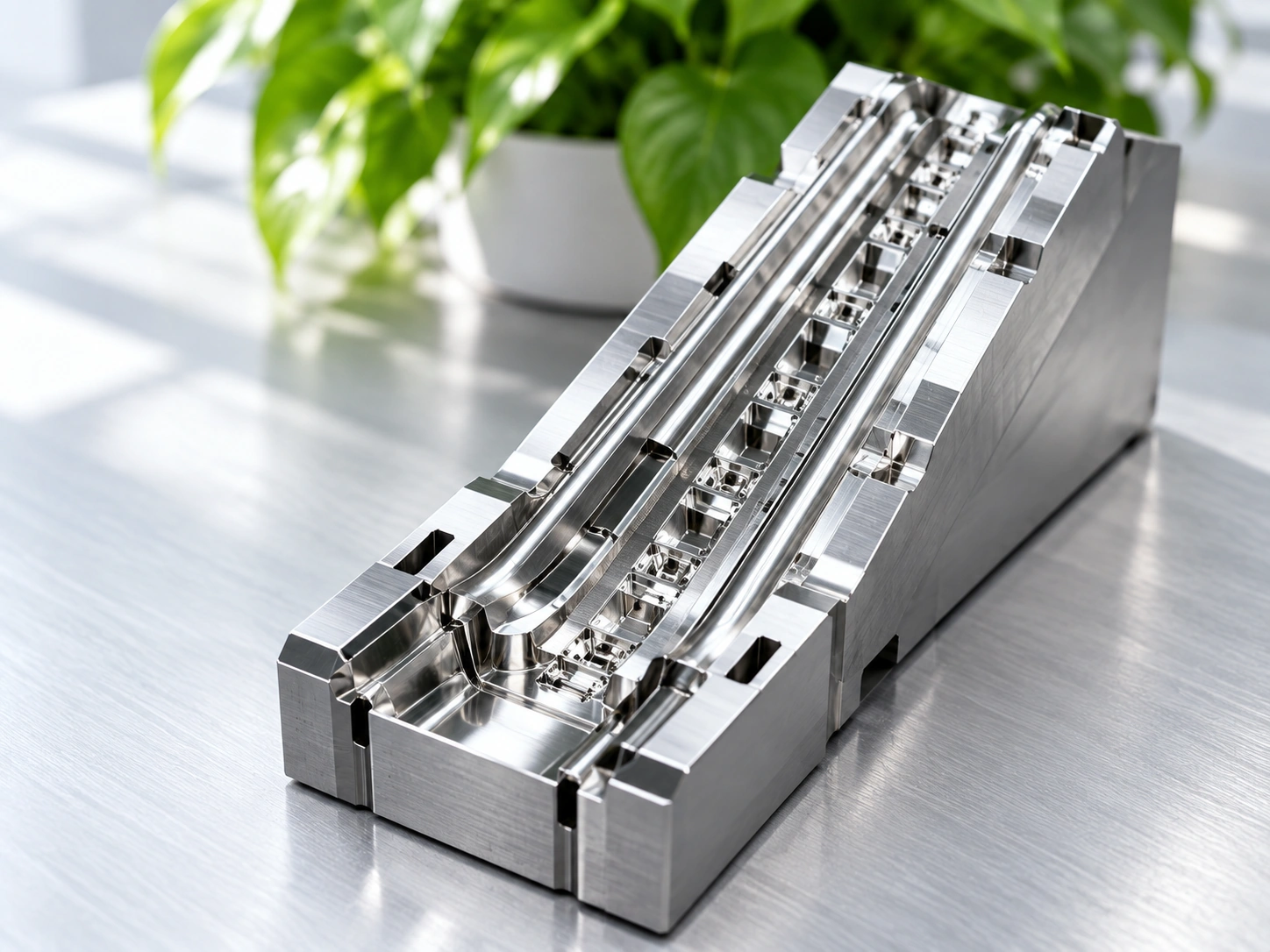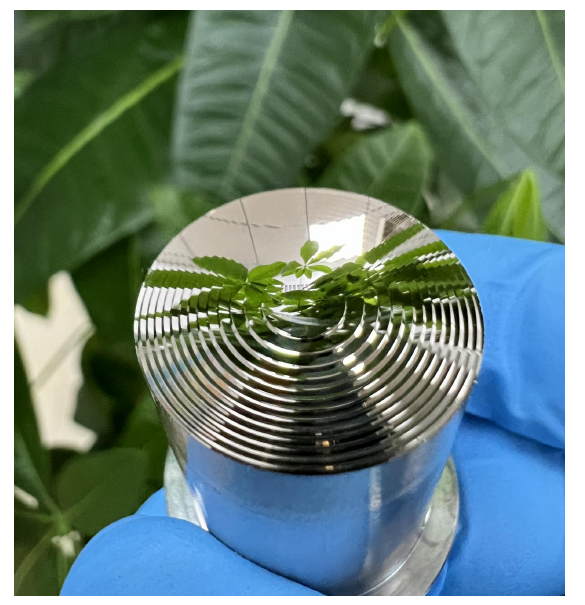
Optical polishing can achieve an extraordinary level of smoothness, with surface roughness values reaching the sub-angstrom level, often less than 1 Ångström (Å) RMS. This is equivalent to 0.1 nanometers (nm) and represents a surface that is smooth down to the scale of individual atoms. Achieving this pinnacle of surface finishing, however, is not a simple task; it depends critically on the interplay of the optical material, the specific polishing technique employed, and the precision of the metrology used to measure the result.
When discussing the perfection of an optical surface, the term “surface roughness” refers to the fine, high-frequency variations on a component’s surface, distinct from lower-frequency “form” or “figure” errors which describe the overall shape. For applications like high-power lasers, EUV lithography, and high-precision telescopes, minimizing this micro-roughness is paramount. A rougher surface can scatter light, reduce the efficiency of the optic, lower its laser damage threshold, and ultimately degrade the performance of the entire optical system. This guide delves into the remarkable capabilities of modern optical polishing, the factors that govern the final outcome, and the technologies that make achieving and verifying atomic-level smoothness possible.
Table of Contents
- Understanding Optical Surface Roughness: More Than Just a Number
- Key Factors That Determine Final Surface Roughness
- A Spectrum of Polishing Techniques and Their Capabilities
- How is Ultra-Low Surface Roughness Accurately Measured?
- What Applications Demand Such Extreme Smoothness?
- Pushing the Limits: The Future of Optical Polishing
- Conclusion: A Symphony of Material, Method, and Measurement
Understanding Optical Surface Roughness: More Than Just a Number
Before quantifying the limits of polishing, it’s essential to understand what surface roughness truly represents in the context of high-precision optics. It’s a statistical measurement of the fine-scale texture of a surface, a critical parameter that dictates how light interacts with the component.
What is Surface Roughness in Optics?
In optics manufacturing, surface quality is broken down into three main spatial frequency domains. Surface form (or figure) is the lowest frequency error, describing the overall deviation of the surface from its ideal shape (e.g., how “spherical” a spherical lens is). Waviness represents mid-frequency errors, like ripples across the surface. Surface roughness, also called micro-roughness or surface finish, refers to the highest-frequency, shortest-wavelength variations. Imagine a perfectly shaped mountain (the form) that has gentle rolling hills on its slopes (the waviness) and fine-grained sand and pebbles on its surface (the roughness). For high-performance optics, it’s this fine-grained texture that must be minimized to near-atomic levels.
How is Surface Roughness Measured? (Ra vs. RMS)
Two primary statistical parameters are used to quantify surface roughness: Ra and RMS.
- Ra (Roughness Average): This is the arithmetic average of the absolute values of the profile deviations from the mean line. It provides a general sense of the surface’s texture but can be less sensitive to occasional high peaks or deep valleys.
- RMS (Root Mean Square) Roughness (Rq or Sq): This is the root mean square average of the profile deviations from the mean line. Because it involves squaring the deviations, the RMS value gives more weight to large peaks and valleys and is therefore more sensitive to extreme surface variations. For this reason, RMS is the preferred and more commonly cited metric for high-precision optical surfaces, as it provides a more critical assessment of the potential for light scatter.
Why are Angstroms and Nanometers the Standard Units?
The precision demanded by modern optics makes conventional units like microns (μm) too large to be practical. The industry standard units are nanometers (nm) and Ångströms (Å):
- 1 nanometer (nm) = 10-9 meters
- 1 Ångström (Å) = 10-10 meters (or 0.1 nm)
To put this into perspective, a single silicon atom has a diameter of roughly 2 Å. Therefore, when a specification calls for a surface roughness of <1 Å RMS, it means the average deviation from the perfect surface is less than the size of a single atom. This is the realm where classical physics meets quantum-level interactions, and achieving it is a monumental engineering feat.
Key Factors That Determine Final Surface Roughness
Achieving sub-angstrom smoothness is not the result of a single magic process. It is a delicate balance of several interconnected factors, each of which must be meticulously controlled. A failure in any one area will prevent the system from reaching its ultimate potential.
The Critical Role of Substrate Material
The material being polished is arguably the most significant factor. Different materials have different crystal structures, hardness, and chemical properties, which dictate how they respond to polishing.
- Fused Silica: An amorphous (non-crystalline) glass, it is a favorite for high-performance optics due to its excellent homogeneity and ability to be polished to extremely low roughness levels, often below 1 Å RMS.
- Zerodur®: A glass-ceramic with a near-zero coefficient of thermal expansion, it’s also capable of achieving sub-angstrom finishes, making it ideal for stable telescope mirrors and metrology platforms.
- Silicon Carbide (SiC): An extremely hard ceramic, it is challenging to polish but is valued for its stiffness and thermal stability. Advanced techniques like MRF and IBF can achieve roughness levels of ~1-2 Å RMS on SiC.
- Single-Crystal Silicon: Essential for infrared optics and semiconductor applications, silicon can be polished to an exceptional finish, often below 1 Å RMS.
The internal defect structure, grain size (for ceramics), and chemical purity of the material all set a fundamental limit on the achievable smoothness.
Polishing Slurry and Lap Material
The classic model of polishing involves a rotating lap, a liquid slurry containing abrasive particles, and the workpiece. The “magic” is in the combination. The lap material, traditionally made from specialized pitch, provides a conforming surface that holds the abrasive. The slurry, often a colloidal suspension of particles like cerium oxide or nanodiamonds, performs the material removal. The size, shape, and consistency of these abrasive particles are critical; to achieve angstrom-level smoothness, the particle sizes must be in the nanometer range and be extremely uniform to avoid creating new scratches.
The Polishing Environment
At the nanometer scale, a single speck of dust is a catastrophic boulder. All state-of-the-art optical polishing is performed in strictly controlled cleanroom environments. Temperature and humidity are tightly regulated to ensure the stability and consistency of the polishing lap and slurry. Any vibration from nearby equipment must be isolated, as even infinitesimal tremors can be imprinted onto the optical surface, degrading its final roughness.
A Spectrum of Polishing Techniques and Their Capabilities
The method used for polishing is the final piece of the puzzle. Over the decades, techniques have evolved from manual art forms to highly deterministic, computer-controlled processes.
Traditional Pitch Polishing: The Craftsman’s Approach
This is the oldest and most traditional method, where a skilled optician uses a pitch lap and abrasive slurry to manually or semi-manually polish a surface. While it is highly dependent on the artisan’s skill, a master optician can still achieve remarkable results, often in the 2-5 Å RMS range. It is particularly effective for one-off, complex custom optics but lacks the deterministic control and repeatability of modern methods.
Computer-Controlled Polishing (CCP): Precision and Repeatability
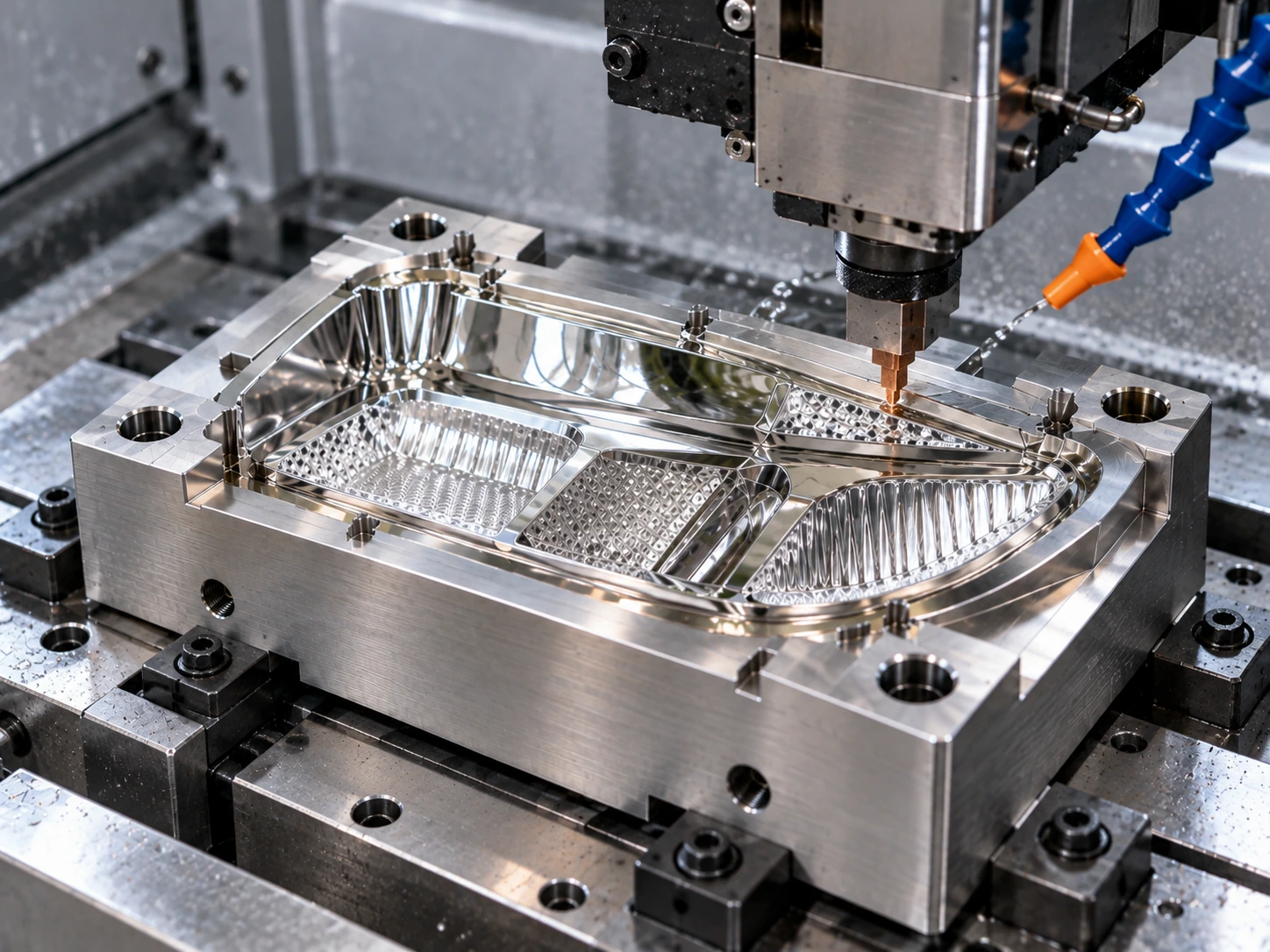
Computer-Controlled Polishing (or Computer Numerical Control, CNC, polishing) automates the process. It uses a smaller lap or tool that is moved across the optic’s surface following a computer-generated path. By precisely controlling dwell time and pressure, CCP can correct both form errors and improve surface roughness. It offers better repeatability than manual methods and can achieve roughness in the sub-5 Å RMS range.
Magnetorheological Finishing (MRF): Deterministic, Sub-Angstrom Results
MRF is a revolutionary, deterministic finishing process. It uses a magnetically sensitive smart fluid (the magnetorheological fluid) that stiffens precisely in a magnetic field to form a small, stable polishing spot. The workpiece is moved through this spot, and material is removed with atomic-level precision without any direct contact between the lap and the part. Because there is no wearing lap, the process is incredibly stable and predictable. MRF is one of the primary technologies used to achieve surface roughness values consistently below 1 Å RMS.
Ion Beam Figuring (IBF): The Ultimate in Surface Finishing
For the absolute highest-precision requirements, Ion Beam Figuring represents the pinnacle of surface finishing. In a vacuum chamber, a focused beam of ions (like argon) is aimed at the optical surface. These ions physically sputter away material, atom by atom. There is zero mechanical force exerted on the part, making it ideal for finishing delicate or structured optics. IBF is a non-contact, highly deterministic process capable of achieving the smoothest surfaces possible, routinely reaching ~1 Å RMS and, in some cases, pushing down to 0.5 Å RMS or even lower.
| Polishing Technique | Typical Achievable Roughness (RMS) | Key Characteristics |
|---|---|---|
| Traditional Pitch Polishing | 2 – 5 Å | Artisan-dependent, highly flexible, good for custom shapes. |
| Computer-Controlled Polishing (CCP) | < 5 Å | Repeatable, good for aspheres, corrects form and roughness. |
| Magnetorheological Finishing (MRF) | < 1 Å | Deterministic, non-contact fluid ribbon, highly predictable, minimal sub-surface damage. |
| Ion Beam Figuring (IBF) | < 1 Å (often ~0.5 Å) | Highest precision, non-contact atomic removal, operates in a vacuum, zero mechanical stress. |
How is Ultra-Low Surface Roughness Accurately Measured?
Polishing a surface to sub-angstrom smoothness is meaningless if you cannot verify it. The metrology (measurement science) for ultra-smooth surfaces is just as advanced as the polishing itself.
White Light Interferometry (WLI): The Workhorse for Optical Surfaces
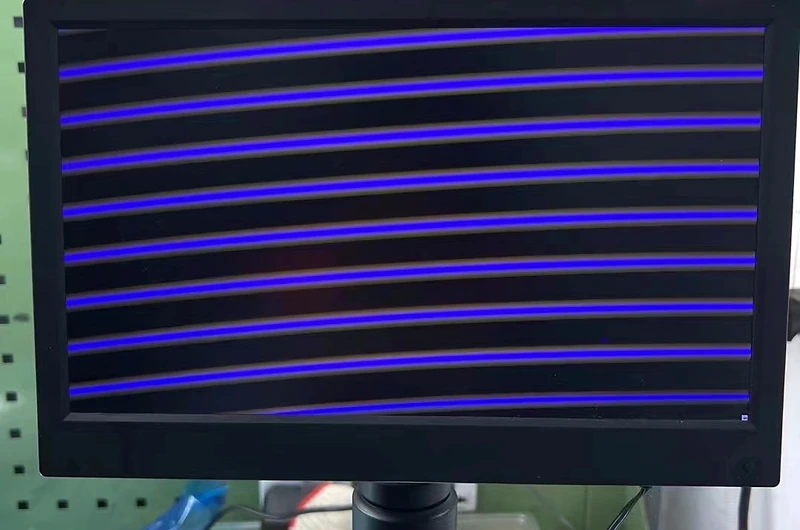
White Light Interferometers (also known as optical profilers) are the industry standard for measuring surface roughness on optical components. They work by splitting a beam of light, reflecting one part off the test surface and the other off a perfectly smooth reference mirror. When the beams are recombined, they create an interference pattern (fringes) that maps the topography of the test surface with sub-nanometer vertical resolution. WLI can measure a relatively large area quickly, providing robust statistical data (like RMS roughness) for quality control.
Atomic Force Microscopy (AFM): Mapping Surfaces at the Atomic Scale
When the highest possible resolution is needed, researchers turn to Atomic Force Microscopy. An AFM doesn’t use light; instead, it uses a microscopic probe with a tip that is only a few atoms wide. This tip is scanned across the surface, and its minute vertical movements, governed by atomic forces between the tip and the surface, are tracked by a laser. An AFM can generate a 3D image of the surface with atomic resolution, allowing engineers to literally see the texture at the angstrom level. It is the ultimate ground truth for surface roughness measurement, though it can only measure a very small area at a time.
The Challenge of Measurement: Is the Surface or the Tool Being Measured?
At these extreme levels of precision, a fundamental challenge arises: ensuring the measurement instrument is not simply measuring its own internal noise or imperfections. Calibrating and validating metrology tools for sub-angstrom measurements is a field of science in itself. It involves using ultra-stable environments, advanced noise-cancellation algorithms, and cross-verification between different types of instruments to establish confidence in the final reported roughness value.
What Applications Demand Such Extreme Smoothness?
The drive for ever-smoother optical surfaces is not just an academic exercise. It is a critical enabler for some of the world’s most advanced technologies.
High-Power Laser Systems
In high-energy laser systems, such as those used in fusion research (like the National Ignition Facility) or advanced manufacturing, any surface imperfection can become a point of light absorption and concentration. This can lead to catastrophic optical damage at high power levels. Ultra-smooth surfaces with <1 Å RMS roughness minimize scatter and absorption, dramatically increasing the Laser-Induced Damage Threshold (LIDT) of the optics.
EUV Lithography and Semiconductor Manufacturing
The production of modern microchips relies on Extreme Ultraviolet (EUV) lithography, which uses light with a very short wavelength (13.5 nm). At this wavelength, even minuscule surface roughness on the system’s mirrors can cause significant light scatter, blurring the projected circuit pattern and reducing manufacturing yield. The collector and projection mirrors in EUV steppers require roughness on the order of 1-2 Å RMS to function effectively.
Space Telescopes and Astronomical Instruments
For telescopes like the James Webb Space Telescope or future planet-finding observatories, stray light is the enemy. Surface roughness on the primary and secondary mirrors scatters light from bright stars into the field of view, obscuring the faint light from distant galaxies or exoplanets. Polishing these large, complex mirrors to angstrom-level smoothness is essential for achieving the high contrast needed for groundbreaking discoveries.
Gravitational Wave Detectors (LIGO)
The mirrors in the Laser Interferometer Gravitational-Wave Observatory (LIGO) are some of the most perfect optics ever created. To detect the infinitesimally small distortions in spacetime caused by a gravitational wave, the system must be incredibly sensitive. Surface roughness on the core test mass mirrors causes thermal noise that can mask the gravitational wave signal. These mirrors are polished to a phenomenal ~0.5 Å RMS to minimize this noise source.
Pushing the Limits: The Future of Optical Polishing
The quest for the perfect surface continues. Current research focuses on several key areas. New polishing slurries with even more uniform nanoparticles are being developed. Hybrid processes that combine the strengths of different techniques (e.g., using CCP for initial shaping, MRF for fine-tuning, and IBF for the final atomic-level touch-up) are becoming more common. Furthermore, advancements in in-situ metrology—measuring the surface during the polishing process—promise to accelerate the feedback loop and enable even greater control and efficiency, pushing the achievable surface roughness towards the fundamental limits of the material itself.
Conclusion: A Symphony of Material, Method, and Measurement
So, what surface roughness can optical polishing achieve? The answer is a stunning sub-angstrom RMS finish, a surface so smooth that its imperfections are measured on an atomic scale. This is not a single number but the result of a highly engineered system—a symphony where the choice of optical material, the precision of the finishing technique like MRF or IBF, and the accuracy of the metrology tool like an AFM must all work in perfect harmony. From enabling the next generation of microchips to peering into the dawn of the universe, the relentless pursuit of the perfect optical surface is a testament to human ingenuity and a cornerstone of modern technology.
Anchor Text Suggestions for Linking
- Learn more about the principles of Magnetorheological Finishing (MRF).
- What is the difference between Ra and RMS roughness?
- Explore the challenges of manufacturing optics for EUV lithography.
- Discover how Atomic Force Microscopy (AFM) visualizes surfaces at the atomic level.
- A guide to choosing the right optical material for your application.
optical polishing, surface roughness, sub-angstrom roughness, magnetorheological finishing, ion beam figuring, surface finish, optical manufacturing, Ångström, nanometer, RMS roughness, atomic force microscopy, white light interferometry, laser damage threshold, EUV lithography optics