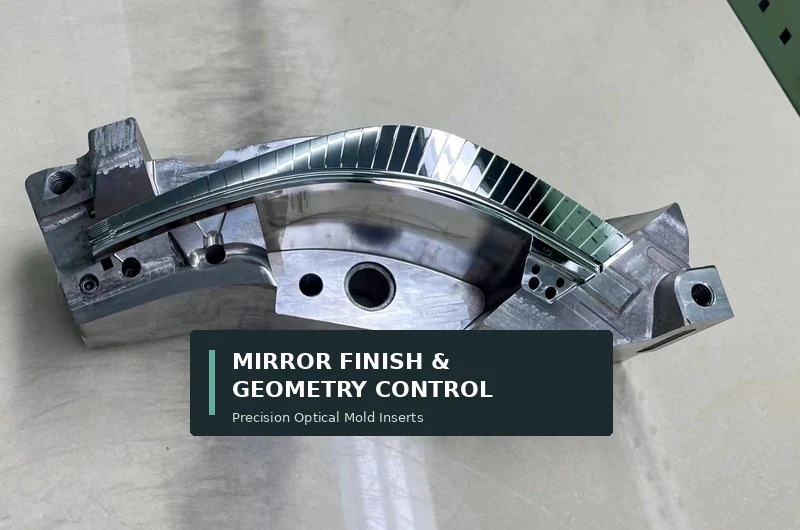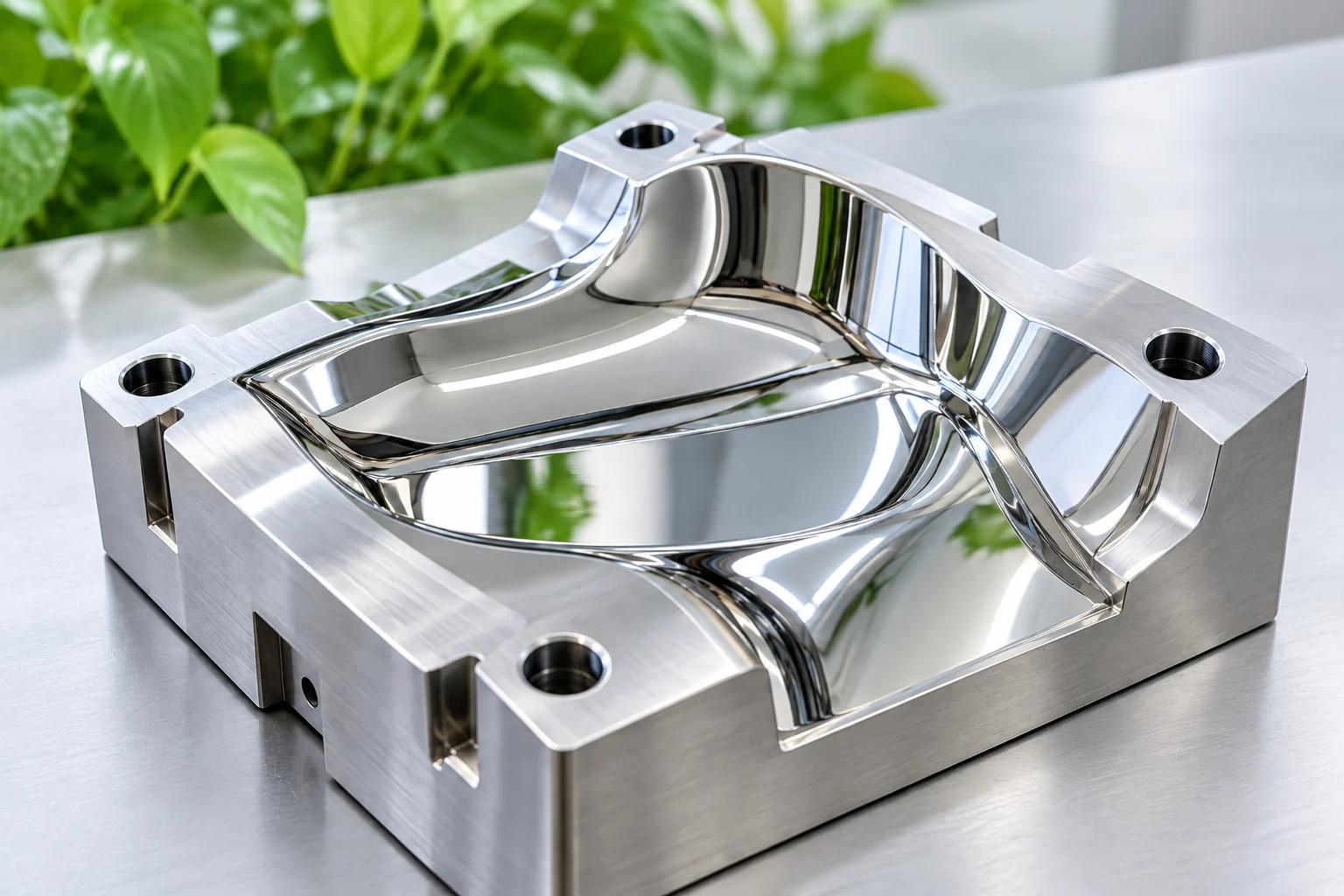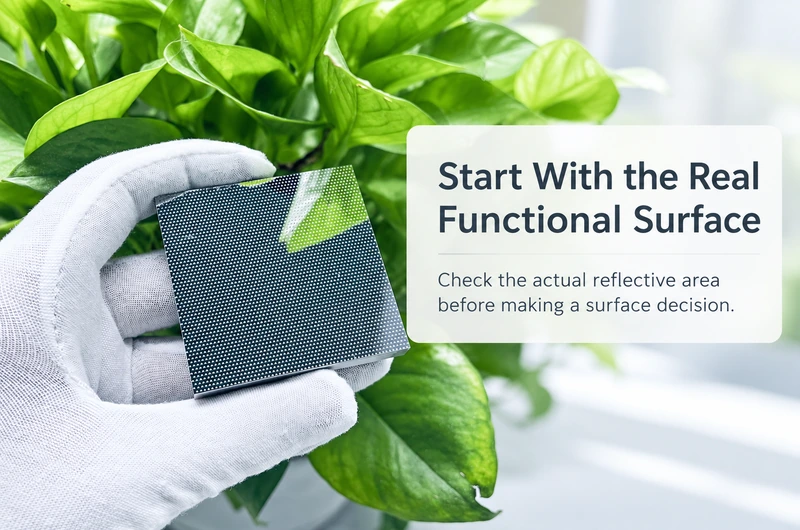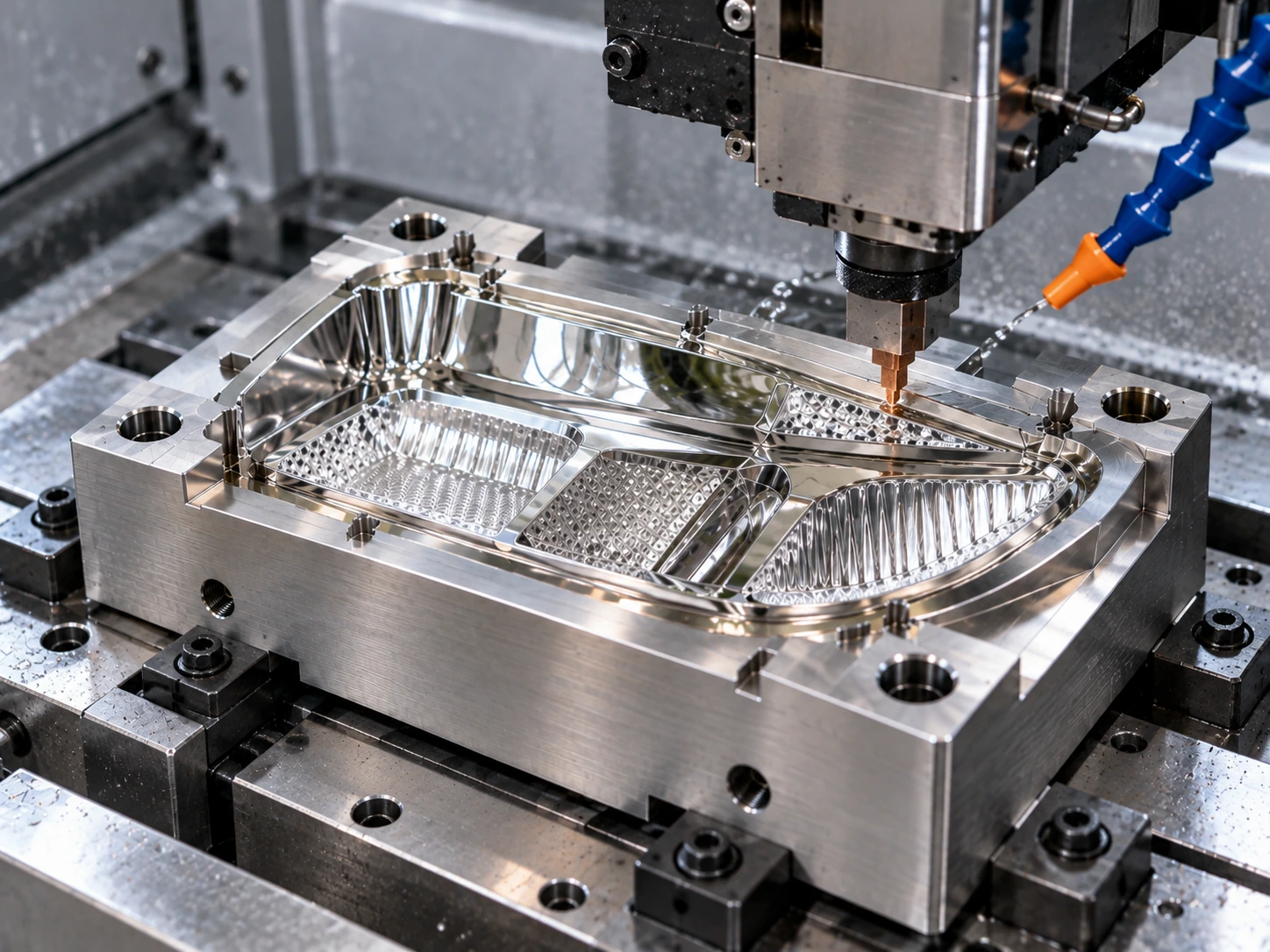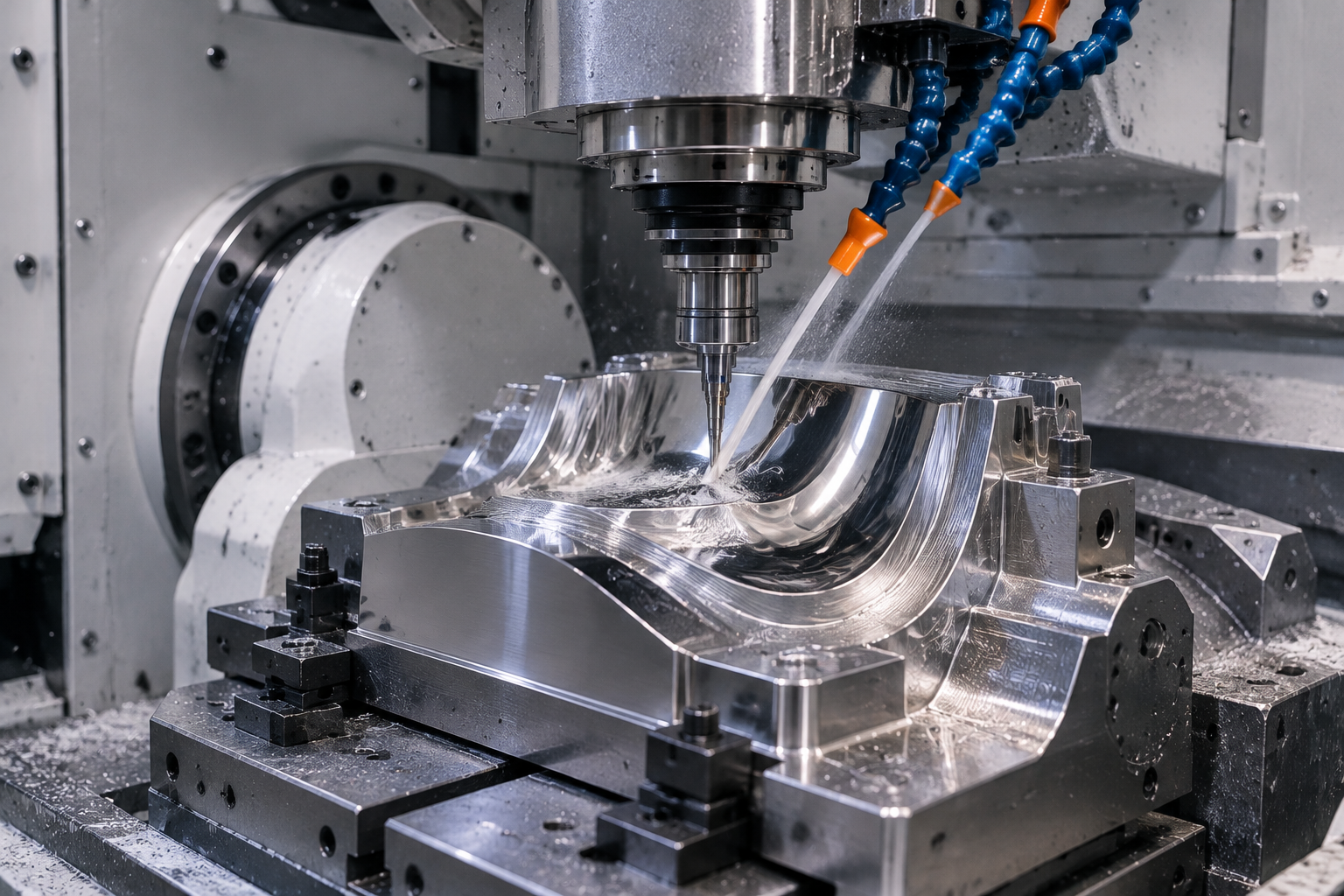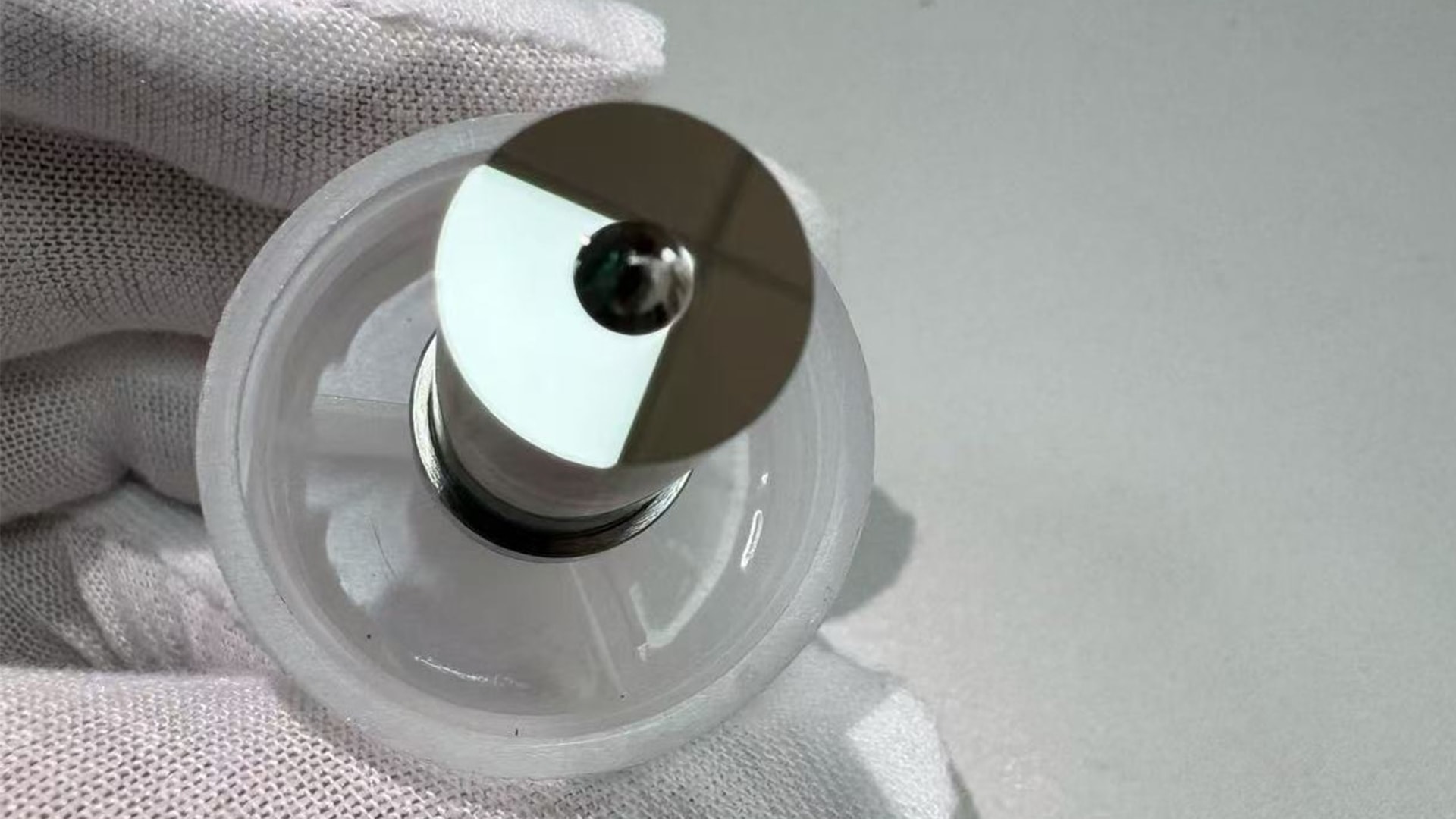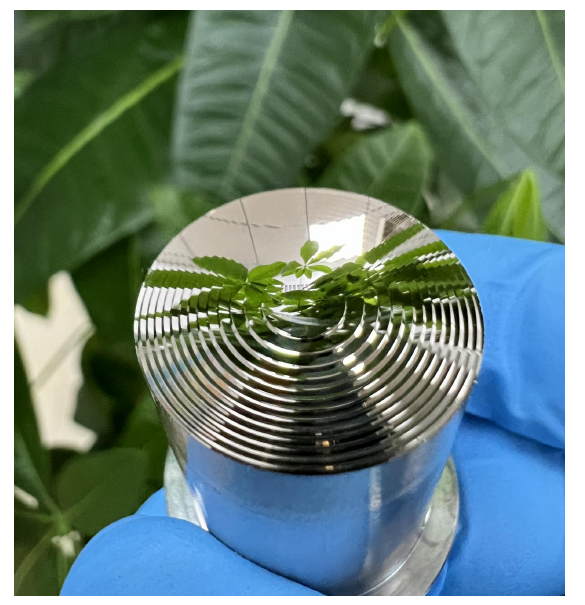
The primary difference between optical polishing and precision grinding lies in their function, mechanism, and resulting surface finish. Precision grinding is an abrasive machining process that uses a fixed-abrasive wheel to rapidly remove material and shape an optical component to its near-net form, resulting in a matte or hazy surface. In contrast, optical polishing is a super-finishing process that uses a soft lap with a fine, loose-abrasive slurry to remove microscopic surface irregularities and subsurface damage left by grinding, achieving a specular, mirror-like finish with angstrom-level smoothness. While grinding establishes the component’s geometry, polishing perfects its surface for optimal optical performance.
Understanding the distinction between these two critical stages of optical fabrication is essential for engineers, designers, and technicians. Choosing the correct process—or, more accurately, understanding their sequential roles—directly impacts the final component’s performance, from its ability to transmit light with minimal scatter to its power handling capacity in high-energy laser systems. This comprehensive guide will explore the mechanics, applications, and key differentiators of both precision grinding and optical polishing, providing a clear framework for when and why each process is used.
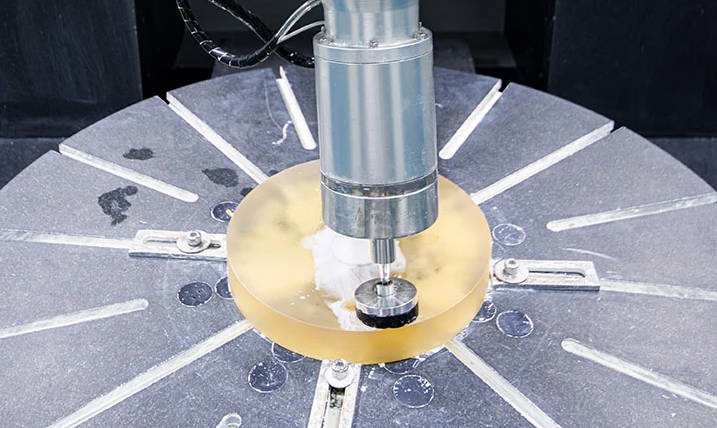
Table of Contents
- What is Precision Grinding? The Foundation of Optical Shaping
- What is Optical Polishing? Achieving Ultimate Surface Perfection
- Head-to-Head Comparison: Grinding vs. Polishing
- How Do Grinding and Polishing Work Together in Optical Fabrication?
- Choosing the Right Process: Key Considerations for Your Application
- Conclusion: A Symbiotic Relationship for Optical Excellence
- Frequently Asked Questions (FAQ)
What is Precision Grinding? The Foundation of Optical Shaping
Precision grinding is the crucial first step in transforming a raw piece of optical material (a “blank”) into a recognizable optical component. It is fundamentally a subtractive manufacturing process focused on establishing the macro-geometry of the part—its radius of curvature, diameter, thickness, and angles. Think of it as the sculpting phase, where the rough block is meticulously carved into its intended shape.
The Mechanics of Grinding: Controlled Brittle Fracture
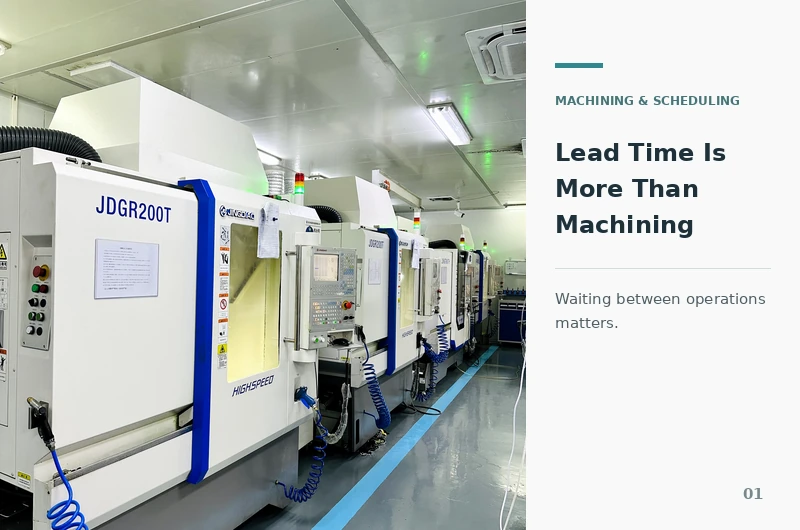
The mechanism behind precision grinding is primarily brittle fracture. The process uses a rapidly rotating grinding wheel, typically made of diamond particles bonded in a metal or resin matrix. As this wheel comes into contact with the optical material (like glass, fused silica, or sapphire), the hard diamond points induce localized stress, causing microscopic fractures. These tiny fractures propagate and intersect, leading to the removal of small chips of material. Modern CNC (Computer Numerical Control) grinding machines provide exceptional control over this process, allowing for the creation of complex shapes, including spherical, aspherical, and freeform surfaces, with high dimensional accuracy.
Key Characteristics of Precision Grinding
The defining traits of grinding are all related to its primary purpose: efficient shaping and material removal.
- Primary Goal: To establish the geometric shape, dimensions, and curvature of the optic.
- Material Removal Rate: High. It’s designed to remove significant amounts of material relatively quickly.
- Resulting Surface: Opaque, matte, or hazy. The surface is covered in microscopic pits and fractures from the abrasive process.
- Tooling: Hard, fixed-abrasive tools, most commonly diamond-impregnated grinding wheels.
- Subsurface Damage: This process inherently induces a layer of microcracks and stress beneath the visible surface, known as subsurface damage (SSD).
Common Applications: When is Grinding the Right Choice?
Precision grinding is the default method for the initial shaping of nearly all hard, brittle optical components. It is used for:
- Generating the spherical or aspherical curvature on lens blanks.
- Shaping raw mirror substrates before polishing and coating.
- Creating the precise angles on prisms and beamsplitters.
- Edging lenses to their final required diameter.
What is Optical Polishing? Achieving Ultimate Surface Perfection
If grinding is the sculpting, then optical polishing is the final, painstaking finishing touch that gives an optic its functionality. This process takes the precisely shaped but optically rough surface from the grinder and transforms it into one that is exceptionally smooth, flat, and free of defects. Its goal is not to change the shape, but to perfect the surface quality, or figure.
The Art and Science of Polishing: Shearing and Chemo-Mechanical Action
Unlike the brute-force fracture mechanism of grinding, optical polishing is a far more delicate process. It involves a polishing lap (often made of pitch or a polyurethane pad) and a liquid slurry containing extremely fine abrasive particles (like cerium oxide, aluminum oxide, or nanodiamonds). The process is a complex interplay of mechanical and chemical actions:
- Mechanical Action: The fine abrasives, suspended in the slurry, move between the lap and the optic’s surface. They shear off microscopic high points, effectively smoothing the surface layer by layer.
- Chemical Action: The slurry and the heat generated by friction can create a hydrated layer on the glass surface (e.g., a Beilby layer). This softer layer is more easily smoothed and reformed, contributing to a “flow-like” finishing action that removes scratches rather than creating new ones.
This combined chemo-mechanical polishing (CMP) is what allows for the removal of the subsurface damage induced by grinding, resulting in a pristine, transparent surface.
Key Characteristics of Optical Polishing
Polishing is characterized by its focus on surface quality over bulk material removal.
- Primary Goal: To achieve a specific surface finish (smoothness) and surface figure (shape accuracy), and to remove all subsurface damage.
- Material Removal Rate: Very low. The process removes material on a nanometer scale.
- Resulting Surface: Specular, transparent, and mirror-like, with extremely low surface roughness.
- Tooling: A soft lap (pitch, polyurethane) combined with a loose-abrasive slurry.
- Subsurface Damage: The primary function of polishing is to methodically remove the SSD left behind by grinding.
Common Applications: Where Polishing is Essential
Polishing is a non-negotiable final step for any optic where light transmission, reflection, or wavefront quality is critical. This includes:
- Final surfaces of high-precision lenses for imaging and laser systems.
- Telescope mirrors, high-precision optical instruments optics, and semiconductor lithography components.
- Laser windows and high-power laser optics.
- Optical flats and reference surfaces.
Head-to-Head Comparison: Grinding vs. Polishing
To truly understand the difference, a direct comparison of their key attributes is essential. While they are part of the same production sequence, their functions and outcomes are polar opposites.
| Attribute | Precision Grinding | Optical Polishing |
|---|---|---|
| Primary Function | Shaping (Geometry/Form Control) | Finishing (Surface Quality/Figure Control) |
| Mechanism | Brittle Fracture | Shearing, Chemical-Mechanical Action |
| Material Removal Rate | High (microns per minute) | Extremely Low (nanometers per minute) |
| Tooling | Fixed Abrasive (e.g., Diamond Wheel) | Loose Abrasive (Slurry) + Soft Lap |
| Surface Finish (Ra) | Rough (~0.5-5 µm) | Extremely Smooth (<1 nm or <10 Å) |
| Surface Appearance | Opaque, Matte, Hazy | Transparent, Specular, Mirror-like |
| Subsurface Damage | Induces a significant layer | Removes the damaged layer |
Surface Finish and Roughness (Ra): From Microns to Angstroms
This is the most dramatic difference. A ground surface has a roughness (Ra) measured in micrometers (µm), which is why it scatters light and appears opaque. An optically polished surface has a roughness measured in nanometers (nm) or even Angstroms (Å), making it thousands of times smoother. This ultra-low scatter surface is what allows light to pass through or reflect predictably.
Material Removal Rate (MRR): Shaping vs. Refining
Grinding’s high MRR is a feature, not a bug. It allows fabricators to efficiently get from a raw blank to a near-net shape. Polishing, by contrast, has a deliberately low MRR. Its purpose is to carefully remove only the topmost layers of the material, including the damaged layer from grinding, without altering the fundamental geometry established in the previous step.
Tooling and Abrasives: Fixed vs. Loose
The “fixed” abrasives in a grinding wheel are held rigidly in a binder. This allows for aggressive, deterministic shaping. The “loose” abrasives in a polishing slurry are suspended in liquid and conform to the shape of the lap and the workpiece. This non-rigid, conformal contact is key to achieving a uniform and gentle smoothing action across the entire optical surface.
Subsurface Damage (SSD): Creating vs. Removing
This is a critical concept in optics. Grinding, by its very nature, creates a network of invisible microcracks extending below the surface. If this SSD is not completely removed, it can become a point of failure for the optic, especially in high-power applications, and will degrade optical performance. A key objective of a well-controlled polishing process is to remove material until this entire damaged layer is gone, leaving a pristine, undamaged bulk material at the surface.
Process Control and Precision: Form vs. Figure
In optics, form refers to the overall shape of the component, while figure refers to the deviation of the surface from its ideal mathematical shape. Grinding is the master of form, establishing the basic radius and dimensions with high precision. Polishing is the master of figure, correcting tiny deviations measured in fractions of a wavelength of light, bringing the surface into its final, highly accurate state.
How Do Grinding and Polishing Work Together in Optical Fabrication?
It’s a mistake to view grinding and polishing as competing processes; they are, in fact, two essential and complementary stages of a single workflow. The fabrication of a high-precision optic almost always follows this sequence:
- Shaping/Generating: A coarse grinding process that gives the optic its basic shape.
- Fine Grinding: A series of grinding steps using progressively finer diamond grits. Each step removes the subsurface damage from the previous one, leaving a smoother, more uniform surface ready for polishing.
- Polishing: Using a polishing lap and slurry, this stage removes the last layer of subsurface damage from the finest grinding step and smooths the surface to its final specification.
- Figure Correction (optional): For the highest precision optics, advanced techniques like Magnetorheological Finishing (MRF) or Ion Beam Figuring (IBF) may be used for final, nanometer-level corrections to the surface figure.
Each step meticulously prepares the surface for the next, ensuring that the final product meets stringent requirements for both geometric accuracy and surface quality.
Choosing the Right Process: Key Considerations for Your Application
Since these are sequential steps, the question isn’t “which one to choose,” but rather “what level of grinding and polishing is required?” The answer depends entirely on the application’s demands.
- What is your desired surface finish? If the component only needs to have a specific shape and transparency is not required (e.g., a structural ceramic part), grinding might be sufficient. If the part must transmit or reflect light with high fidelity, polishing is mandatory.
- How much material needs to be removed? If you are starting with a large, raw blank, grinding is the only practical way to get to the near-net shape.
- What are the geometric and surface figure tolerances? Basic grinding can hold tolerances in the micron range. High-precision polishing, often guided by interferometry, is needed to achieve figure tolerances of λ/10 or better (where λ is a wavelength of light).
- What is the material of the optic? While the principles apply to most glasses and crystals, the specific parameters for grinding (wheel speed, grit size) and polishing (slurry type, lap material, pressure) must be optimized for each material to avoid excessive damage and achieve the best results.
Conclusion: A Symbiotic Relationship for Optical Excellence
In the world of optical fabrication, precision grinding and optical polishing are not rivals but indispensable partners. Grinding is the powerful sculptor, using controlled fracture to rapidly and accurately impose the fundamental geometry onto a raw material. Polishing is the master artist, using a delicate chemo-mechanical process to erase every flaw, remove all subsurface damage, and produce a surface so perfect that it can manipulate light with unparalleled precision. One creates the form, the other perfects the finish. Together, this symbiotic relationship makes the creation of modern high-performance optical components possible, from the lens in your smartphone to the mirrors of the James Webb Space Telescope.
Frequently Asked Questions (FAQ)
Can you polish without grinding first?
Technically, yes, if the initial surface is already very close to the desired shape and has minimal surface roughness. However, in nearly all practical scenarios for creating a new optic from a blank, this is not feasible. Polishing has such a low material removal rate that it would take an exorbitant amount of time to change the shape of an optic or remove significant surface flaws. Grinding is the essential preparatory step.
What is the difference between lapping and polishing?
Lapping is often considered an intermediate step between fine grinding and polishing. Like polishing, it uses a loose abrasive slurry. However, lapping typically uses a hard, flat lap (like cast iron) and coarser abrasives to improve surface flatness and remove the deeper damage from grinding. It creates a finer matte surface than grinding but is not as smooth as a final polish. Polishing uses a soft, conforming lap (like pitch) and much finer abrasives to achieve the final specular surface.
How is CNC technology used in grinding and polishing?
CNC technology has revolutionized both processes. CNC grinders can produce complex aspheric and freeform shapes with incredible determinism and repeatability. CNC polishing machines use computer-controlled paths for the polishing tool, allowing for targeted material removal to correct surface figure errors identified by metrology instruments like interferometers. This has moved optical fabrication from a highly manual “black art” to a precise, computer-controlled science.
Optical Polishing, Precision Grinding, Optical Polishing vs Precision Grinding, difference between grinding and polishing, optical fabrication, surface finish, subsurface damage, material removal rate, grinding and polishing process, precision optics, CNC grinding, surface roughness