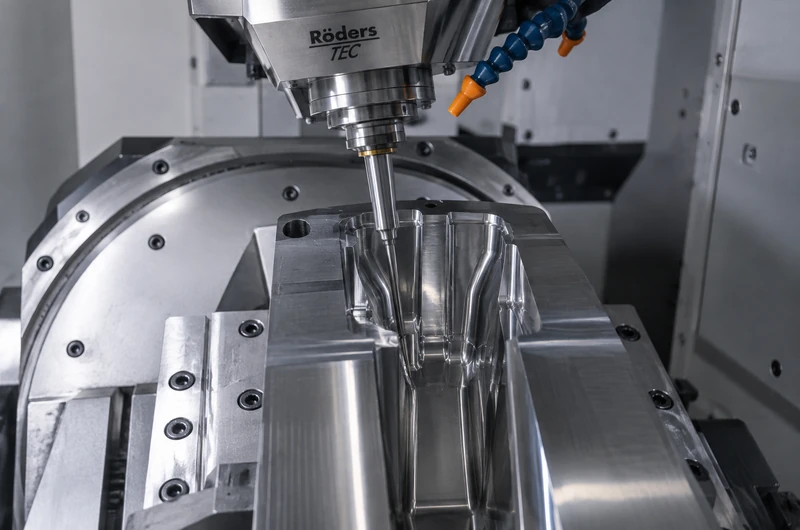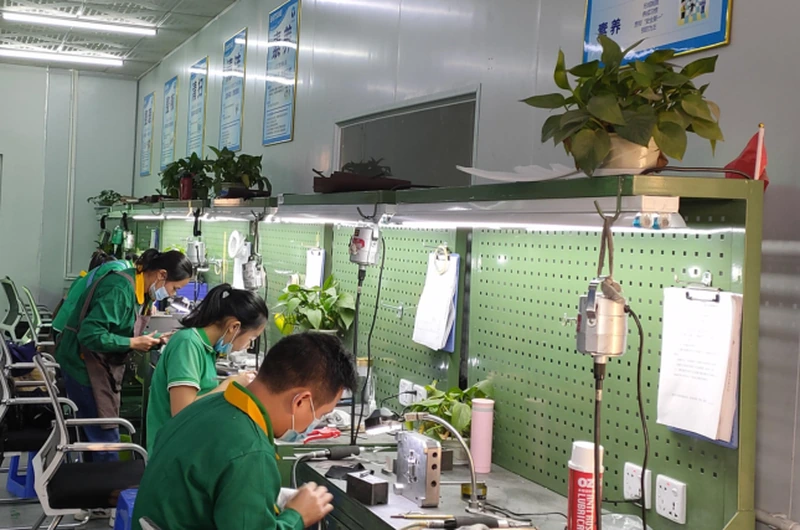
In the landscape of modern manufacturing, the word “precision” is often used loosely. However, for engineers developing next-generation optical systems, high-reliability optical components, or medical implants, the difference between “precise” and “ultra-precise” is the difference between project success and catastrophic failure.
As industries push the boundaries of physics, understanding the technical nuances between Precision Machining, Micromachining, and Ultra-Precision Machining (UPM) is critical for optimizing performance and managing production costs.
I. Introduction: The Evolution of Accuracy
The journey of manufacturing has been a relentless pursuit of the “next decimal point.” While traditional machining satisfied the requirements of the industrial age, the digital and photonics age demands a move from millimeters to sub-micron and even nano-scale accuracy.
The critical distinction between these tiers lies in the “deterministic” nature of the process. While standard precision machining relies on the statistical capabilities of the machine tool, Ultra-Precision Machining requires absolute control over every environmental variable—from thermal expansion to floor vibrations—to achieve results that are repeatable at the atomic level.
II. Comparative Analysis: Defining the Boundaries
To choose the right process, one must first define the technical boundaries. Below is a comparative breakdown of the three manufacturing tiers:
III. Deep Dive: What Defines Ultra-Precision Machining?
Ultra-Precision Machining (UPM) is defined as a manufacturing process where the relative error between the tool and the workpiece is kept within the sub-micron range, typically achieving form accuracies of less than $0.1\mu\text{m}$ and surface roughness in the nanometer scale. Unlike standard CNC milling, UPM is a “deterministic” process. This means that every movement is measured and compensated for in real-time.
1. Single-Point Diamond Turning (SPDT)
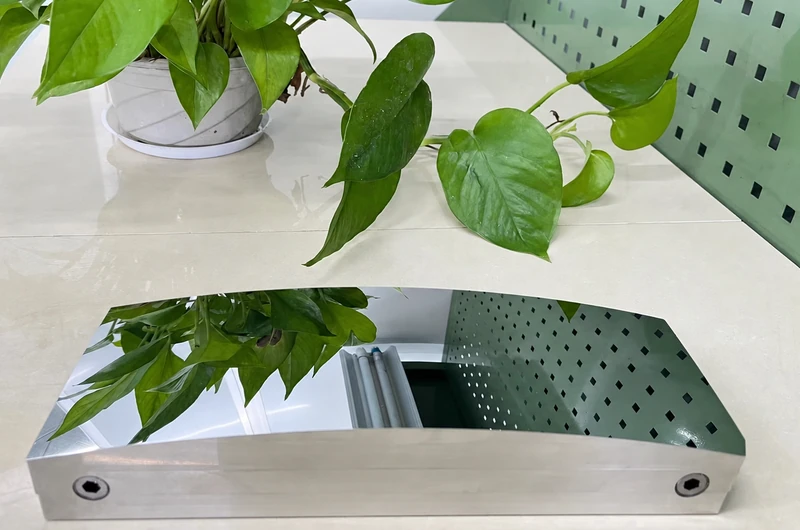
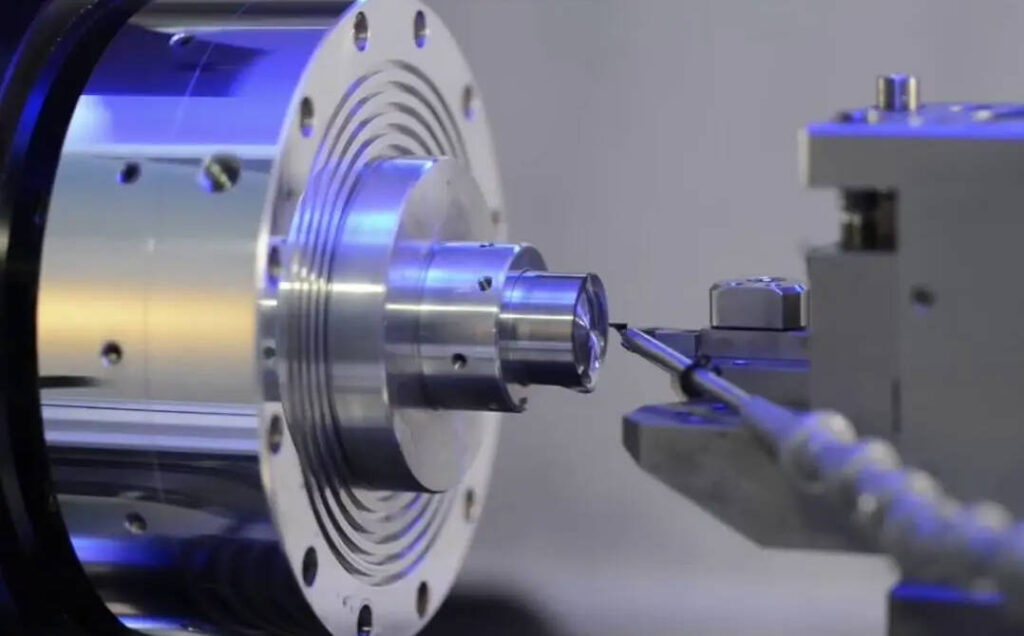
The cornerstone of UPM is Single-Point Diamond Turning. By using a gem-quality monocrystalline diamond tool, manufacturers can achieve a molecular-level shear of the material. This results in a surface so smooth that it requires no manual polishing, which is essential for preserving the geometric integrity of optical lenses and mirrors.
2. Environmental Mastery
In the realm of UPM, the environment is a component of the machine.
- Thermal Stability: A change of just $1$°C can cause a metal component to expand by microns—far exceeding the UPM tolerance. Leading UPM facilities use liquid-cooled housings to maintain temperatures within $\pm 0.01$°C.
- Vibration Isolation: UPM machines often sit on massive air-suspension granite blocks to decouple the process from seismic or building vibrations.
IV. Micromachining: It’s About Scale, Not Just Tolerance
It is a common misconception that Micromachining and Ultra-Precision Machining are the same. Micromachining focuses on the size of the features (creating holes or slots smaller than a human hair), whereas Ultra-Precision Machining focuses on the accuracy and smoothness of the surface, regardless of the part’s overall size.
For example, a micro-fluidic chip for medical diagnostics requires Micromachining to create tiny channels. However, a large telescope mirror (which is definitely not “micro”) requires Ultra-Precision Machining to achieve the necessary optical clarity.
V. Critical Decision Factors: When Do You Need UPM?
You should choose Ultra-Precision Machining when your component requires optical-grade surface finishes (Ra $< 10\text{nm}$), form tolerances tighter than $0.5\mu\text{m}$, or when secondary polishing processes would destroy the part’s required geometric accuracy.
1. Optical Systems
If a part needs to reflect, refract, or focus light, UPM is non-negotiable. This includes:
- Aspheric and diffractive lenses.
- Laser resonators.
- Infrared (IR) optics for and thermal imaging.
2. Extreme Mechanical Fits
In high-end high-reliability optical applications, such as air bearings or gyroscope components, the friction must be near zero. UPM allows for “liquid-tight” metal-to-metal seals without the need for gaskets, achieved simply through the incredible flatness of the machined surfaces.
VI. The Challenges of Ultra-Precision (User Pain Points)
For procurement specialists and engineers, UPM presents unique challenges that differ from traditional sourcing:
1. Metrology: “You Can’t Make What You Can’t Measure”
Standard calipers and CMMs are useless in the UPM world. To verify a sub-micron part, we must use Laser Interferometry or Non-contact Profilometry. Users must ensure their partner has the metrology equipment to prove the tolerances they claim to hit.
2. Material Constraints
Not all materials are “diamond turnable.” While aluminum, copper, and plastics like PMMA are ideal for SPDT, ferrous metals (like steel) react chemically with diamond tools. For these materials, hybrid processes or specialized coatings are required.
3. Cost and Lead Time
UPM is an investment. The slow feed rates required to achieve a nano-finish, combined with the extensive setup time for thermal stabilization, mean that UPM parts have higher price points and longer lead times than precision-machined parts.
The future of UPM is moving toward Hybrid Machining. By combining Laser-Assisted Machining with Diamond Turning, we are now able to achieve ultra-precision finishes on hard and brittle materials like ceramics and silicon carbide, which were previously impossible to machine to such standards.
Additionally, the rise of “Desktop” UPM platforms is allowing R&D labs to prototype optical components in-house, significantly shortening the development cycle for new consumer electronics.
VIII. Conclusion: Choosing the Right Partner
Selecting between Precision Machining, Micromachining, and UPM depends entirely on your end-use case. If your priority is fit and function at a reasonable cost, Precision Machining is the winner. If you are miniaturizing electronics, Micromachining is the answer. But if your project involves the manipulation of light or extreme mechanical performance, Ultra-Precision Machining is the only path forward.
When sourcing a UPM provider, always ask for their metrology reports and their method for thermal compensation. In the world of the sub-micron, there is no room for “close enough.”