
Custom Ultra-Precision Mirror Mold Machining for Bluetooth Earphone Charging Cases
A charging case is judged immediately by its reflection, opening line, lid gap and hand feel. For the mold insert, the difficult part is keeping a clean mirror surface without changing the geometry that controls those visible details.
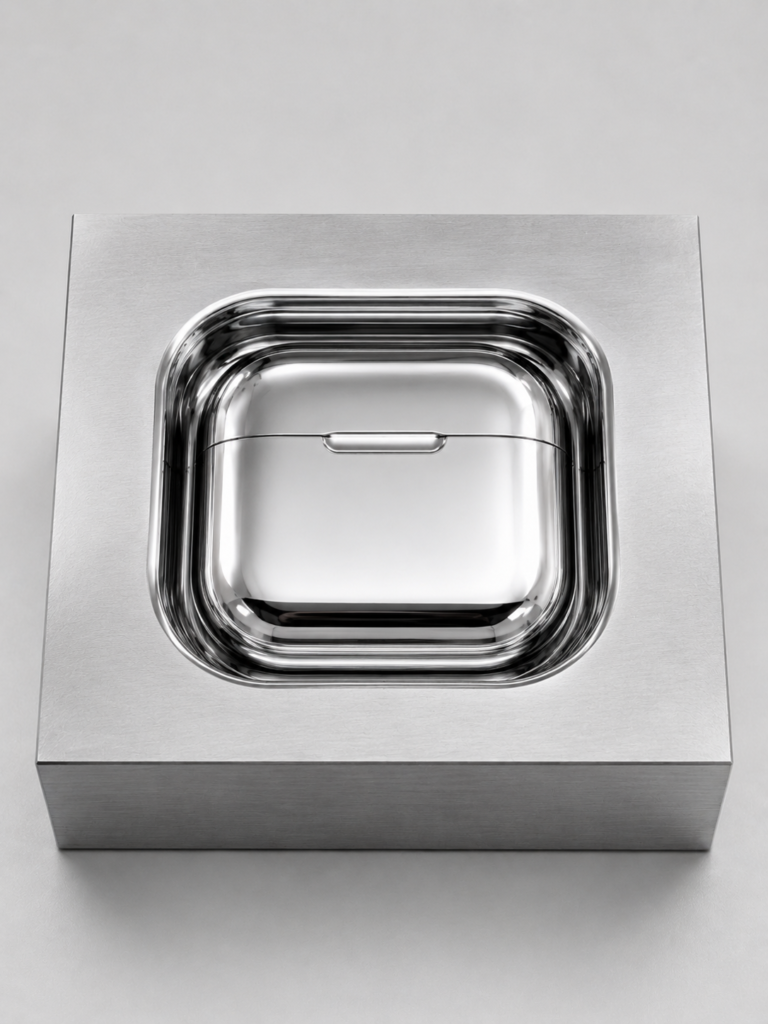
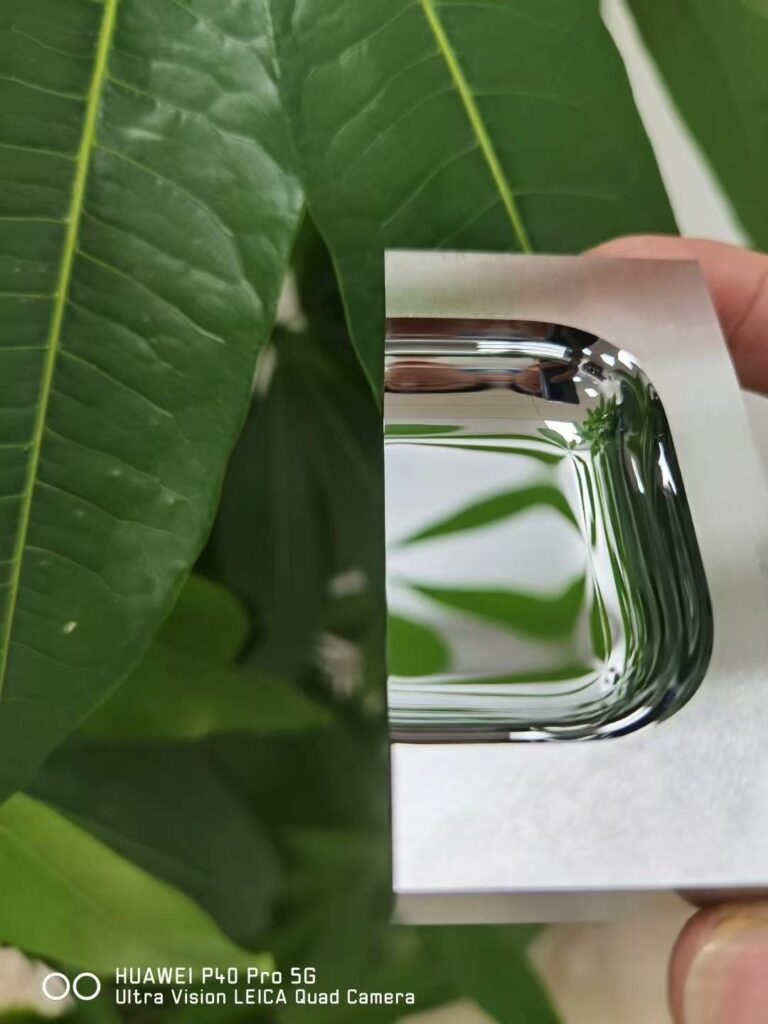
Broad visible curves and high-gloss surfaces.
Opening line, lid gap and matching geometry.
Hard-to-reach curves, corners and transitions.
Existing mold systems reviewed from drawings and current defects.
A charging-case mirror mold project that looked bright, but still failed the customer’s visual expectation
One customer came to Yishun after several correction attempts on a charging-case mold insert. The cavity already looked bright, but the molded part still showed unstable reflection and the opening edge looked less clean after assembly.
At first glance, the obvious reaction would have been to keep polishing and try to make the cavity even brighter. But our team did not treat it as a simple gloss problem. We reviewed the cavity as one complete functional surface, including the broad reflection area, the opening edge, the deep inner transition and the fitting relationship between the upper and lower case structure.
This kind of project is exactly why a charging-case mold cannot be judged only by how glossy the cavity looks in isolation. For real customer use, the important question is whether the insert still supports the final appearance and assembly effect after finishing.
Mirror finish is only one part of acceptance
Charging case molds combine large visible surfaces with opening edges, parting lines, fitting references and deep inner geometry. A correction that improves gloss can still create a new assembly or appearance problem if material removal is not controlled.
Broad glossy surfaces reveal small defects
Fine scratches, haze, orange peel, waves and local dullness are easy to see when light moves across a large curved charging-case surface.
The opening can become visually soft
Excess polishing can round the edge, change the opening shape and make the lid gap look less precise after assembly.
Deep cavities are difficult to finish evenly
Narrow corners and inner transitions can leave some areas over-polished while others remain dull if the route is not planned first.
Upper and lower parts must still align
Surface finishing cannot disturb the references that determine the final lid position, gap and visible fitting line.
Custom mold cores and mirror inserts for TWS charging cases
Yishun Optical supports custom mold cores and inserts for charging-case outer shells, upper lids, lower housings, opening areas, inner trays, decorative surfaces, transparent windows and replacement mold components.
Five areas we review before material is removed
The charging case surface should not be treated as one uniform polishing zone. Different areas carry different visual and geometric risks.
Checked for waves, haze, scratches and uneven reflection.
Needs edge definition without excessive rounding.
Tool access and removal balance are reviewed separately.
Must retain the geometry controlling the visible case gap.
Surface state and key geometry need consistency between inserts.
From geometry first, mirror finish second
The machining and finishing route is selected from the actual cavity depth, surface accessibility, edge conditions, material and acceptance requirement.
Drawing review
Mark broad appearance areas, opening edges, deep cavities, R corners, thin walls and fitting references.
Precision machining
Form the main cavity geometry with 5-axis machining, mirror machining or other suitable precision processes.
Controlled finishing
Improve mirror quality while limiting removal near opening edges, steps, curves and assembly-related surfaces.
Inspection confirmation
Verify agreed dimensions, surface condition, roughness and matching requirements before delivery.
Reference capability for quotation review
Final values depend on the actual drawing, material, cavity depth, access and customer acceptance standard.
Deep cavities, narrow openings, sharp edges, micro-textures and hard-to-reach corners require separate review from the actual drawing.
What a surface defect can mean in the assembled case
Appearance and geometry are linked. The correction route should be chosen from the actual symptom instead of simply adding more polishing.
Uneven reflection
Broad curves show waves, haze, fine scratches or orange peel under strong light.
Check the machining pattern and local surface condition before deciding whether additional finishing will improve or worsen the surface.
Rounded opening edge
The surface becomes brighter, but the lid gap or opening line looks softer after assembly.
Mark the opening and nearby fitting surfaces before polishing, then control the path and removal amount around the edge.
Deep cavity inconsistency
Some areas remain dull while narrow inner curves are over-polished or locally reshaped.
Review depth, width, corner shape and tool angle first, and separate hard-to-reach areas from broad open surfaces.
Upper / lower mismatch
A small difference in curve, edge or parting area makes the final fitting line look wider on one side.
Protect the references that control the lid position and review paired inserts rather than judging each surface independently.
Multi-cavity appearance drift
Each cavity may pass individually but look different when finished cases are compared side by side.
Use the same acceptance logic for surface state, key dimensions and finishing balance across the insert set.
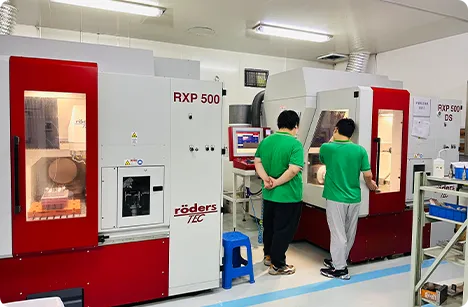

Protect the shape while improving the surface
The core manufacturing question is not simply how bright the cavity can become. It is whether the final insert still keeps the opening, fitting line, broad curve and cavity relationship required by the charging-case design.
What to send for a charging-case mold review
Complete project information makes it easier to identify high-risk surfaces before machining and to avoid unnecessary correction loops later.
Core project files
- 2D drawing and 3D model
- Mold material requirement
- SPI or Ra target
- Cavity quantity
- Critical appearance and fitting zones
Useful supporting information
- Trial-part photos or current defect photos
- Opening-edge or lid-gap concern
- Required inspection record format
- Replacement / matching requirement
- Target quantity and delivery schedule
TWS charging case mirror mold questions
Can you make custom mirror mold cores for TWS charging cases?
Yes. Yishun can evaluate custom mold cores and mirror inserts for outer shells, upper lids, lower housings, opening areas, deep inner cavities, trays and other charging-case components from customer drawings.
Can a charging-case mold reach SPI A0?
It can be evaluated. SPI A1 is common for high-gloss appearance surfaces. SPI A0 depends on mold material, cavity depth, surface access, geometry and the agreed acceptance standard.
How do you protect the opening edge during polishing?
The opening edge and nearby fitting surfaces are marked before finishing. The polishing route and removal amount are controlled so the edge does not become unnecessarily soft or rounded.
Can deep charging-case cavities be polished evenly?
They can be reviewed, but depth, width, corner shape, material and access determine the final route. Deep or narrow areas often need separate planning from open broad surfaces.
Can you control upper and lower case matching?
Yes, when the relevant datums and acceptance points are defined. Surfaces that affect the final lid position and visible fitting line are reviewed together with the appearance surfaces.
Can you support multi-cavity appearance consistency?
Yes. Surface condition, reflection, key dimensions and finishing balance can be compared between inserts according to the confirmed project plan.
What files are needed for quotation?
2D drawings, 3D data, mold material, SPI or roughness target, cavity quantity and target timing are preferred. Trial-part photos and defect photos are especially useful for corrective or replacement projects.
How is this page different from the Bluetooth earphone housing mold-core page?
This page focuses on charging-case outer shells, upper/lower matching, broad reflective surfaces, opening edges and deep cavities. The earphone housing page focuses on smaller earbud shells, left-right matching, acoustic openings, snap fits and compact functional details.
Developing or correcting a TWS charging-case mirror mold?
Send the drawing, mold material, surface target, cavity quantity and any current trial-part or defect photos. We will first review the broad reflection surfaces, opening edge, deep cavity, fitting areas and regions that are difficult to finish without changing geometry.
Send Drawings for Review