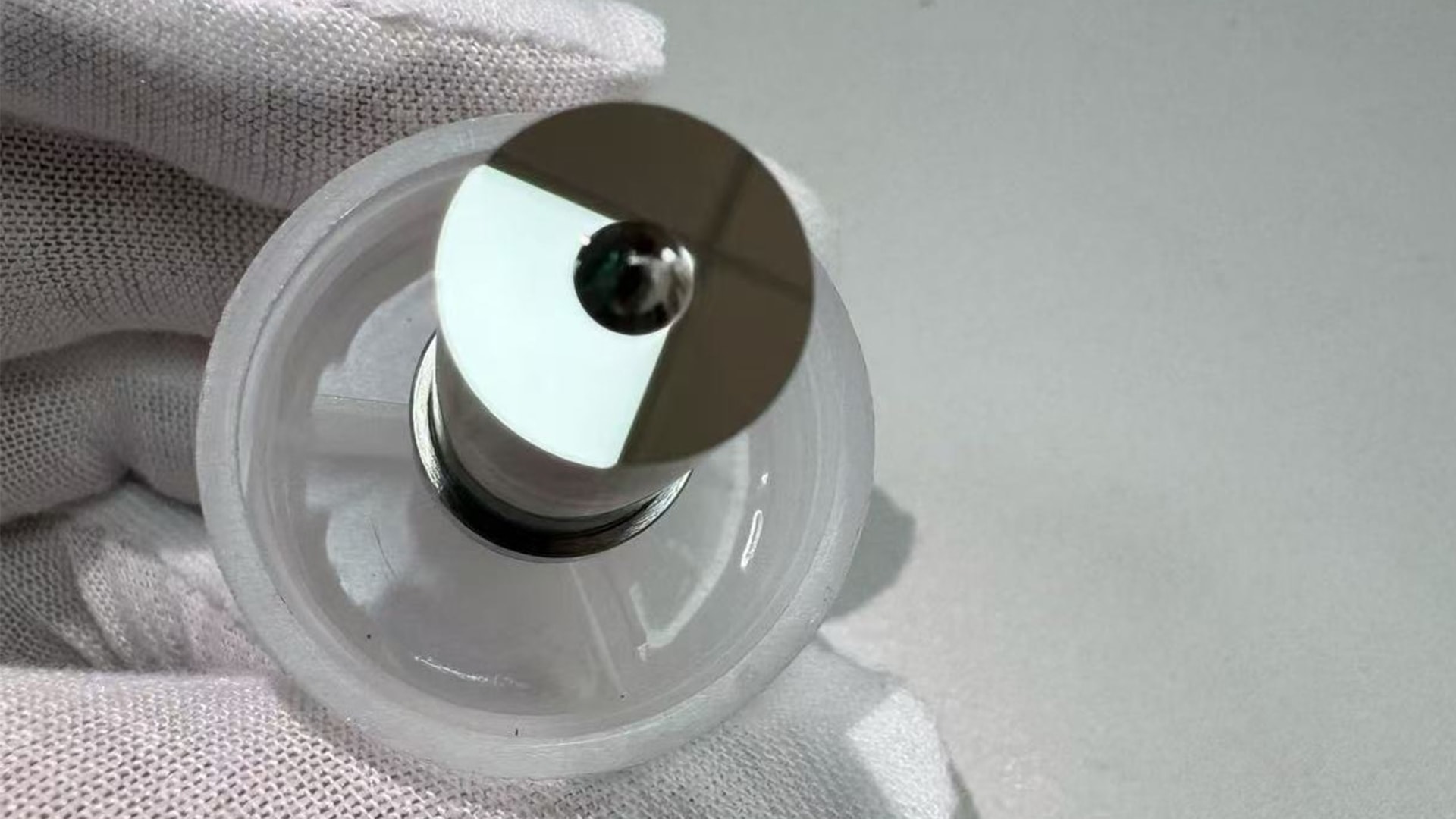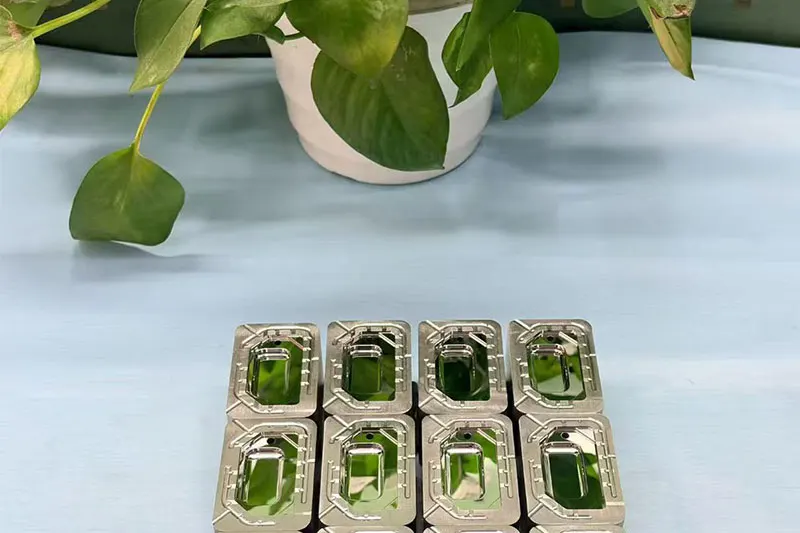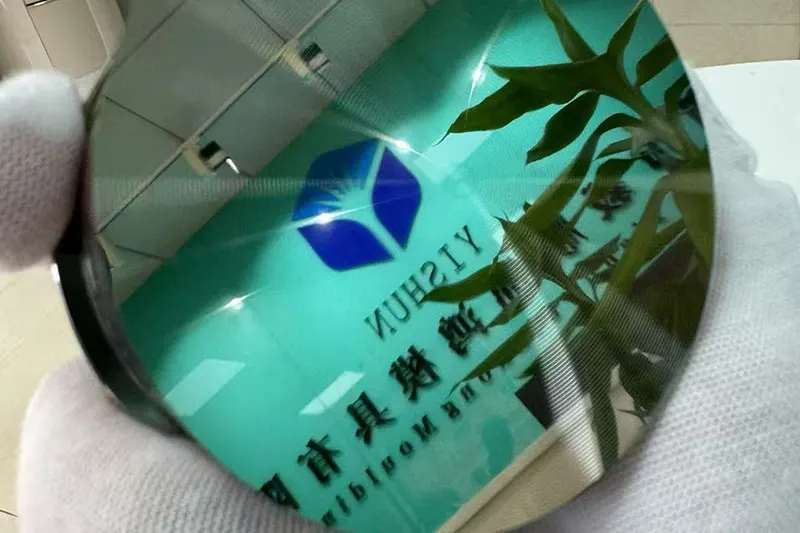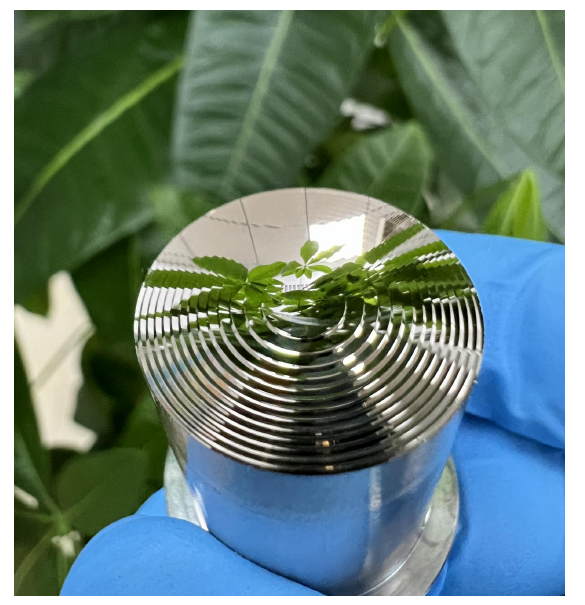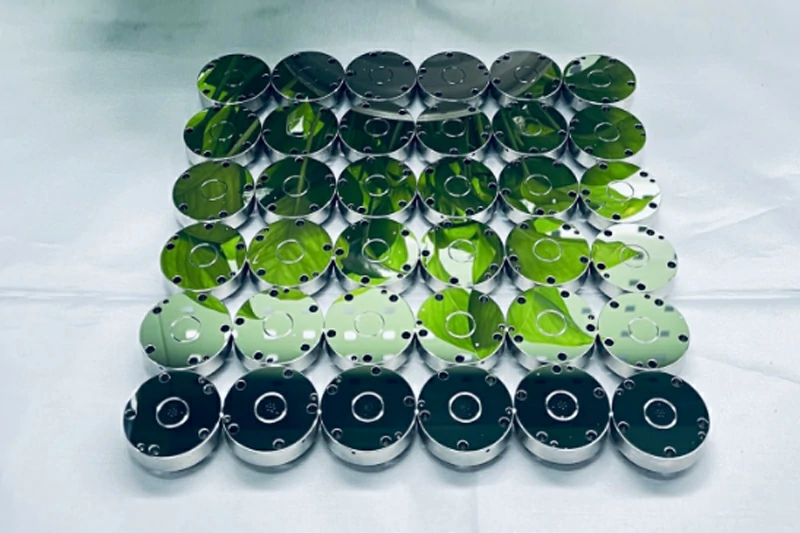
In precision optics manufacturing, surface quality requirements continue pushing toward extremes. While Ra 1nm surface roughness represents excellent smoothness for most applications, advanced systems demand surface finishes measured in sub-angstrom surface finish specifications—surfaces smoother than one ten-billionth of a meter.
Such ultra-precision surfaces are essential for laser interferometers, gravitational wave detectors, extreme ultraviolet (EUV) lithography optics, and advanced scientific instrumentation where even minimal surface irregularities cause measurable performance degradation.
Achieving sub-angstrom surface quality requires more than extended polishing time—it demands deterministic manufacturing processes, rigorous environmental control, and sophisticated metrology. YISHUN Optical’s precision manufacturing capabilities encompass these advanced techniques for applications where only the smoothest surfaces suffice.
Key Takeaway:
- Sub-angstrom surfaces (<0.1nm RMS) are essential for EUV lithography, laser interferometry, and gravitational wave detection
- Deterministic polishing techniques (MRF, IBF, AFP) provide controlled material removal for ultra-smooth surfaces
- Environmental factors—temperature, vibration, contamination—significantly impact achievable surface quality
- Advanced metrology including phase-shifting interferometry and AFM is required for verification
- Process sequencing combining multiple techniques optimizes results
Understanding Sub-Angstrom Surface Requirements
What Does Sub-Angstrom Mean?
One angstrom equals 10⁻¹⁰ meters (0.1 nanometers). A sub-angstrom surface finish refers to surface variations less than 1 angstrom in height—smaller than the diameter of a single hydrogen atom.
| Unit | Equivalent |
|---|---|
| 1 meter | 1 m |
| 1 millimeter | 10⁻³ m |
| 1 micrometer | 10⁻⁶ m |
| 1 nanometer | 10⁻⁹ m |
| 1 angstrom | 10⁻¹⁰ m |
| 1 picometer | 10⁻¹² m |
For context:
- Surface roughness Ra 1nm = 10 angstroms
- Sub-angstrom finish = <1 angstrom RMS
- This represents 10× improvement over “standard” precision optics
Applications Requiring Sub-Angstrom Surfaces
| Application | Why Sub-Angstrom Matters |
|---|---|
| EUV Lithography | Surface scatter degrades imaging at 13.5nm wavelength |
| Laser Interferometry | Surface errors cause phase shifts and measurement error |
| Gravitational Wave Detection | LIGO/GEO require mirrors with <0.1nm surface error |
| Optical Cavities | Ultra-low loss requires minimal scatter sites |
| Synchrotron Optics | High-brilliance X-rays sensitive to surface roughness |
| Precision Metrology | Reference surfaces for calibration |
| Quantum Computing | Optical interfaces for trapped ion qubits |
Challenges in Achieving Sub-Angstrom Surface Quality
Achieving sub-angstrom surfaces presents fundamental challenges:
Challenge 1: Fundamental Material Limits
Even theoretically perfect polishing cannot achieve atomic smoothness due to:
- Crystal Lattice Structure: Atoms arranged in periodic patterns create inherent surface steps
- Grain Boundaries: Polycrystalline materials have inherent discontinuities
- Amorphous Materials: Glass surfaces exhibit atomic-scale roughness from random atomic packing
However, modern ultra-precision techniques approach these fundamental limits closely enough for practical sub-angstrom surfaces on amorphous materials like fused silica.
Challenge 2: Deterministic vs. Stochastic Processing
Conventional polishing relies on stochastic (probabilistic) material removal:
- Abrasive particle contact is random and statistical
- Removal function varies across surface
- Achieving uniform <1 angstrom requires impractically long process times
Sub-angstrom surfaces require deterministic processing where material removal is mathematically controlled:
- Removal amount depends predictably on position
- Computer-controlled parameters ensure uniformity
- Process time scales reasonably with quality requirements
Challenge 3: Environmental Contamination
At atomic scales, contamination dominates:
- Organic molecules (from atmosphere, hands, tools) adsorb onto surfaces
- Water vapor creates molecular-scale adsorbed layers
- Particulate contamination creates local surface disturbances
- Cleaning procedures must be ultra-clean and validated
Challenge 4: Metrology at Atomic Scales
Measuring sub-angstrom surfaces challenges available technology:
- Standard optical profilometers lack required resolution
- Contact metrology introduces surface damage
- Environmental vibrations obscure true surface features
- Correlation between different measurement techniques varies
Advanced Techniques for Sub-Angstrom Surfaces
Technique 1: Ion Beam Figuring (IBF)
Ion beam figuring uses focused ion beams (typically argon or gallium ions) to remove material with exceptional precision:
How IBF Works:
- Ions accelerated toward surface under high voltage
- Collision cascades sputter atoms from surface
- Computer-controlled beam positioning enables deterministic removal
- Removal depth controlled by ion dose (energy × time)
| IBF Parameter | Typical Value |
|---|---|
| Ion Energy | 0.5-2 keV |
| Beam Current | 1-50 mA |
| Removal Rate | 0.1-10 nm/minute |
| Removal Resolution | 0.1-1 μm spot |
| Surface Accuracy | λ/100-λ/200 |
| Process Environment | Ultra-high vacuum |
Advantages:
- Non-contact process eliminates tool-induced damage
- Highly deterministic removal function
- Excellent for correcting residual figure errors
- No subsurface damage introduction
Limitations:
- Very slow material removal rate
- Equipment cost very high
- Requires ultra-clean vacuum environment
- Gallium contamination concern for some applications
Technique 2: Magnetorheological Finishing (MRF)
MRF provides deterministic material removal with higher throughput than IBF:
MRF for Sub-Angstrom Surfaces: While standard MRF achieves Ra 1-3nm, optimized MRF parameters combined with post-processing can achieve sub-angstrom surfaces:
- Reduced removal rate minimizes local non-uniformity
- Optimized polishing fluid composition
- Extended processing times with precise control
- Often combined with IBF for final correction
Technique 3: Fluid Jet Polishing (FJP)
Fluid jet polishing uses eroding fluid streams for non-contact material removal:
Characteristics:
- Erodent slurry (typically water and abrasive) directed at surface
- No physical tool contact eliminates subsurface damage
- Computer-controlled jet positioning
- Removal function depends on jet velocity, composition, and dwell time
Applicability to Sub-Angstrom: FJP achieves smooth surfaces with good mid-spatial-frequency characteristics, useful as a pre-polish step before final deterministic processing.
Technique 4: Atomic Force Processing (AFP)
AFP combines AFM-based measurement with in-situ material removal:
How AFP Works:
- AFM probe scans surface, creating nanoscale topography map
- Processing occurs simultaneously using localized chemical/mechanical effect
- Iterative measure-remove cycles converge toward target surface
- Achieves true atomic-scale deterministic surface modification
Applications: Primarily research applications rather than production, AFP represents the ultimate in deterministic surface processing for specialized optics.
Technique 5: Sequential Precision Polishing
Production of sub-angstrom surfaces typically employs sequential processes:
Typical Sequence for Sub-Angstrom Optics:
- Computer-Controlled Pre-Polish (CCP)
- Removes previous grinding damage
- Achieves Ra 2-5nm
- Establishes uniform surface for final processing
- Deterministic MRF
- Corrects figure and mid-spatial-frequency errors
- Achieves Ra 0.5-1nm
- Final removal function optimized for smoothness
- Ion Beam Figuring (if needed)
- Corrects residual figure errors to λ/100+
- Minimal additional smoothing
- Final surface optimization
- Pre-Cleaning
- Chemical cleaning removes processing residues
- Ultrasonic cleaning in ultra-pure solvents
- Validated particle removal
- Final Polish/Clean
- Optimized final polish for sub-angstrom surface
- Super-clean handling and packaging
- Atmospheric control during handling
Equipment Requirements for Sub-Angstrom Processing
Ultra-Precision CNC Machines
Processing equipment must meet extreme specifications:
| Specification | Requirement |
|---|---|
| Positioning Accuracy | <0.5 μm |
| Repeatability | <0.1 μm |
| Thermal Stability | ±0.1°C |
| Vibration Isolation | <1 μg at processing frequency |
| Environment | Temperature controlled 20±0.5°C |
YISHUN Optical’s precision equipment includes:
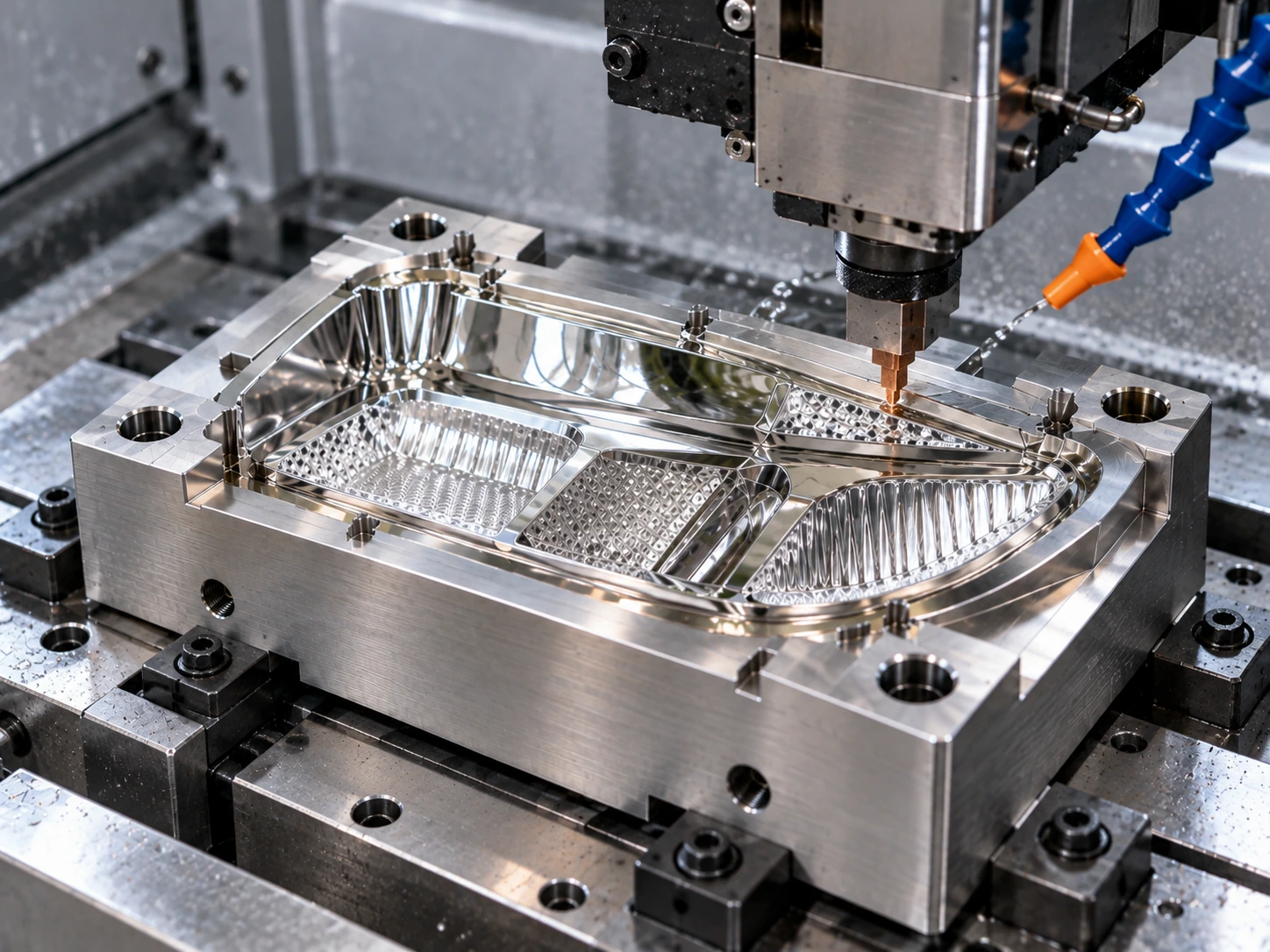
- Moore Nanotech 350FG: 3-axis ultra-precision fly cutting
- RODERS RXP500DS: 5-axis high-speed machining
- Brysen MM-1212G: Precision diamond turning
Metrology Equipment
Sub-angstrom verification requires advanced instrumentation:
Optical Profiling:
- Phase-shifting interferometers (PSI) for sub-nanometer resolution
- Mirau interferometer objectives
- Fizeau interferometers with reference flats
- Stitching interferometry for large apertures
Scanning Probes:
- Atomic Force Microscopy (AFM) for true atomic resolution
- Scanning White Light Interferometry (SWLI) for larger areas
- Stylus profilometry (limited resolution due to contact)
Total Integrating Scatter:
- Scatter measurement correlates with surface roughness
- Ultra-low scatter indicates ultra-smooth surfaces
- Coblentz sphere-based systems
Environmental Control for Ultra-Precision Processing
Sub-angstrom surface quality requires exceptional environmental conditions:
Temperature Control
Thermal expansion of optical materials limits achievable precision:
| Material | Thermal Expansion (10⁻⁶/°C) | ΔL at 0.1°C for 100mm |
|---|---|---|
| Fused Silica | 0.5 | 5 nm |
| Zerodur | 0.05 | 0.5 nm |
| ULE | 0.03 | 0.3 nm |
| BK7 | 7.1 | 710 nm |
YISHUN Optical maintains processing environments at 20±0.5°C with thermal equilibration protocols.
Vibration Isolation
Vibration at the processing frequency transfers to surface quality:
- Active and passive vibration isolation tables
- Isolated building foundations
- Separate foundations for heavy equipment
- Environmental vibration monitoring
Cleanliness Standards
Particle contamination at sub-angstrom scales causes measurable defects:
- Cleanroom environments (Class 100-1000)
- Ultra-clean chemical cleaning
- Particle-free tooling and fixtures
- Validated handling procedures
- Protective packaging during storage and transport
Surface Quality Measurement at Sub-Angstrom Scales
Interferometric Surface Measurement
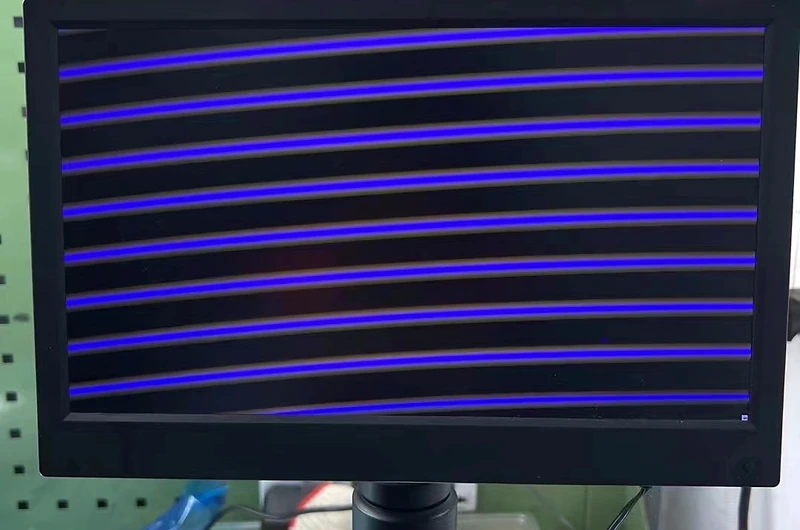
Phase-shifting interferometry provides required resolution:
Measurement Technique:
- Interference between test surface and reference creates fringe pattern
- Phase-shifting algorithms extract surface height information
- Sub-nanometer height resolution achievable
- Requires vibration isolation and temperature stability during measurement
Measurement Uncertainty:
- Best commercial interferometers: 0.1nm (1Å) uncertainty
- Reference surfaces for calibration: 0.01-0.05nm uncertainty
- Environmental control essential during measurement
Total Integrating Scatter (TIS)
Scatter measurement provides indirect surface quality verification:
Theoretical Basis:
- Surface roughness scatters incident light proportionally to (4πσ/λ)²
- Total scattered light integrated over hemisphere relates to RMS roughness
- Correlation wavelength must match measurement geometry
TIS Advantages:
- Non-contact, full-aperture measurement
- Sensitive to surface features across spatial frequency range
- Rapid measurement relative to scanning techniques
- Validates ultra-smooth surfaces (σ <1nm)
AFM Characterization
Atomic force microscopy provides true atomic-scale imaging:
Capabilities:
- True surface height measurement at angstrom resolution
- Imaging of atomic steps and lattice patterns
- Localized measurement (typically 10μm × 10μm maximum)
- Time-intensive compared to optical techniques
YISHUN Optical’s Ultra-Precision Capabilities
YISHUN Optical delivers sub-angstrom surface quality for the most demanding applications:
Precision Manufacturing:
- Ultra-precision CNC machining with sub-micrometer accuracy
- Advanced finishing including MRF and sequential polishing
- Strict environmental controls for ultra-precision processing
- Full metrology capability for surface verification
Quality Assurance:
- Phase-shifting interferometry for surface form verification
- Optical profiling for roughness assessment
- Total integrating scatter measurement
- Complete documentation and traceability
Certification:
- ISO 9001:2015 certified quality management system
- ISO 14001:2015 environmental management
- Customer-specific requirements compliance
- Process validation documentation
Conclusion
Achieving sub-angstrom surface finish quality represents the current frontier of precision optics manufacturing. While the techniques and equipment required are sophisticated, they enable optical systems with performance impossible through conventional approaches.
Key success factors include:
- Deterministic processing techniques (IBF, optimized MRF, AFP) for controlled material removal
- Sequential process optimization combining multiple techniques
- Rigorous environmental control for temperature, vibration, and cleanliness
- Advanced metrology with interferometric and scanning probe techniques
- Validated procedures ensuring repeatable results
For applications requiring the smoothest possible optical surfaces—EUV lithography, gravitational wave detection, precision metrology—YISHUN Optical’s ultra-precision manufacturing capabilities deliver results meeting the most demanding specifications.
Contact info@yishunoptical.com or visit yishunoptical.com to discuss your ultra-precision optical requirements.
YISHUN Optical delivers ISO 9001:2015 certified precision optical components including ultra-smooth surfaces for advanced scientific, semiconductor, and applications. Our 20+ years of precision manufacturing experience encompasses sub-angstrom surface finishing capabilities.
Frequently Asked Questions
What does “sub-angstrom surface finish” actually mean?
Sub-angstrom surface finish means the surface roughness (typically measured as RMS or Ra) is less than 1 angstrom (0.1 nanometers). This is approximately 10× smoother than excellent optical surfaces (Ra 1nm) and represents surfaces smoother than individual atoms can be resolved. Such surfaces scatter light minimally and are essential for extreme ultraviolet optics, laser cavities, and precision interferometers.
How is sub-angstrom surface quality measured?
Sub-angstrom surfaces require advanced metrology techniques including phase-shifting interferometry (PSI) with sub-nanometer resolution, atomic force microscopy (AFM) for true atomic-scale imaging, total integrating scatter (TIS) measurement which correlates scatter intensity with roughness, and scanning white light interferometry (SWLI) for larger area assessment. Standard optical profilometers typically lack sufficient resolution.
What manufacturing techniques achieve sub-angstrom surfaces?
Achieving sub-angstrom surfaces requires deterministic processing techniques including ion beam figuring (IBF) for non-contact, highly controlled material removal; optimized magnetorheological finishing (MRF) with controlled parameters; sequential precision polishing combining computer-controlled and final hand polishing; and fluid jet polishing for specialized applications. Conventional stochastic polishing cannot achieve this quality level efficiently.
Why is sub-angstrom surface quality necessary for EUV lithography?
EUV lithography operates at 13.5nm wavelength—far shorter than visible light. At these wavelengths, even surfaces that appear smooth to the eye cause significant scattering and absorption. Sub-angstrom surface quality minimizes these losses, enabling efficient EUV optical systems. Surface roughness of just 0.5nm can cause substantial EUV reflectivity degradation.
What is the difference between surface roughness and surface figure?
Surface figure refers to large-scale surface shape errors measured in waves of light (λ), typically λ/4 to λ/20 for precision optics. Surface roughness refers to fine-scale variations at nanometer to angstrom scales. Both parameters matter—figure determines optical wavefront quality while roughness determines scatter and LIDT. Sub-angstrom surfaces address roughness specifically.
How long does it take to achieve sub-angstrom surface quality?
Processing time varies significantly with component size, starting surface quality, and specific requirements. Typical processing times range from several days to weeks for a single optical component. The extended time results from the slow material removal rates required for deterministic processes and the sequential nature of achieving figure correction, mid-spatial-frequency control, and final surface smoothing.
What environmental factors affect ultra-precision surface processing?
Critical environmental factors include temperature stability (typically ±0.5°C or better), vibration isolation from building and equipment sources, air cleanliness to prevent particulate contamination, humidity control to prevent condensation and adsorbed moisture, and acoustic isolation in some cases. YISHUN Optical maintains controlled environments meeting ultra-precision processing requirements.
Can sub-angstrom surfaces be achieved on all optical materials?
Sub-angstrom surfaces are achievable on amorphous materials including fused silica, BK7, and other optical glasses. These materials lack grain boundaries and crystalline anisotropy that can limit ultimate smoothness. Crystalline materials like sapphire have inherent surface steps from their lattice structure that can limit achievable smoothness, though modern techniques approach near-amorphous quality. Metals present additional challenges due to grain structure and chemical reactivity.