Custom Bluetooth Earphone Housing Machining requires more than precise cutting. The surface, fitting areas, small holes, snap-fit structures, and curved sections all need careful control.

TWS earphone housings are small, but even a slight change in the mold can affect the final appearance and assembly. That is why we review both visible surfaces and functional areas before machining. Our goal is to help customers achieve clean surfaces, consistent left and right housings, and stable results from sample testing to mass production.

Working on a New TWS Earphone Housing?

Send us your 2D drawing, 3D file, material, surface target, and cavity quantity. We can first review the difficult areas and give you a practical machining suggestion.

Request a Free Drawing Review

Description for Bluetooth Earphone Housing Mold

What Bluetooth Earphone Housing Mold Is Used For

This product page is for custom, non-standard mold cores used to make Bluetooth earphone housings. The molded parts may include the outer earbud shell, stem housing, upper cover, lower cover, button area, decorative window, sound outlet area, snap-fit structure, or other small appearance and assembly parts.

PC/ABS is common for these housings. Transparent PC, translucent materials, coated parts, plated parts, and high-gloss black parts can also be reviewed. The right mold surface and machining route depend on the material, wall thickness, demolding direction, and final appearance requirement.

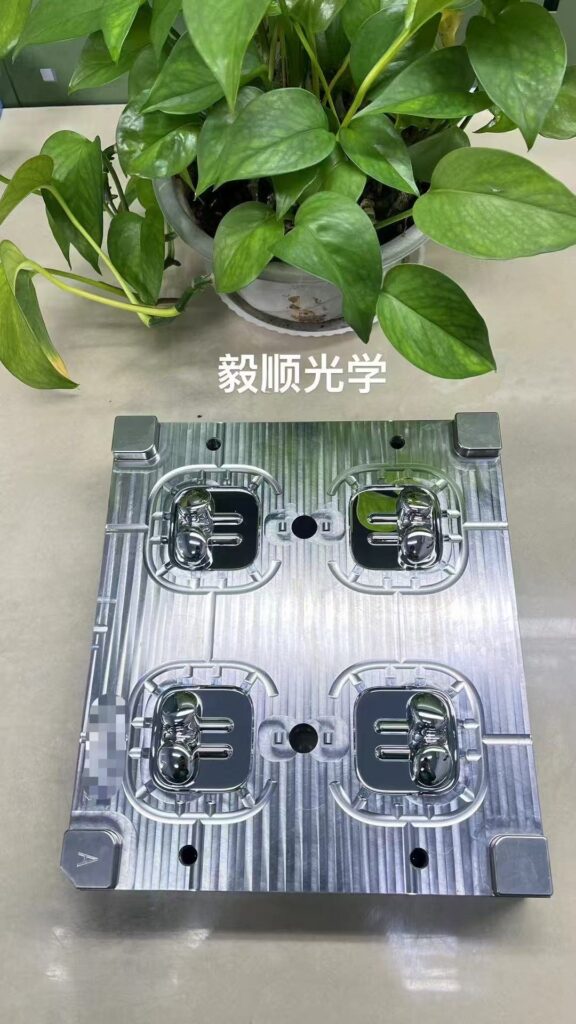
Four-cavity Bluetooth earbud housing mold with mirror-polished inserts
Four-cavity Bluetooth earbud charging case mirror mold for high-gloss production.
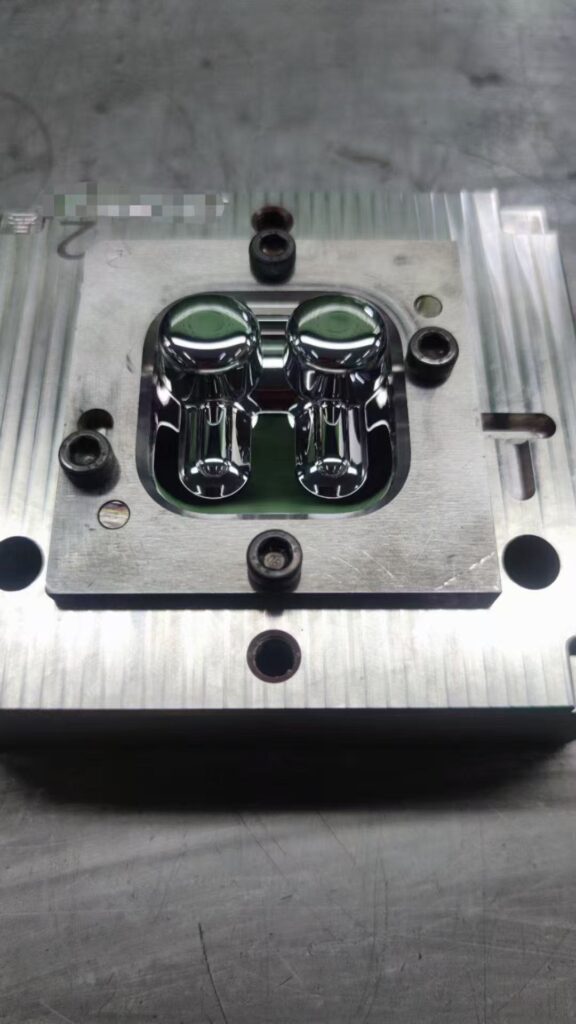
Bluetooth earbud housing mold with high-gloss mirror-polished cavities
Bluetooth earbud charging case mirror mold insert with high-gloss cavity details.

Why Earphone Housing Molds Need Special Control

A TWS earphone housing must look clean and also fit well. A small change around a snap fit, screw hole, positioning hole, acoustic opening, or parting edge may cause an uneven gap or poor assembly. The molded part may still look acceptable on its own, but the full earphone may not feel right after the left and right pieces are assembled.

This is why a non-standard earphone housing mold cannot be treated like a normal glossy plastic mold. The surface, geometry, and assembly details must be checked together.

Typical Machining Process

We normally start with drawing review. We mark the appearance surfaces, assembly surfaces, critical holes, thin-wall areas, snap fits, small ribs, R corners, and features that may be difficult to reach.

We then use 5-axis CNC precision machining to make the basic curved shape and compact structures. Grinding, precision finishing, mirror machining, and controlled polishing are added according to the part design and surface target.

During polishing, we control the polishing path and removal amount. The aim is to improve gloss and surface quality without rounding an edge, changing a hole position, softening a small step, or moving an assembly surface.

Technical Reference

ItemTypical Requirement / Capability
Suitable productsLeft and right TWS earbud shells, stem housings, upper and lower covers, decorative parts, button areas, acoustic openings, light windows, snap-fit areas, and replacement mold inserts
Common materialsPC/ABS, transparent PC, translucent materials, glossy black parts, parts before coating or electroplating, and other materials confirmed during project review
Main process5-axis CNC precision machining, mirror machining, grinding, controlled polishing, automated polishing where suitable, and inspection confirmation
Outer profile toleranceFor suitable whole-cavity structures, ±0.005 mm can be used as a reference. Final capability depends on the drawing.
Left-right cavity symmetry≤0.003 mm can be used as a reference for suitable projects to reduce shell mismatch and uneven fitting gaps.
Curved surface profileProfile tolerance of ≤5 μm can be reviewed for suitable surfaces and machining access.
Positioning and locking holes±0.002 to ±0.003 mm can be used as a reference, depending on hole size, depth, datum, and tool access.
Mirror finishSPI A1 is common for visible high-gloss surfaces. SPI A0 can be evaluated for optical or sensing windows when the material and structure are suitable.
Surface roughnessRa ≤0.02 μm can be used as a reference for suitable glossy appearance areas. Higher targets require separate review.
Detail protectionEdges, small R corners, thin walls, snap fits, holes, small steps, acoustic areas, and assembly surfaces are reviewed before polishing.
Quotation basis2D drawing, 3D file, mold material, surface standard, cavity quantity, sample or defect photos, target quantity, and delivery target

These values are technical references, not a fixed promise for every drawing. Deep holes, thin walls, micro details, sharp edges, and hard-to-reach surfaces need a separate process review.

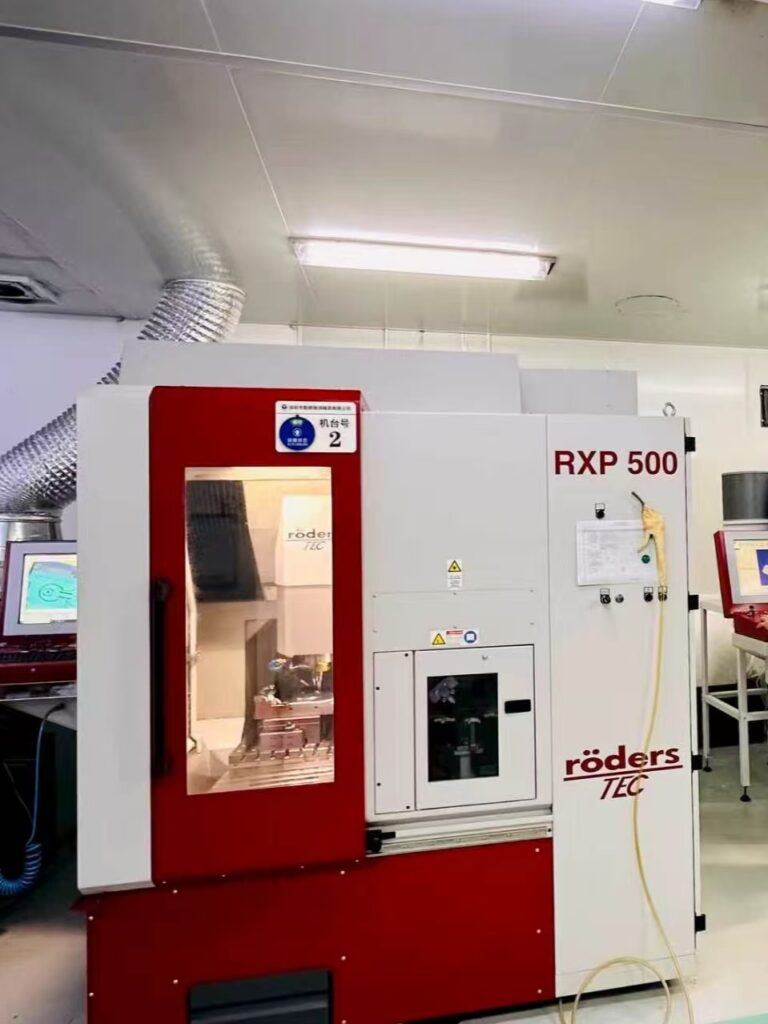
Röders RXP 500 high-speed machining center for optical mold cores
Röders RXP 500 machining center used for precision optical mold core processing.
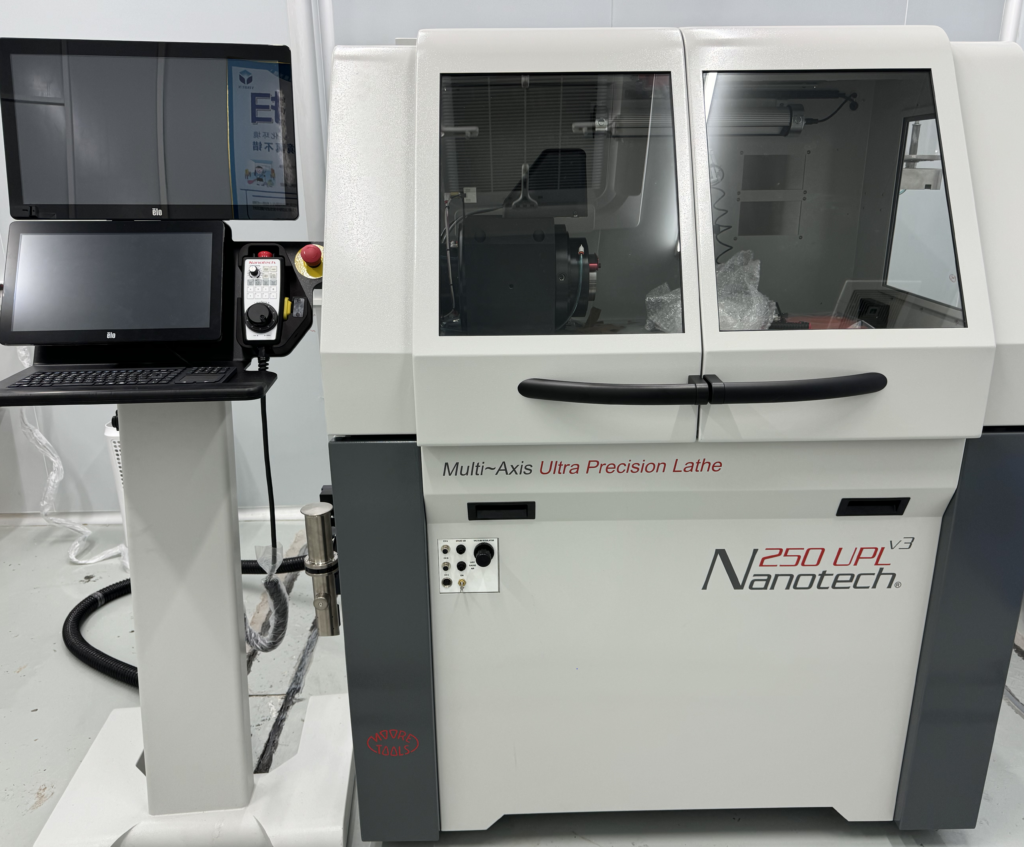
Moore ultra-precision diamond turning machine for optical mold cores
Moore ultra-precision diamond turning equipment used for high-accuracy optical mold core machining.

Common Problems in Bluetooth Earphone Housing Projects

1. The Left and Right Housings Do Not Match

The left and right earbud shells may use similar geometry, but their details are not always exactly the same. If cavity symmetry, datum control, or polishing removal is not stable, the final housings may show different fitting gaps, gloss, or hand feel.

Customers may only find the problem after assembly. At that point, it can be difficult to tell whether the cause comes from the mold, molding shrinkage, or the assembly method.

2. Small Functional Features Are Easy to Damage

Earphone housings often include acoustic holes, microphone openings, positioning areas, snap fits, small ribs, button areas, and fine R corners. These details are important for sound, assembly, and product feel.

If machining or polishing is not controlled, a hole edge may become soft, a snap fit may change, or a small rib may lose its original shape. The surface may look better, but the part may become harder to assemble.

3. Glossy Areas and Assembly Areas Need Different Treatment

Not every surface should be polished in the same way. The visible outer curve may need a clean glossy finish, while a fitting surface or snap-fit area needs stable geometry and size.

When these surfaces are not clearly marked before machining, polishing may touch a functional area and cause a small but important size change.

4. Thin Walls and Compact Curves Can Deform

Bluetooth earphones have limited internal space. The housing may need to hold a battery, speaker, microphone, sensor, and electronic parts. This makes the plastic wall and mold cavity compact.

If the cavity shape, wall thickness, or local structure is not stable, the molded housing may show sink marks, warpage, uneven gaps, or poor contact between parts.

5. Trial Mold Rework Can Delay the Product Launch

TWS products move quickly. Repeated adjustment of gloss, fitting gaps, holes, or snap-fit areas can delay sample approval. A change in one small area may also affect another area.

An early drawing review helps identify these risks before machining starts. It is normally more efficient than correcting every problem after the first trial mold.

6. Good Samples Do Not Always Mean Stable Mass Production

A sample can look good after careful adjustment, but the mold also needs to stay stable during production. Demolding friction, cleaning, injection pressure, and repeated maintenance may slowly change the surface condition.

For earphone housings, production stability includes both appearance and assembly consistency. The goal is not only one good sample. It is repeatable molded parts that are easier to inspect and assemble.

How Yishun Optical Can Help

For Custom Bluetooth Earphone Housing Machining, we review the appearance surfaces, assembly areas, polishing access, and small structures before production.We start by reviewing the drawing and separating the important surfaces. We confirm which areas are visible, which areas control assembly, and which small features must be protected.

Our 5-axis machining capability helps us work on compact curves, angled surfaces, small ribs, snap-fit areas, sound outlet areas, and other structures that are difficult to reach with a simple machining route.

For glossy areas, we use controlled finishing and polishing. We try to reduce tool marks, micro scratches, haze, orange peel, and uneven reflection while keeping the original edge and surface shape.

For left-right parts and matching covers, we also check repeatability between inserts. We pay attention to the same datums, similar surface condition, and the areas that affect the final fitting gap.

Before production, we can confirm the material, demolding direction, polishing direction, surface standard, and inspection plan. During the project, drawings, marked photos, and written feedback help both sides stay clear about any change.

This helps us choose a more suitable machining and polishing route and reduce the risk of rounded edges, changed dimensions, poor fitting, and uneven surface quality.

Why Choose Yishun Optical

The challenge of an earphone housing mold is not only its small size. It is the need to control many details in a very limited space.

Yishun Optical has long worked on ultra-precision mold cores, mirror mold inserts, and complex mold components. We combine precision machining, controlled polishing, and inspection confirmation instead of treating each step separately.

We also understand that a beautiful surface is not useful if the part does not fit. For this reason, our work focuses on surface quality, structural integrity, left-right matching, and production repeatability at the same time.

Our aim is to help customers reduce repeated mold repair, shorten sample adjustment, and make the move from trial production to mass production more stable.

FAQ

1. Do you make complete Bluetooth earphone molds or only mold cores?

We mainly provide custom mold cores, cavities, mirror inserts, and precision mold components based on the customer’s drawing. The exact supply scope is confirmed before quotation.

2. Can you make left and right TWS earphone housing mold inserts?

Yes. We can review matched left-right housing inserts. We pay attention to cavity symmetry, reference datums, surface consistency, and the areas that affect the final fitting gap.

3. Can you machine acoustic holes, snap fits, and small ribs?

These structures can be evaluated. The final process depends on feature size, depth, tool access, material, and tolerance. Please send the 2D and 3D files so we can check the difficult areas.

4. Can the housing mold reach SPI A1 or SPI A0?

SPI A1 is common for high-gloss appearance areas. SPI A0 can be evaluated for special optical or sensing areas. The final result depends on the mold material, cavity shape, polishing access, and acceptance standard.

5. Why should assembly surfaces be protected during polishing?

Because polishing removes material. Too much polishing around a snap fit, hole, parting edge, or fitting surface may change the size and affect assembly, even when the surface looks brighter.

6. What files do you need for quotation?

Please send a 2D drawing, 3D file such as STEP, IGES, or X_T, mold material, surface target, cavity quantity, estimated quantity, delivery target, and any sample or defect photos you already have.

7. Can you provide inspection reports?

Yes. Depending on the confirmed project scope, we can provide dimensional inspection, roughness records, appearance checks, and other agreed inspection documents.

8. Can you review an existing mold problem?

Yes. You can send the drawing, trial part photos, defect photos, and a short description. We will first check whether the issue may be related to the mold surface, geometry, assembly position, material, or molding conditions.

Get a Quote for a Custom Bluetooth Earphone Housing Mold

Send us the project information below. We will first review the difficult areas and then suggest a suitable machining, polishing, and inspection route.

Yishun Optics' signboard
Yishun Optics carries out friendly cooperation with overseas partners
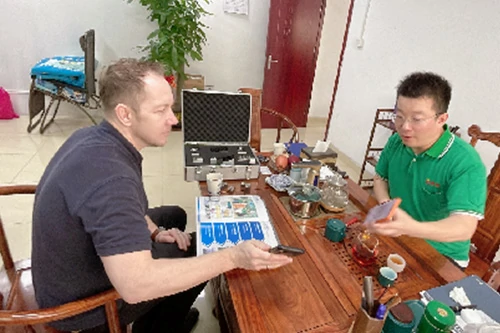
Person in charge of Yishun Optics meets with clients

Request a Free Drawing

ReviewAsk for a Sample Plan

Get a Custom Quote

Start Your Project With A Free Quote

Our professionals are available to talk you through each of our offerings. We’ll be sure to answer you within 24 hours. Fill out the information below with as much detail as possible, and we’ll get back to you promptly.