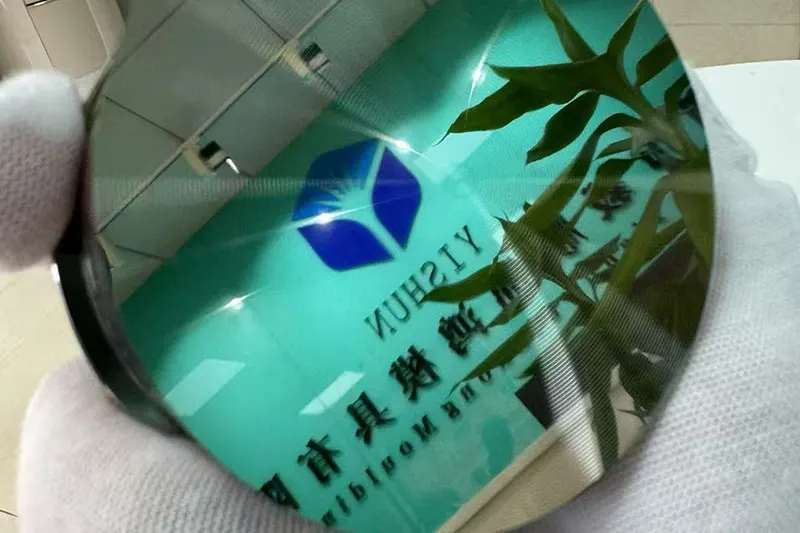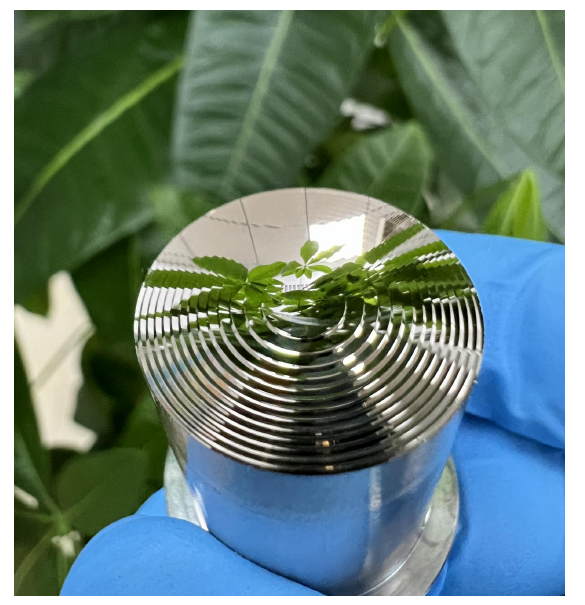
In the world of precision engineering, an “optical flat” is more than just a smooth surface; it is a fundamental reference of geometric perfection. For industries ranging from high-reliability optical and laser manufacturing to medical imaging and semiconductor lithography, the demand for small, high-precision mirrors is surging. However, the path to achieving a surface accurate to within a fraction of the wavelength of light is paved with complex material science and rigorous metrology.
If you are a project manager or lead engineer seeking an Optical Polishing Service, understanding the methodology behind grinding and polishing small glass mirrors is essential. This guide explores the industrial standards, technical processes, and quality benchmarks required to produce mirrors that meet the most demanding optical specifications.
I. Introduction: The Anatomy of an Optical Flat
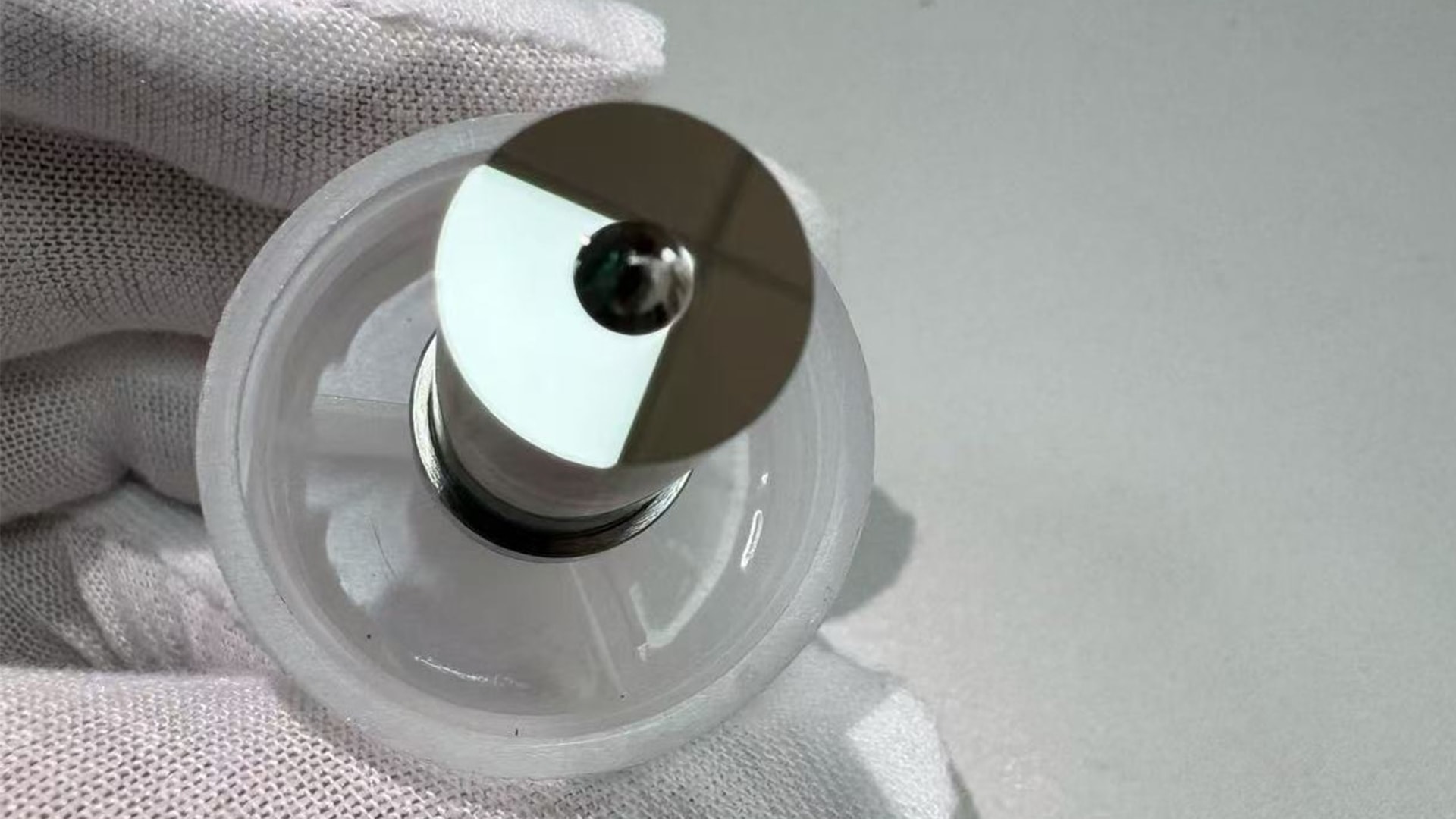
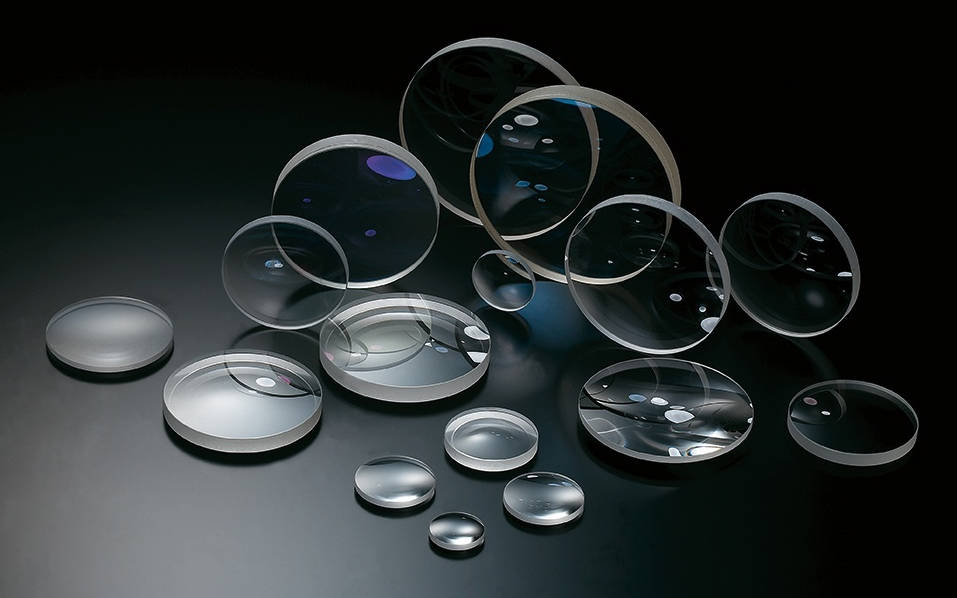
What defines an “optical flat”? Unlike a standard commercial mirror, which may have visible distortions or “orange peel” textures, an optical flat is engineered to maintain a specific wavefront accuracy across its entire clear aperture.
Optical flatness is a measure of the surface deviation of an optical component, typically expressed in fractions of a wavelength ($\lambda$), representing the precision with which a surface approximates a perfect geometric plane. In high-end applications, a “flat” mirror must often achieve a flatness of $\lambda/10$ or even $\lambda/20$, meaning the highest peak and lowest valley on the surface differ by less than 63.3 nanometers (assuming a 633nm HeNe laser source).
When you contract a professional Optical Polishing Service, you are not just paying for a shiny surface; you are paying for the elimination of wavefront errors that would otherwise degrade laser beam quality or blur high-resolution images.
II. Material Selection: The Foundation of Stability
The grinding and polishing process begins long before the glass touches a lap. The choice of substrate material determines how the mirror will react to thermal fluctuations and mechanical stress during both the polishing process and its final operation.
1. N-BK7 (Borosilicate Crown Glass)
The most common material for visible light applications. It offers excellent homogeneity and low bubble/inclusion content. While versatile, its thermal expansion is higher than specialized materials.
2. Fused Silica
For high-power laser mirrors or applications involving extreme temperature shifts, Fused Silica is the “gold standard.” It has a near-zero coefficient of thermal expansion (CTE), ensuring the mirror stays flat even when under thermal load.
3. Borofloat® / Pyrex
These are cost-effective alternatives often used for larger mirrors or applications where slight surface roughness is permissible, but they are generally more difficult to polish to a sub-angstrom finish compared to Fused Silica.
Table 1: Substrate Material Comparison for Optical Mirrors
| Material | CTE (10−6/K) | Hardness (Knoop) | Transformation Temp (∘C) | Best Use Case |
| N-BK7 | 7.1 | 610 | 557 | General Purpose Optics |
| Fused Silica | 0.55 | 522 | 1045 | UV & High-Power Lasers |
| Zerodur | 0.05 | 620 | 600 | high-reliability optical & Telescopes |
| Borofloat 33 | 3.25 | 480 | 525 | Industrial Sensors |
III. The Grinding Phase: Generating the Geometric Plane
Before polishing can begin, the raw glass blank must be “generated” into a plane. This is a subtractive process divided into rough and fine grinding.
1. Rough Grinding and Shaping
Using fixed diamond abrasives or coarse silicon carbide (SiC) grit, the service provider removes the bulk material to reach the target thickness. During this stage, parallelism is established—ensuring the front and back surfaces are aligned.
2. Fine Grinding (Lapping)
Lapping is the bridge between a raw cut and a polished surface. Professional optical grinding utilizes progressively finer aluminum oxide ($Al_2O_3$) or garnet grits in a planetary lapping machine to remove sub-surface damage (SSD) caused by rough grinding, while simultaneously refining the surface flatness to within a few microns.
Without proper fine grinding, microscopic fractures remain hidden beneath the surface. If these are not removed, they can “bloom” during the polishing stage or fail under the heat of a high-energy laser.
IV. The Polishing Phase: Achieving Sub-Angstrom Smoothness
Polishing is a chemical-mechanical process. It is the most time-consuming and expertise-intensive part of the workflow.
1. Chemical Mechanical Polishing (CMP)
Industrial polishing uses a slurry—typically water mixed with Cerium Oxide ($CeO_2$). The cerium oxide doesn’t just “scratch” the glass away; it reacts chemically with the silica molecules on the surface, softening them so the mechanical action of the polishing pad can sweep them away.
2. Pitch Polishing vs. Synthetic Pads
- Optical Pitch: A traditional mixture of wood resins. It is semi-solid and flows slowly under pressure. Pitch polishing remains the industry standard for achieving $\lambda/20$ flatness because the pitch lap naturally conforms to the optical surface, providing a self-correcting mechanism that minimizes high-frequency ripples.
- Synthetic Pads (Polyurethane): Used for higher volume production. While faster, they often struggle to achieve the extreme flatness of pitch.
3. Surface Roughness (Ra)
The goal of polishing is to achieve a surface that is not only flat but also incredibly smooth. To achieve sub-angstrom surface roughness in small glass mirrors, industrial optical polishing services utilize Chemical Mechanical Polishing (CMP) with cerium oxide slurries and specialized optical pitch laps, ensuring surface finishes below 5 Ångströms (0.5 nm) Ra.
V. Critical Metrology: Proving the Flatness
In the optical industry, “if you can’t measure it, you didn’t make it.” A professional Optical Polishing Service must provide documented proof of surface quality.
1. Fizeau Interferometry
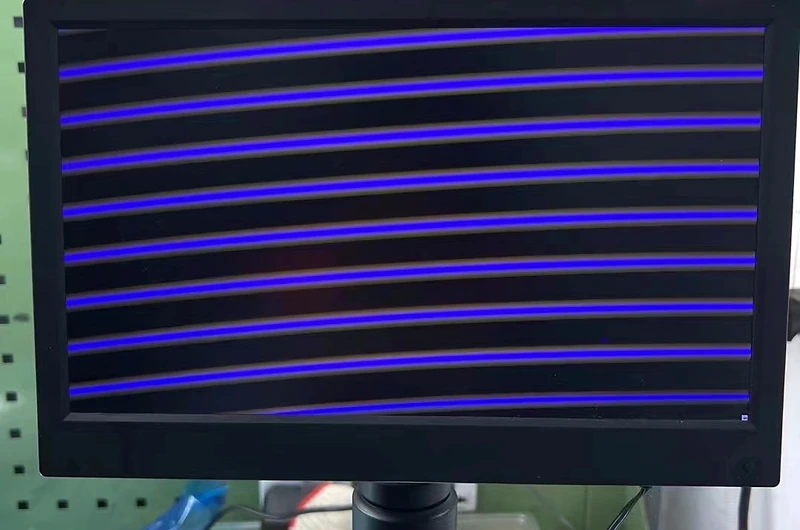
The Fizeau Interferometer is the primary tool for measuring flatness. It bounces a laser off a “reference flat” (a known perfect surface) and the “test flat” (your mirror). The interference of these two beams creates a “fringe pattern” or “contour map” of the surface.
2. Understanding the Metrics
- Peak-to-Valley (P-V): The distance between the highest and lowest points on the mirror.
- RMS (Root Mean Square): A statistical average of the surface deviations. It is generally a better indicator of overall performance than P-V.
- Scratch-Dig: A visual standard (e.g., 10-5 per ISO 10110-7 surface imperfection specification) that defines the allowable size and number of surface defects.
Table 2: Typical Industrial Specifications for Precision Mirrors
| Specification | Commercial Grade | Precision Grade | High-Laser Grade |
| Flatness (P-V) | $1\lambda$ | $\lambda/4$ to $\lambda/10$ | $\lambda/20$ |
| Roughness (Ra) | < 20 Å | < 10 Å | < 2 Å |
| Scratch-Dig | 60-40 | 20-10 | 10-5 |
| Parallelism | < 3 arcmin | < 30 arcsec | < 5 arcsec |
VI. Addressing the “Small Mirror” Challenge
Polishing a 10mm mirror is significantly harder than polishing a 100mm mirror. Small components present unique physical challenges that can ruin an optical specification.
1. Edge Roll-Off (The “Dubbing” Effect)
When polishing small parts, the pressure at the edges is naturally higher than in the center. This causes the edges to round off, a phenomenon known as “roll-off.”
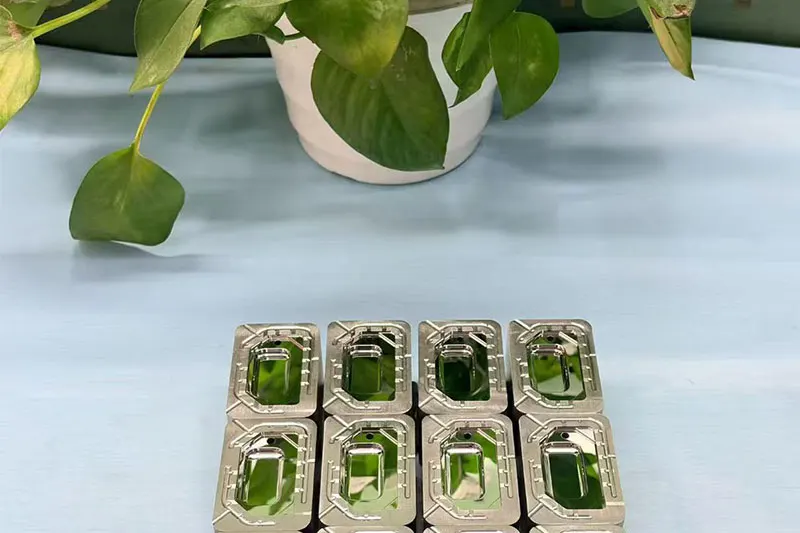
Professional services mitigate edge roll-off in small mirrors by using a “blocking” technique, where multiple small substrates are embedded into a larger sacrificial glass plate to create a continuous surface area for the polishing lap.
2. Thermal Management
Friction creates heat. Because small mirrors have less mass to dissipate that heat, they can expand and warp during the polishing cycle. If the surface is measured while it is still warm, it may appear flat but will “taco” or warp once it cools down to room temperature. A high-quality service allows for long “soak times” to ensure thermal equilibrium before final metrology.
VII. Why Outsource to a Professional Optical Polishing Service?
While many research labs have small hand-polishing setups, industrial outsourcing offers three critical advantages:
- Repeatability: CNC-controlled planetary polishers ensure that the 1st mirror and the 1,000th mirror are identical.
- Environmental Control: Professional facilities operate in Class 1000 (ISO 6) or better cleanrooms. A single speck of dust on a polishing lap can leave a “dig” that fails a 10-5 specification.
- Certification: Most B2B contracts require a Certificate of Conformance (CoC) and an interferogram. Professional services have the $100,000+ metrology suites (like Zygo or 4D Technology interferometers) required to generate these reports.
VIII. Frequently Asked Questions (FAQ)
1. What is the tightest flatness tolerance achievable for a 10mm mirror?
Most high-end services can achieve $\lambda/20$ across a 10mm aperture. In extreme cases, $\lambda/40$ is possible using Ion Beam Finishing (IBF), though costs increase exponentially.
2. How does the substrate material affect the final cost?
Harder materials like Fused Silica take longer to polish but can achieve a better surface finish. Softer materials like N-BK7 are faster to grind but are more prone to scratches, requiring more careful handling.
3. Can you re-polish a mirror that has damaged coatings?
Yes. The existing coating (Gold, Silver, or Dielectric) is chemically stripped, and the glass is given a “flash polish” to restore the surface before being re-coated. This is often more cost-effective than buying a new substrate.
IX. Conclusion: Precision Starts at the Surface
The performance of any optical system is only as good as its flattest component. Achieving optical flatness in small glass mirrors is a delicate balance of mechanical force, chemical reaction, and environmental stability. By partnering with a specialized Optical Polishing Service, you ensure that your optical assembly is built on a foundation of sub-micron precision.
Whether your application is a simple beam splitter or a complex quantum laser cavity, the grind-and-polish cycle is where the “magic” of optics happens. Don’t settle for “flat-ish”—demand certified precision.