Cases Study

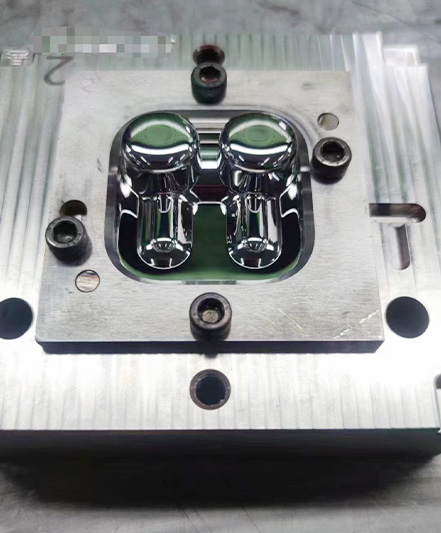
Rhodes RXP500DS Bluetooth headset mold mirror processing

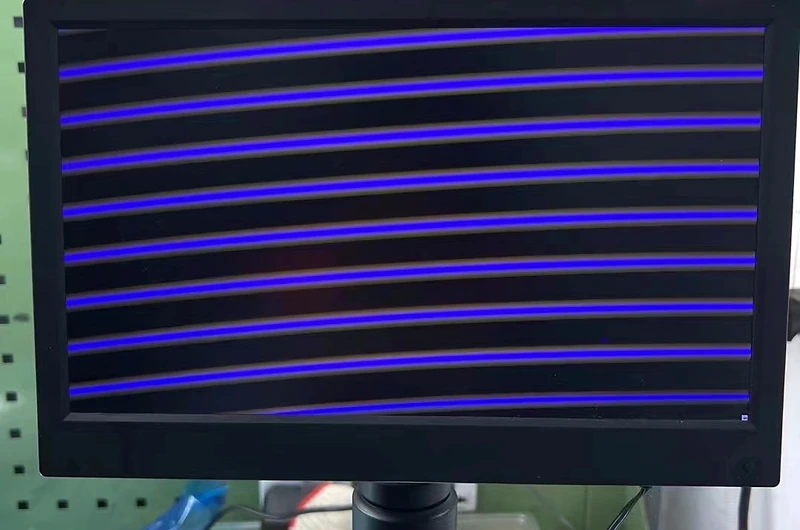
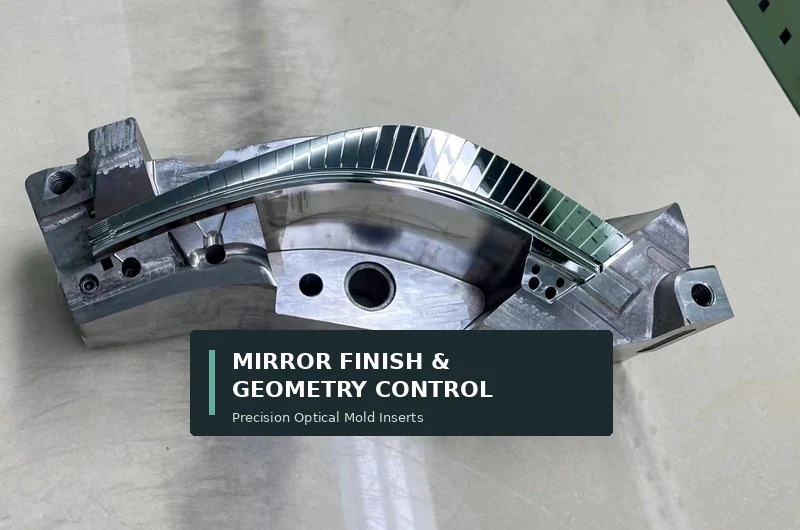
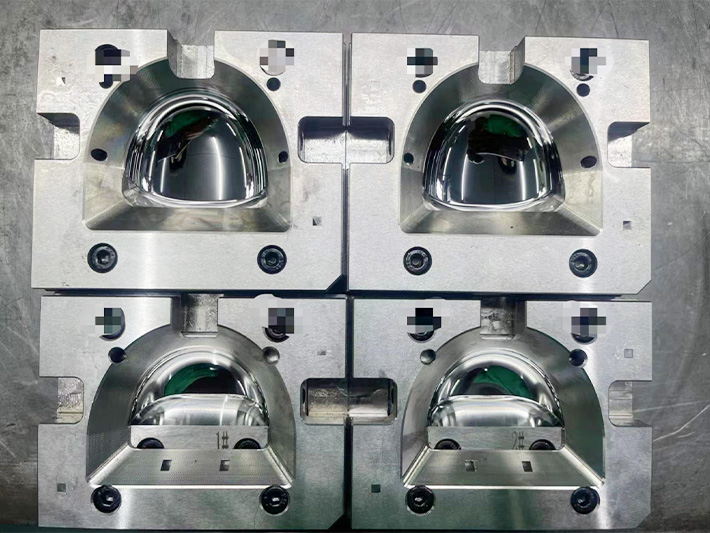
With the Foxconn Group, Apple IV Bluetooth headset molds to replace the traditional discharge process five-axis mirror processing, mirror molds do not round mouth, no deformation, multi-cavity consistent, interchangeable with each other.

Maximum processing size 450mm*455mm*240mm

Surface precision plus or minus 0.005mm, roughness Ra0.008um
Related Posts

Top 10 Questions to Ask Before Choosing a Lapping Service Provider

When selecting a lapping service provider, the stakes are incredibly high. Precision lapping is often the final stage in the manufacturing process, meaning any error can result in the loss of expensive, pre-machined components. To ensure your project meets exacting specifications for flatness, parallelism, and surface finish, you must vet your partner thoroughly. The top 10 questions to ask include: 1. What are your achievable tolerances? 2. What quality certifications (ISO/AS) do you hold? 3. Do you have experience with my specific material? 4. What metrology equipment do you use for verification? 5. Can you handle my production volume? 6. What is your typical lead time? 7. Do you offer secondary finishing services? 8. How do you handle part cleaning and packaging? 9. What is your technical support process? 10. Can you provide case studies or references? Table of Contents 1. What are your achievable tolerances for flatness and parallelism? The primary reason for seeking precision lapping services is to achieve geometric dimensions that standard milling or grinding cannot reach. You must ask a potential provider for their specific limits. A high-tier provider should be able to discuss tolerances in terms of light bands or microns. If your project requires flatness within 0.00001″, you need to

How to Evaluate an Optical Polishing Service Supplier: The Ultimate Checklist

To evaluate an optical polishing service supplier effectively, you must assess their technical metrology capabilities, material expertise, quality management certifications (such as ISO 9001), and their ability to meet specific surface roughness and flatness tolerances. A reliable supplier should provide interferometric data and profilometer reports to validate that components meet Angstrom-level requirements. Choosing the right partner involves auditing their production scalability, from rapid prototyping to high-volume manufacturing, ensuring they possess the specialized equipment necessary for your specific glass or crystalline substrates. Table of Contents Assessing Technical Capabilities and Machinery The foundation of any high-precision optical component lies in the machinery used during the fabrication process. When evaluating a supplier, you must inquire about their polishing technologies. Do they utilize traditional pitch polishing for high-precision flat optics, or do they employ advanced Magnetorheological Finishing (MRF) and Computer Numerical Control (CNC) polishing for complex aspheric or freeform surfaces? Pitch polishing remains the gold standard for achieving sub-angstrom surface roughness, whereas MRF is essential for correcting figure errors with extreme deterministic precision. Furthermore, the physical capacity of the facility dictates the size of the optics they can handle. A supplier specialized in micro-optics may lack the large-aperture planetary polishers required for telescope mirrors or high-power laser windows. It is critical to match your project’s dimensional

OEM Optical Polishing Services: Unlocking Precision Through Customization

OEM optical polishing services offer *bespoke solutions* for manufacturers requiring high-precision optical components tailored to exact specifications. These services go beyond standard offerings, providing *customizable options* for material selection, surface finish, geometry, and coating applications, ensuring optimal performance for diverse industries such as aerospace, medical, defense, and telecommunications. By leveraging advanced polishing techniques and stringent quality control, OEM partners deliver optical elements that meet the most demanding operational requirements and integrate seamlessly into complex systems. Understanding OEM Optical Polishing: The Foundation of Precision Optics In the realm of advanced manufacturing, original equipment manufacturers (OEMs) frequently require optical components that are not only high-performing but also precisely integrated into their proprietary systems. This is where OEM optical polishing services become indispensable. Far from off-the-shelf solutions, these services specialize in crafting optical surfaces to meet an OEM’s unique design and functional specifications, ensuring that each lens, prism, or mirror contributes optimally to the overall system’s performance. The process involves meticulous shaping and smoothing of optical substrates to achieve desired *surface accuracy*, *roughness*, and *figure*, which are critical for controlling light propagation without distortion or loss. The core value proposition of OEM optical polishing lies in its ability to deliver *repeatable precision* at scale. For

Metrology in Optical Polishing: How Surface Quality Is Measured

In the realm of high-performance optics, the difference between a successful mission and a total system failure often comes down to a few nanometers. Whether you are developing a deep-space telescope, a high-energy laser system, or a cutting-edge medical imaging device, the quality of your optical surfaces is paramount. However, “quality” in the optical industry is not a subjective term. It is a rigorously measured, mathematically defined set of parameters. For anyone seeking optical polishing services, understanding how these surfaces are measured—a field known as metrology—is the key to ensuring you receive components that perform exactly as designed. This guide is designed to walk you through the complex world of optical metrology, explaining the tools, the math, and the standards that define world-class surface quality. I. The Invisible Difference: Why Metrology Matters When you hold a polished lens or mirror, it may look perfect to the naked eye. However, at the microscopic and atomic levels, that surface is a landscape of peaks, valleys, and textures. Metrology in optical polishing is the essential process of quantifying surface deviations to ensure they fall within the specific tolerances required for a given application. Without precise metrology, polishing is merely guesswork. Advanced optical polishing

Get Started with Your Optical Polishing and Ultra Precision Machining Projects

Ready to take your optical projects to the next level? Yishun Optical is here to support you every step of the way. Our team is dedicated to providing a seamless experience, ensuring that your optical components meet the highest performance standards through our expert polishing and ultra precision machining services.

Start Your Project With A Free Quote

Our professionals are available to talk you through each of our offerings. We’ll be sure to answer you within 24 hours. Fill out the information below with as much detail as possible, and we’ll get back to you promptly.