The precision optics market, valued at USD 30.76 billion in 2026, is reshaping manufacturing priorities worldwide. Optical mold polishing technology is undergoing rapid transformation, driven by automation adoption (robotic polishing systems with ±0.001mm repeatability), AI-driven process optimization, and hybrid manufacturing approaches. The global optical precision mold market is forecast to reach USD 673 million by 2032, growing at a 6.6% CAGR. Consumer electronics miniaturization, AR/VR optical systems, and automotive LiDAR are accelerating demand for ultra-precision polishing capabilities. Manufacturers must invest in deterministic processes, real-time metrology, and skilled workforce development to remain competitive. Five-axis machining integration, digital twin simulation, and energy-field-assisted polishing represent the key technological frontiers defining the 2026 landscape.
The Precision Optics Market in 2026: Drivers and Growth Trajectory
The precision optics market expanded from USD 28.97 billion in 2025 to USD 30.76 billion in 2026, with projections reaching USD 45.87 billion by 2032 at a 6.78% CAGR, according to Research and Markets. This growth trajectory reflects rising photonics adoption, miniaturization of optical assemblies for AR/VR devices, and expanding applications across aerospace, defense, automotive, and medical imaging segments. The optical precision mold sector specifically is expected to grow from USD 433 million in 2025 to USD 673 million by 2032.
Consumer electronics remain the dominant demand driver. Flagship smartphones now deploy up to seven precision lenses per camera module to enable computational photography capabilities. AR headsets require waveguide combiners and nanoimprinted gratings with accuracy under 10 nanometers. Each device demands optical molds capable of achieving surface finishes below Ra 1nm, creating unprecedented quality requirements for polishing processes.
The automotive sector presents emerging opportunities. LiDAR systems contain more than 20 precision optical elements per sensor, with the automotive LiDAR market growing at 43% CAGR through 2027. This expansion directly fuels demand for optical mold polishing services capable of maintaining sub-micron tolerances across high-volume production runs.
YISHUN Optical operates 4 Toshiba UVM ultra-precision machining centers achieving PV≤0.15μm surface accuracy, positioning the facility to serve these demanding applications. The company’s 2 Moore single-point diamond turning lathes deliver Ra≤2nm surface finishes, while the ABB 6-axis robotic polishing system ensures ±0.001mm repeatability across production batches.
Automation and Robotics: Transforming Optical Mold Polishing
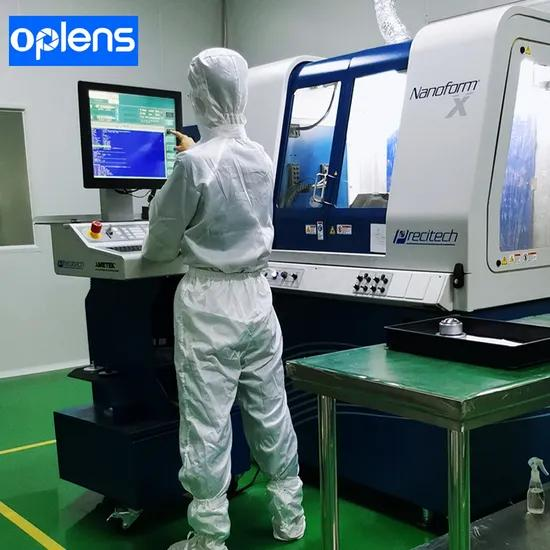
Robot-assisted polishing systems are increasingly adopted in modern manufacturing environments, offering consistent quality, improved efficiency, and the ability to handle complex geometries. Intelligent control systems can monitor surface conditions in real time and optimize the polishing process automatically. The global market for aluminum oxide polishing fluid alone reached USD 356.4 million in 2025, projected to reach USD 529.56 million by 2032, indicating robust growth in precision finishing consumables.
The integration of robotic systems addresses critical industry challenges. Traditional polishing processes rely heavily on operator skill, resulting in quality variability across batches. Robotic polishing eliminates this inconsistency, maintaining programmed tool paths and pressure profiles across thousands of cycles. The ABB 6-axis robotic polishing system employed by YISHUN Optical exemplifies this approach, achieving ±0.001mm repeatability that manual processes cannot reliably match.
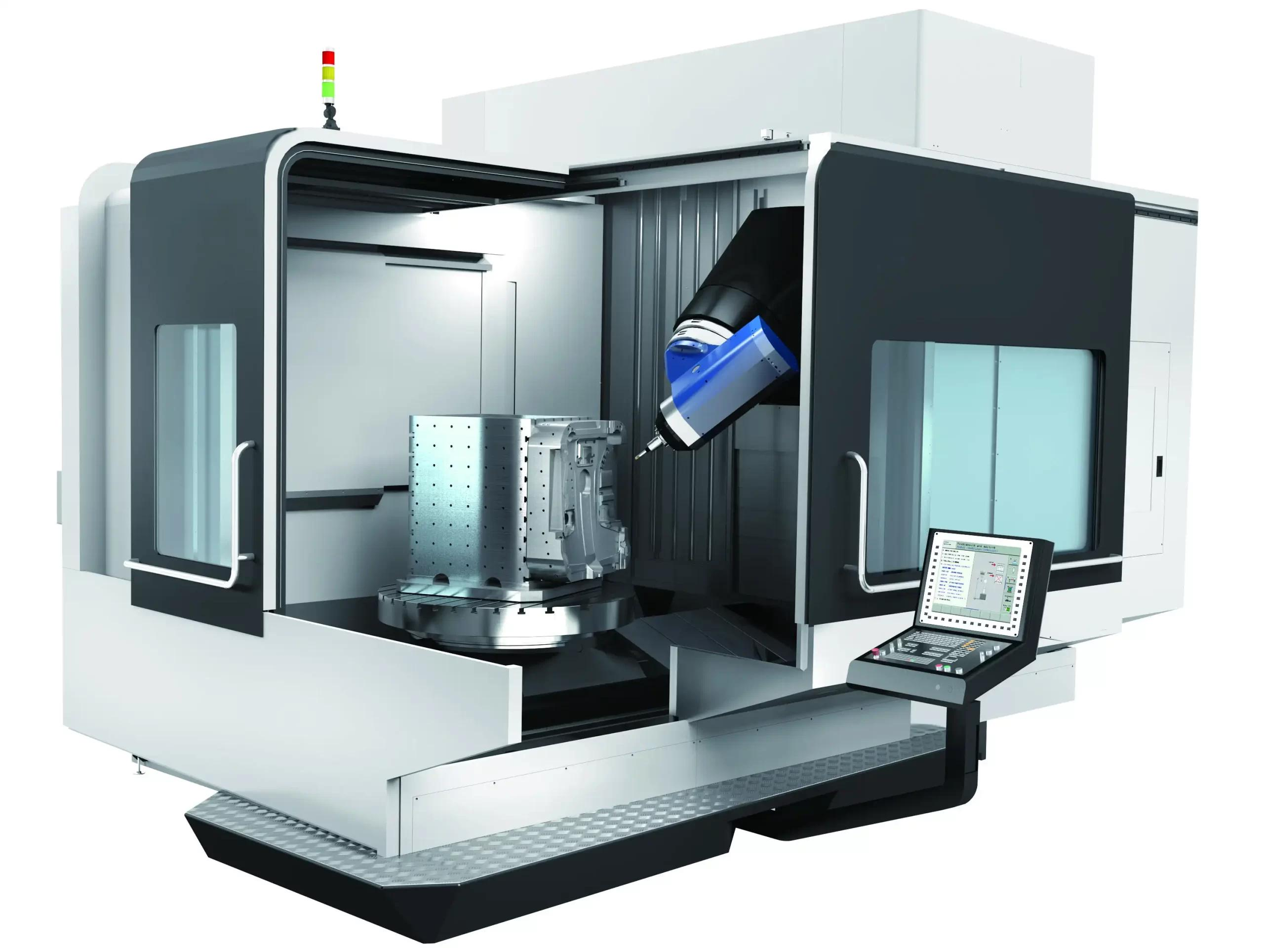
Automation extends beyond the polishing cell itself. Digital twin simulation allows manufacturers to model tool paths before physical execution, identifying potential interference and optimizing parameters virtually. This predictive capability reduces trial iterations, shortens lead times, and ensures first-pass quality. Leading facilities now integrate CAD/CAM systems directly with robotic polishing cells, enabling seamless transitions from design to production.
Skilled workforce development remains essential despite automation advances. Technicians must program robotic cells, interpret metrology data, and troubleshoot process deviations. YISHUN Optical’s team of skilled technicians has solved complex polishing challenges for international clients including Ahmed Khan from the UAE, who noted that “the advanced machines at YISHUN Optical consistently produce flawless mirror finishes.” Investment in human capital complements technological capabilities.
AI-Driven Process Optimization and Intelligent Polishing
Artificial intelligence is being integrated into polishing systems to enable adaptive control, predictive maintenance, and real-time quality monitoring. This allows manufacturers to optimize processes dynamically and reduce defects. The shift toward data-driven manufacturing represents a fundamental transformation in how optical mold polishing is approached.
AI-powered process optimization leverages machine learning algorithms trained on historical production data. These systems identify correlations between input parameters and output quality, generating predictive models that adjust polishing variables in real time. When surface roughness deviates from targets, AI systems can compensate by modifying pressure, speed, or abrasive composition before defects propagate through the batch.
Predictive maintenance extends equipment reliability by analyzing vibration signatures, temperature trends, and usage patterns. Rather than following fixed maintenance schedules, AI-driven systems predict failures before they occur, scheduling interventions during planned downtime. This approach maximizes equipment utilization while preventing unexpected disruptions that impact delivery schedules.
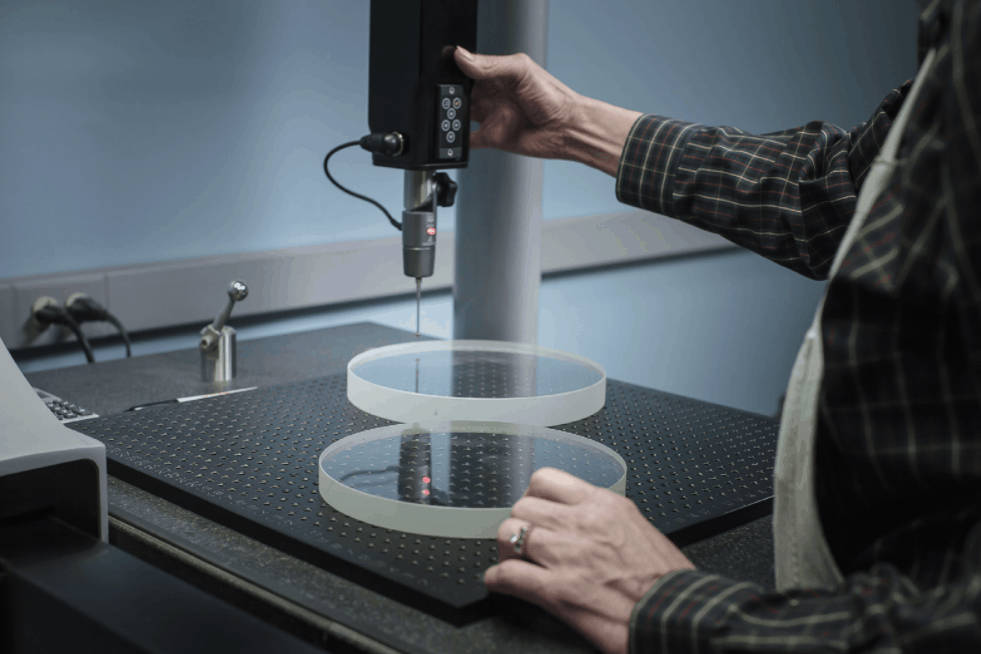
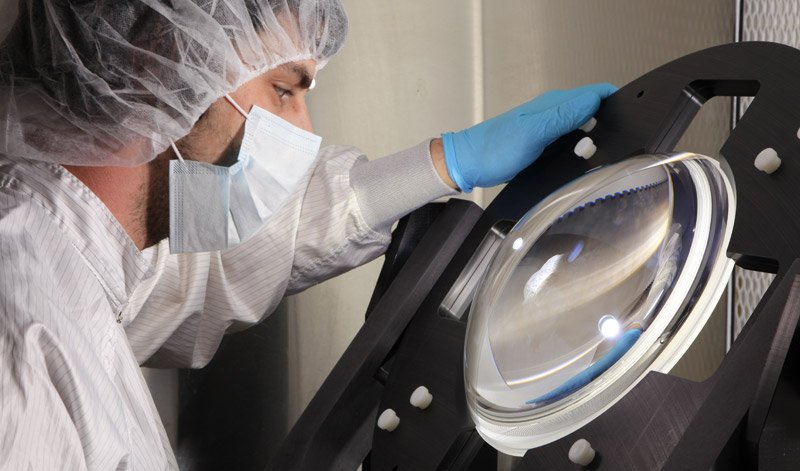
Real-time quality monitoring integrates in-process metrology with closed-loop control systems. Interferometers, profilometers, and optical coherence tomography provide immediate surface characterization, enabling immediate process adjustments. YISHUN Optical’s Class 10 cleanroom environment supports these precision measurement requirements, ensuring that metrology results accurately reflect surface conditions without environmental interference.
The combination of AI optimization and real-time monitoring delivers measurable improvements. Facilities report defect rate reductions of 30-50% compared to conventional approaches. First-pass yield improvements directly impact total cost of ownership, as scrap and rework expenses decline. These efficiency gains become increasingly important as quality requirements intensify across consumer electronics and automotive applications.
Ultra-Precision Technologies: Pushing the Boundaries of Surface Quality
The demand for higher precision is driving development of polishing techniques capable of achieving atomic-level surface finishes. Laser polishing and ion beam polishing are used for ultra-precision applications, achieving extremely low surface roughness suitable for high-end optics, aerospace components, and advanced materials. Energy-field-assisted polishing methods use ultrasonic, plasma, or thermal energy to enhance polishing efficiency and precision, gaining attention for their ability to process ultra-hard materials like diamond with minimal damage.
Single-point diamond turning (SPDT) represents the pinnacle of deterministic manufacturing for optical surfaces. YISHUN Optical operates 2 Moore SPDT lathes capable of achieving Ra≤2nm surface finishes through precision diamond tool engagement. This capability enables production of aspheric lenses, freeform optics, and precision mold inserts without secondary polishing operations, reducing lead times and maintaining form accuracy throughout the manufacturing process.
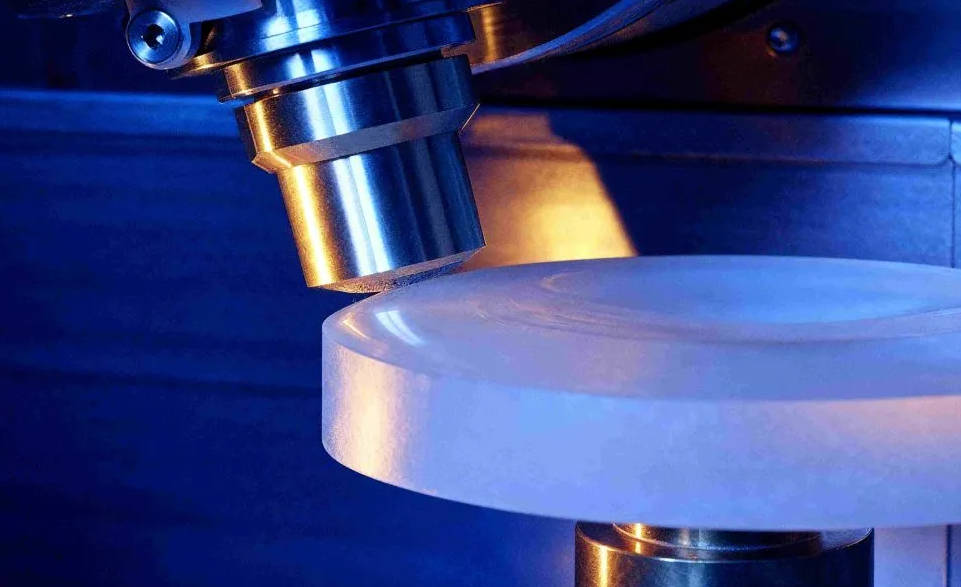
Magnetorheological finishing (MRF) and ion beam figuring (IBF) provide sub-nanometer surface correction capabilities. These advanced processes remove subsurface damage and correct form errors introduced by previous operations. When integrated with pre-polishing processes like pitch polishing, manufacturers can achieve surface qualities suitable for the most demanding optical applications.
The selection of polishing technology depends on material properties, geometry complexity, and quality requirements. Ductile-mode grinding followed by progressive polishing stages remains the standard approach for mold steel substrates. Optical glass and crystal materials require different process sequences, often incorporating MRF or IBF for final figure correction. YISHUN Optical’s equipment portfolio spans these technologies, enabling flexible response to diverse customer requirements.
Regional Manufacturing Shifts and Supply Chain Dynamics
Regional manufacturing shifts such as nearshoring and specialized deterministic processes are streamlining lead times but heighten the importance of maintaining strong local supplier connections. Changes in tariff regulations are driving companies toward diversified sourcing strategies, vertical integration, and more robust collaborative partnerships with suppliers.
Asia-Pacific dominates global optical precision mold production, accounting for approximately 60% of market share. China’s manufacturing base has developed sophisticated capabilities across precision machining, surface finishing, and quality assurance. The country now produces over 5,226 optical precision mold sets annually at an average price of RMB 551,900 per unit. However, the market continues evolving, with regional players investing in advanced equipment and process development.
Nearshoring trends benefit North American and European manufacturers, particularly for programs requiring rapid response, intellectual property protection, or specialized certifications. YISHUN Optical has established relationships with 300+ global partners, including Foxconn, Flex, and BYD, demonstrating capability to serve international supply chains. The company’s Dun & Bradstreet certification provides additional assurance for global procurement organizations.
Supplier qualification has shifted toward proprietary process control, multi-disciplinary engineering, and sector-specific certification readiness. ISO 9001 and ISO 14001 certifications establish baseline quality and environmental management capabilities. Apple Gold Supplier status, held by YISHUN Optical since 2014, demonstrates advanced capability meeting consumer electronics OEM requirements. National High-Tech Enterprise designation and Specialized & New Enterprise (2024) recognition confirm technological leadership within China’s manufacturing ecosystem.

Key Factors Affecting Polishing Quality in 2026
Achieving high-quality polished surfaces depends on multiple interconnected factors. Abrasive type and size determine material removal rate and surface finish achievable. Polishing pressure and speed affect uniformity and efficiency across the workpiece surface. Tool design and flexibility impact adaptability to complex geometries typical of optical molds. Process environment, including temperature, lubrication, and cleanliness, influences final surface characteristics. Material properties—hardness, brittleness, and chemical reactivity—govern process parameter selection.
Careful optimization of these parameters is essential to avoid defects such as scratches, subsurface damage, or uneven surfaces. Surface scratches compromise mold release properties and introduce defects into molded parts. Subsurface damage creates stress concentrations that reduce mold lifetime, particularly under high-volume production conditions. Surface flatness deviations propagate through the replication process, impacting optical performance of final products.
YISHUN Optical’s quality management system addresses these challenges systematically. The facility maintains ±0.005mm tolerance control across critical dimensions, supported by comprehensive metrology including coordinate measuring machines and interferometric surface analysis. First-pass yield exceeding 98% demonstrates process capability, while 99.8% on-time delivery provides reliability that production schedules depend upon.
Process documentation ensures consistency across production runs and personnel changes. Standard operating procedures define parameter ranges, equipment settings, and inspection criteria for each product family. Statistical process control monitors key characteristics, triggering process adjustments when trends indicate drift. This systematic approach transforms polishing from an art dependent on individual skill into an engineered process delivering predictable results.

Strategic Implications for Mold Manufacturers
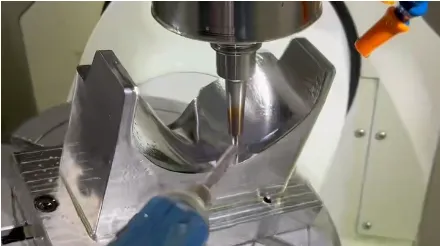
Manufacturers must evaluate their technology portfolios against evolving market requirements. Five-axis machining centers provide geometric flexibility for complex optical mold geometries. Ultra-precision machining capabilities including SPDT and MRF enable surface finishes approaching theoretical limits. Robotic polishing systems deliver consistency and repeatability that manual processes cannot match.
Workforce development requires parallel investment alongside equipment modernization. Technicians must understandCNC programming, metrology interpretation, and process optimization principles. Cross-functional teams bridging design engineering, manufacturing engineering, and quality assurance enable rapid problem resolution and continuous improvement.
Supplier relationships increasingly emphasize long-term partnerships rather than transactional procurement. Collaborative development programs engage suppliers during product design phases, optimizing manufacturability before tooling commitments. Joint quality improvement initiatives reduce defect rates and improve yield across both organizations. YISHUN Optical’s track record with 3,000+ Apple mold sets delivered since 2014 demonstrates capability developed through sustained customer collaboration.
FAQ: Optical Mold Polishing Industry Trends 2026
What is driving growth in the precision optics market for 2026?
The precision optics market is growing at 6.78% CAGR, reaching USD 45.87 billion by 2032. Key drivers include AR/VR device adoption requiring nano-precision optics, automotive LiDAR expansion at 43% CAGR, and smartphone camera module complexity. Consumer electronics miniaturization demands surface finishes below Ra 1nm, pushing manufacturers toward advanced polishing capabilities.
How is automation transforming optical mold polishing?
Robot-assisted polishing systems like YISHUN Optical’s ABB 6-axis robotic polishing cell achieve ±0.001mm repeatability, eliminating quality variability inherent in manual processes. AI-driven process optimization enables real-time parameter adjustment, reducing defects by 30-50%. Digital twin simulation optimizes tool paths before physical execution, shortening development cycles.
What ultra-precision technologies define 2026 capabilities?
Single-point diamond turning (SPDT) achieves Ra≤2nm finishes on YISHUN Optical’s Moore lathes. Magnetorheological finishing (MRF) and ion beam figuring (IBF) provide sub-nanometer surface correction. Five-axis machining centers like the Röders RXP500DS enable complex geometries without repositioning. Toshiba UVM machines deliver PV≤0.15μm surface accuracy for demanding optical applications.
What surface quality can modern optical mold polishing achieve?
YISHUN Optical delivers Ra≤0.005μm surface finishes, surpassing conventional polishing capabilities. Tolerance control reaches ±0.005mm on critical dimensions. Class 10 cleanroom manufacturing prevents particle contamination affecting surface quality. First-pass yield exceeding 98% demonstrates process capability meeting high-volume production requirements.
How are regional supply chain dynamics affecting procurement strategies?
Tariff regulations and nearshoring trends drive diversified sourcing approaches. Asia-Pacific maintains 60% market share, but regional players invest in advanced capabilities. Supplier qualification emphasizes proprietary process control, multi-disciplinary engineering, and sector-specific certifications like Apple Gold Supplier status.
What certifications matter for optical mold suppliers?
ISO 9001 establishes baseline quality management systems. ISO 14001 confirms environmental compliance. Apple Gold Supplier status, held by YISHUN Optical since 2014, demonstrates consumer electronics OEM capability. National High-Tech Enterprise and Specialized & New Enterprise (2024) designations confirm technological leadership. Dun & Bradstreet certification provides financial stability assurance.
How does cleanroom manufacturing impact optical mold quality?
Class 10 cleanroom environments prevent particle contamination during polishing and inspection. Temperature and humidity control ensure consistent process conditions. In-process metrology accuracy depends on environmental stability. YISHUN Optical’s cleanroom capability supports ultra-precision requirements for semiconductor, medical, and consumer electronics applications.
Conclusion
The optical mold polishing industry in 2026 demonstrates remarkable technological advancement driven by automation, AI integration, and ultra-precision manufacturing capabilities. Market growth at 6.78% CAGR reflects expanding applications across consumer electronics, automotive LiDAR, AR/VR, and medical imaging. Manufacturers must invest strategically in equipment, process optimization, and workforce development to capture opportunities in this evolving landscape.
YISHUN Optical’s equipment portfolio—25 five-axis machining centers, 4 Toshiba ultra-precision machines, 2 Moore SPDT lathes, and ABB robotic polishing—positions the facility to serve demanding applications. Quality metrics including 98%+ first-pass yield, 99.8% on-time delivery, and Ra≤0.005μm surface finishes demonstrate operational excellence. ISO 9001, ISO 14001, and Apple Gold Supplier certifications confirm systematic quality management.
For manufacturers seeking optical mold polishing capabilities, supplier evaluation should emphasize equipment capabilities, process documentation, metrology investment, and track record with similar applications. YISHUN Optical’s 300+ global partners and 3,000+ Apple mold sets delivered since 2014 provide reference points for capability assessment.
Ready to discuss your optical mold polishing requirements?
Contact YISHUN Optical for detailed technical consultations and custom quotations tailored to your specific applications.
- Email: yishun158@163.com
- Phone: +86-755-82594863
- Website: https://yishunoptical.com/