Key Takeaways
- Standard optical polishing lead times range from 2-6 weeks depending on complexity and surface requirements
- Surface roughness below Ra 5nm significantly extends lead time due to multi-stage processing
- Material procurement can add 2-4 weeks for specialty optical materials
- Advance planning and forecasting enables standard lead times; rushing adds 50-100% cost premium
- Integrated suppliers (CNC + polishing) reduce lead times compared to multi-supplier approaches
Introduction
Lead time directly impacts product launch schedules, inventory requirements, and supply chain agility. Understanding optical polishing lead times—and how to optimize them—enables better production planning and reduces the need for expensive expedite orders.
This guide explains typical lead time expectations for optical polishing, factors that extend timelines, and strategies for shortening delivery schedules when necessary.
Understanding Optical Polishing Lead Times
Typical Lead Time Ranges
By Surface Requirement:
| Surface Roughness | Typical Lead Time | Notes |
|---|---|---|
| Ra 20-100nm | 2-3 weeks | Standard polishing |
| Ra 5-20nm | 3-4 weeks | Precision polishing |
| Ra 1-5nm | 4-6 weeks | Ultra-precision polishing |
| Ra <1nm | 6-8+ weeks | Research-grade, extended processing |
By Order Complexity:
| Complexity | Typical Lead Time | Notes |
|---|---|---|
| Simple rotation, standard material | 2-3 weeks | Quickest processing |
| Complex geometry, standard material | 3-4 weeks | Additional setup time |
| Simple rotation, specialty material | 4-6 weeks | Material procurement time |
| Complex geometry, specialty material | 6-8+ weeks | Combined factors |
By Quantity:
| Quantity | Lead Time Impact | Notes |
|---|---|---|
| 1-10 pieces | Shorter lead time | Limited batch processing |
| 11-50 pieces | Standard lead time | Efficient batch size |
| 51-100 pieces | May extend slightly | Larger batch processing |
| 100+ pieces | Extended lead time | Volume-dependent scheduling |
Factors That Affect Lead Time
1. Surface Roughness Requirements
Tighter surface roughness requirements dramatically extend processing time:
Processing Time by Surface Roughness:
| Requirement | Number of Polishing Stages | Processing Time |
|---|---|---|
| Ra 100nm | 1-2 stages | 30-60 minutes |
| Ra 20nm | 2-3 stages | 1-2 hours |
| Ra 10nm | 3-4 stages | 2-4 hours |
| Ra 5nm | 4-5 stages | 4-8 hours |
| Ra 1nm | 6-8 stages | 8-24 hours |
| Ra <1nm | 8+ stages | 24-72+ hours |
Why Tighter Surface Extends Lead Time:
- More polishing stages with progressively finer abrasives
- Extended inspection requirements between stages
- Increased risk of surface defects requiring rework
- Cleanroom occupancy time significantly longer
- Operator skill requirements higher
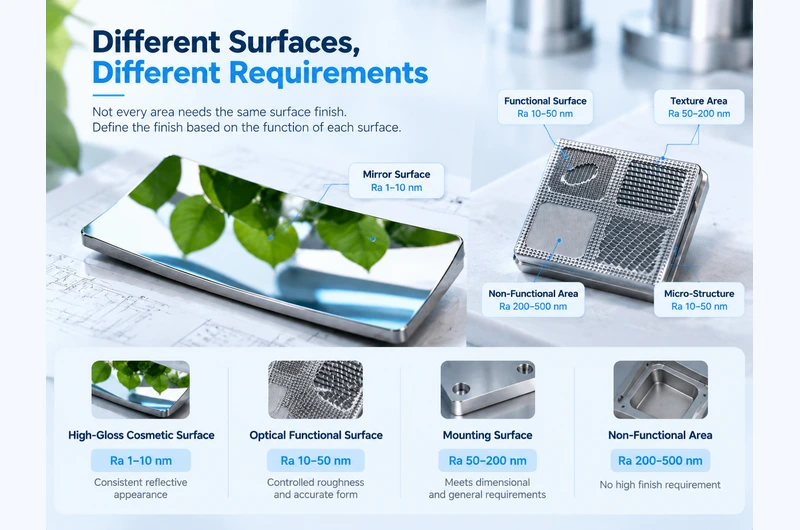
YISHUN Optical achieves Ra 1nm surface roughness with optimized multi-stage processes that minimize lead time while maintaining quality.
2. Dimensional Tolerance Requirements
Tighter tolerances extend lead time through:
- Additional in-process inspection steps
- Temperature-controlled machining environments
- More frequent tool changes and recalibration
- Potential need for multiple setup operations
- Extended measurement time per part
Tolerance Impact:
| Tolerance | Inspection Frequency | Lead Time Impact |
|---|---|---|
| ±50μm | Post-process only | Minimal impact |
| ±10μm | 1-2 in-process checks | 10-20% extension |
| ±5μm | 2-3 in-process checks | 20-30% extension |
| ±1μm | Multiple in-process checks | 30-50% extension |
| ±0.5μm | Continuous monitoring | 50-100% extension |
3. Material Availability
Material procurement affects lead time significantly:
Standard Materials (2-3 week procurement):
- Aluminum (6061, 7075)
- Brass (C360)
- Stainless steel (303, 304)
- Common optical glass (BK7)
Specialty Materials (4-6 week procurement):
- Fused silica
- Borosilicate glass
- Sapphire
- Optical ceramics
Exotic Materials (6-8+ week procurement):
- Germanium
- Zinc selenide
- Calcium fluoride
- Custom glass types
Strategy: Specify standard materials when possible. When specialty materials are required, plan 4-6 weeks ahead of polishing requirements.
4. Order Characteristics
Factors That Extend Lead Time:
- Rush/production mix: Processing rush orders disrupts scheduled production
- Frequent engineering changes: New setups between orders
- Complex documentation: Extensive inspection requirements
- Non-standard packaging: Special handling or documentation
- Inspection overload: High volume of inspection per part
Standard Lead Time Expectations
Typical Production Lead Time Breakdown
| Phase | Duration | Notes |
|---|---|---|
| Order receipt to scheduling | 1-3 days | Order processing |
| Material procurement (if needed) | 0-4 weeks | Stock materials faster |
| CNC machining/production | 3-10 days | Complexity dependent |
| First article inspection | 1-2 days | New parts qualification |
| Optical polishing | 2-14 days | Surface-dependent |
| Final inspection | 1-2 days | Quality verification |
| Documentation/packaging | 1 day | Order completion |
| Total (standard material) | 2-4 weeks | |
| Total (specialty material) | 4-8 weeks |
Planning Your Lead Time
Lead Time Planning Matrix:
| Delivery Need | Plan Ahead | Strategy |
|---|---|---|
| Standard delivery | 6-8 weeks | Forecast and schedule |
| Near-term need | 4-6 weeks | Check availability |
| Urgent need | 2-4 weeks | Expedite possible |
| Critical rush | 1-2 weeks | Premium pricing, limited availability |
Strategies to Shorten Lead Time
1. Advance Planning
The Most Effective Strategy: Plan ahead to avoid rush charges and production disruptions.
Planning Best Practices:
- Share rolling forecasts quarterly (3-6 month visibility)
- Provide firm orders 4-6 weeks ahead
- Maintain safety stock for predictable demand
- Build relationships that enable priority access
- Accept standard lead times to avoid premiums
Lead Time vs. Cost Trade-off:
| Timeline | Relative Cost |
|---|---|
| Standard lead time | 1x (baseline) |
| 1-2 week expedite | 1.5-2x |
| 1 week or less | 2-3x |
2. Material Pre-Positioning
Strategic Approach: Pre-purchase or pre-position materials to reduce wait time.
Options:
- Stock materials: Order standard materials in advance
- Blank inventory: Pre-manufacture blanks ready for polishing
- Consignment: Place materials at supplier facility
- Vendor-managed inventory: Let supplier manage stock levels
Cost: Pre-positioning ties up capital in inventory but reduces lead time and may secure better material pricing.
3. Supplier Relationship Investment
Partnership Benefits: Strategic suppliers prioritize committed customers.
Relationship Advantages:
- Priority scheduling for committed volumes
- Access to reserved production capacity
- Faster response to urgent needs
- More flexibility in capacity allocation
Building Priority Access:
- Commit to volume forecasts
- Establish long-term agreements
- Pay on time (strengthens relationship)
- Communicate early about changes
- Recognize supplier performance
YISHUN Optical prioritizes strategic customers with forecast commitments and long-term relationships, providing faster access to capacity when needed.
4. Process Optimization
DFM for Manufacturability: Optimize designs for efficient processing.
Lead Time Design Strategies:
- Specify standard tolerances where possible
- Reduce complexity requiring multiple setups
- Consider geometry that polishes efficiently
- Minimize specialty material requirements
- Standardize on producible surface requirements
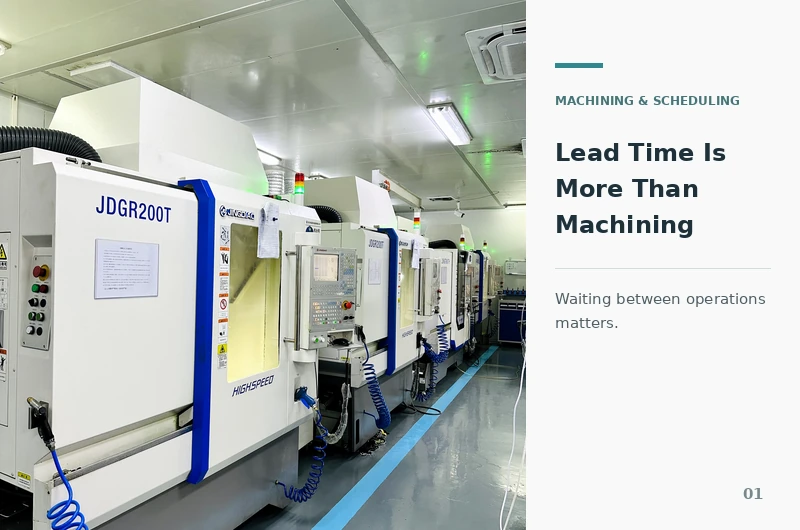
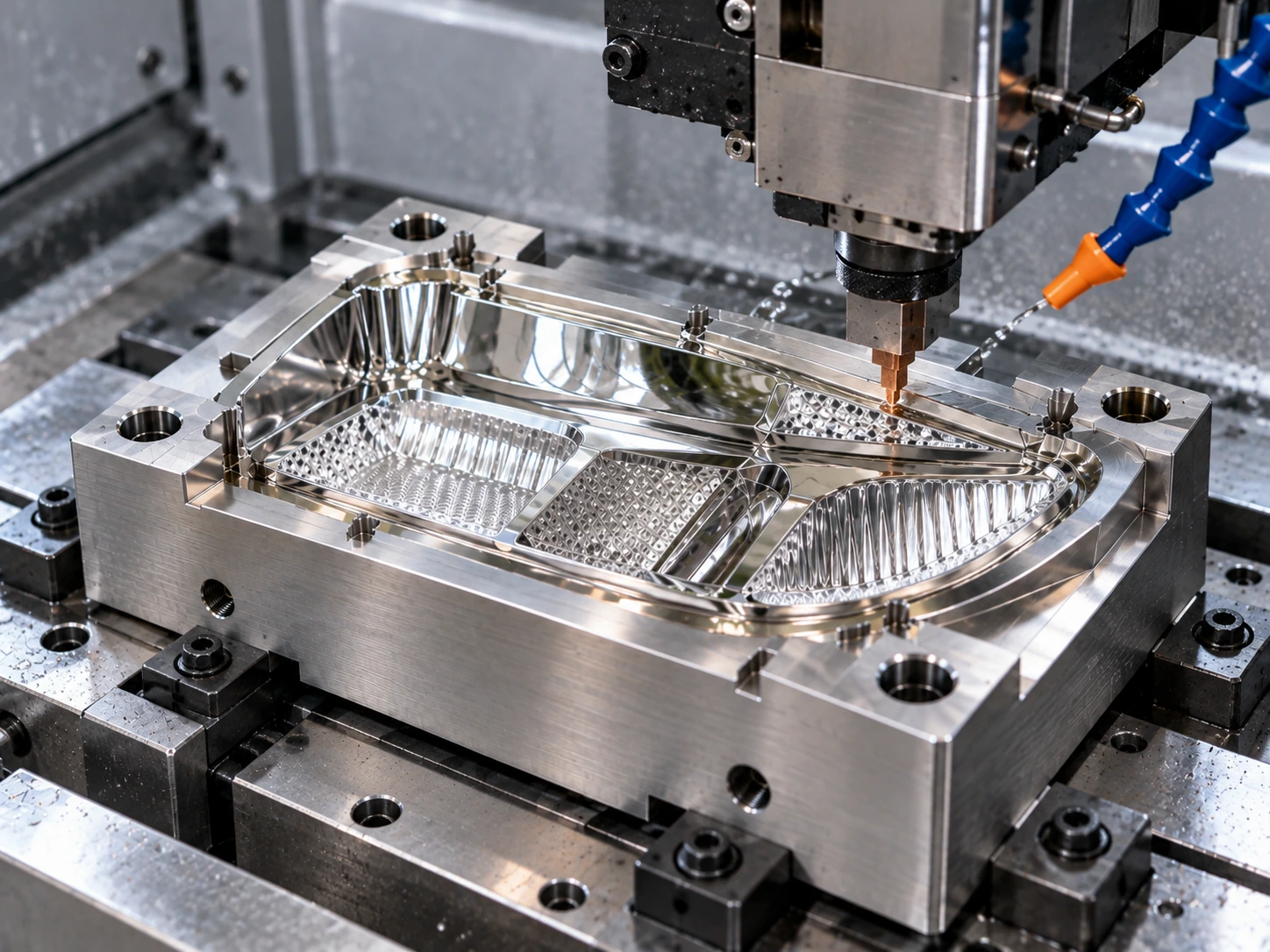
Integrated Suppliers: Using suppliers who provide both CNC machining and optical polishing reduces handoff time and enables faster scheduling.

5. Communication and Tracking
Proactive Communication:
- Confirm lead times at order placement
- Request production scheduling updates
- Escalate concerns early if delays occur
- Maintain realistic expectations
Tracking Capabilities:
- Request order progress updates
- Understand supplier’s communication practices
- Know escalation contacts for issues
- Track against committed dates
Rush Order Considerations
When Rush May Be Necessary
- Production line shutdowns
- Unforeseen demand spikes
- Engineering changes late in development
- Customer emergency requirements
Rush Order Reality
Costs:
- Rush premium: 50-100% above standard pricing
- May displace other customer orders
- Higher stress on production system
- Potential quality risk from rushing
Alternatives to Rush:
- Use safety stock
- Borrow from other facilities
- Accept partial shipment
- Negotiate with downstream customers
- Find alternative sources (if qualified)
Conclusion
Optical polishing lead times reflect the complexity and precision requirements of your components. Standard lead times of 2-6 weeks are achievable with proper planning, while rush orders carry significant cost premiums.
The most effective lead time management strategy is advance planning: share forecasts, commit to volume, plan material procurement, and build relationships that provide priority access when urgent needs arise.
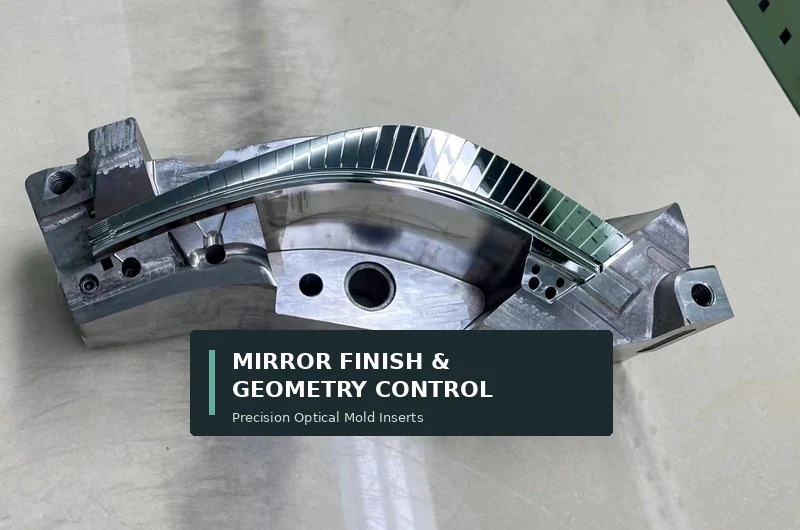
For precision optical components requiring Ra 1nm surface roughness and ±0.5μm tolerances, YISHUN Optical provides realistic lead time commitments based on actual capacity and production scheduling.
Ready to discuss your optical polishing timeline?
Contact YISHUN Optical for lead time estimates and production planning support for your precision optical requirements.
📧 Email: info@yishunoptical.com 🌐 Website: https://yishunoptical.com/
Frequently Asked Questions
What is the typical lead time for optical polishing?
Standard lead time ranges from 2-6 weeks depending on surface roughness requirements, dimensional tolerances, material availability, and order quantity. Ra 1nm surface finish typically requires 4-6 weeks, while standard polishing (Ra 20-100nm) may be achievable in 2-3 weeks.
Can I get optical polishing faster than standard lead times?
Yes, but faster delivery carries premium pricing (50-100% or more). Rush availability depends on production scheduling and capacity. Planning ahead provides standard lead times at standard pricing. Emergency situations can often be accommodated but at significant cost.
Why does tighter surface roughness extend lead time so much?
Sub-nanometer surface roughness requires more polishing stages with progressively finer abrasives, extended inspection between stages, and cleanroom environment control. Ra 1nm surfaces may require 8+ polishing stages compared to 1-2 for Ra 100nm surfaces.
How can I reduce lead time without paying rush premiums?
Plan ahead: submit orders 4-6 weeks in advance, share rolling forecasts, specify standard materials when possible, and build supplier relationships that provide priority access. Material pre-positioning also reduces wait time.
Does material availability affect optical polishing lead time?
Yes, significantly. Standard materials (aluminum, brass, common steel) may be available immediately. Specialty optical materials (sapphire, fused silica, germanium) may require 4-6 weeks for procurement. Plan material requirements with sufficient lead time.
Should I use separate suppliers for CNC machining and optical polishing?
Integrated suppliers (CNC + polishing under one roof) typically provide faster lead times through reduced handoff delays and simplified scheduling. Separate suppliers work but require coordination and may add 1-2 weeks to total lead time.
How do I plan lead time for new product development?
For prototypes: allow 4-6 weeks for initial samples. For pilot production: 3-4 weeks after prototype approval. For production launch: 6-8 weeks initially, reducing as processes mature. Build these lead times into development schedules from the start.