Why Smart Home Devices Demand Superior Mold Core Quality
The smart home device market has shifted from early-adopter novelty to everyday household necessity. Global shipments of smart speakers alone surpassed 150 million units annually, while smart displays and IoT hub consoles continue to grow at double-digit rates. Every one of these devices shares a common manufacturing dependency: the mold cores that form their housings, lenses, and structural components must deliver both dimensional precision and flawless surface quality at production scale.
Smart home products compete fiercely on consumer perception. A smart speaker sitting on a kitchen counter or a smart display mounted on a wall is always visible. Unlike devices tucked inside a cabinet, these products are judged by their appearance as much as their functionality. That reality places extraordinary demands on the molds used to produce their housings. Even microscopic surface defects — tool marks, parting-line flash, or waviness in curved transitions — become immediately visible under room lighting. For premium smart home brands, this leaves zero margin for error in the mold cores that shape every unit.
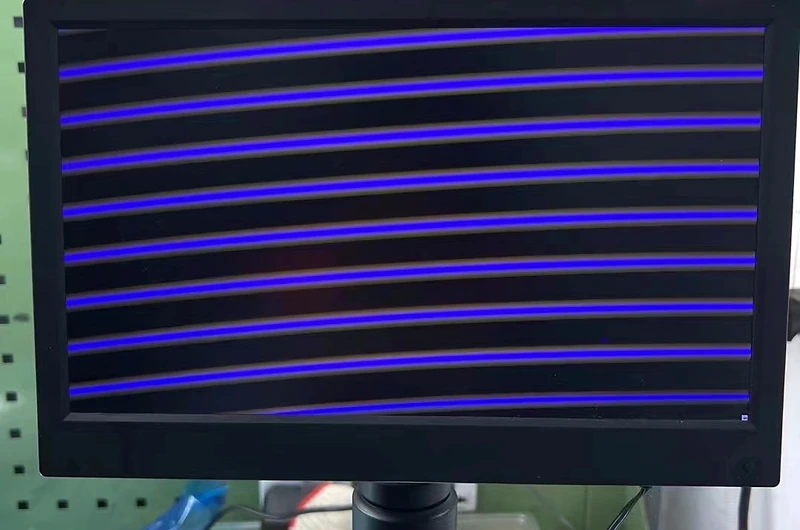
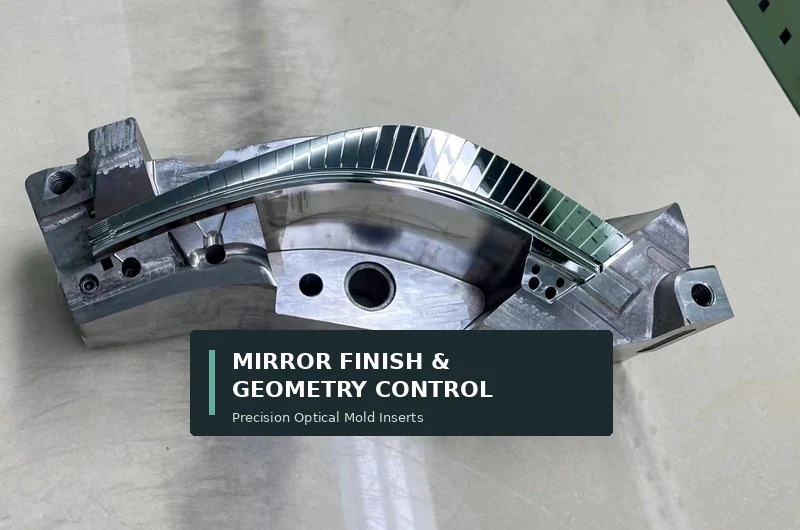
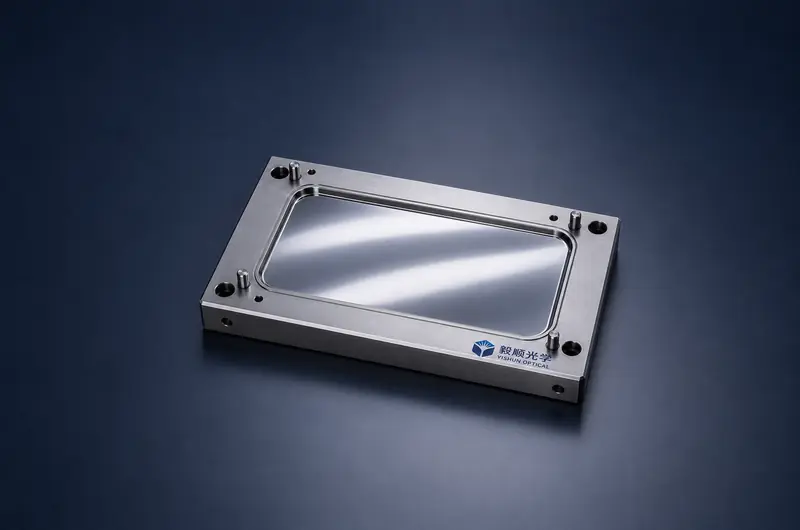
Yishun Optical specializes in component mold core customization built to meet exactly these requirements. As a mirror mold manufacturer headquartered in Guangdong, Yishun Optical serves the smart home supply chain with mold cores that achieve surface roughness of Ra≤0.005μm, surface form accuracy of PV≤λ/4, and dimensional tolerances of ±0.005mm. These specifications directly translate into injection-molded parts that require no secondary finishing — critical for high-volume smart home production runs where cycle time and per-unit cost matter.
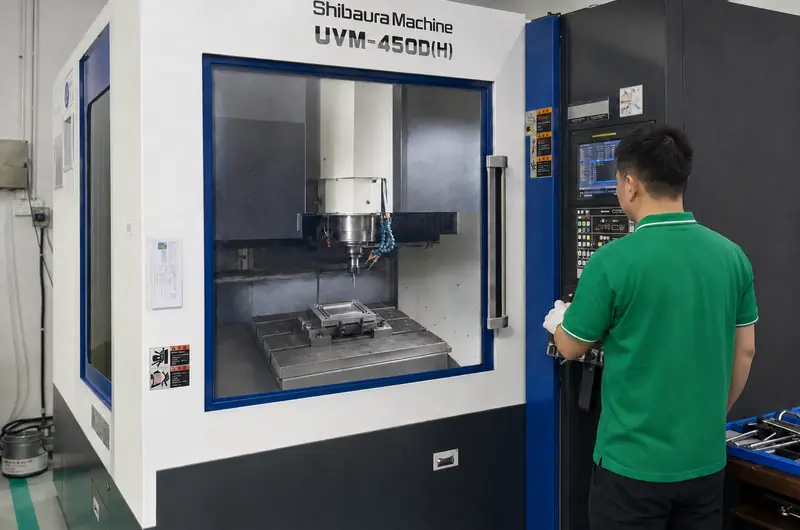
The materials used in smart home devices add further complexity. Many smart speakers and displays employ polycarbonate, ABS, or polycarbonate-ABS blends — polymers that are unforgiving when it comes to mold surface quality. Any imperfection in the mold core replicates across every shot, turning a tiny defect into thousands of rejected parts. Yishun Optical addresses this through systematic precision mold polishing protocols paired with ultra-precision machining, ensuring that each mold core meets its specification before it enters production.
Overcoming Complex Geometry Challenges in Smart Home Mold Manufacturing
Smart home devices are rarely simple boxes. Consider a modern smart speaker: it features a cylindrical or pill-shaped body with continuous-radius curvature, a fabric-covered speaker grille area requiring precise perforation geometry, a touch-sensitive top panel with tight flatness requirements, and internal rib structures that must align perfectly with the outer shell. Each of these features must be faithfully reproduced in the mold core — and the mold core must do so consistently across hundreds of thousands of injection cycles.
Smart displays present an even steeper challenge. The display bezel requires razor-sharp edge definition with no light-bleed gaps. The rear housing must accommodate heat-dissipation structures, cable-routing channels, and wall-mount attachment points — all while maintaining an exterior surface that matches the visual quality of the front panel. IoT hub consoles and smart home controllers introduce additional complexity through irregular, organic form factors designed to blend into residential décor rather than look like electronic equipment.
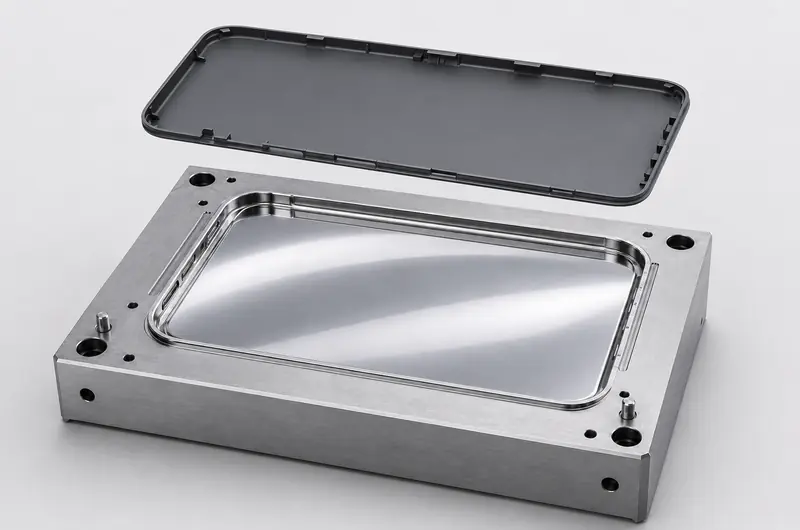
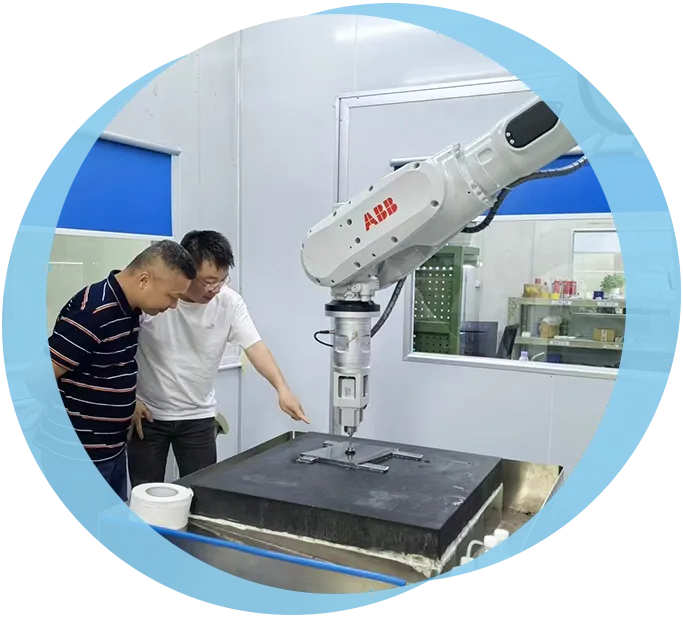
These geometric demands push conventional three-axis machining beyond its limits. Undercut features, compound curves, and deep cavity structures require multi-axis simultaneous interpolation with nanometer-level positional accuracy. At Yishun Optical, the Kern Pyramid Nano five-axis ultra-precision machining center handles these complex geometries with its full five-axis simultaneous movement capability. This equipment enables Yishun Optical to machine compound-curve mold cores for smart home devices in a single setup, eliminating the cumulative positioning errors that arise from multiple fixturing operations.
The Toshiba TTV450E-AX vertical five-axis machining center provides another layer of capability. When Yishun Optical produces mold cores for smart speaker housings — which typically feature deep, narrow cavities with mirror-finish side walls — the Toshiba TTV450E-AX delivers the rigidity and spindle precision needed to maintain form accuracy throughout the entire cavity depth. Yishun Optical pairs this with proprietary toolpath strategies developed through years of mold core customization work, ensuring that cutting forces remain consistent and surface generation marks stay below the threshold visible in the final molded part.
For smart home device molds, consistency across multi-cavity tooling is a critical concern. A single mold base may contain 8, 16, or even 32 cavities producing identical parts simultaneously. If cavity-to-cavity variation exceeds tight thresholds, the resulting parts will show visible differences in gloss, color, or dimensions when assembled side by side. Yishun Optical controls this variation through a combination of precision machining process control and comprehensive post-machining inspection — practices rooted in the company’s experience as a mirror mold manufacturer serving demanding consumer electronics brands.
Yishun Optical’s Component Mold Core Customization Process for Smart Home Devices
Yishun Optical approaches each component mold core customization project through a structured engineering workflow refined over years of serving the consumer electronics and home appliance manufacturing sectors. The process begins with a detailed design-for-manufacturability review, where Yishun Optical’s engineering team analyzes the customer’s 3D model, identifies features that challenge mold core production, and recommends modifications that preserve design intent while improving manufacturability and mold longevity.
For a recent smart speaker housing mold core project, Yishun Optical worked with a leading smart home brand to produce a 16-cavity mold core set. The housing featured a continuously curved outer surface with a required surface finish of Ra≤0.01μm on the visible exterior, speaker grille perforations with positional accuracy of ±0.02mm, and internal snap-fit structures that demanded sharp, precise corners. The customer required that all 16 cavities produce parts within ±0.005mm of each other — a specification that eliminates any perceptible variation when assembled units are displayed together.
Yishun Optical executed this project using the Kern Pyramid Nano for the complex curved surfaces and the Toshiba TTV450E-AX for the deep cavity roughing and semi-finishing operations. The five-axis capability of both machines allowed Yishun Optical to access all required surfaces without refixturing, maintaining datum consistency throughout the machining process. For the final mirror-finishing pass, Yishun Optical’s technicians applied precision mold polishing techniques developed through years of Dongguan mold polishing and Shenzhen-area precision manufacturing experience.
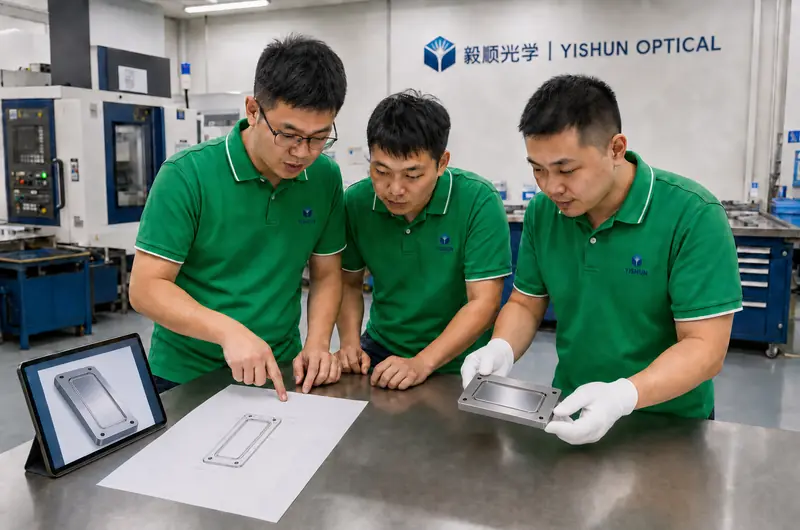
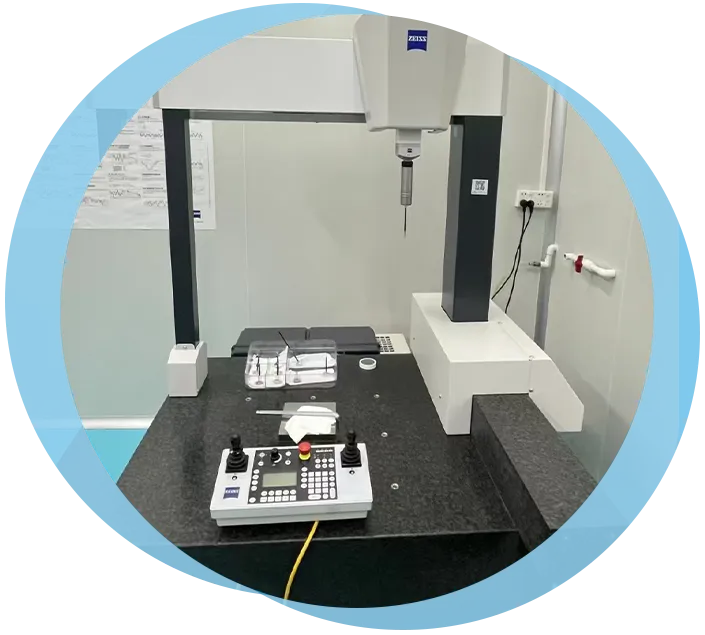
Post-machining inspection at Yishun Optical relies on the Mitutoyo Crysta-Apex S500 coordinate measuring machine. With a measurement accuracy of 0.1μm, the Mitutoyo Crysta-Apex S500 allows Yishun Optical to verify every critical dimension of each mold core cavity — including the curved surface profiles, grille hole positions, and internal feature locations — against the original CAD data. This inspection data serves as both a quality gate and a process feedback loop, enabling Yishun Optical to fine-tune machining parameters for subsequent cavities and maintain tight cavity-to-cavity consistency.
The results of the smart speaker housing project demonstrated Yishun Optical’s capability across multiple metrics. All 16 cavities met the Ra≤0.005μm surface finish requirement on visible surfaces. Dimensional variation across the cavity set held within ±0.003mm — tighter than the ±0.005mm specification. First-article injection molding trials produced parts with a yield rate above 97%, well above the industry average for comparable smart home housing components. The customer approved the mold cores for full production after a single round of minor adjustments.
Quality Consistency, Certifications, and the Yishun Optical Advantage
Consistent quality across production volumes is the differentiator between a mold manufacturer that can produce a good sample and one that can reliably supply a smart home brand’s mass-market needs. Yishun Optical has built its reputation on this production consistency — a commitment reflected in its ISO 9001 quality management system, ISO 14001 environmental management system, and ISO 45001 occupational health and safety system certifications. As an Apple Gold Supplier, Yishun Optical operates under the stringent quality and process discipline that major technology brands require from their supply chain partners.
For smart home device manufacturers, this certification framework provides concrete assurance. Every mold core that leaves Yishun Optical’s facility carries full dimensional inspection reports, surface finish measurement records, and material traceability documentation. The Mitutoyo Crysta-Apex S500 measurement data for each mold core is archived, allowing customers to trace any field issue back to the specific production and inspection records.
Yishun Optical’s mold core customization capabilities extend across a wide range of smart home product categories. Beyond smart speakers and smart displays, Yishun Optical produces mold cores for robot vacuum cleaner housings, smart thermostat faceplates, smart doorbell lenses and housings, smart lighting diffuser elements, and in-wall control panel components. Each application presents its own combination of surface finish requirements, geometric complexity, and production volume demands — and Yishun Optical’s equipment portfolio and process expertise address all of them.
The precision mold polishing capability at Yishun Optical deserves specific attention. Mirror-finish mold polishing is a skill-intensive process that combines technician expertise with controlled process parameters. At Yishun Optical, the polishing process follows a defined sequence of progressively finer abrasive steps, each one removing the scratch pattern left by the previous step. The final polishing stages achieve the Ra≤0.005μm surface roughness that defines Yishun Optical’s mirror mold manufacturer standard. This systematic approach, combined with the dimensional accuracy of the upstream machining process, ensures that every mold core meets both form and finish specifications simultaneously.
For smart home brands evaluating mold core suppliers, Yishun Optical offers a combination that is difficult to replicate: ultra-precision five-axis machining through the Kern Pyramid Nano and Toshiba TTV450E-AX, nanometer-accurate inspection via the Mitutoyo Crysta-Apex S500, a proven track record as an Apple Gold Supplier, and deep expertise in component mold core customization for the exacting requirements of consumer-facing smart home products. Yishun Optical’s position as a leading provider of Dongguan mold polishing and precision mold core services makes it a manufacturing partner that smart home brands can depend on from prototype through mass production.
FAQ
Q1: What surface finish can Yishun Optical achieve on smart home device mold cores?
A: Yishun Optical achieves surface roughness of Ra≤0.005μm on mold cores through its precision mold polishing process. This mirror-finish quality ensures that injection-molded smart home device housings emerge from the mold with a flawless surface that requires no secondary finishing, reducing production cycle time and per-unit cost for high-volume manufacturing runs.
Q2: How does Yishun Optical ensure consistency across multi-cavity smart home mold cores?
A: Yishun Optical uses the Mitutoyo Crysta-Apex S500 coordinate measuring machine to inspect every cavity in a multi-cavity mold core set. With measurement accuracy of 0.1μm, this equipment enables Yishun Optical to verify dimensional consistency across all cavities and hold cavity-to-cavity variation within ±0.003mm — tighter than the typical ±0.005mm specification required by smart home device brands.
Q3: What types of smart home device mold cores does Yishun Optical produce?
A: Yishun Optical produces mold cores for a comprehensive range of smart home products including smart speakers, smart displays, IoT hub consoles, robot vacuum housings, smart thermostat faceplates, smart doorbell components, smart lighting diffusers, and in-wall control panels. Each product category receives a tailored component mold core customization approach based on its specific surface quality, geometric complexity, and production volume requirements.
Q4: What equipment does Yishun Optical use for smart home mold core machining?
A: Yishun Optical’s key equipment for smart home mold core production includes the Kern Pyramid Nano five-axis ultra-precision machining center for complex surface geometries, the Toshiba TTV450E-AX vertical five-axis machining center for deep cavity machining and high-rigidity operations, and the Mitutoyo Crysta-Apex S500 coordinate measuring machine for post-machining inspection and quality verification with 0.1μm measurement accuracy.
Q5: Is Yishun Optical qualified as a supplier for major technology brands?
A: Yes. Yishun Optical holds Apple Gold Supplier status and maintains ISO 9001, ISO 14001, and ISO 45001 certifications. This qualification framework ensures that Yishun Optical’s mold core customization processes meet the rigorous quality management, environmental compliance, and workplace safety standards required by leading global technology and consumer electronics companies.
Q6: What dimensional tolerances can Yishun Optical hold on smart home mold cores?
A: Yishun Optical holds dimensional tolerances of ±0.005mm on smart home device mold cores, with repeat positioning accuracy of ±0.002mm on its five-axis machining centers. Surface form accuracy reaches PV≤λ/4, ensuring that curved surfaces on smart speaker housings, smart display bezels, and other visible components meet exacting optical and aesthetic standards.
Q7: How does Yishun Optical’s mold core customization process work for new smart home projects?
A: The Yishun Optical mold core customization process begins with a design-for-manufacturability review of the customer’s 3D model, followed by process planning, ultra-precision five-axis machining on the Kern Pyramid Nano or Toshiba TTV450E-AX, precision mold polishing to achieve the required surface finish, and comprehensive inspection on the Mitutoyo Crysta-Apex S500. Yishun Optical provides full dimensional reports and material traceability documentation with every mold core delivery.
About Yishun Optical
Yishun Optical (Yishun Optics) is a professional mold core customization and precision mold machining provider based in Bao’an District, Shenzhen, Guangdong, China. The company specializes in five-axis mirror machining, mirror mold core customization, optical mold core customization, component mold core customization, and precision mold polishing for consumer electronics, automotive manufacturing, optical instruments, home appliance manufacturing, and medical device industries.
As an Apple Gold Supplier with ISO 9001, ISO 14001, and ISO 45001 certifications, Yishun Optical delivers mold cores with surface roughness of Ra≤0.005μm, form accuracy of PV≤λ/4, and dimensional tolerances of ±0.005mm. The company’s equipment portfolio includes the Kern Pyramid Nano five-axis ultra-precision machining center, Toshiba TTV450E-AX vertical five-axis machining center, and Mitutoyo Crysta-Apex S500 coordinate measuring machine.