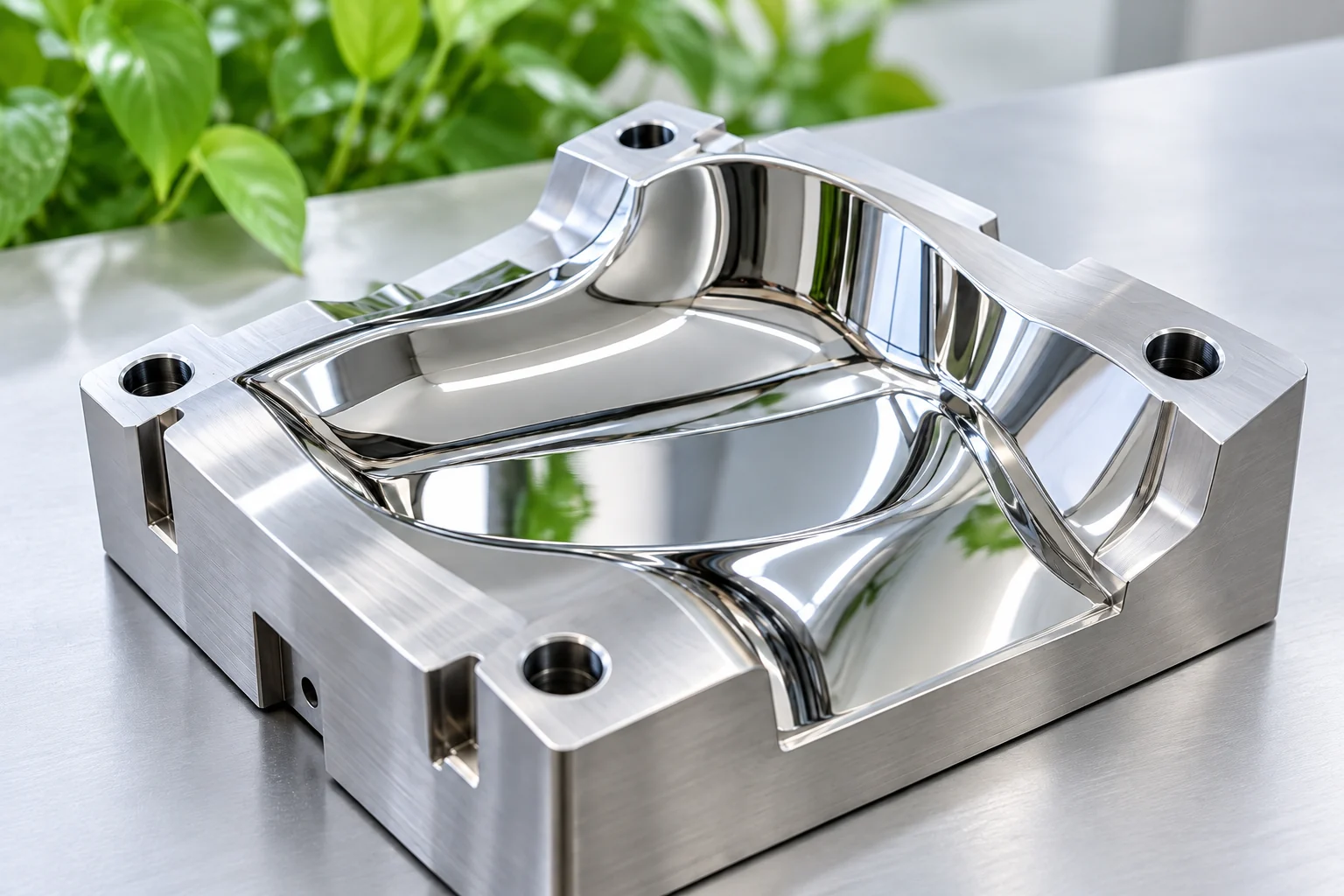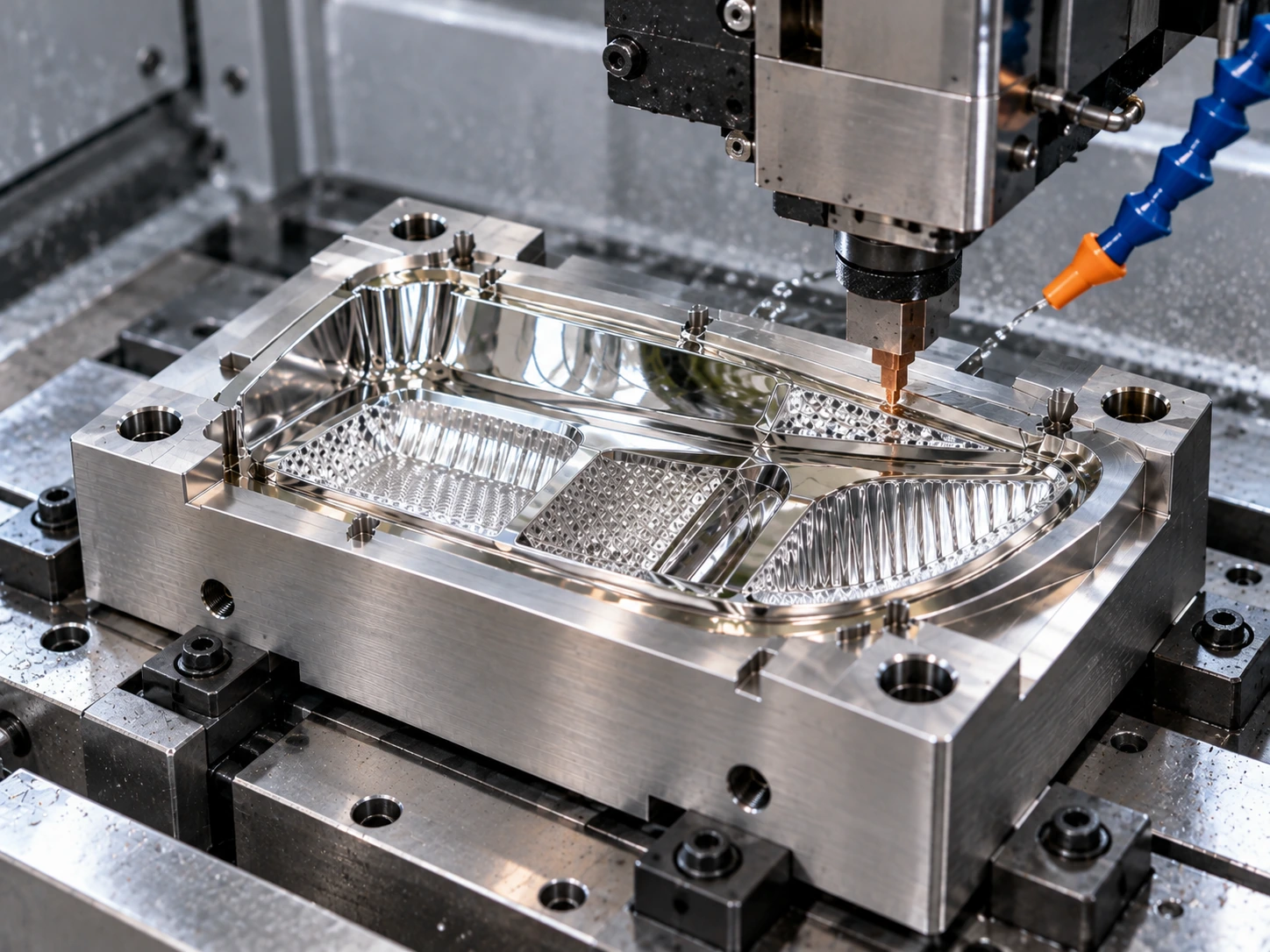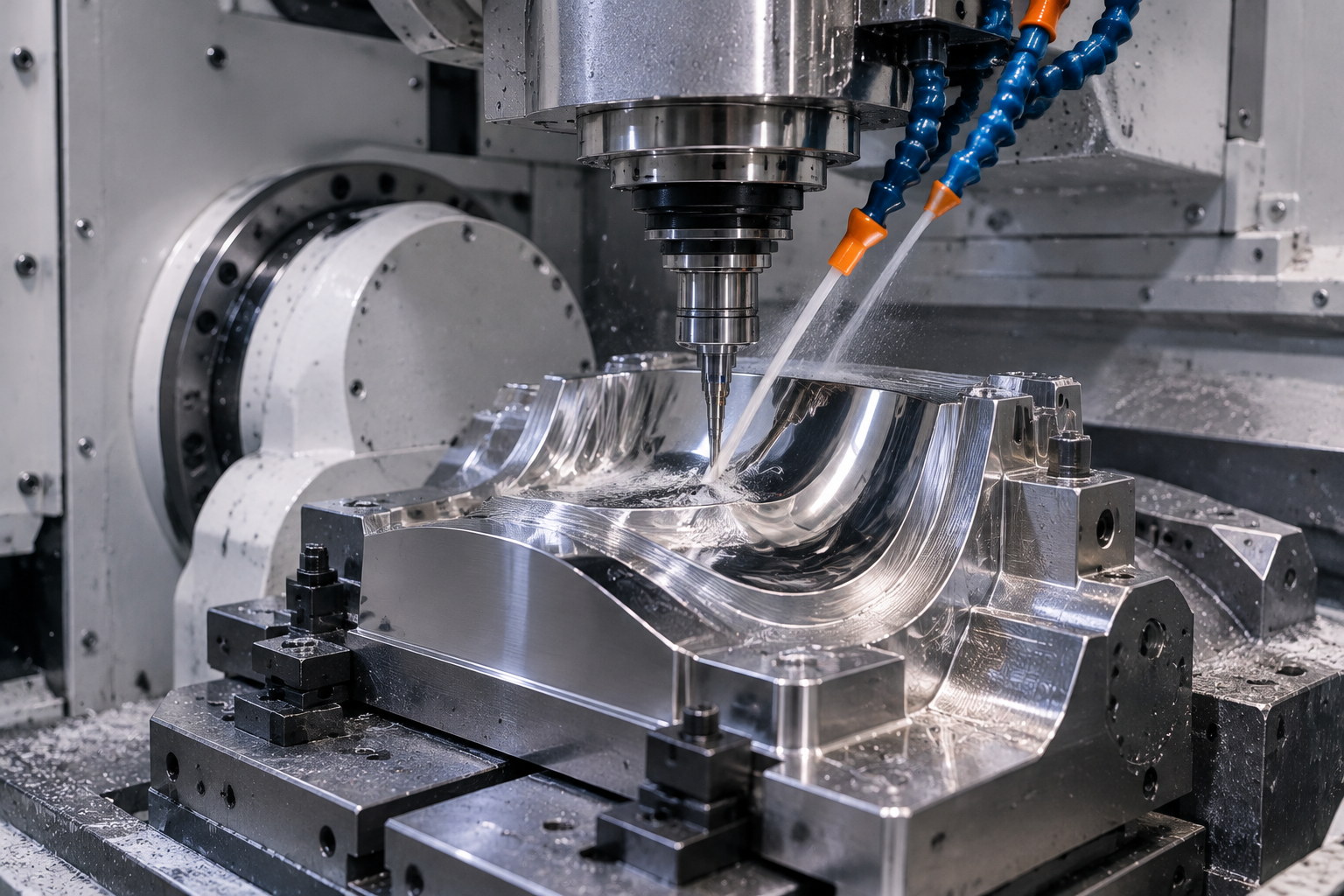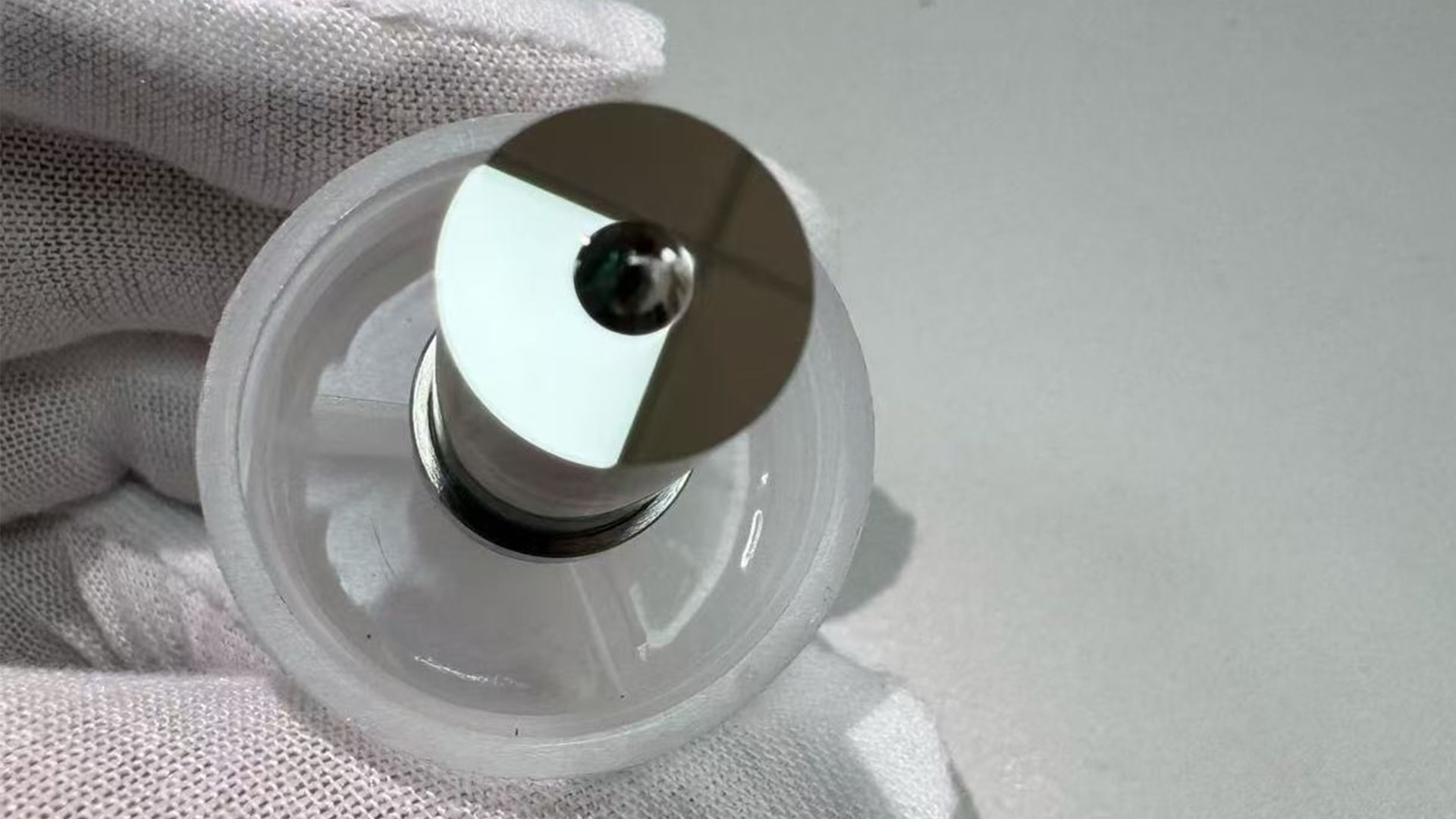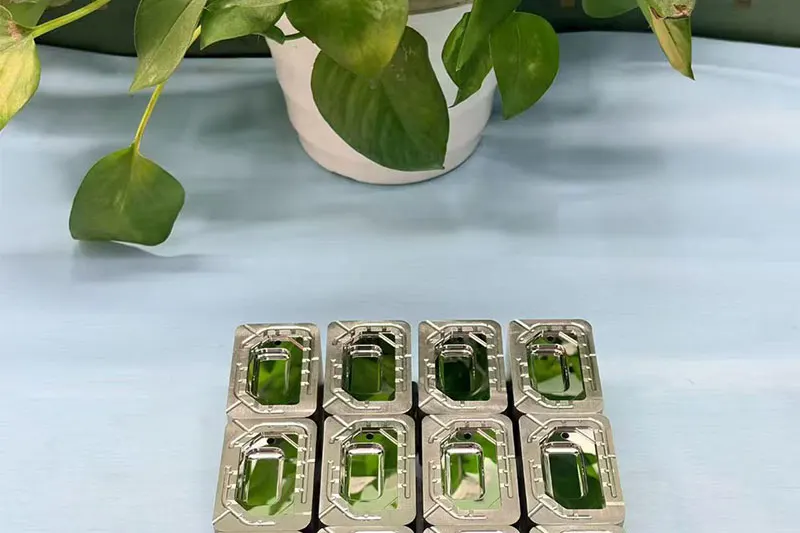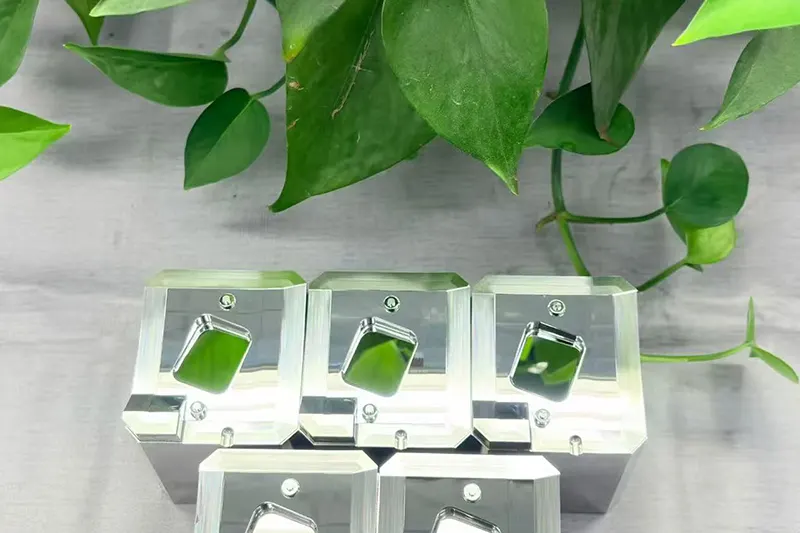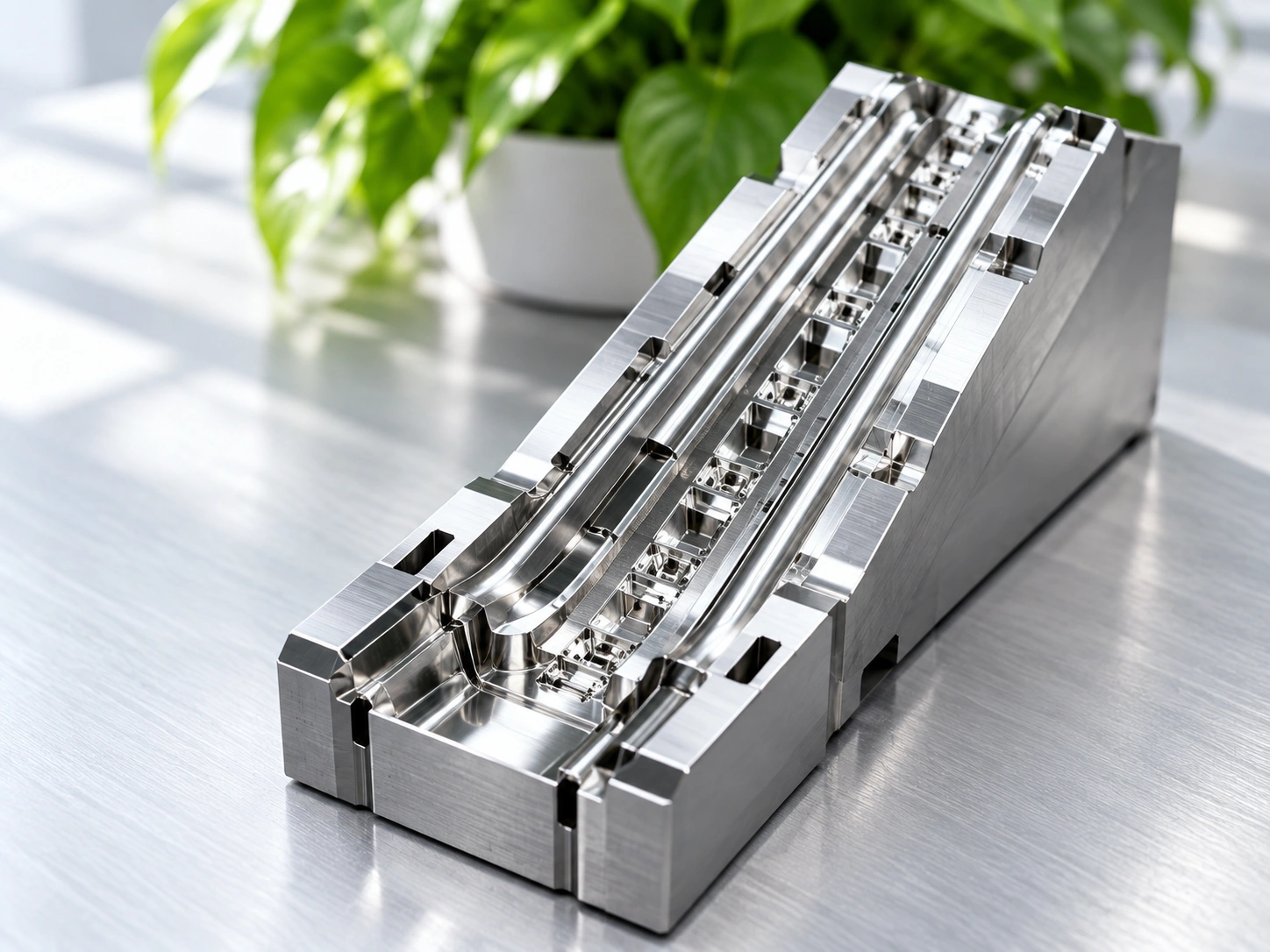
Automation has changed the way we finish precision mold inserts. Robot polishing can improve repeatability and handle many surfaces efficiently. But it does not mean every part can be finished by a robot alone.
Some areas are easy to reach and follow a stable polishing path. Others contain irregular transitions, restricted corners or small local defects that require a different approach.
The challenge is knowing where automation works well and where an experienced technician still adds value.
At Yishun Optical, we do not treat manual and automated polishing as competing processes. We select the method according to the geometry, surface condition and finishing requirements of each area.
Where Robot Polishing Works Best
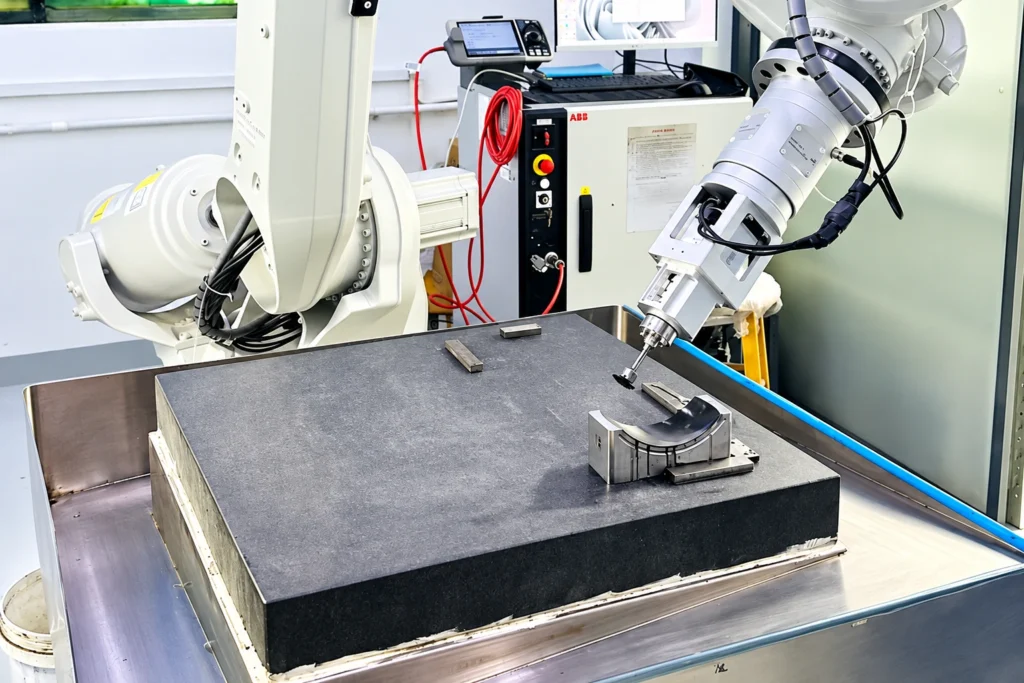
Robot polishing is particularly useful when the surface is accessible and the tool can follow a repeatable path.
For suitable curved surfaces and larger finishing areas, automation helps maintain consistent movement and contact conditions. Once the process has been properly developed, the same approach can be repeated across similar parts.
This is valuable when a project requires stable finishing results rather than depending entirely on individual operator technique.
However, repeatability alone does not guarantee a good result. The polishing tool, contact pressure, path, surface geometry and workpiece setup must all be appropriate.
A robot can repeat a programmed path consistently, but that path still needs to be suitable for the actual part.
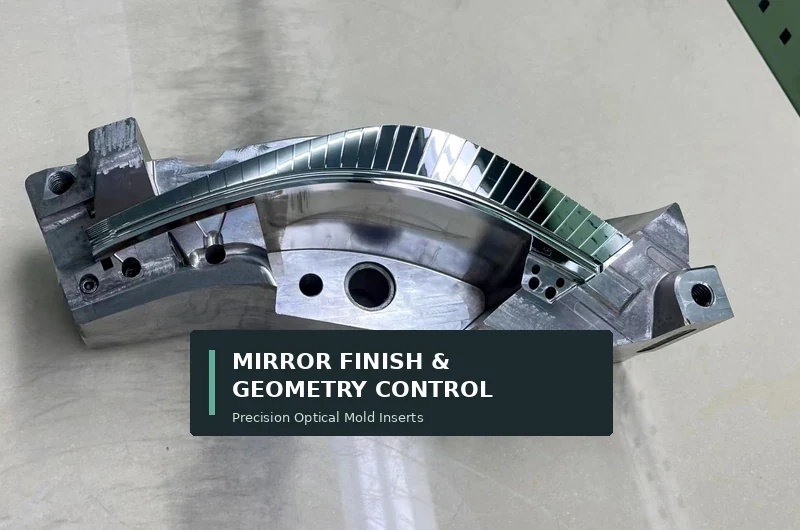
Our automated polishing work on automotive AR-HUD mold inserts illustrates how robotic finishing can be integrated with precision machining and inspection.
Where Manual Mirror Polishing Still Matters
1. Restricted corners and difficult-to-reach areas
Some mold inserts contain narrow transitions, recessed features or irregular regions where the polishing tool has limited access.
Whether a robot can finish these areas depends on the tool size, approach angle, surrounding geometry and available clearance.
In certain cases, a skilled technician can reach the feature more effectively using a suitable manual tool and controlled local finishing.
The decision should be based on the actual geometry, not on the assumption that every corner must be polished manually.
2. Small, localized surface defects
After automated polishing, an insert may still have a small area that needs additional attention.
An experienced technician can inspect the defect, judge whether further material removal is appropriate and adjust the finishing method accordingly.
This is different from polishing the entire surface by hand. The objective is to correct only the area that needs it, without unnecessarily disturbing the surrounding finish.
If the defect is too deep or removing it would compromise the geometry, additional polishing may not be the right solution. The part should be assessed before more material is removed.

3. Irregular transitions and sensitive features
Some surfaces change curvature quickly or sit close to a critical boundary. These features may require a more localized finishing strategy.
For example, a mirror surface may meet a small radius or a defined edge. Improving the reflection is not the only requirement; the original geometry must also be preserved.
Our article on preventing edge rounding during mirror polishing explains why these areas need particular care.
Manual finishing is valuable here when it provides better control, but it is not automatically safer. The technician still needs clear limits on material removal and an understanding of which features must remain unchanged.
Why We Do Not Choose One Method for the Entire Insert
A complex mold insert rarely has the same finishing requirements everywhere.
A broad, accessible surface may be suitable for robotic polishing. A restricted corner may require manual finishing. Another region may already meet its surface requirement after machining and need no additional polishing.
Applying the same method to every area can create unnecessary work.
Using manual polishing everywhere may introduce avoidable variation and consume time on surfaces that could be finished more consistently through automation. Relying entirely on a robot may also leave some local features needing correction.
Our approach is to divide the insert into finishing zones and decide how each area should be treated.
How We Combine Automation and Skilled Finishing
At Yishun Optical, our polishing capability combines six-axis robotic automation with a team of 15 polishing technicians, each with more than 10 years of experience.
The equipment and the technicians serve different purposes. The important part is deciding how they work together.
Our process review focuses on five steps:
- Identify the critical areas. Mark the surfaces requiring a mirror finish, restricted features and geometry that must be protected.
- Review the starting surface. Determine whether machining has left a suitable surface for finishing or whether a separate correction is necessary.
- Assign suitable areas to automation. Use robotic polishing where access, tool contact and path repeatability support a stable process.
- Define manual finishing zones. Reserve skilled local finishing for areas that genuinely need it, rather than polishing the entire insert by hand.
- Inspect the finished features. Check surface condition and critical dimensions against the agreed acceptance criteria.
This approach helps us avoid treating polishing as an open-ended operation. Each finishing step should have a clear purpose.
When Should You Stop Polishing?
One important decision is knowing when further polishing is no longer worthwhile.
A visible mark may appear to be a simple surface problem, but removing it could require more material than the feature can safely tolerate.
Before continuing, we consider the defect’s location and severity, the remaining finishing allowance and the geometry around it.
If removing the mark risks changing a critical feature, we review whether another corrective route is possible. More polishing is not automatically the best answer.
This judgment matters whether the work is performed by a robot or manually.
What Should You Provide for a Polishing Review?
If your mold insert has complex geometry or demanding surface requirements, send us the complete 3D model and relevant 2D drawings.
Please identify the mirror-finish areas, restricted corners, critical edges and dimensions that must remain stable. If there are specific cosmetic defects or acceptance requirements, include those as well.
We can then assess which areas are suitable for automated polishing, which may need skilled manual finishing and which should be reviewed before further material is removed.
The goal is not to eliminate manual polishing or automate every operation. It is to use each method where it provides the best control over the finished part.