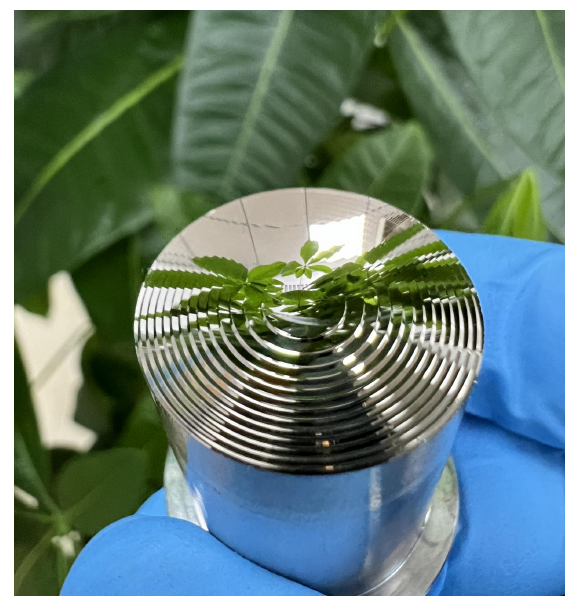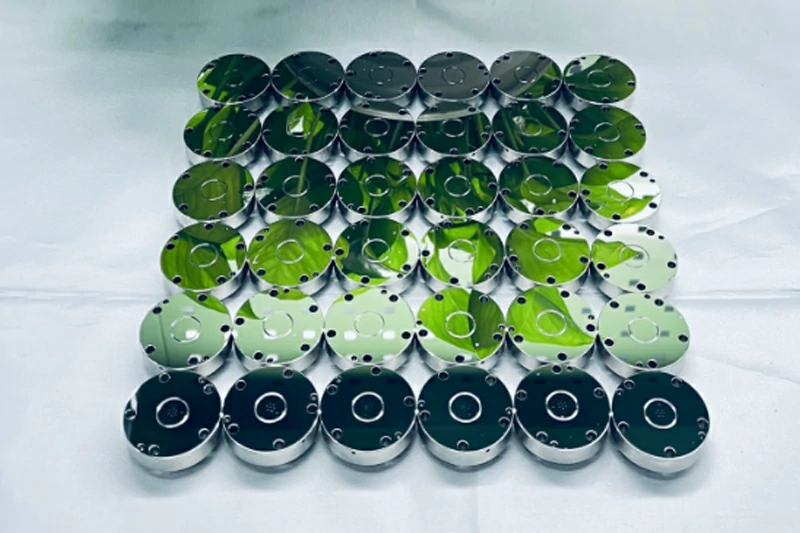
When customers request a mirror mold insert, the first requirement is often simple:
“We need a mirror finish.”
However, a mirror finish alone does not define the complete machining challenge.
A complex mold insert may include curved optical surfaces, deep cavities, small-radius transitions, narrow grooves, internal features, or strict dimensional requirements.
Each feature can influence the final machining strategy.
Choosing the wrong process at the beginning can create problems later:
- excessive polishing time;
- unstable surface quality;
- damaged edges;
- geometry deviation;
- repeated corrections;
- delayed project delivery.
For precision mirror mold inserts, the important question is not:
“Which machine is the best?”
The better question is:
“Which process is suitable for this specific geometry, material, and performance requirement?”
At YISHUN Optical, we evaluate mirror mold insert projects by understanding the relationship between geometry, surface requirements, machining accessibility, and inspection requirements.
The goal is not to use the most advanced equipment.
The goal is to select the right process combination to achieve stable and predictable results.
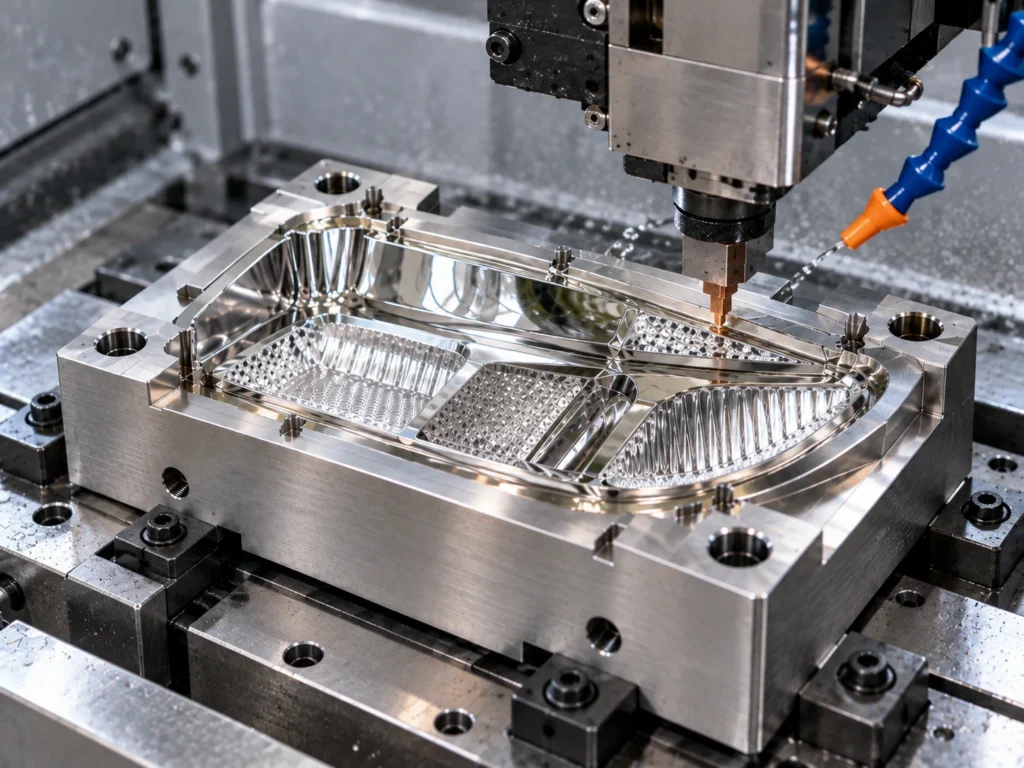
There Is No Single Process for Every Mirror Mold Insert
Different mirror mold inserts create different machining challenges.
A simple flat optical surface and a complex freeform insert may both require a mirror finish, but the manufacturing approach can be completely different.
Some parts can achieve the required surface quality through precision milling.
Others may require five-axis machining to maintain tool access and surface stability.
Certain difficult corners or narrow areas may need mirror EDM.
Some complex through-hole structures may require oil-wire EDM evaluation.
The final process depends on several factors:
- mold insert material;
- surface geometry;
- tolerance requirements;
- mirror area size;
- minimum radius;
- accessibility;
- inspection method.
A process that works well for one project may create unnecessary risks on another.
This is why process selection should happen before machining begins.
High-Speed Mirror Milling for Suitable Optical Surfaces
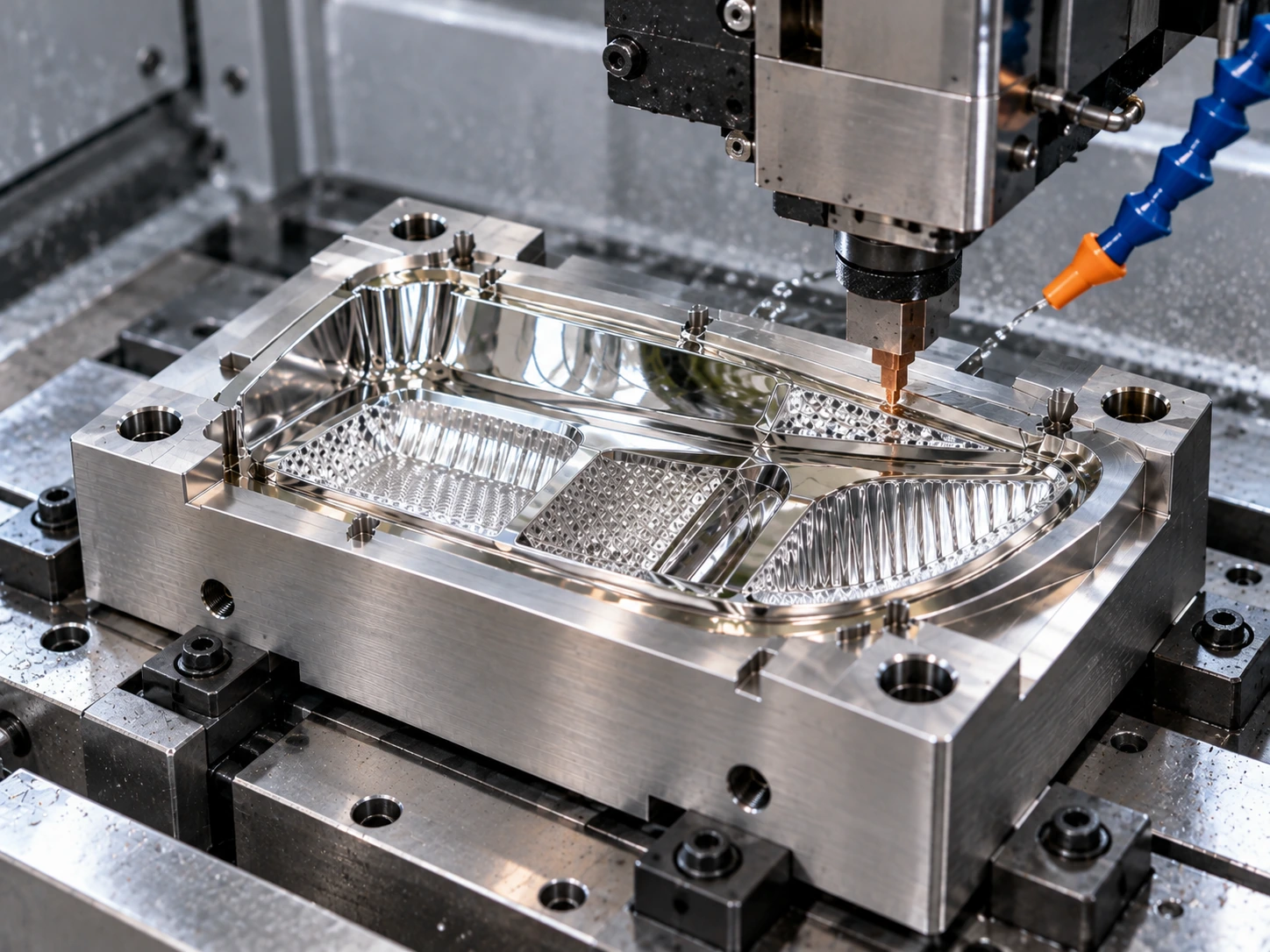
For many mirror mold inserts, precision milling can create a strong foundation before any finishing process.
When the geometry is accessible and the material is suitable, high-speed precision machining can help establish:
- accurate surface shape;
- stable dimensions;
- controlled machining allowance;
- reduced finishing requirements.
However, mirror milling is not simply about using a smaller tool and higher spindle speed.
The cutting strategy must consider:
- tool rigidity;
- tool path direction;
- cutting stability;
- remaining stock;
- machine accuracy.
If machining conditions are unstable, the surface may show unwanted tool marks, vibration patterns, or form deviation.
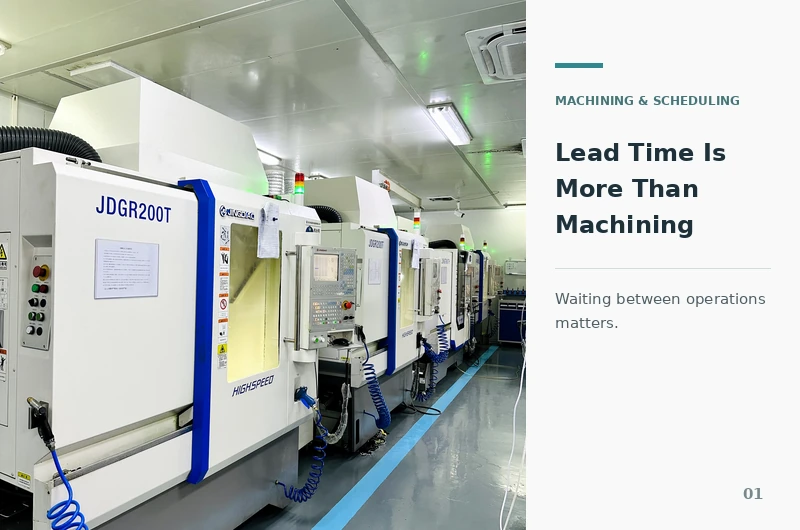
For projects requiring controlled surface quality and dimensional stability, precision CNC machining provides the foundation for evaluating tool selection, machining sequence, and geometry protection.
Five-Axis Machining for Complex Surface Geometry
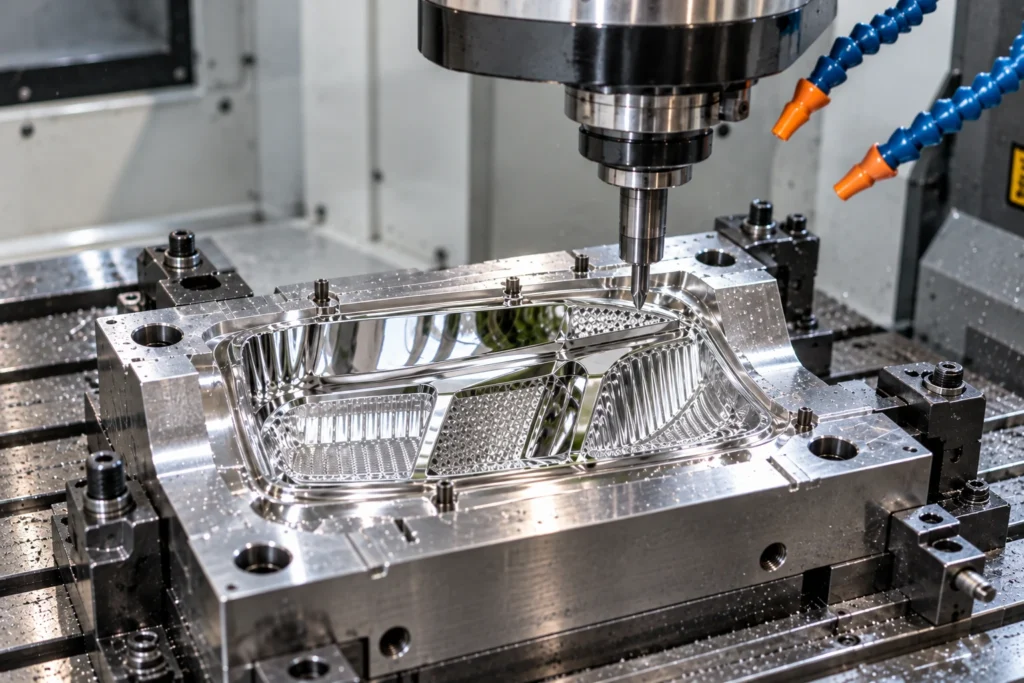
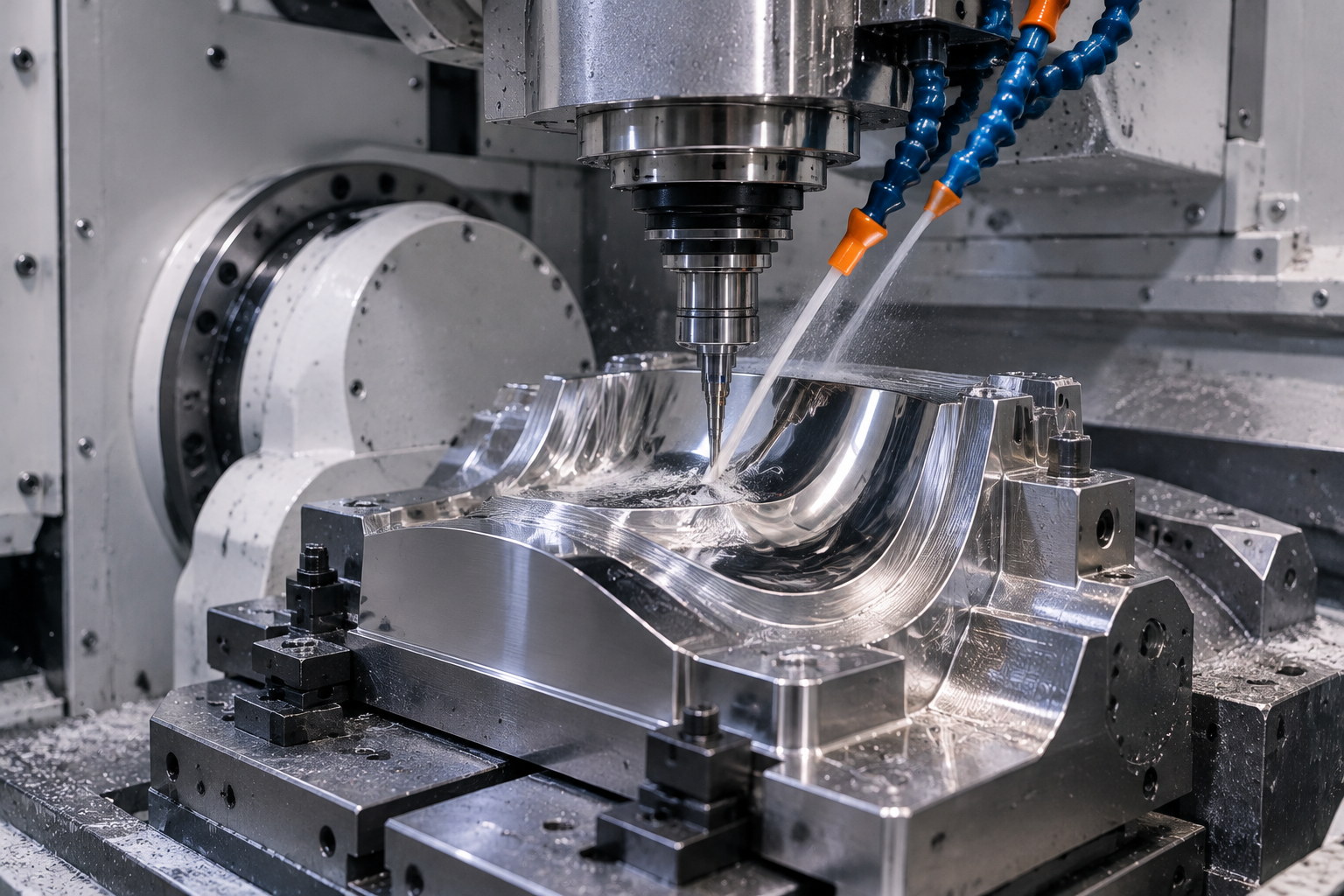
Complex optical mold inserts often contain surfaces that cannot be efficiently machined from a fixed tool direction.
Examples include:
- freeform optical surfaces;
- curved reflectors;
- complex transition areas;
- deep angled regions.
In these cases, five-axis machining can provide better tool orientation control.
The advantages include:
- improved tool accessibility;
- reduced unnecessary tool extension;
- more stable cutting conditions;
- better consistency across complex surfaces.
However, five-axis machining is not automatically the correct solution for every project.
The programming strategy, fixture design, cutting direction, and inspection requirements must still be considered.
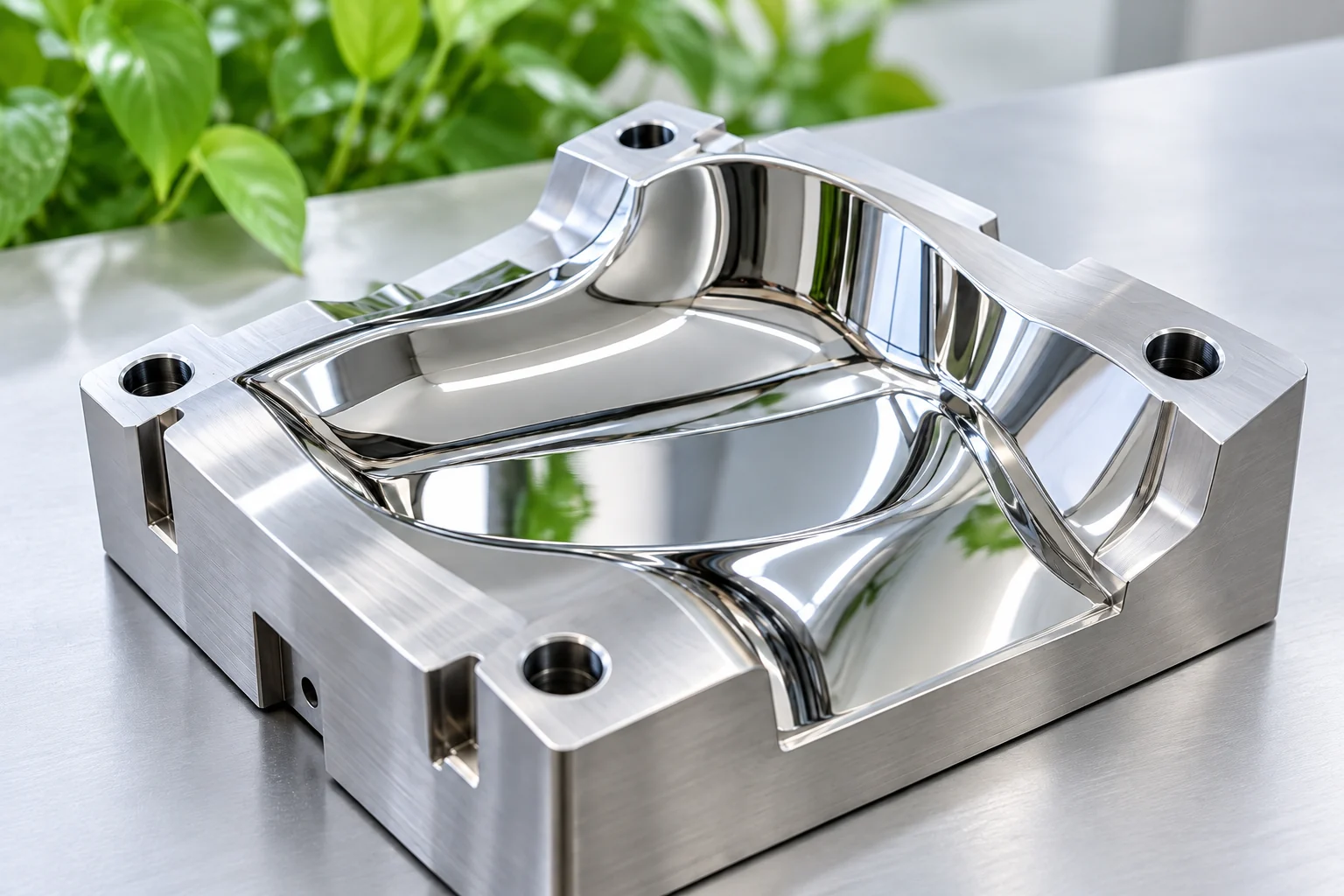
For suitable applications, five-axis mirror machining helps control complex optical surfaces where both mirror finish and geometry accuracy are important.
The purpose is not simply to add more machining capability.
It is to create a more stable process for difficult geometries.
Mirror EDM for Difficult Features
Some mirror mold inserts contain areas where traditional cutting tools cannot easily reach.
Examples include:
- narrow slots;
- deep corners;
- difficult internal transitions;
- small-radius features.
In these situations, mirror EDM can become an important option.
EDM does not rely on direct cutting contact between the tool and workpiece.
This allows it to process certain difficult geometries where mechanical tool access is limited.
However, EDM selection also requires careful evaluation.
The customer should consider:
- required surface quality;
- material type;
- feature size;
- edge requirements;
- acceptance criteria.
Mirror EDM is not a replacement for every machining process.
It is a solution for specific geometry challenges.
The best results often come from combining machining methods instead of forcing one process to complete every feature.
Oil-Wire EDM for Complex Through-Hole Structures
Some mirror mold inserts contain irregular through-hole structures or internal contours.
For suitable conductive materials, oil-wire EDM can provide another possible machining route.
Because the wire does not require physical cutting pressure against the side wall, it can be considered for certain narrow or complex profiles.
However, process suitability depends on the actual structure.
Important factors include:
- whether the feature is a through-hole or blind cavity;
- wire access conditions;
- required contour accuracy;
- surface requirements;
- inspection capability.
Oil-wire EDM should be evaluated based on engineering requirements rather than selected simply because the feature looks difficult.
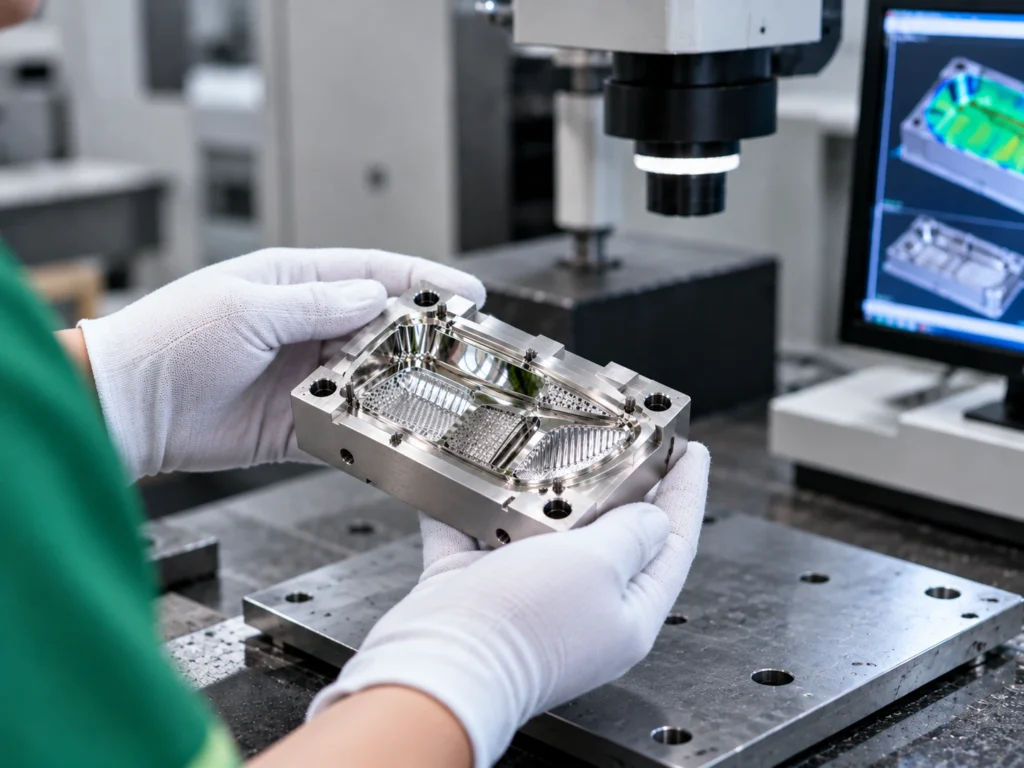
A technically suitable process must also provide a reliable inspection method.
The Wrong Process Can Increase Project Risk
Many machining problems do not begin during production.
They begin when the wrong process is selected during project evaluation.
For example:
A supplier may choose excessive polishing because the machining process cannot achieve a stable starting surface.
A long tool may be selected for a deep cavity even though tool deflection creates geometry problems.
A single machining method may be applied to a part that actually requires multiple processes.
These choices can lead to:
- additional manual correction;
- unstable repeatability;
- longer delivery time;
- increased project cost.
For mirror mold inserts, the best process is usually the one that reduces unnecessary correction.
A controlled machining route creates a better foundation for finishing and inspection.
Process Selection Should Start From the Geometry
At YISHUN Optical, we do not select a process based only on the requested surface finish.
We first review the actual part requirements.
The evaluation includes:
- 3D surface geometry;
- material properties;
- critical dimensions;
- mirror surface areas;
- minimum radius requirements;
- machining accessibility;
- final inspection expectations.
For example:
A freeform optical surface may require five-axis machining.
A narrow difficult corner may require EDM evaluation.
A complex through-hole may require oil-wire EDM consideration.
A high-gloss visible surface may require controlled finishing after machining.
The final solution may combine several processes.
The objective is not to minimize the number of processes.
The objective is to minimize unnecessary risk.
Surface Finish, Geometry, and Inspection Must Be Considered Together
A mirror mold insert is successful only when the finished component meets the customer’s actual requirements.
Surface finish is important.
But geometry accuracy is equally important.
A bright surface cannot compensate for incorrect form.
A precise shape cannot compensate for unacceptable surface quality.
Both must be controlled together.
This is especially important for optical applications where small deviations can affect the final product performance.
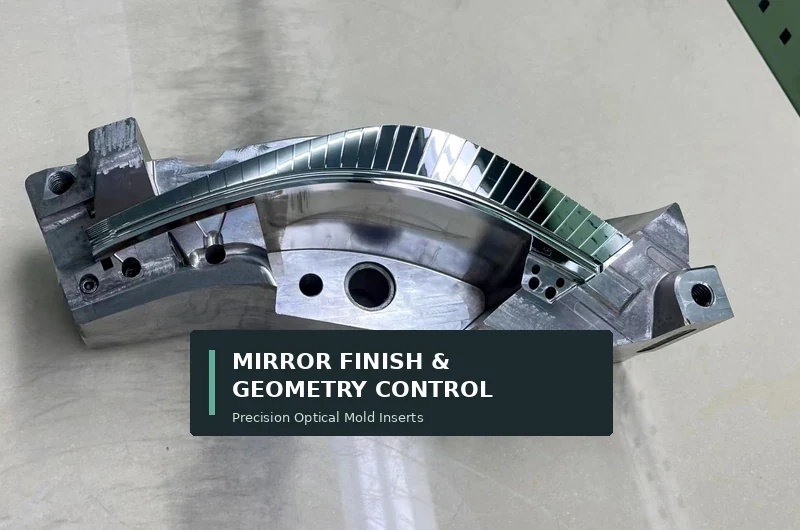
For complex optical components, freeform mold insert surface accuracy requires coordination between machining, finishing, and measurement.
The process decision should therefore include the inspection method from the beginning.
How YISHUN Reviews Mirror Mold Insert Projects
When reviewing a new mirror mold insert project, we start with the customer’s actual challenge.
We analyze:
- what features are difficult;
- which surfaces are functional;
- where tool access is limited;
- what accuracy must be maintained;
- how the final result will be verified.
Then we evaluate the suitable process route.
This may involve precision milling, five-axis machining, mirror EDM, oil-wire EDM, finishing, or a combination of methods.
Every project has different priorities.
Some require maximum surface quality.
Some require strict geometry control.
Others require protecting delicate features.
The right process is the one that balances all requirements.
Choosing the Right Process Creates Better Results
Mirror mold insert machining is not only about equipment capability.
It is about understanding the relationship between geometry, material, surface requirements, and production risk.
A successful project begins with the correct process decision.
If your mirror mold insert project involves complex surfaces, difficult features, tight tolerances, or uncertain machining routes, YISHUN Optical can help evaluate the practical solution.
Send us your 2D drawing, 3D model, material specification, surface requirements, tolerance information, and inspection expectations.
We can review the machining challenges and discuss a suitable process approach for your project.
Contact YISHUN Optical: https://yishunoptical.com/