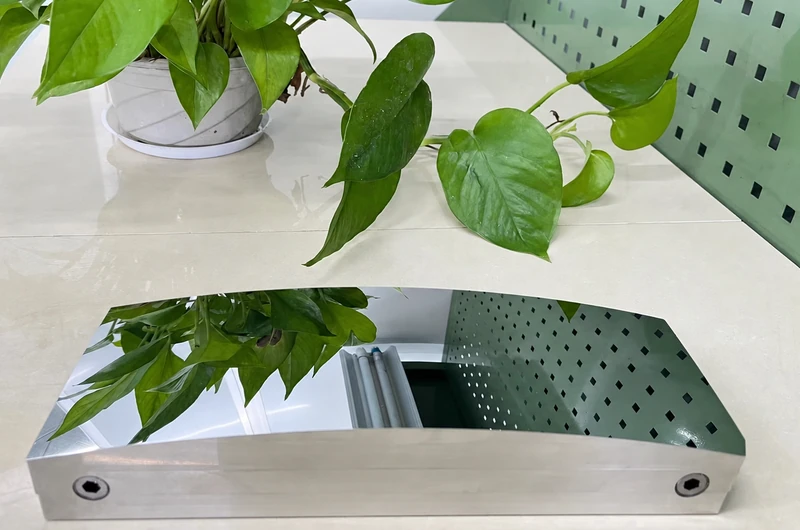
A mirror mold insert can look much better after polishing and still be worse than it was before.
We have seen this more than once.
The surface becomes bright. Tool marks are less obvious. Under normal light, the insert may even look finished.
Then the important checks begin.
A small radius is larger than it should be. A sharp boundary is softer. One local area is slightly lower. A dimensional feature has moved. On a curved surface, the reflection is bright but no longer flows the way it did before polishing.
This is one of the biggest misunderstandings around manual mold polishing:
A brighter surface does not automatically mean a better mold insert.
For a mirror insert, we are always trying to protect two things at the same time—surface quality and geometry.
If we improve one by damaging the other, the job is not finished.
The Surface Can Look Good Before the Real Problem Is Visible
When an insert comes back from polishing, the first thing people naturally notice is the gloss.
That makes sense. Mirror surfaces are visual.
But appearance is only one part of the result.
We are usually more concerned about the areas where polishing can quietly change the part: small corners, narrow ribs, transitions between surfaces, sealing or fitting areas, cosmetic boundaries and local radii.
These features do not normally fail in an obvious way.
You rarely see one moment where the edge suddenly collapses.
The change happens gradually.
A little material is removed during one polishing step. A little more during the next. The technician keeps working because one machining mark is still visible.
By the time the surface looks uniform, the original geometry may already have changed.
That is why our optical polishing services are not treated as a simple “make it shiny” operation. The polishing route has to follow the function and geometry of the insert.
Most Manual Polishing Problems Start Before the Polishing Bench
When we receive a mold insert that has been polished several times and still needs rework, we do not begin by blaming the polishing technician.
We first look at the surface they received.
This is important.
If the CNC surface has deep cutter marks, chatter, steps between tool paths or local waviness, the polishing technician has a much harder job.
They are no longer lightly refining the surface.
They are being asked to remove machining defects.
That usually means more polishing time, more pressure and more material removal.
And that is exactly when the risk of geometry change increases.
A good polishing technician can control a difficult surface better than an inexperienced one, but experience does not change the basic fact that polishing removes material.
If too much material must be removed, something will eventually change.
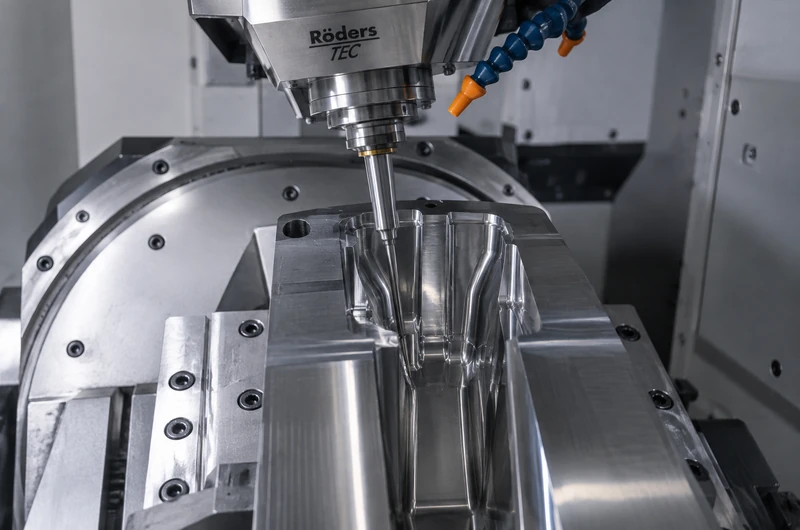
This is why we prefer to solve as much as possible during precision CNC machining rather than leaving the finishing department to correct the machining process afterward.
We Try to Make Polishing a Finishing Process, Not a Repair Process
For many mirror mold inserts, polishing is still necessary.
We are not trying to eliminate it from every project.
What we try to reduce is unnecessary polishing.
There is a big difference between spending time refining a stable machined surface and spending time trying to erase deep machining marks.
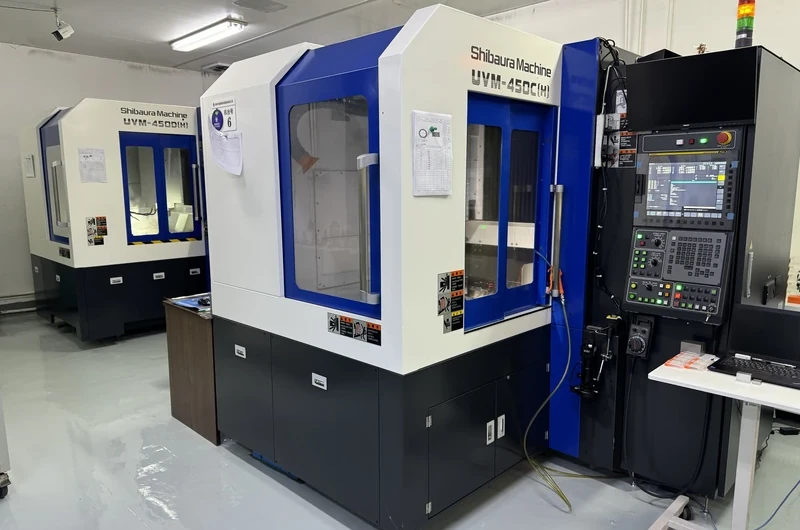
When the starting surface is already controlled, the polishing technician can work more locally and more gently.
That helps us protect small radii, edges and dimensional relationships.
When the starting surface is poor, the technician has to chase defects across a larger area.
That is when we start seeing problems such as rounded edges, collapsed corners, local depressions and shape changes.
The best result often comes from dividing the work correctly:
CNC machining establishes the geometry and produces the best practical starting surface.
Polishing improves the remaining surface condition without trying to rebuild the geometry.
A Bright Depression Is Still a Depression
One failure mode that customers sometimes overlook is local over-polishing.
Imagine one small area has a deeper machining mark than the rest of the surface.
The technician naturally spends more time there.
The mark gradually disappears.
The area becomes shiny.
Visually, that can look like a successful correction.
But material has been removed from that local zone more than from the surrounding surface.
On some parts, that difference is small enough not to matter.
On a precision mirror mold insert, especially one with a functional freeform or appearance-critical surface, it may matter a lot.
This is why we do not judge the result only by whether the scratch or cutter mark disappeared.
We also ask what had to be removed to make it disappear.
Sometimes the safest decision is to stop polishing and go back to machining.
Robot Polishing Helps Most When the Process Is Already Defined
We also use automated polishing for suitable surfaces.
Its advantage is repeatability.
Once the contact condition, path and pressure are defined correctly, a robot can repeat the same process far more consistently than purely manual work.
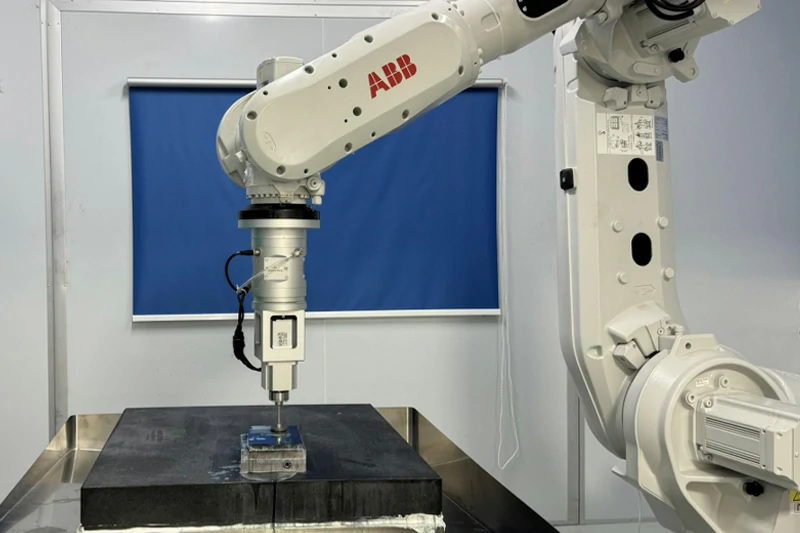
That is useful on suitable standardized areas and larger continuous surfaces.
But automation does not make the engineering decision for us.
A robot cannot decide by itself that one edge should not be touched, that a local radius is already close to its limit, or that an existing machining defect is too deep to correct safely.
A robot can repeat a good polishing path very consistently.
It can also repeat a bad polishing path very consistently.
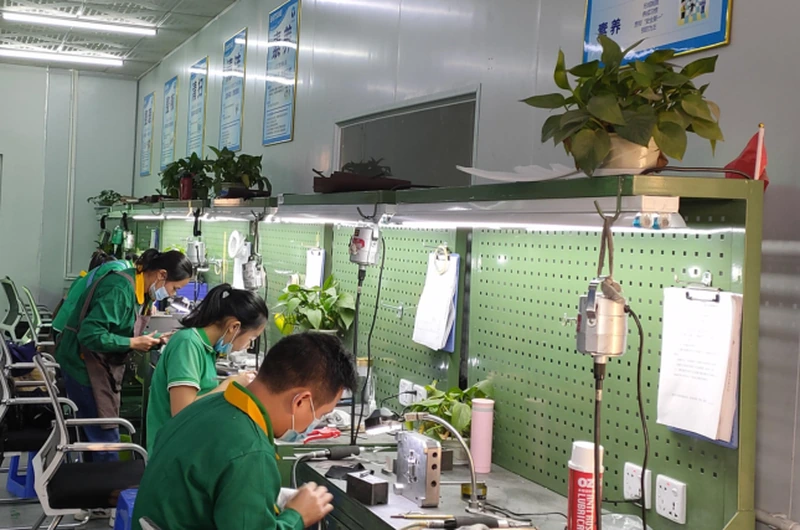
That is why automated polishing and experienced manual work are not competing processes in our shop.
We use them for different situations.
Regular, accessible areas may suit automation.
Irregular transitions, sensitive boundaries and difficult local features may still need experienced manual finishing.
The important part is deciding where each process should stop.
Complex Surfaces Need More Than a Good Polisher
On difficult inserts, tool access is often part of the polishing problem.
Deep walls, steep surfaces and narrow areas may require longer tools during machining. Longer tool overhang can introduce vibration or leave heavier marks.
If those marks are left for polishing, the finishing risk increases.
For suitable structures, 5-axis ultra-precision machining for complex mold surfaces allows us to adjust the tool orientation and improve access to the surface.
That can help us shorten tool overhang and leave a more stable starting surface before polishing.
Again, the point is not that five-axis machining replaces polishing.
The point is that better machining can make precision polishing safer.
Rework Becomes Dangerous When Nobody Knows How Much Has Already Been Removed
A new insert is usually easier to evaluate than an insert that has already been polished several times.
With a rework part, one of our first questions is:
How much material has already been removed?
Often, nobody knows exactly.
The surface may have been hand polished by different people at different times. A local area may already have been corrected several times.
This makes mold insert rework more difficult because the remaining allowance is uncertain.
Before continuing, we need to understand which dimensions are still within tolerance, which areas have changed and whether another correction step is safe.
Sometimes the insert can still be recovered.
Sometimes continuing to polish only makes the problem worse.
There are projects where the correct engineering decision is not “polish more.”
It is “stop and measure.”
We Check Geometry After Polishing, Not Only Before
If polishing can change geometry, then checking the part only before polishing is not enough.
For critical projects, dimensional and surface verification have to follow the actual risk of the part.
A ZEISS CMM may be appropriate for critical dimensions and positional relationships.
A white-light interferometer may be useful when we need to understand surface topography or roughness on suitable optical areas.
Microscope inspection can help us look at local marks, edges and small features.
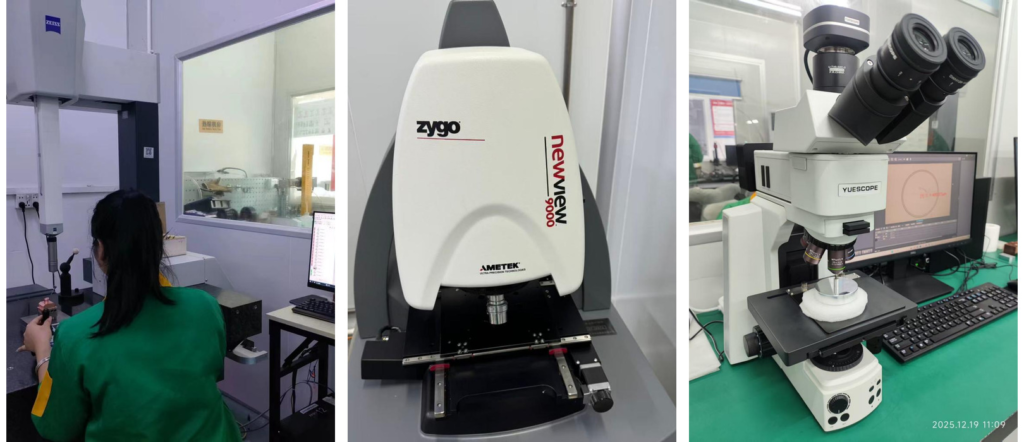
There is no single inspection method that answers every question.
What matters is that the inspection method matches the feature we are trying to protect.
Our quality management approach is based on the drawing and the actual function of the insert rather than using surface gloss as the final acceptance standard.
Before Polishing, We Want to Know Which Areas Must Not Change
One thing that makes a project much easier is a clear drawing.
If an edge must remain sharp, mark it.
If a small radius has a maximum allowable value, specify it.
If one surface is cosmetic and another controls fit or optical function, tell us.
If an area can accept a small blend but another cannot, we need to know that before finishing begins.
This information changes how we divide the polishing zones and how aggressively each area can be treated.
Without it, a technician may produce a beautiful mirror finish mold surface and still unintentionally change something that matters to the final molded part.
Can Manual Mold Polishing Be Avoided Completely?
Not always.
Some mold materials, geometries and surface requirements still need manual or automated finishing after machining.
Our goal is not to eliminate polishing at any cost.
The goal is to reduce unnecessary material removal and keep polishing within a controlled finishing range.
Why Does a Mirror Mold Insert Change Shape After Polishing?
Because polishing is still a material-removal process.
Long polishing time, high local pressure, repeated work around edges and attempts to remove deep machining marks can gradually change the local geometry.
Small radii, boundaries and transitions are usually the areas we watch most closely.
Is Robot Polishing Better Than Manual Polishing?
It depends on the surface.
Robotic polishing is useful where the path, contact and pressure can be standardized and repeated.
Manual polishing is still valuable around irregular features and areas that require local judgment.
For us, the better question is not which method is universally better.
It is which method creates the lowest risk for that specific area of the insert.
Can a Mold Insert Be Repaired After Over-Polishing?
Sometimes.
It depends on how much material has been removed, whether there is remaining machining allowance, where the damage is located and whether the affected geometry can be restored.
Before attempting another polishing cycle, we prefer to measure the part and decide whether continued finishing or controlled re-machining is the safer route.
When You Send Us a Mirror Mold Insert for Review
The most useful information is not simply “mirror polish required.”
Tell us which surfaces are functional, which are cosmetic and which dimensions or edges must not change.
Send the 2D drawing, 3D model, material, tolerance requirements and mirror-finish areas.
From there, we can decide how much should be solved during machining, where automated polishing makes sense and where experienced manual finishing is safer.
The goal is not to make the insert as bright as possible.
The goal is to finish the surface without losing the geometry you paid to machine.