
Before or After Diamond Turning: When Should Holes and Slots Be Machined?

Machining holes and slots before or after diamond turning creates different risks. Review feature intersections, support, exit edges and surface protection before choosing the sequence.
Before Polishing a Diamond-Turned Insert: What Problem Are You Trying to Solve?
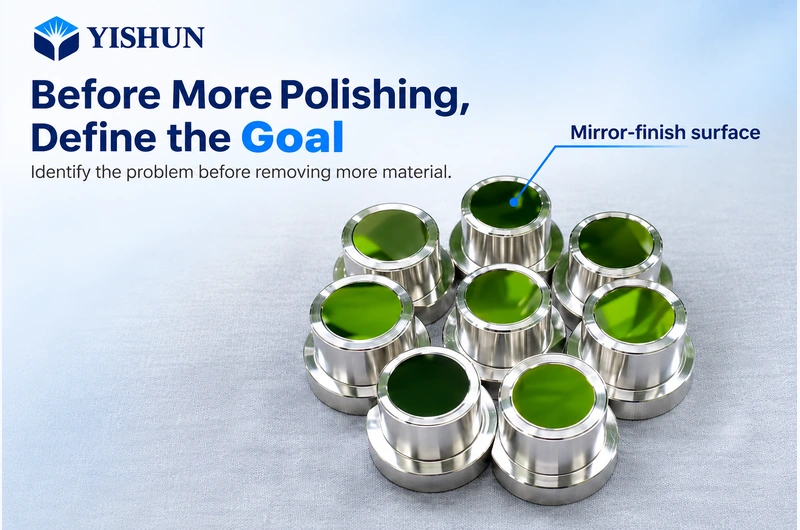
Additional polishing needs a clear purpose. Identify the surface concern, assess remaining allowance and define how improvement will be verified before removing more material.
One Roughness Note, Several Surfaces: Does the Same Requirement Apply Everywhere?
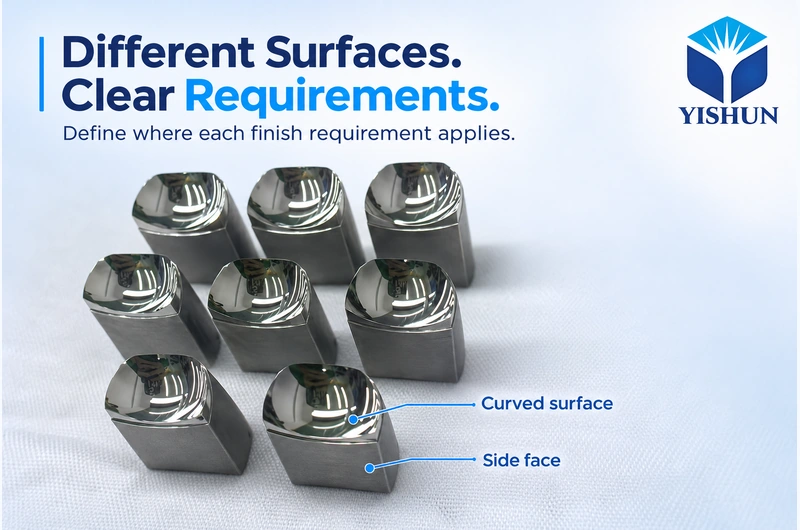
A general roughness note can affect working faces, locating features and recesses differently. Clarify its scope, resolve conflicting callouts and agree on verification before production.
The Roughness Value Changed—Did the Surface Change?

A revised roughness value does not automatically mean the surface changed. Compare the underlying measurement and evaluation settings before approving further finishing.
Near the Tolerance Limit: How Should Acceptance Be Decided?
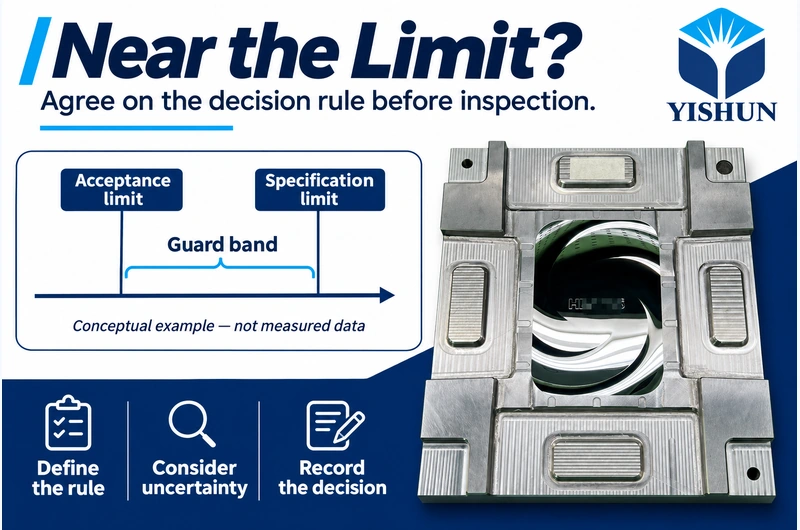
A measurement just inside tolerance does not explain the acceptance decision by itself. Agree on uncertainty treatment, decision rules and the response to unresolved results before inspection.
The Cutter Reaches the Surface—Does the Tool Holder Clear the Cavity?

A cutter that reaches the surface does not prove the complete assembly will clear the cavity. Review holder geometry, tool projection, tilt and connecting movements before machining.