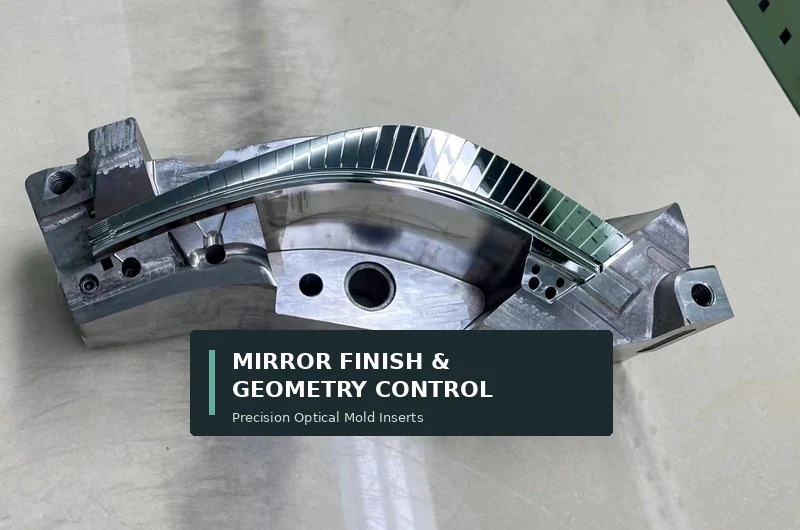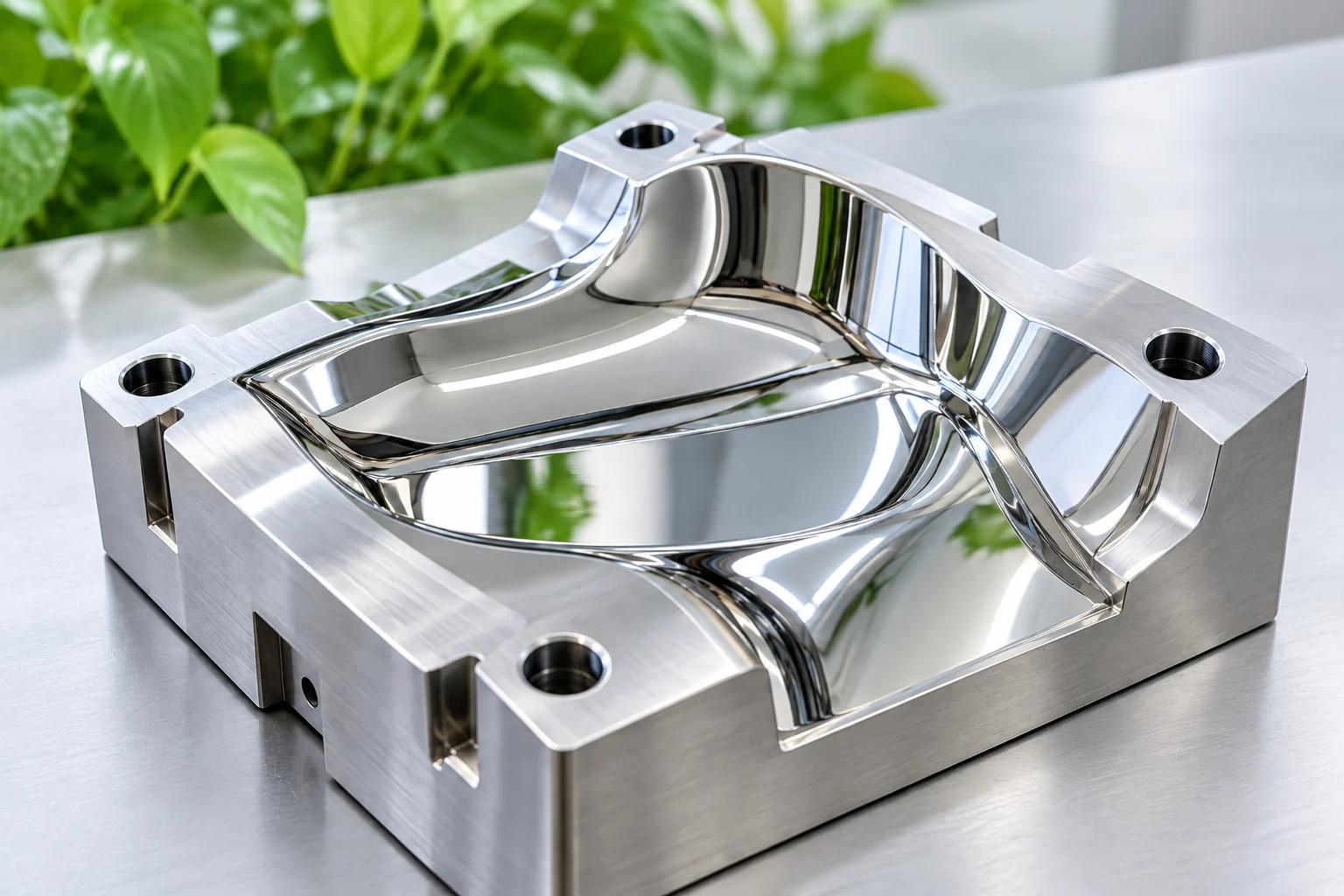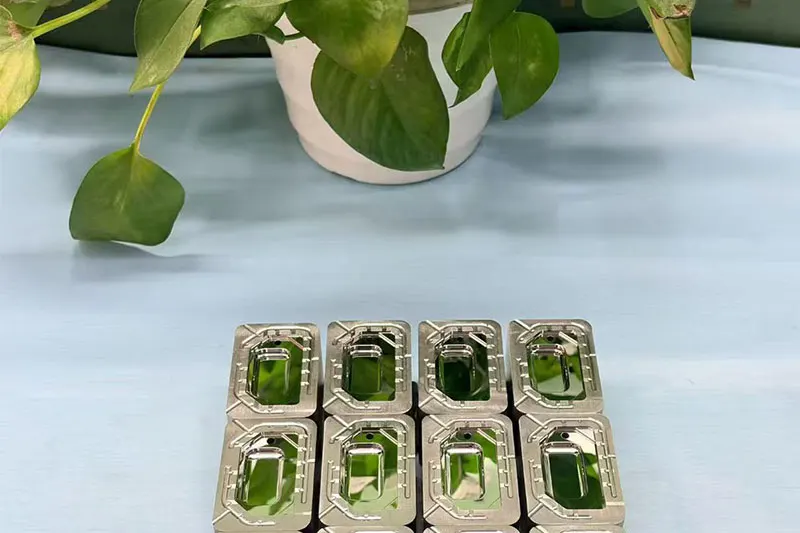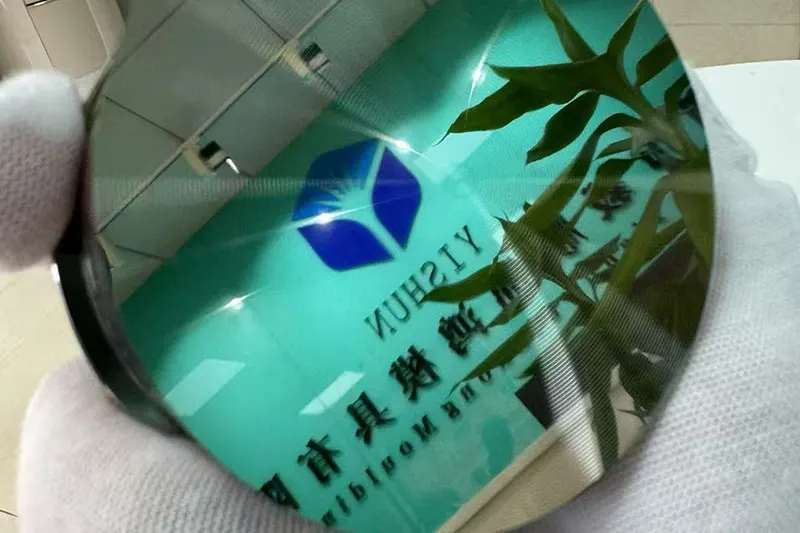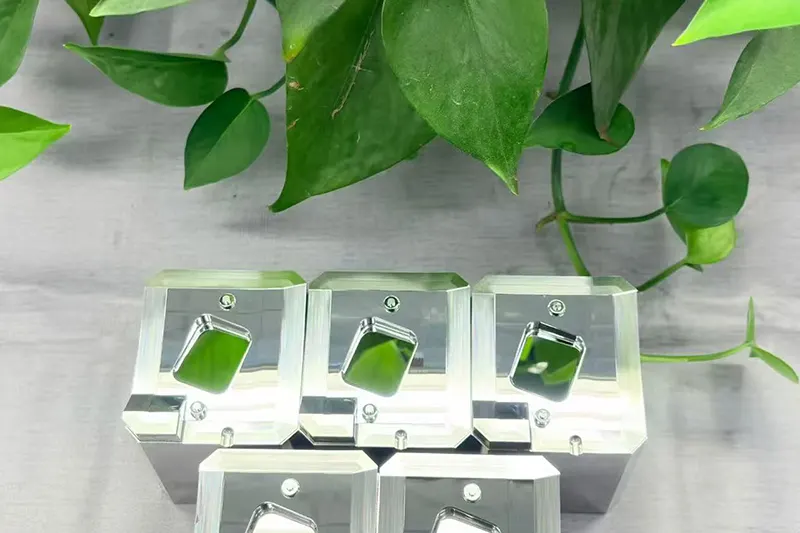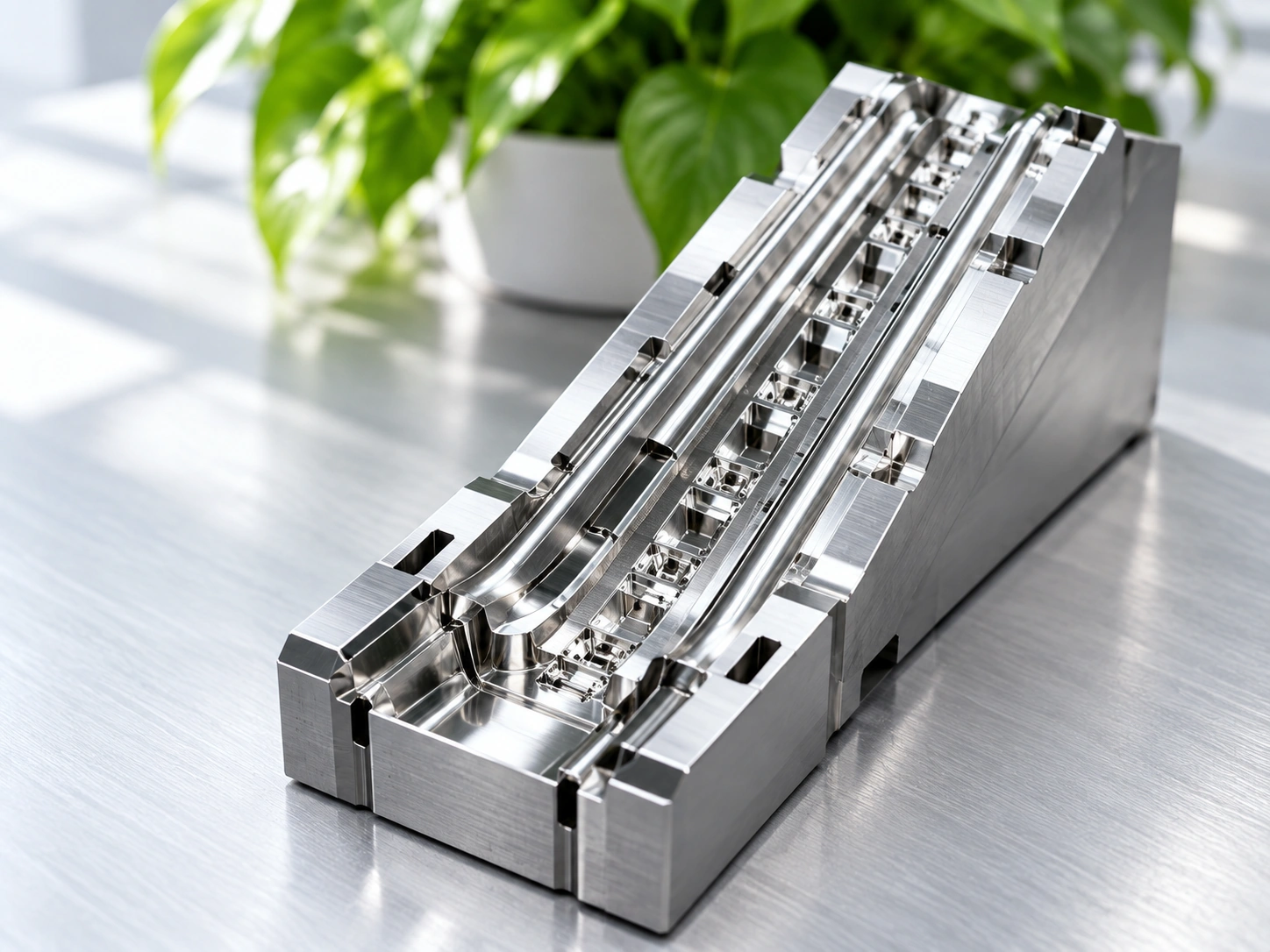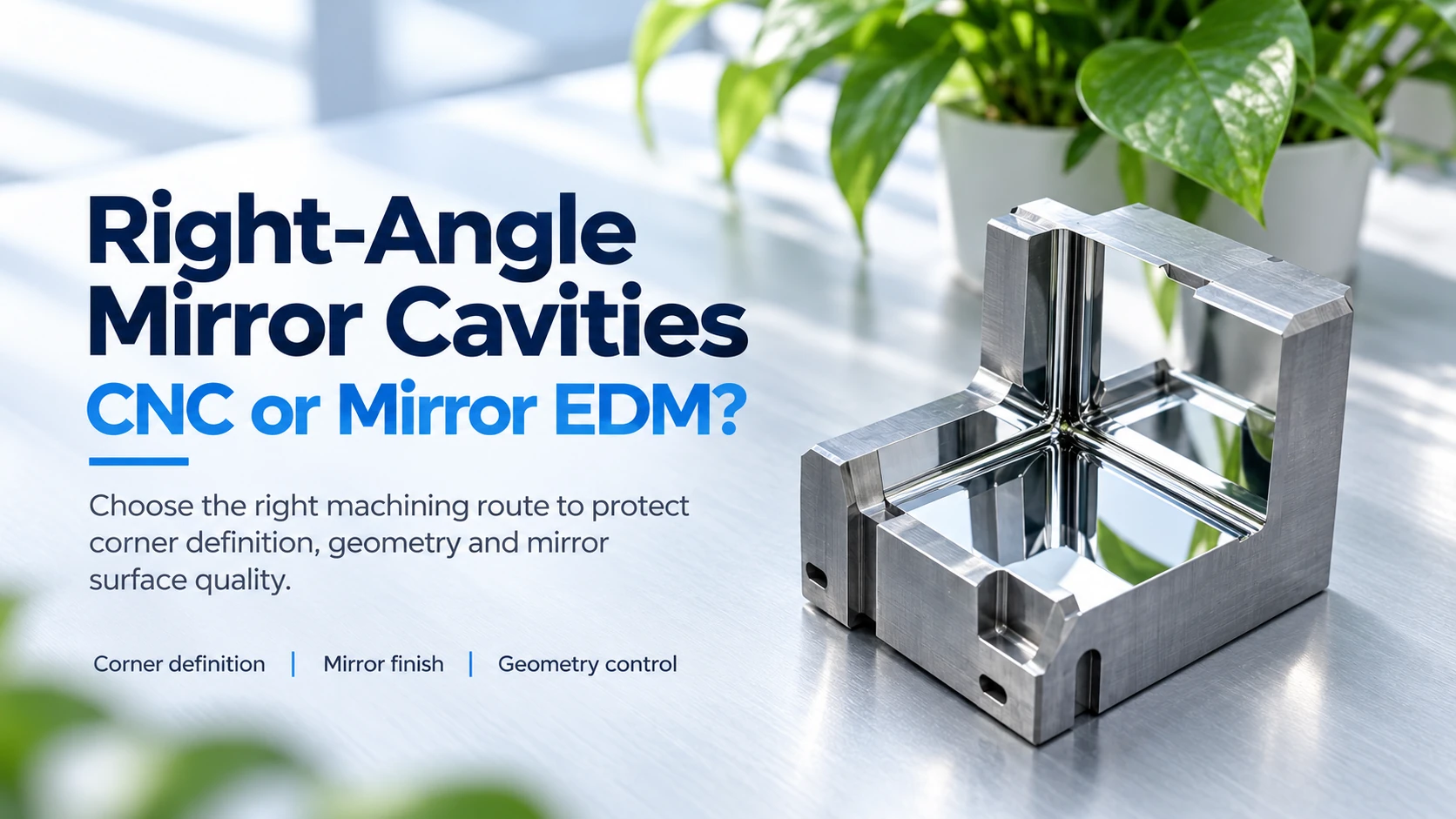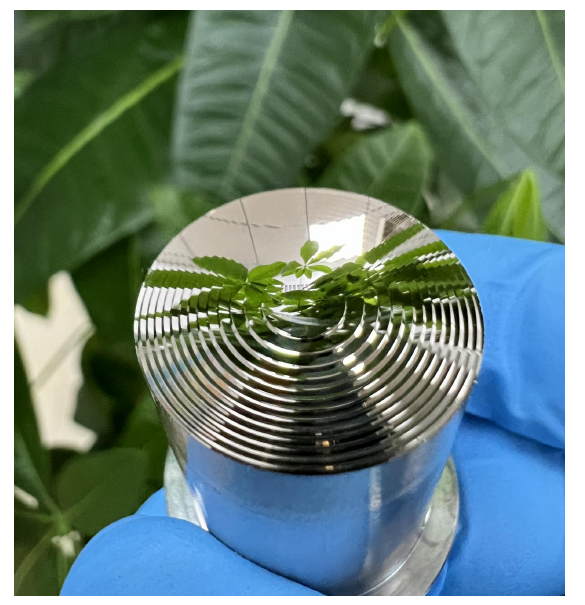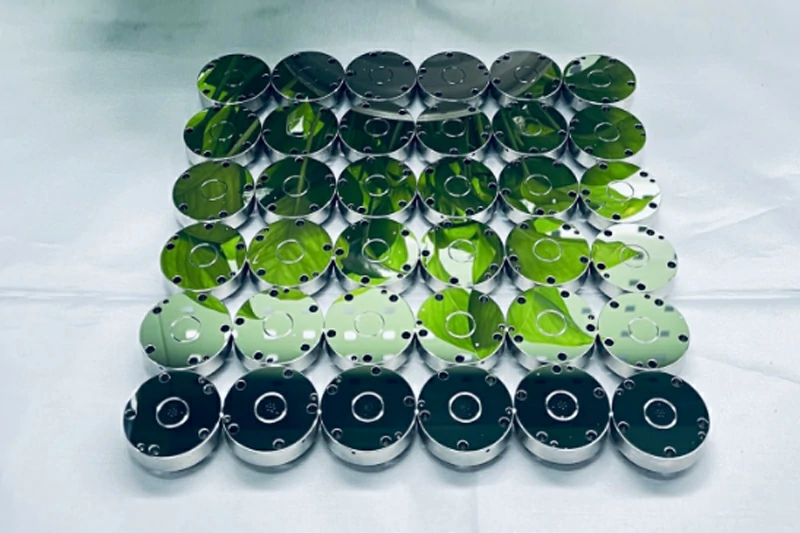
Chemical mechanical polishing (CMP) delivers the exceptional surface quality essential for optical mold applications in semiconductor manufacturing, achieving nanometer-level planarization through synergistic chemical and mechanical actions. Yishun Optical applies advanced CMP optical polishing techniques using precision-controlled processes, supported by 25 five-axis machining centers and ABB robotic polishing systems with ±0.001mm repeatability. This comprehensive guide examines CMP process fundamentals, parameter optimization, and quality metrics that define successful optical surface CMP operations.
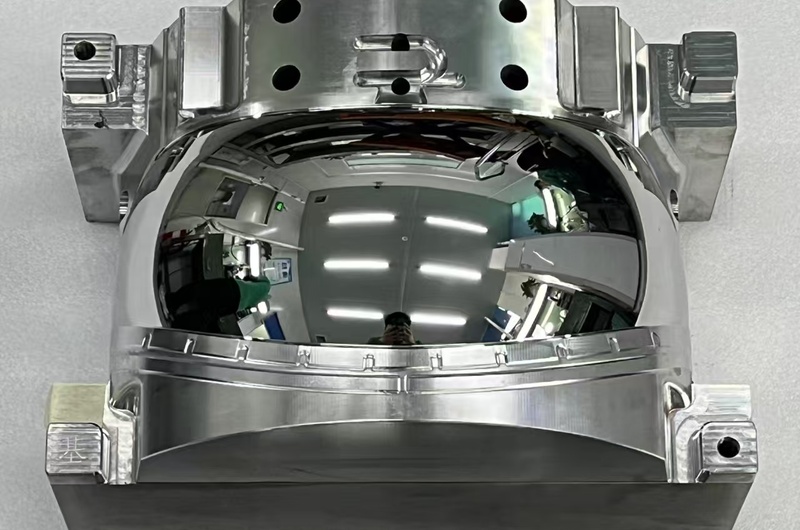
Optical mold surfaces for lithography, precision optics, and advanced packaging require surface figures below λ/20 and roughness values reaching Ra≤0.005μm. Achieving these specifications demands process control capabilities that Yishun Optical has developed through 20+ years of precision manufacturing experience serving 300+ global partners.
Fundamentals of Chemical Mechanical Polishing
The CMP Process Mechanism
Chemical mechanical polishing combines chemical reaction with mechanical abrasion to achieve material removal with minimal sub-surface damage. The synergistic mechanism enables planarization at nanometer scales while preserving surface integrity essential for optical performance.
During CMP optical polishing, slurry chemicals first react with the mold surface to form a softened reaction layer. Mechanical abrasion from abrasive particles then removes this chemically modified layer, exposing fresh material for subsequent chemical attack. This cyclic mechanism continues until surface specifications are achieved.
The chemical component provides selectivity that preferentially removes high points, enabling planarization across patterned surfaces. Mechanical action controls removal rate and prevents excessive chemical attack that could compromise surface integrity.
Yishun Optical’s CMP processes integrate these fundamental mechanisms with precision equipment that maintains stable conditions throughout the polishing operation.
Evolution of CMP Technology
CMP technology originated in the 1960s for achieving planar surfaces on glass and metal components. IBM first applied CMP to semiconductor wafer processing in 1988, establishing the process that enables modern integrated circuit manufacturing.
Advances in slurry chemistry, polishing pad materials, and process control have expanded CMP applications to optical mold manufacturing. Today, CMP optical polishing enables surface qualities unachievable through purely mechanical methods.
Yishun Optical has adopted these technological advances while developing proprietary processes optimized for optical mold applications. The combination of established CMP fundamentals with application-specific expertise delivers consistent results.
Equipment and Process Configuration
Polishing Platform Requirements
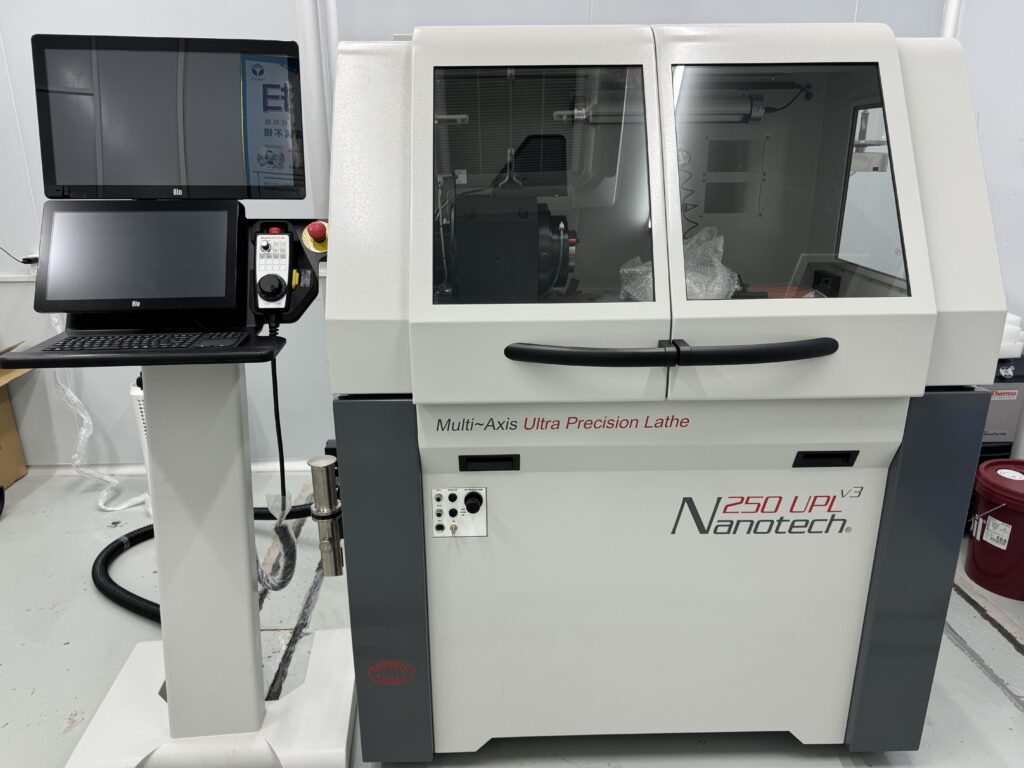
CMP optical polishing equipment must maintain precise control over pressure distribution, relative velocity, and slurry supply. Yishun Optical employs advanced polishing platforms with multi-zone pressure control that ensures uniform material removal across the entire mold surface.
Carrier designs accommodate diverse mold geometries while maintaining pressure distribution uniformity within 2%. Back-pressure control prevents deflection that could compromise flatness on thin-walled structures.
The integration of process control systems with polishing equipment enables closure optimization that maintains consistent results across production batches. Yishun Optical’s equipment investments support the automation necessary for high-volume optical surface CMP operations.
Polishing Pad Selection
Pad material properties influence both removal rate and surface quality in CMP processes. Polyurethane pads offer durability and consistent performance, while softer pads provide superior conformality for patterned surfaces.
Multi-layer pad constructions combine support rigidity with surface compliance, optimizing performance for specific applications. Yishun Optical’s process engineers select pad configurations based on mold material, geometry, and surface specifications.
Pad conditioning maintains consistent surface texture throughout the polishing operation. Automated conditioning systems, integrated with process control, compensate for pad wear while preserving process stability.
Slurry Chemistry for Optical Applications
Abrasive Materials
Abrasive particle selection significantly influences CMP performance for optical surface finishing. Common abrasives include silicon dioxide (SiO₂), aluminum oxide (Al₂O₃), and cerium oxide (CeO₂), each offering distinct removal characteristics.
Silica slurries provide gentle material removal suitable for final surface finishing. The sub-micron particle sizes enable smooth surfaces without scratching that could compromise optical performance.
Cerium oxide offers excellent removal rates combined with high selectivity, making it popular for glass optical mold polishing. Yishun Optical’s slurry formulations balance removal rate with surface quality to optimize process efficiency.
Chemical Additives
Oxidizers in CMP slurries accelerate surface chemical reactions that enable efficient material removal. Hydrogen peroxide and other oxidizing agents provide controllable reactivity without excessive etching.
pH buffers maintain chemical stability throughout the polishing operation, preventing variations that could affect removal uniformity. Yishun Optical’s slurry management protocols ensure consistent chemistry from start to finish.
Surfactants control particle dispersion and prevent agglomeration that could introduce surface defects. Anti-foaming agents maintain slurry flow characteristics essential for uniform delivery to the polishing interface.
Process Parameter Optimization
Pressure Control
Down pressure determines material removal rate and surface quality in CMP optical polishing. Excessive pressure increases removal rate but may introduce surface damage and non-uniformity.
Yishun Optical employs multi-zone pressure control that compensates for pad deflection and mold geometry variations. This adaptive approach ensures uniform material removal across the entire mold surface.
Pressure profiling adjusts removal distribution to compensate for known removal non-uniformities, enabling convergence toward target specifications. Real-time pressure monitoring provides feedback that maintains process stability.
Velocity and Motion Control
Relative velocity between the mold surface and polishing pad influences both removal rate and surface quality. Yishun Optical’s polishing systems maintain precise velocity control that ensures consistent process conditions.
Orbital and rotary motion patterns create predictable removal distributions that support process optimization. The combination of orbital and rotary motions enables uniform coverage across large mold surfaces.
Servo-controlled motion systems maintain velocity consistency throughout the polishing operation. Position feedback ensures accurate path control that prevents localized over-polishing.
Quality Metrics for Optical Mold Surfaces
Surface Figure Specification
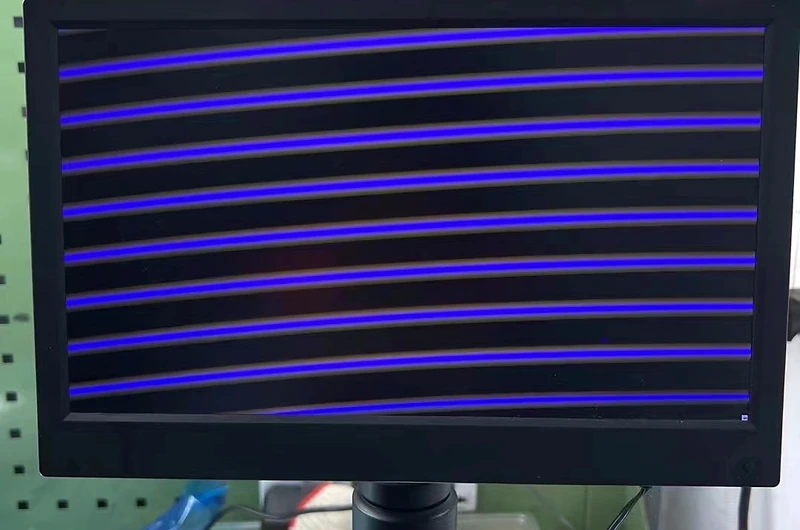
Surface figure measures the deviation of the actual surface from an ideal mathematical surface. For optical mold applications, figure errors must remain below λ/20 (approximately 32nm at 632.8nm), with some applications requiring λ/50 or better.
Yishun Optical achieves figure specifications through iterative polishing with interferometric feedback. Computer-controlled processes calculate optimal dwell time distributions that correct measured figure errors.
Statistical process control ensures that figure variations remain within specification across production batches. This capability supports high-volume optical surface CMP while maintaining quality consistency.
Surface Roughness Requirements
Surface roughness at the nanometer scale influences optical scattering and coating adhesion. Ra values below 0.5nm are achievable with optimized CMP optical polishing processes.
Yishun Optical’s precision processes achieve Ra≤0.005μm (5nm) routinely, with specialized processes reaching sub-nanometer roughness for the most demanding applications. White light interferometry and atomic force microscopy verify roughness specifications.
PSD (Power Spectral Density) analysis characterizes roughness across spatial frequencies that influence optical performance. This comprehensive characterization ensures that surface quality meets application requirements at all scales.
Subsurface Damage Assessment
Subsurface damage (SSD) represents a critical quality metric for optical mold surfaces. Even perfect surface roughness may conceal damage that affects long-term performance through coating adhesion failure or particle generation.
Yishun Optical employs chemical etching techniques that reveal SSD by preferentially attacking damaged material. The absence of etch pits indicates damage-free surfaces suitable for demanding optical applications.
Process optimization targets the elimination of SSD through controlled material removal that avoids introducing new damage during final finishing. This approach requires careful balance between removal efficiency and surface integrity.
Process Control and Monitoring
In-Process Metrology
Real-time process monitoring enables adaptive control that maintains quality while maximizing throughput. Yishun Optical integrates metrology systems that characterize surface evolution during polishing.
Endpoint detection identifies when polishing operations have achieved target specifications, preventing over-polishing that wastes cycle time and potentially introduces damage.
Force, temperature, and vibration monitoring provide additional feedback that confirms process stability. Deviations from established baselines trigger process adjustments or operator alerts.
Process Recipe Development
Each optical mold material and geometry requires optimized process parameters. Yishun Optical’s engineering team develops comprehensive recipes that specify slurry selection, pad configuration, pressure profiles, and cycle times.
Design of Experiments (DOE) methodologies systematically explore parameter spaces to identify optimal conditions. This statistical approach ensures that recipes are robust across expected material and geometry variations.
Process qualification verifies recipe performance before production deployment. This validation ensures that production processes deliver specified quality consistently.
Material-Specific CMP Applications
Glass Optical Molds
Glass materials including BK7, fused silica, and specialty optical glasses respond well to cerium oxide-based CMP slurries. Yishun Optical’s glass polishing processes achieve surfaces suitable for lithography molds and precision optical components.
The chemical composition of glass influences polishing kinetics and final surface quality. Process optimization accounts for these material differences to deliver consistent results across glass types.
Metal Optical Molds
Aluminum and copper alloy molds benefit from silica-based CMP slurries that provide controlled removal rates. Nickel-phosphorus coatings, commonly applied to metal molds, require specialized slurries optimized for electroless nickel surfaces.
Yishun Optical’s experience with diverse mold materials enables rapid process development for new applications. Material characterization supports recipe development that addresses specific surface quality requirements.
Ceramic Optical Molds
Ceramic materials present unique challenges for CMP optical polishing due to their hardness and chemical inertness. Yishun Optical employs specialized abrasive systems that achieve material removal while preserving surface integrity.
Silicon carbide and aluminum nitride ceramics require process optimization that accounts for their distinct material properties. Our engineering team develops custom solutions for challenging ceramic applications.
Post-CMP Processing
Cleaning and Surface Preparation
Residual slurry particles and reaction byproducts must be removed before final inspection and shipment. Yishun Optical employs multi-stage cleaning processes that eliminate contamination without introducing surface damage.
Ultrasonic cleaning in deionized water removes particles from surface features and blind holes. Organic solvent cleaning addresses organic residues that aqueous processes cannot remove effectively.
Surface activation treatments prepare mold surfaces for coating applications that may follow polishing. These treatments ensure coating adhesion and reflectivity specifications.
Surface Protection
Post-polish protection prevents contamination and damage during storage and transport. Yishun Optical applies temporary coatings or covers that preserve surface quality until the mold reaches its destination.
Packaging materials are selected to prevent particle generation and moisture adsorption. Controlled environment storage maintains cleanliness until the mold enters production use.
Integrating CMP with Precision Machining
Process Sequence Design
CMP optical polishing typically follows precision machining that establishes geometry and coarse surface quality. Yishun Optical designs process sequences that efficiently transition from rough machining through final polishing.
Grinding operations prepare surfaces for CMP by removing machining damage and establishing surface figures within polishing correction range. This preparatory step ensures efficient CMP operations.
Intermediate inspection points verify surface quality progression and identify any issues requiring process adjustment. This integrated approach maximizes first-pass quality.
Five-Axis Machining Integration
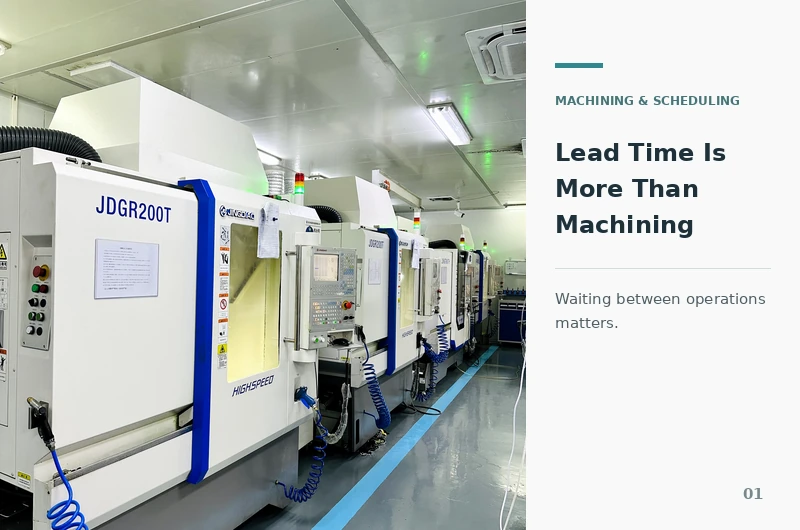
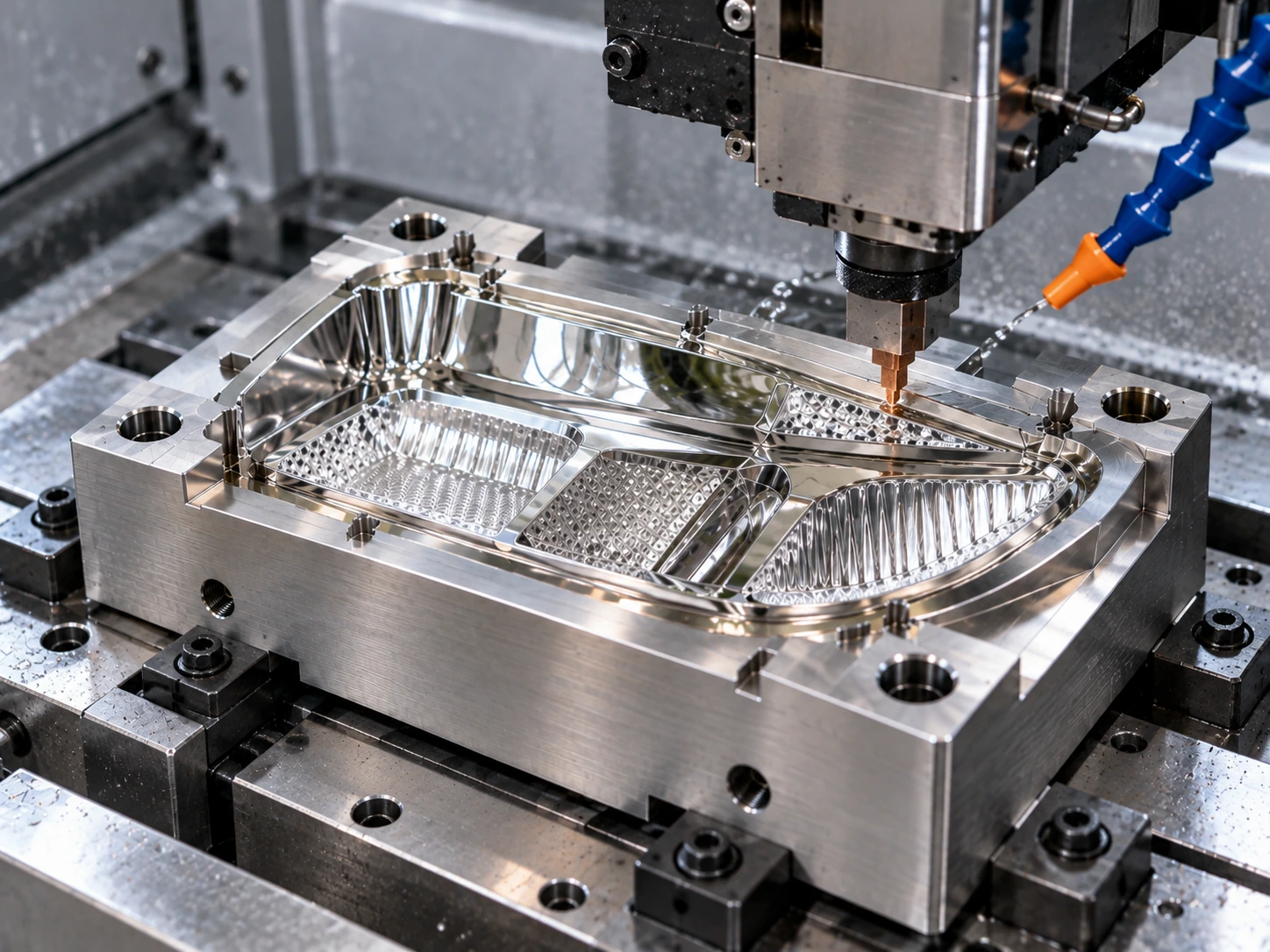
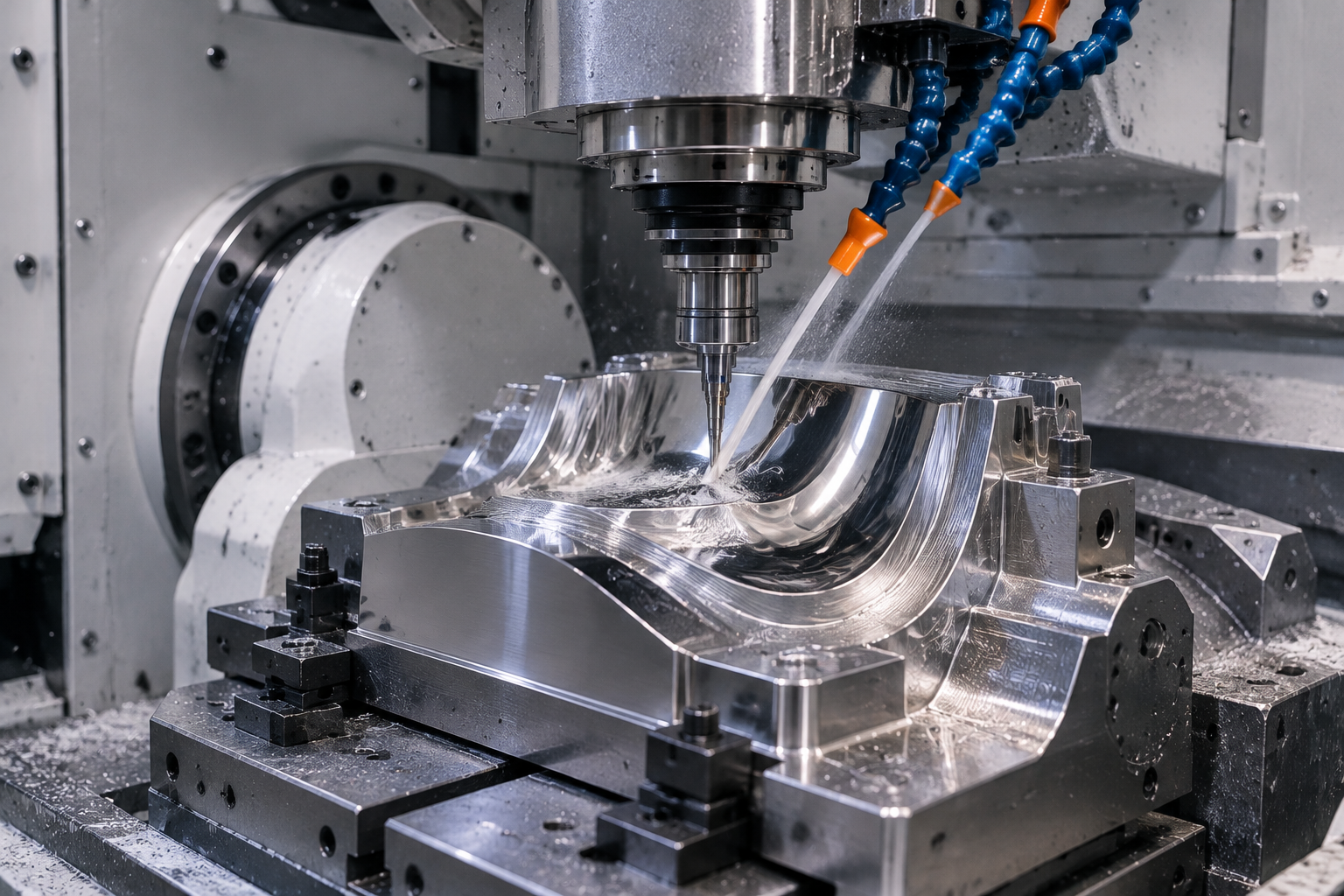
Our 25 five-axis machining centers prepare surfaces optimized for subsequent CMP processing. The combination of precision machining with advanced polishing delivers surfaces that meet the most demanding specifications.
Complex geometries benefit from multi-axis machining that establishes form accurately before polishing. This approach reduces polishing time while ensuring form accuracy.
Yishun Optical’s comprehensive capabilities enable single-source solutions for optical mold manufacturing. This integration simplifies supply chain management while ensuring quality consistency.
Quality Systems and Certifications
ISO-Certified Quality Management
Yishun Optical maintains ISO 9001 (Quality Management) and ISO 14001 (Environmental Management) certifications. These management systems ensure consistent processes and continuous improvement.
Statistical process control monitors key quality characteristics throughout optical surface CMP operations. This proactive approach identifies trends before specification failures occur.
Complete documentation supports traceability from raw material through finished optical mold. This documentation meets semiconductor industry requirements for process verification.
Customer-Specific Requirements
Beyond standard quality systems, Yishun Optical accommodates customer-specific quality requirements. The company’s Apple Gold Supplier status demonstrates capability to meet the most demanding customer standards.
First article inspection, in-process monitoring, and final acceptance testing follow customer-specified protocols. This flexibility supports diverse requirements across semiconductor, optics, and precision manufacturing industries.
Future Directions in CMP Technology
Fixed-Abrasive CMP
Fixed-abrasive polishing uses abrasive grains bonded to the polishing pad rather than suspended in slurry. This approach offers potential advantages in consistency and environmental impact.
Yishun Optical evaluates emerging technologies that may enhance future capabilities. Our commitment to technology leadership ensures continued ability to meet evolving requirements.
Intelligent Process Control
Machine learning and artificial intelligence offer opportunities for enhanced process optimization. Yishun Optical invests in research that applies these technologies to optical surface CMP.
Predictive process control could anticipate quality outcomes before measurements confirm specification achievement. This proactive approach would reduce cycle time while ensuring quality.
Conclusion
Chemical mechanical polishing delivers the exceptional surface quality essential for optical mold applications in semiconductor and precision optics manufacturing. The synergistic combination of chemical and mechanical mechanisms enables nanometer-level planarization unachievable through purely mechanical methods.
Yishun Optical’s CMP optical polishing capabilities combine advanced equipment with proprietary process expertise developed through 20+ years of precision manufacturing. Our Class 10 cleanroom, automated polishing systems, and comprehensive metrology ensure surfaces that meet demanding specifications.
For optical surface CMP requiring Ra≤0.005μm, figure below λ/20, and damage-free surfaces, partner with Yishun Optical. Our engineering team welcomes discussions about your specific requirements.
Email: yishun158@163.com | Phone: +86-755-82594863 | Website: https://yishunoptical.com/
FAQ
Q1: What surface roughness can Yishun Optical achieve with CMP optical polishing?
A: Yishun Optical achieves Ra≤0.005μm routinely with specialized processes reaching sub-nanometer roughness. White light interferometry and AFM verify surface quality at nanometer resolution.
Q2: What figure accuracy does Yishun Optical achieve on optical molds?
A: Our CMP processes achieve surface figures below λ/20 (approximately 32nm at 632.8nm), with some applications reaching λ/50 through iterative polishing with interferometric feedback.
Q3: How does Yishun Optical prevent sub-surface damage during polishing?
A: We employ controlled material removal processes that avoid introducing damage during final finishing. Chemical etching assessment verifies absence of SSD before final acceptance.
Q4: What materials does Yishun Optical polish using CMP techniques?
A: We process glass (BK7, fused silica), aluminum and copper alloys, nickel-phosphorus coatings, and ceramics (SiC, AlN). Each material requires optimized slurry chemistry and process parameters.
Q5: How does Yishun Optical ensure process consistency across batches?
A: Multi-zone pressure control, automated slurry delivery, and real-time monitoring maintain consistent conditions. Statistical process control tracks quality metrics and identifies trends.
Q6: What cleaning processes follow CMP optical polishing?
A: Multi-stage cleaning includes ultrasonic cleaning in deionized water and organic solvent cleaning. These processes remove all slurry residue and reaction byproducts.
Q7: Does Yishun Optical provide complete optical mold manufacturing or only polishing services?
A: Yishun Optical provides comprehensive optical mold manufacturing including precision machining, heat treatment, surface preparation, and CMP finishing. Our 25 five-axis machining centers and ABB robotic polishing systems enable single-source solutions.