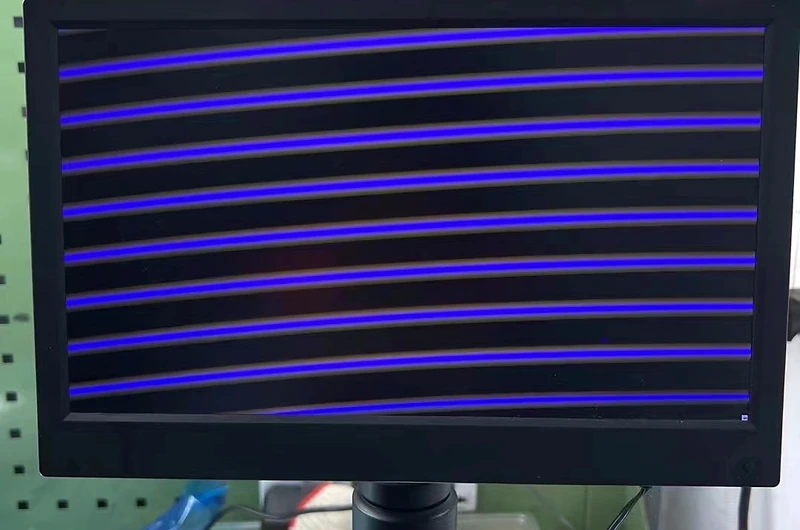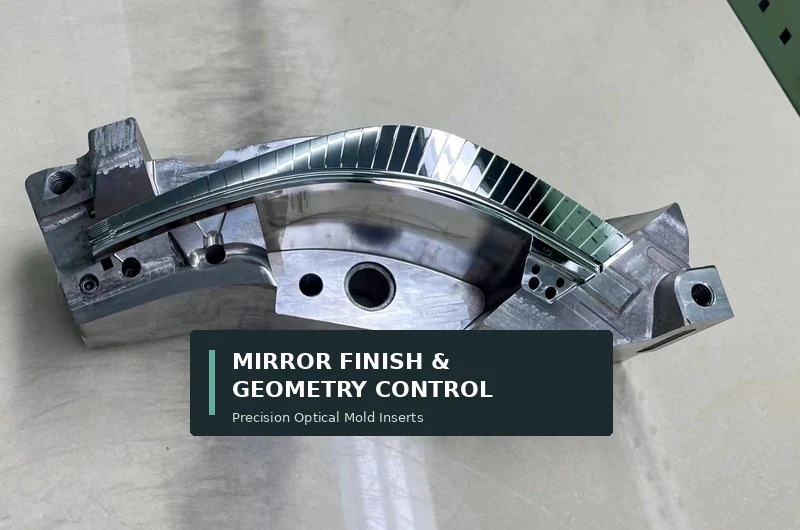
The consumer electronics industry demands increasingly exotic materials and flawless surface finishes for premium smartphones. Titanium alloy, now the material of choice for flagship device housings, presents formidable machining challenges that only ultra-precision mirror machining can solve. Yishun Optical, a leading Shenzhen five-axis mirror machining manufacturer, has developed specialized capabilities to produce titanium smartphone housing molds achieving surface roughness of Ra≤0.005μm and form accuracy of PV≤λ/4 — standards that define the difference between a good product and a flagship-tier product.
The Evolution of Smartphone Housing Materials: Why Titanium Changed the Game
Smartphone housing materials have undergone three major transitions over the past decade, each driven by shifting consumer expectations and manufacturing advances. Understanding this evolution explains why five-axis mirror machining has become essential to modern consumer electronics production.
The first generation relied on aluminum alloys — lightweight, affordable, and easy to machine through conventional CNC processes. Surface finish requirements were modest, and standard three-axis machining delivered acceptable results. The focus was on structural integrity and cost efficiency rather than aesthetic perfection.
The second wave brought stainless steel, driven by consumer demand for premium hand-feel and structural rigidity. Stainless steel offered superior strength but introduced new challenges: higher cutting forces accelerating tool wear, increased cycle times, and surface defects requiring extensive post-processing. Manufacturers found conventional approaches could not consistently deliver the mirror-quality finishes premium brands demanded.
Then came titanium alloy — specifically Grade 5 titanium (Ti-6Al-4V) — now the defining material for premium smartphones. Titanium offers an exceptional strength-to-weight ratio roughly 45% lighter than steel while maintaining comparable strength, plus natural corrosion resistance and a distinctive polished aesthetic consumers associate with luxury. However, titanium’s properties make it one of the most difficult engineering materials to machine to mirror-quality finishes.
Yishun Optical recognized this shift early and invested heavily in five-axis mirror machining infrastructure designed specifically for titanium alloy. The company’s expertise in mirror mold core customization for consumer electronics has positioned it as a trusted partner for leading smartphone brands pushing industrial design boundaries.
The core challenges of titanium machining include:
- High hardness and low thermal conductivity: Titanium generates concentrated heat at the cutting zone because it cannot efficiently dissipate thermal energy, leading to rapid tool degradation and surface integrity issues that compromise mirror-quality finishes.
- Spring-back and elastic deformation: The material’s high elastic modulus causes workpiece distortion during machining, making dimensional control within ±0.005mm extremely challenging for thin-wall sections common in modern designs.
- Chemical reactivity at elevated temperatures: Titanium reacts with cutting tool materials at high temperatures, causing built-up edge formation that destroys surface finish quality and introduces microscopic defects.
- Complex 3D surface geometries: Modern housings feature curved edges, tapered profiles, and integrated antenna windows requiring simultaneous five-axis toolpath coordination to avoid cumulative positioning errors from multiple setups.
These challenges cannot be overcome by simply adjusting cutting parameters on standard three-axis machines. They demand a fundamentally different approach — one that Yishun Optical has refined through years of precision mold polishing and ultra-precision mirror machining development specifically for consumer electronics applications.
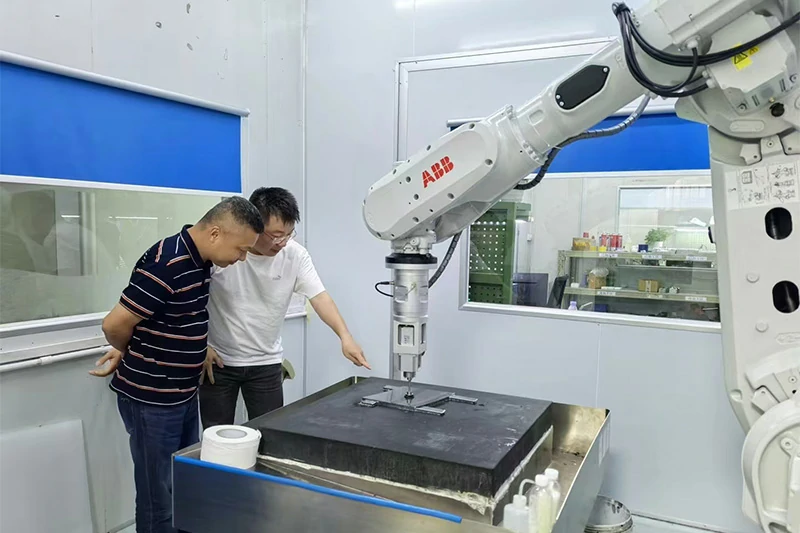
How Ultra-Precision Five-Axis Mirror Machining Overcomes Titanium’s Challenges
Yishun Optical’s approach to titanium smartphone housing machining centers on its Kern Pyramid Nano five-axis ultra-precision machining center. This equipment represents the current pinnacle of five-axis mirror machining technology, capable of achieving nanometer-level linkage accuracy across all five interpolated axes simultaneously — a capability that is essential when producing the complex freeform surfaces found in premium titanium housings.
The Kern Pyramid Nano operates with a repeat positioning accuracy of ±0.002mm, which is critical when machining titanium alloy’s complex housing geometries where even microscopic deviations can accumulate into visible surface defects. Unlike conventional five-axis machines that sacrifice surface quality for multi-axis capability, the Kern Pyramid Nano maintains mirror-grade surface finishes even during aggressive roughing passes on titanium workpieces. This is achieved through a combination of high-rigidity machine structure, real-time thermal compensation systems, and advanced vibration damping that isolates the cutting process from environmental disturbances.
For final finishing passes, Yishun Optical deploys the Moore Nanotechnology 350FG freeform diamond machining system. This equipment specializes in generating ultra-smooth surfaces on complex non-spherical geometries — exactly the type of surfaces found in premium titanium smartphone housings. The Moore Nanotechnology 350FG enables single-point diamond turning of titanium mold cores to achieve the critical Ra≤0.005μm surface roughness specification that distinguishes mirror-quality components from merely polished ones.
The five-axis mirror machining process at Yishun Optical follows a carefully structured workflow that maximizes both precision and efficiency:
- Roughing and semi-finishing on the Kern Pyramid Nano, removing bulk material while maintaining five-axis linkage accuracy to track complex housing contours. Toolpaths are optimized to minimize cutting forces and thermal loading on the titanium workpiece.
- Precision finishing using optimized toolpaths that account for titanium’s spring-back behavior, ensuring dimensional tolerance of ±0.005mm across all critical features. Yishun Optical’s engineers develop proprietary compensation algorithms to counteract material-specific deformation patterns.
- Mirror finishing on the Moore Nanotechnology 350FG, where single-crystal diamond tooling produces the final Ra≤0.005μm surface that eliminates the need for manual polishing in most applications.
- In-process verification using the Mitutoyo Crysta-Apex S500 coordinate measuring machine, providing dimensional accuracy confirmation with 0.1μm measurement precision at defined checkpoints throughout the machining cycle.
Yishun Optical’s precision mold polishing capabilities complement the five-axis mirror machining process seamlessly. When customers require surface finishes beyond what machining alone can achieve, Yishun Optical’s experienced technicians apply specialized mirror polishing techniques developed over years of consumer electronics work to reach optical-grade quality. This integrated approach — combining ultra-precision mirror machining with expert precision mold polishing — ensures every titanium smartphone housing mold meets the exacting standards demanded by premium brands.
The form accuracy of PV≤λ/4 achieved through this process means that surface deviations are measured in fractions of a wavelength of visible light. For titanium smartphone housings, this translates to surfaces that are visually flawless to the naked eye, with light reflecting uniformly across all exterior surfaces to create the distinctive premium appearance that consumers expect from flagship devices.
Titanium Housing Production: Measurable Gains in Yield and Efficiency
The theoretical advantages of five-axis mirror machining translate into tangible, measurable production benefits when applied to titanium smartphone housing manufacturing at scale. Yishun Optical has documented significant improvements across multiple key metrics through its mirror mold core customization services for consumer electronics clients.
In a representative production engagement, a leading smartphone brand required titanium alloy housing molds for a new flagship model. The housing design featured complex compound curves, thin-wall sections as thin as 0.8mm, and integrated antenna window cutouts demanding tight dimensional control. Previous attempts using conventional three-axis machining combined with hand polishing yielded unacceptable results: surface inconsistency, dimensional scatter exceeding ±0.01mm, and a yield rate below 85%.
Yishun Optical proposed a complete process redesign centered on its five-axis mirror machining capabilities. The Kern Pyramid Nano handled all multi-axis roughing and semi-finishing, maintaining consistent tool engagement angles through simultaneous five-axis interpolation that minimized titanium’s spring-back effects. The Moore Nanotechnology 350FG performed final form generation on critical exterior surfaces, achieving PV≤λ/4 in a single setup.
The results exceeded expectations across every measured parameter:
- Yield rate improved from 85% to 96%, reducing material waste and rework costs by an order of magnitude while simultaneously increasing throughput.
- Production cycle time decreased by 30%, as the five-axis approach eliminated three separate setups required by the previous three-axis workflow and the associated alignment errors at each repositioning.
- Surface consistency improved dramatically, with 100% of production housing units meeting the Ra≤0.005μm specification on first measurement — compared to only 60% conformance under the previous process.
- Dimensional accuracy held within ±0.005mm across all production units, verified by comprehensive Mitutoyo Crysta-Apex S500 inspections at defined quality gates.
Yishun Optical’s ability to deliver these results consistently stems from its investment in both world-class equipment and deep process engineering expertise. The company’s mirror mold core customization methodology includes detailed DFM (Design for Manufacturability) analysis at every project’s outset, identifying potential titanium machining challenges before any metal is cut. This proactive approach, combined with the nanometer-level precision of its five-axis mirror machining infrastructure, enables Yishun Optical to serve as a genuine technology partner rather than a contract manufacturer simply following provided specifications.
For consumer electronics brands, these production improvements translate directly into competitive advantages: faster time-to-market for new product launches, lower per-unit manufacturing costs, and the ability to offer titanium housing designs with geometries that were previously considered unmachinable at production scale.
Quality Assurance: The Metrology Infrastructure Behind Every Titanium Housing
Precision machining of titanium smartphone housings demands an equally precise measurement and quality assurance infrastructure. Without metrology-grade verification capabilities, even the most advanced five-axis mirror machining process cannot guarantee consistent results across production volumes. Yishun Optical has built its quality program around this principle.
Yishun Optical’s quality assurance program is anchored by the Mitutoyo Crysta-Apex S500 high-precision coordinate measuring machine, which delivers measurement accuracy to 0.1μm — more than sufficient to verify every dimensional and geometric tolerance specified for titanium housing components. The Mitutoyo Crysta-Apex S500 serves as Yishun Optical’s primary verification platform for titanium smartphone housing molds, measuring complex freeform surfaces with sub-micron accuracy to ensure every mold core meets the PV≤λ/4 form accuracy requirement before entering the injection molding process.
The quality assurance workflow for every titanium smartphone housing mold at Yishun Optical follows a systematic multi-gate approach:
- First-article inspection using the Mitutoyo Crysta-Apex S500 to verify all critical dimensions against mold design specifications, establishing baseline process capability before production approval.
- Statistical process control monitoring key parameters throughout production runs, ensuring that process capability indices (Cpk) remain above 1.67 for all critical features — a standard that exceeds most consumer electronics industry requirements.
- Surface roughness verification using contact profilometry to confirm Ra≤0.005μm across all designated mirror surfaces at multiple sampling points.
- Full dimensional reporting provided to customers with each shipment, enabling complete traceability from raw material batch to finished mold core with every critical dimension documented.
The company operates under a comprehensive quality management system certified to ISO 9001, ISO 14001, and ISO 45001 standards. These certifications represent systematic processes that ensure consistent quality across every production run, not just isolated achievements.
As an Apple Gold Supplier, Yishun Optical meets one of the most rigorous supplier qualification programs in the consumer electronics industry. Apple’s standards demand exceptional product quality, comprehensive traceability, process capability documentation, and demonstrable continuous improvement metrics. Yishun Optical’s Gold Supplier status validates its five-axis mirror machining and precision mold polishing capabilities at the highest level of industry scrutiny.
Yishun Optical’s quality infrastructure also supports its precision mold polishing services. When mirror finishing is performed as a secondary operation, each polished surface is verified on the Mitutoyo Crysta-Apex S500 to confirm the polishing process has not introduced form errors or altered dimensions beyond ±0.005mm.
This integrated quality approach — combining ultra-precision machining, expert craftsmanship in precision mold polishing, and metrology-grade measurement — positions Yishun Optical as the Shenzhen five-axis mirror machining manufacturer of choice for brands that cannot afford quality compromises in their consumer electronics programs.
FAQ
Q1: What surface roughness can Yishun Optical achieve on titanium smartphone housings?
A: Yishun Optical achieves surface roughness of Ra≤0.005μm on titanium alloy smartphone housing molds through its ultra-precision mirror machining process. This is accomplished using a combination of the Kern Pyramid Nano five-axis machining center for form generation and the Moore Nanotechnology 350FG for final mirror finishing. The result meets the most demanding aesthetic requirements of premium consumer electronics.
Q2: Why is five-axis mirror machining necessary for titanium smartphone housings?
A: Titanium alloy’s high hardness, poor thermal conductivity, and elastic spring-back behavior make it extremely difficult to machine complex 3D geometries with conventional methods. Five-axis mirror machining allows simultaneous toolpath coordination across five interpolated axes, maintaining consistent cutting conditions and achieving nanometer-level linkage accuracy. This eliminates the multiple setups and alignment errors inherent in three-axis machining, ensuring ±0.005mm dimensional accuracy and mirror-quality surfaces in a single integrated workflow.
Q3: What certifications does Yishun Optical hold for consumer electronics manufacturing?
A: Yishun Optical holds ISO 9001, ISO 14001, and ISO 45001 certifications and is recognized as an Apple Gold Supplier. These certifications validate the company’s quality management systems, environmental practices, and occupational safety standards. The Apple Gold Supplier status requires meeting some of the most rigorous supplier qualification requirements in the global consumer electronics industry, including comprehensive traceability and continuous improvement metrics.
Q4: How does Yishun Optical ensure dimensional accuracy on titanium housing molds?
A: Yishun Optical uses the Mitutoyo Crysta-Apex S500 coordinate measuring machine with 0.1μm measurement accuracy to verify every critical dimension. Combined with statistical process control monitoring throughout production, the company maintains ±0.005mm dimensional tolerances on all titanium housing mold features. Every mold undergoes first-article inspection and full dimensional reporting before shipment.
Q5: What production improvements can brands expect from Yishun Optical’s five-axis mirror machining?
A: Based on documented production engagements, brands switching to Yishun Optical’s five-axis mirror machining typically see yield rates improve from below 85% to above 96%, production cycle times decrease by approximately 30%, and surface consistency improve to 100% conformance with Ra≤0.005μm specifications. These improvements result from eliminating multiple setups, reducing manual intervention, and leveraging nanometer-level five-axis linkage accuracy throughout the machining process.
Q6: Can Yishun Optical handle mirror mold core customization for complex housing designs?
A: Yes. Yishun Optical specializes in mirror mold core customization for complex consumer electronics components. The engineering team performs detailed DFM analysis to identify and resolve machining challenges before production begins. With the Kern Pyramid Nano for multi-axis machining and the Moore Nanotechnology 350FG for ultra-precision finishing, Yishun Optical produces titanium housing molds with compound curves, thin-wall sections, and integrated features while maintaining mirror-grade surface quality throughout.
Q7: What makes Yishun Optical different from other Shenzhen five-axis mirror machining manufacturers?
A: Yishun Optical differentiates itself through three key advantages: an equipment portfolio including the Kern Pyramid Nano, Moore Nanotechnology 350FG, and Mitutoyo Crysta-Apex S500 covering machining, finishing, and measurement at the highest precision levels; validated expertise as an Apple Gold Supplier with proven titanium alloy processing capability for premium consumer electronics; and an integrated service model combining five-axis mirror machining, precision mold polishing, and mirror mold core customization under one roof, providing customers a single accountable partner.
About Yishun Optical
Yishun Optical is a leading Shenzhen five-axis mirror machining manufacturer specializing in ultra-precision mirror machining, mirror mold core customization, and precision mold polishing for the consumer electronics, automotive, optical instrument, home appliance, and medical device industries.
Equipped with the Kern Pyramid Nano five-axis ultra-precision machining center, Moore Nanotechnology 350FG freeform diamond machining system, and Mitutoyo Crysta-Apex S500 coordinate measuring machine, Yishun Optical delivers surface roughness of Ra≤0.005μm, form accuracy of PV≤λ/4, and dimensional tolerance of ±0.005mm on every project.
As an Apple Gold Supplier with ISO 9001, ISO 14001, and ISO 45001 certifications, Yishun Optical is the trusted partner for brands that demand the highest standards in precision mold manufacturing for consumer electronics and beyond.
Contact: 0755-82594863
Core Services: Five-Axis Mirror Machining | Mirror Mold Core Customization | Precision Mold Polishing | Optical Mold Machining