The manufacturing of 3D structured light modules for Face ID optics demands injection molds achieving micron-scale precision, with feature tolerances below ±0.005mm and surface finishes reaching Ra≤0.005μm. Yishun Optical, an Apple Gold Supplier with 3000+ mold sets experience, delivers structured light module manufacturing through 25 five-axis machining centers and 4 Toshiba UVM ultra-precision machining centers (PV≤0.15μm). This technical guide explores the precision requirements, manufacturing processes, and quality assurance protocols essential for Face ID optics production.
Face ID technology projects over 30,000 infrared dots onto a user’s face, requiring optical components manufactured to extreme tolerances. The structured light module incorporates diffractive optical elements (DOE), VCSEL emitters, and precision housings that must maintain alignment throughout thermal cycling and mechanical stress. Yishun Optical’s expertise in precision mold manufacturing enables the high-volume production these components demand.
Understanding 3D Structured Light Technology
Face ID System Architecture
Apple’s Face ID system employs a TrueDepth camera module that integrates multiple optical components within a compact form factor. The module projects a structured pattern of infrared dots onto the user’s face, which an infrared camera then captures to generate a depth map.
The infrared dot projector uses a vertical-cavity surface-emitting laser (VCSEL) combined with a diffractive optical element (DOE) that splits the laser beam into thousands of individual dots. This pattern, when projected onto a three-dimensional surface, deforms based on the geometry of that surface.
The infrared camera captures the deformed pattern, and dedicated processors calculate depth information through triangulation. This three-dimensional sensing enables secure facial recognition that operates reliably in diverse lighting conditions.
Yishun Optical’s precision manufacturing capabilities support the production of optical molds that define the diffractive structures essential for structured light pattern generation.
Precision Requirements for Face ID Optics
Face ID optics demand unprecedented precision in injection mold manufacturing. Feature sizes on the order of micrometers require mold tolerances measured in microns, while surface quality influences optical performance directly.
The diffractive optical element within the structured light module contains micro-structures that must maintain precise relationships across the entire element area. Any deviation in feature geometry or surface quality affects pattern uniformity and ultimately recognition accuracy.
Thermal stability becomes critical as Face ID modules operate across temperature ranges from -20°C to 60°C. Mold materials and component designs must accommodate these thermal excursions without dimensional changes that affect optical alignment.
Yishun Optical’s ultra-precision machining capabilities, including Ra≤2nm surface finishes from Moore diamond turning lathes, address these demanding requirements for structured light module manufacturing.
Precision Mold Manufacturing for Optical Components
Micro-Feature Replication
Injection molds for 3D structured light modules must faithfully replicate micro-features that define optical functionality. These features often measure tens of micrometers in width with aspect ratios exceeding 5:1.
Yishun Optical’s five-axis machining centers achieve the precision necessary for micro-optical mold fabrication. The combination of precision machine tools with specialized cutting tools enables feature tolerances below ±0.005mm.
Polishing techniques adapted for micro-scale features preserve optical-quality surfaces while achieving the geometry tolerances that ensure component function. This specialized capability differentiates Yishun Optical in structured light module manufacturing.
Surface Quality for Optical Function
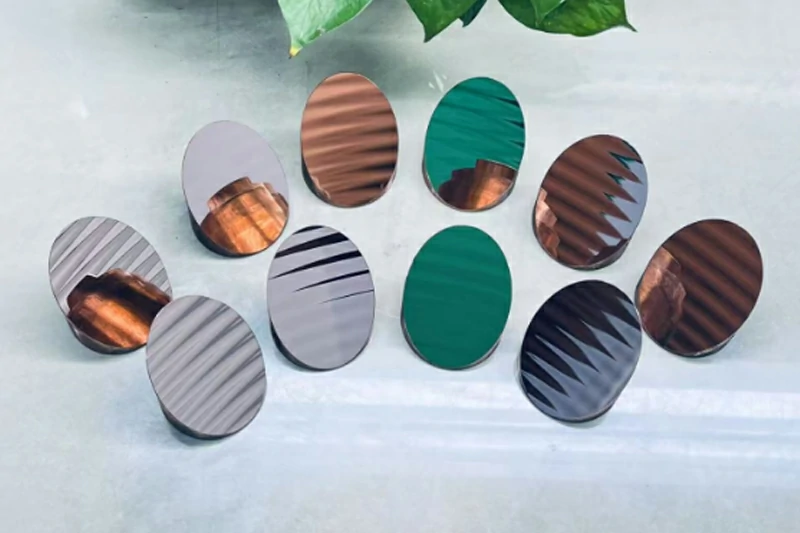
Surface roughness on optical mold cavities directly affects the surface quality of injected plastic components. Ra values below 0.05μm prevent optical scattering that would compromise Face ID pattern quality.
Yishun Optical achieves Ra≤0.005μm through precision polishing techniques including pitch polishing and computer-controlled optical surfacing. These processes eliminate surface imperfections that would replicate into plastic optical components.
Cleanliness throughout manufacturing prevents particle contamination that could create defects in optical surfaces. Yishun Optical’s Class 10 cleanroom maintains the contamination control essential for optical-quality molds.
Manufacturing Equipment and Capabilities
Five-Axis Machining Centers
Yishun Optical operates 25 five-axis machining centers that provide the geometric flexibility required for complex optical mold geometries. These machines combine multi-axis capability with precision positioning that achieves micron-level tolerances.
The Röders RXP500DS and Roku Roku machining centers deliver the stiffness and thermal stability necessary for sustained precision machining. Combined with skilled operators and optimized cutting parameters, these machines produce molds meeting Face ID optics specifications.
Five-axis capability enables complex optical surfaces that would be impossible to machine with conventional three-axis equipment. This advanced capability positions Yishun Optical to address evolving structured light module designs.
Ultra-Precision Machining Systems
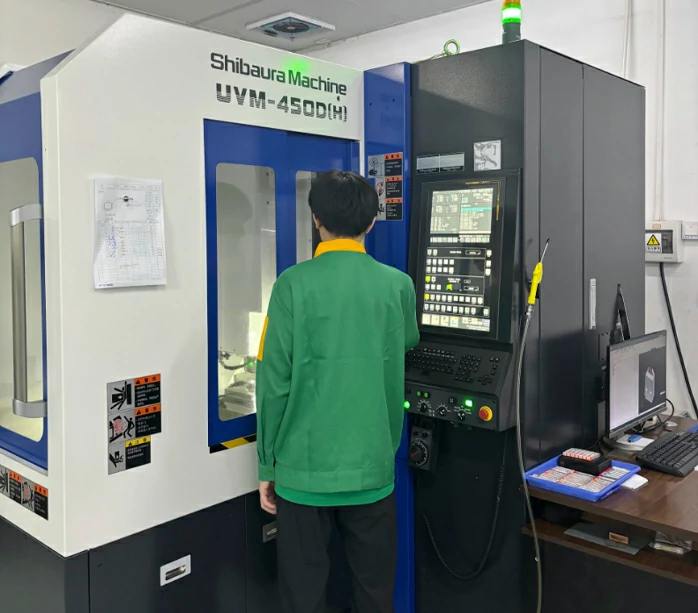
Four Toshiba UVM ultra-precision machining centers provide PV≤0.15μm performance for the most demanding optical surfaces. These machines achieve precision that conventional machining cannot match.
The Moore single-point diamond turning lathes achieve Ra≤2nm surfaces directly from machining, without requiring subsequent polishing. This capability accelerates manufacturing while ensuring surface quality specifications.
Yishun Optical’s investment in ultra-precision equipment ensures that manufacturing capability exceeds the requirements for advanced structured light modules.
Precision Polishing Systems
The ABB 6-axis robotic polishing system provides automated surface finishing with ±0.001mm repeatability. This system ensures consistent surface quality across production batches while reducing cycle times compared to manual polishing.
Robotic polishing integrates with metrology feedback that optimizes tool paths for specific surface geometries. The combination of automation and adaptive control delivers surfaces meeting the most demanding specifications.

Material Selection for Optical Molds
Tool Steel Requirements
Tool steel selection for 3D structured light module molds balances hardness, machinability, and thermal stability. Pre-hardened steels offer dimensional stability without post-machining heat treatment that could distort precision features.
Stainless steel options provide corrosion resistance essential for maintaining cleanliness throughout high-volume production. Yishun Optical’s material expertise guides selection based on specific application requirements.
Surface treatments including nitriding and PVD coatings enhance wear resistance in high-volume applications. These treatments extend mold life while maintaining precision throughout production runs.
Optical-Grade Materials
Some optical components require mold materials that do not outgas or react with optical-grade polymers. Yishun Optical specifies materials that meet these stringent requirements for specialized applications.
Beryllium-copper alloys offer thermal conductivity that enables efficient cooling while maintaining hardness for precision micro-features. These materials suit high-volume applications where cycle time optimization is critical.
Process Control for Micron-Scale Tolerances
Environmental Control
Temperature stability during machining directly influences achievable tolerances. Yishun Optical maintains machining environments at 20±0.5°C with humidity controlled to 45±5% RH, preventing thermal expansion from introducing errors.
Cleanroom classification at Class 10 prevents particle contamination that would compromise optical surface quality. This controlled environment extends from raw material storage through final inspection and packaging.
Vibration isolation protects precision machining operations from environmental disturbances. Foundation isolation and active control systems maintain the stability necessary for micron-scale manufacturing.
Measurement and Verification
In-process measurement at each critical stage identifies deviations before they compound into specification failures. Yishun Optical employs coordinate measuring machines with 0.1μm resolution for dimensional verification.
Optical measurement systems including interferometers verify surface figure on critical optical surfaces. This comprehensive metrology ensures that all specifications are met before molds proceed to assembly.
Statistical process control monitors key characteristics throughout production. This proactive approach maintains quality while maximizing throughput across high-volume structured light module programs.
Quality Assurance for Face ID Components
Critical Dimension Control
Critical dimensions on structured light module molds require monitoring across multiple measurement locations. Statistical analysis ensures that variations remain within specification limits throughout production.
Yishun Optical’s quality systems document all measurements, enabling traceability from raw material through finished mold. This documentation supports continuous improvement while meeting customer quality requirements.
Gauge capability studies verify measurement system adequacy for critical dimension verification. This validation ensures that measurement decisions correctly distinguish conforming from non-conforming parts.
Surface Quality Verification
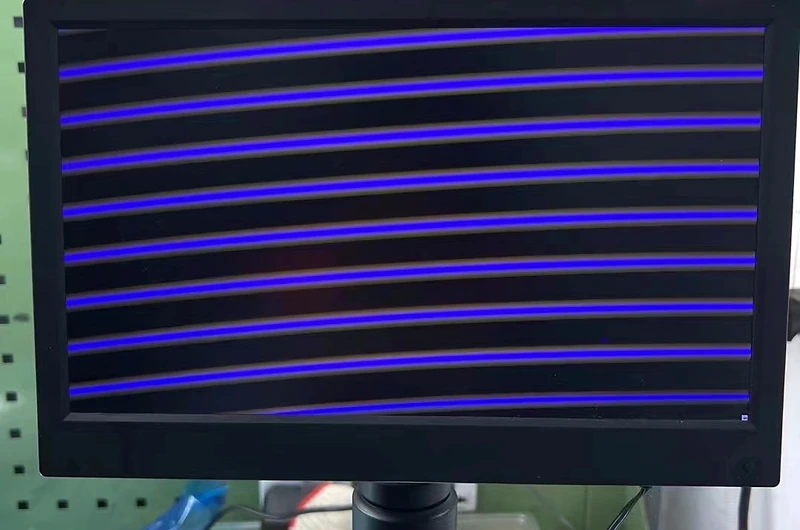
Surface roughness measurement using white light interferometry verifies that Ra≤0.005μm specifications are achieved. Multiple measurement locations assess uniformity across complex mold geometries.
Visual inspection under controlled lighting identifies surface defects that could affect component function. Yishun Optical’s inspectors are trained to identify issues specific to optical-quality requirements.
Injection Molding Considerations
Process Optimization for Optical Components
Injection molding process parameters require optimization specific to 3D structured light modules. Melt temperature, injection pressure, and cooling time all influence component quality.
Yishun Optical collaborates with customers to establish optimal process windows that maximize quality while maintaining production efficiency. This partnership approach ensures successful molded component qualification.
Process monitoring during production verification confirms that established parameters deliver consistent results. This validation precedes production release.
Mold Temperature Control
Precise mold temperature control influences component quality and dimension stability. Yishun Optical specifies mold temperature control systems that maintain temperatures within ±1°C throughout production.
Cooling channel design optimizes temperature uniformity across the mold cavity. This design prevents thermal gradients that could cause differential shrinkage affecting optical alignment.
Advanced Applications and Future Technologies
Structured Light Beyond Face ID
3D structured light technology extends beyond consumer electronics into industrial inspection, medical imaging, and automotive safety systems. Each application imposes unique requirements on optical component precision.
Yishun Optical’s capabilities address diverse structured light applications requiring micron-scale precision. The company’s experience across industries enables rapid qualification for new applications.
Emerging applications in augmented reality and 3D sensing expand demand for structured light components. Yishun Optical’s manufacturing capabilities position the company to address these growing market opportunities.
Miniaturization Trends
Continued miniaturization of electronic devices drives smaller structured light modules with tighter tolerances. Yishun Optical invests in equipment and process development to address these advancing requirements.
Advanced micro-machining techniques enable features measuring micrometers rather than millimeters. This capability supports the next generation of structured light technologies.
Partnering with Yishun Optical
Engineering Support
Yishun Optical’s engineering team provides design for manufacturing (DFM) consultation that optimizes structured light module molds for production. Early engagement prevents issues that could delay program schedules.
Material selection assistance, tooling design review, and process development all benefit from Yishun Optical’s 20+ years of precision mold manufacturing experience. This expertise accelerates qualification while ensuring quality.
Production Capacity
With 25 five-axis machining centers and additional ultra-precision equipment, Yishun Optical provides capacity for high-volume production. The company’s scale enables cost-effective manufacturing without compromising precision.
Program management coordinates manufacturing activities across multiple machines and shifts. This coordination ensures on-time delivery while maintaining quality standards.
Industry Standards and Certifications
Quality System Compliance
Yishun Optical maintains ISO 9001 (Quality Management) and ISO 14001 (Environmental Management) certifications that ensure consistent processes. These management systems provide the foundation for precision manufacturing excellence.
Apple Gold Supplier status demonstrates Yishun Optical’s capability to meet the most demanding customer requirements. This recognition reflects manufacturing capabilities and quality systems suitable for consumer electronics production.
The National High-Tech Enterprise designation recognizes Yishun Optical’s commitment to advanced manufacturing technology. Continuous investment in equipment and process development maintains technical leadership.
Customer-Specific Requirements
Beyond standard certifications, Yishun Optical accommodates customer-specific quality requirements. The company’s flexible quality systems adapt to diverse customer specifications across industries.
First article inspection, in-process monitoring, and production lot acceptance testing follow customer-specified protocols. This customization ensures that quality verification aligns with specific program requirements.
Supply Chain Integration
Local and Global Support
Yishun Optical supports customers globally through established logistics networks. The company’s location in China provides efficient access to the electronics manufacturing supply chain.
Engineering communication through email (yishun158@163.com) and phone (+86-755-82594863) enables rapid response to customer inquiries. The company’s website (https://yishunoptical.com/) provides access to capability information and quotation requests.
Long-term partnerships with global brands including Apple demonstrate Yishun Optical’s ability to support international supply chain requirements.
Continuous Improvement
Statistical analysis of production data identifies opportunities for process optimization. Yishun Optical’s continuous improvement culture ensures that manufacturing efficiency and quality continue advancing.
Customer feedback integration drives capability development that addresses evolving requirements. This responsive approach maintains Yishun Optical’s position as a preferred structured light module manufacturing partner.
Conclusion
3D structured light module manufacturing for Face ID optics demands injection molds achieving micron-scale precision and optical-quality surfaces. The combination of advanced machining, precision polishing, and rigorous quality control enables high-volume production of these demanding components.
Yishun Optical’s investment in ultra-precision equipment—including 25 five-axis machining centers, 4 Toshiba UVM machining centers, and Moore diamond turning lathes—provides manufacturing capabilities that exceed Face ID optics requirements. The company’s Apple Gold Supplier status and 3000+ mold sets experience demonstrate proven capability.
For structured light module manufacturing requiring ±0.005mm tolerances and Ra≤0.005μm surface finishes, partner with Yishun Optical. Our engineering team welcomes discussions about your specific Face ID optics requirements.
Email: yishun158@163.com | Phone: +86-755-82594863 | Website: https://yishunoptical.com/
FAQ
Q1: What tolerances can Yishun Optical achieve for structured light module molds?
A: Yishun Optical achieves position tolerances of ±0.005mm with PV values of 0.15μm or better on ultra-precision machined surfaces. Our surface finishes reach Ra≤2nm through diamond turning and Ra≤0.005μm through precision polishing.
Q2: How does Yishun Optical ensure optical-quality surface finishes on micro-features?
A: We employ specialized polishing techniques adapted for micro-scale features, combined with cleanroom manufacturing that prevents contamination. Multiple quality checks verify surface quality throughout the manufacturing process.
Q3: What equipment does Yishun Optical use for structured light module manufacturing?
A: Our capabilities include 25 five-axis machining centers (Röders RXP500DS, Roku Roku), 4 Toshiba UVM ultra-precision machining centers, 2 Moore single-point diamond turning lathes, and ABB 6-axis robotic polishing system (±0.001mm repeatability).
Q4: Does Yishun Optical have experience with Face ID optics manufacturing?
A: Yes, as an Apple Gold Supplier with 3000+ mold sets experience, Yishun Optical has manufactured precision molds for Face ID components. Our quality systems and manufacturing capabilities meet consumer electronics standards.
Q5: What cleanroom classification does Yishun Optical maintain?
A: Yishun Optical operates Class 10 cleanroom facilities that meet semiconductor manufacturing contamination standards. This controlled environment ensures that optical-quality surfaces remain contamination-free throughout manufacturing.
Q6: Can Yishun Optical support high-volume structured light module production?
A: Yes, our extensive equipment base and experienced workforce support high-volume production requirements. We have produced molds for consumer electronics programs serving global markets.
Q7: How does Yishun Optical handle quality documentation for Face ID applications?
A: Our ISO 9001 certified quality management system provides complete traceability from raw material through finished mold. All measurements, processes, and inspections are documented for customer review.