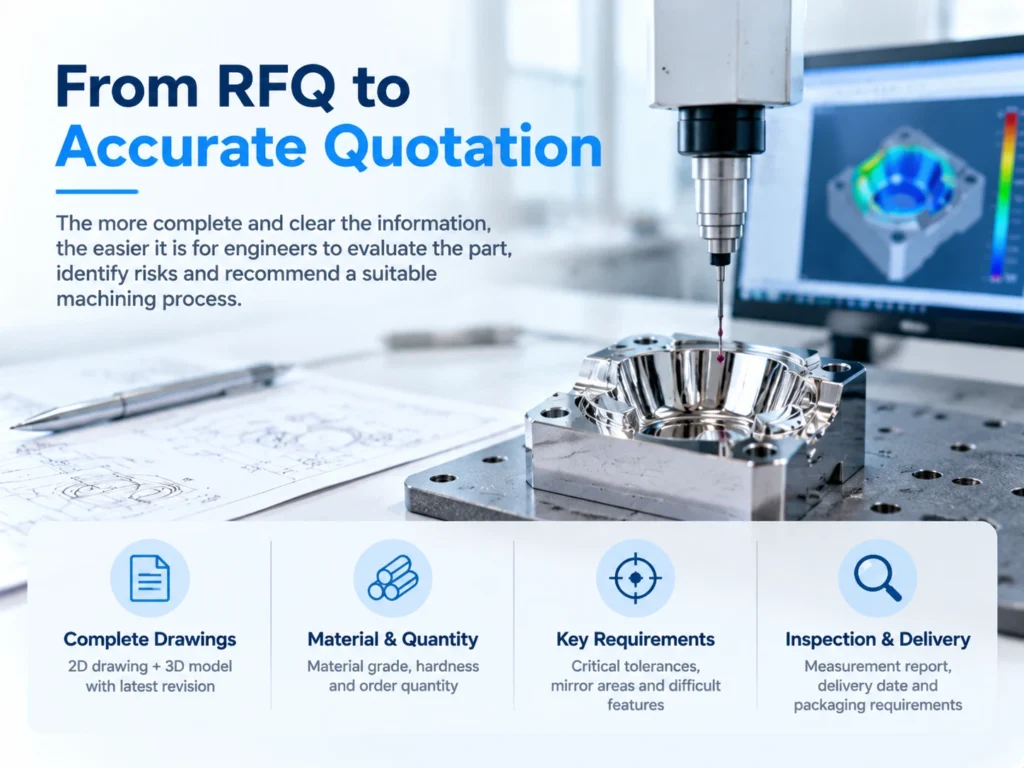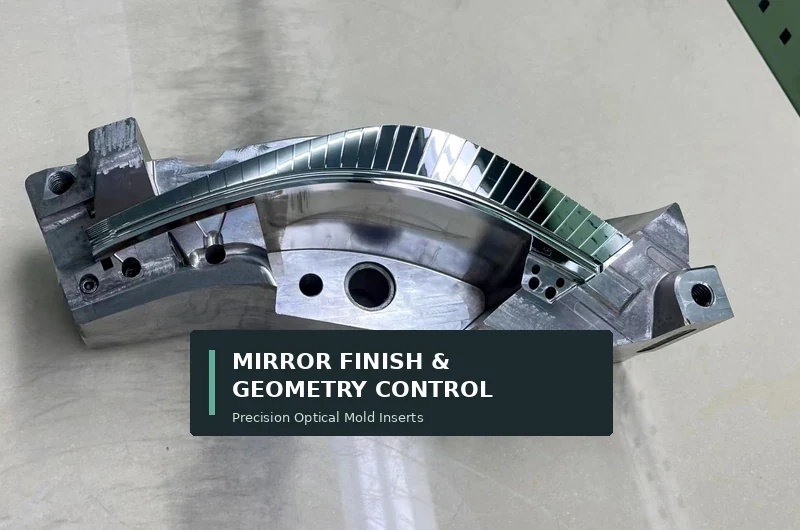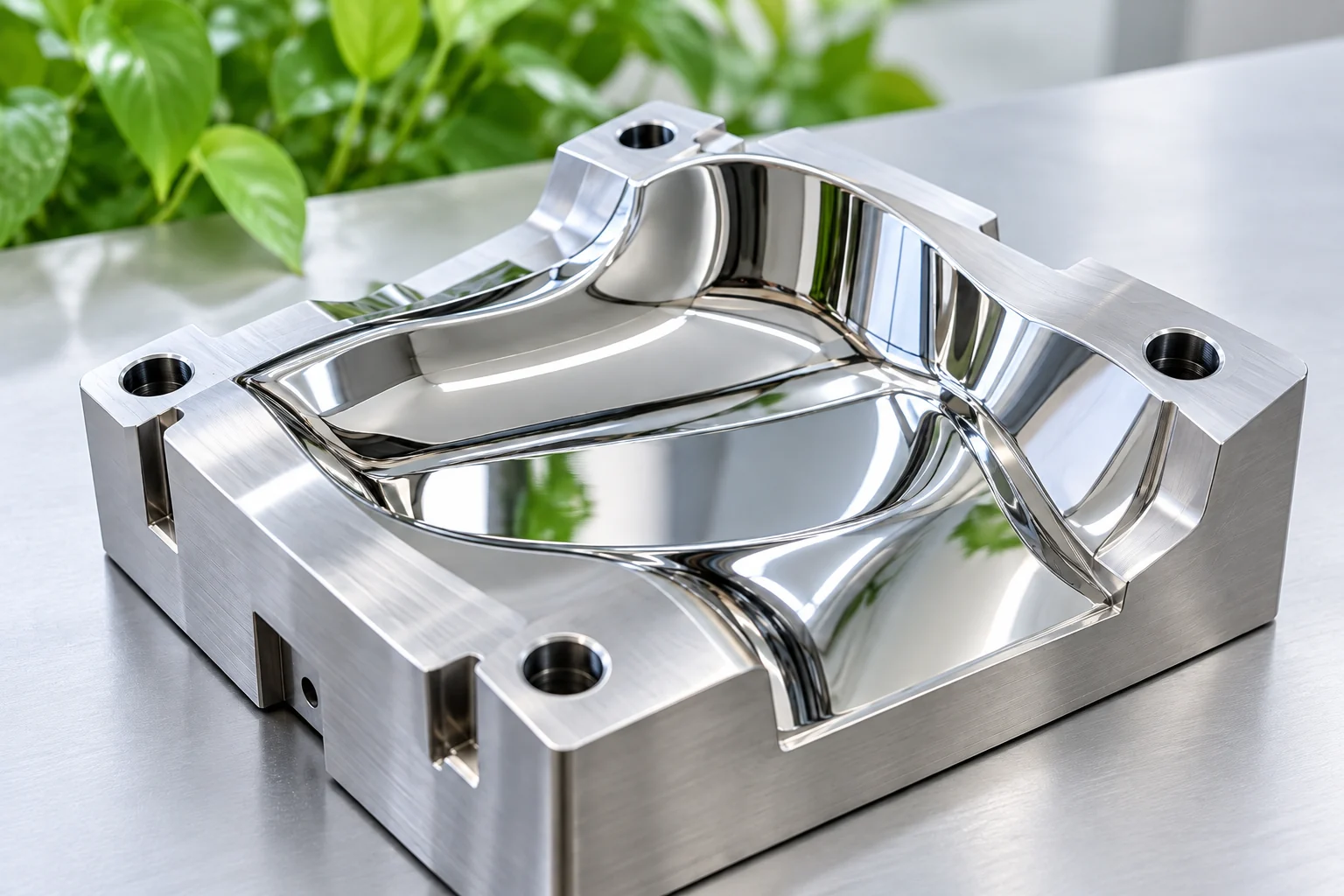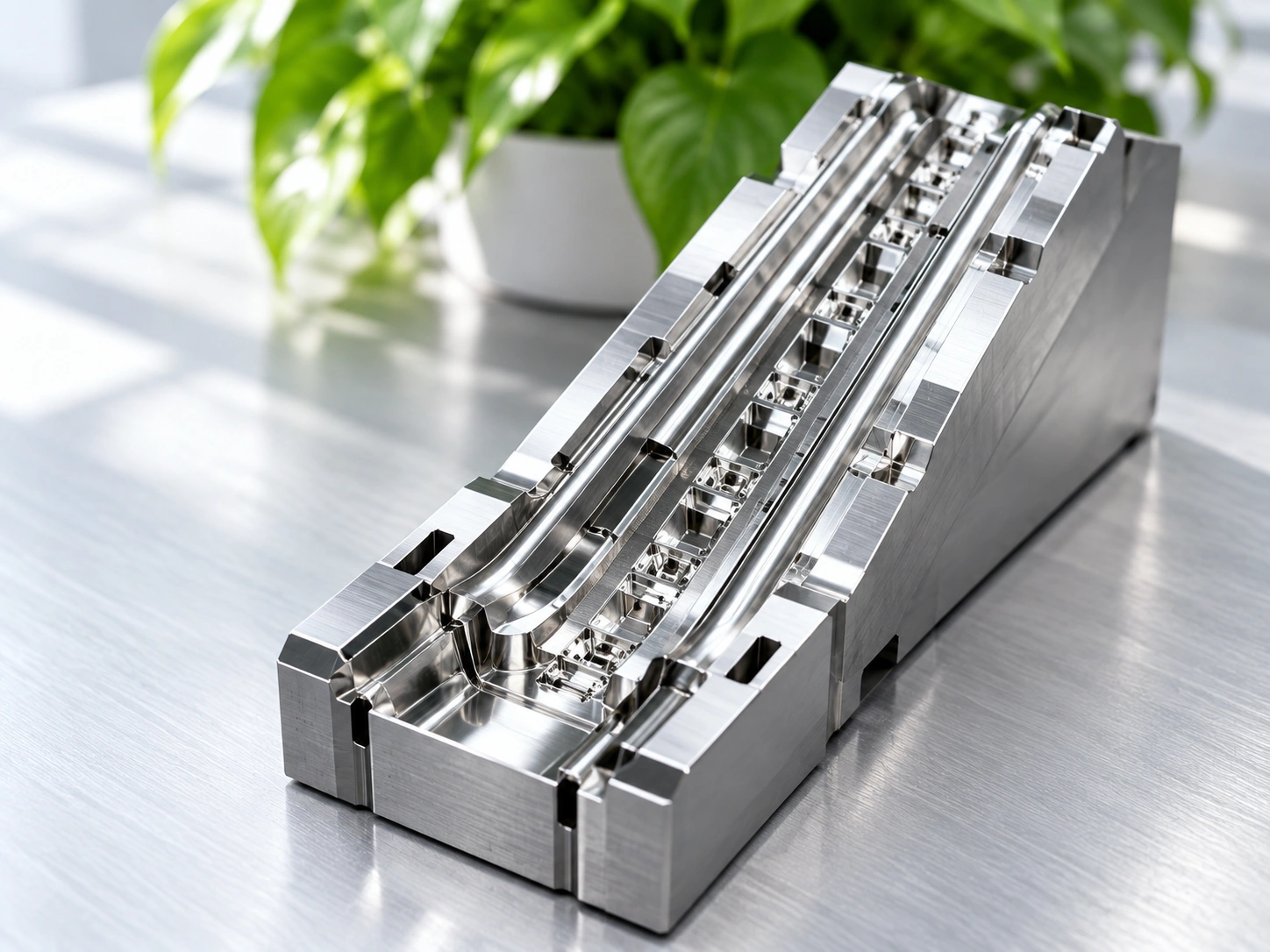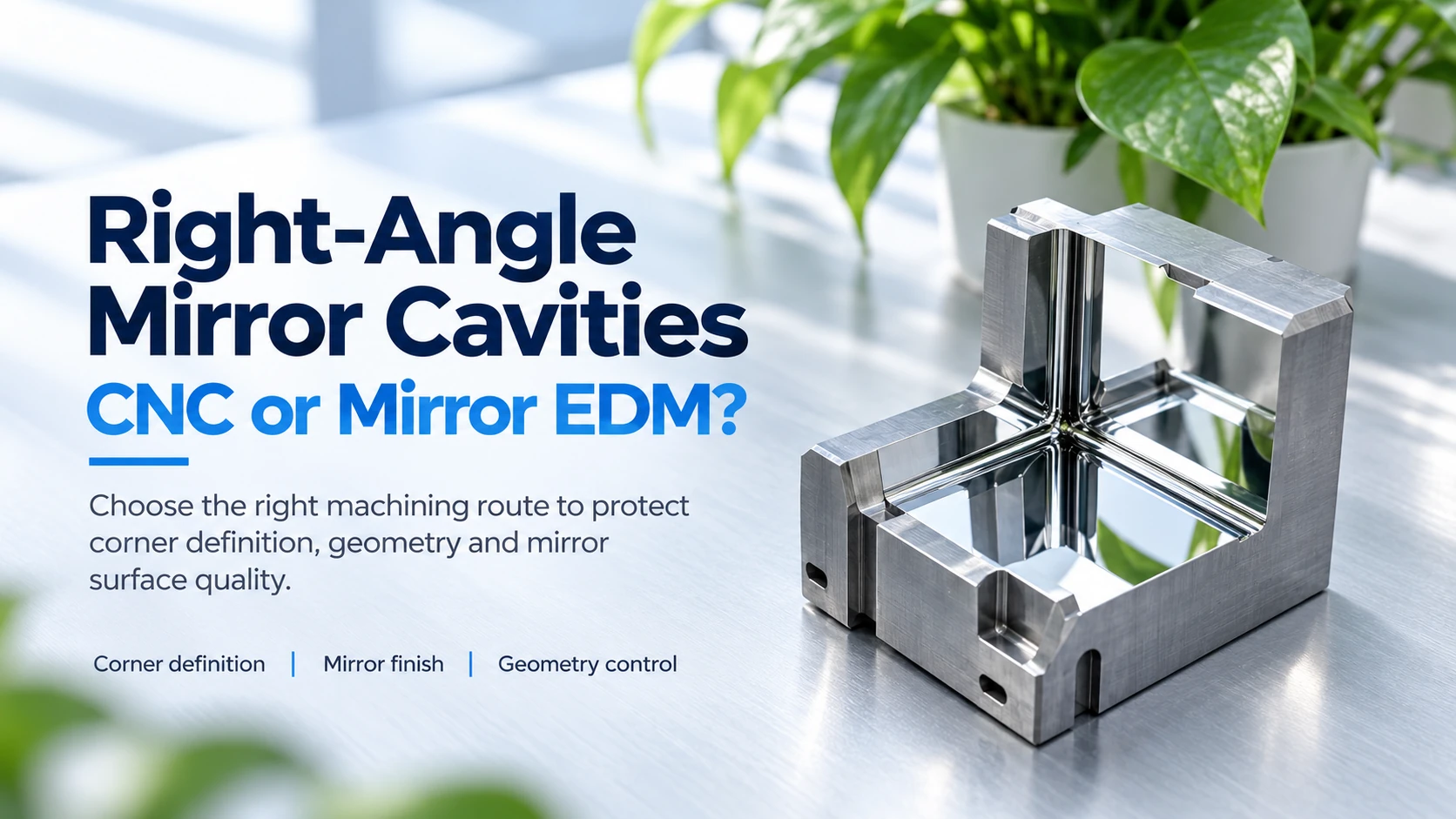
A photo of a mirror-finish mold insert and a short message saying “Please quote” may be enough to start a conversation, but rarely enough to prepare an accurate quotation.
Without the drawing, material, tolerances, and surface requirements, an engineer has to make assumptions. This often leads to repeated questions, delayed quotations, or a machining route that does not suit the actual geometry.
For a mirror mold insert RFQ, the goal is simple: provide enough technical information for the supplier to evaluate the part, identify risks, and recommend a practical process before pricing.
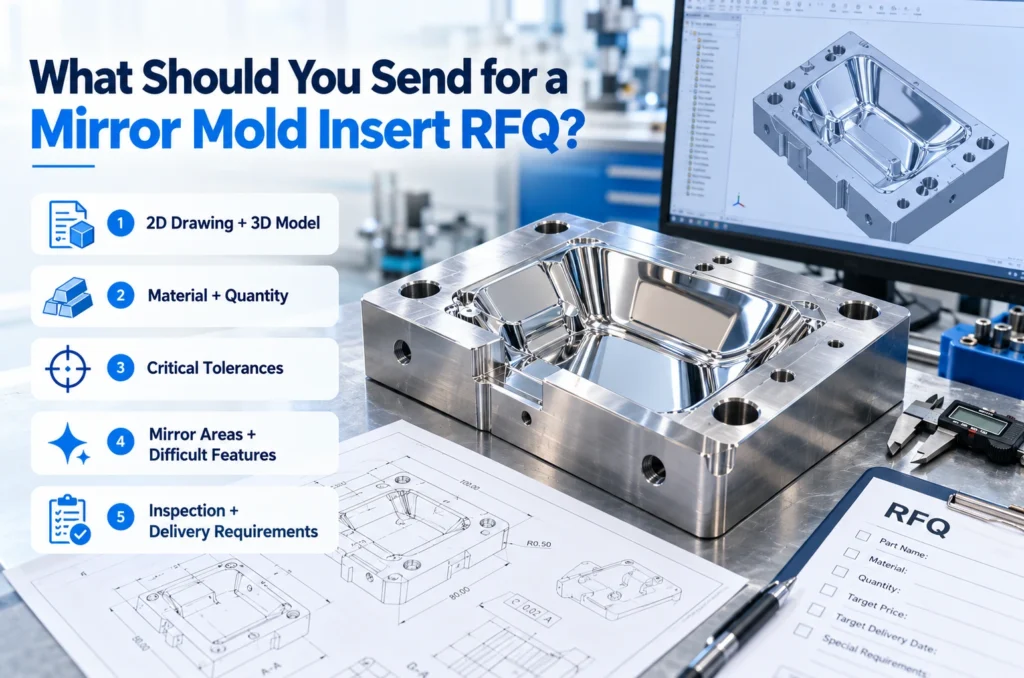
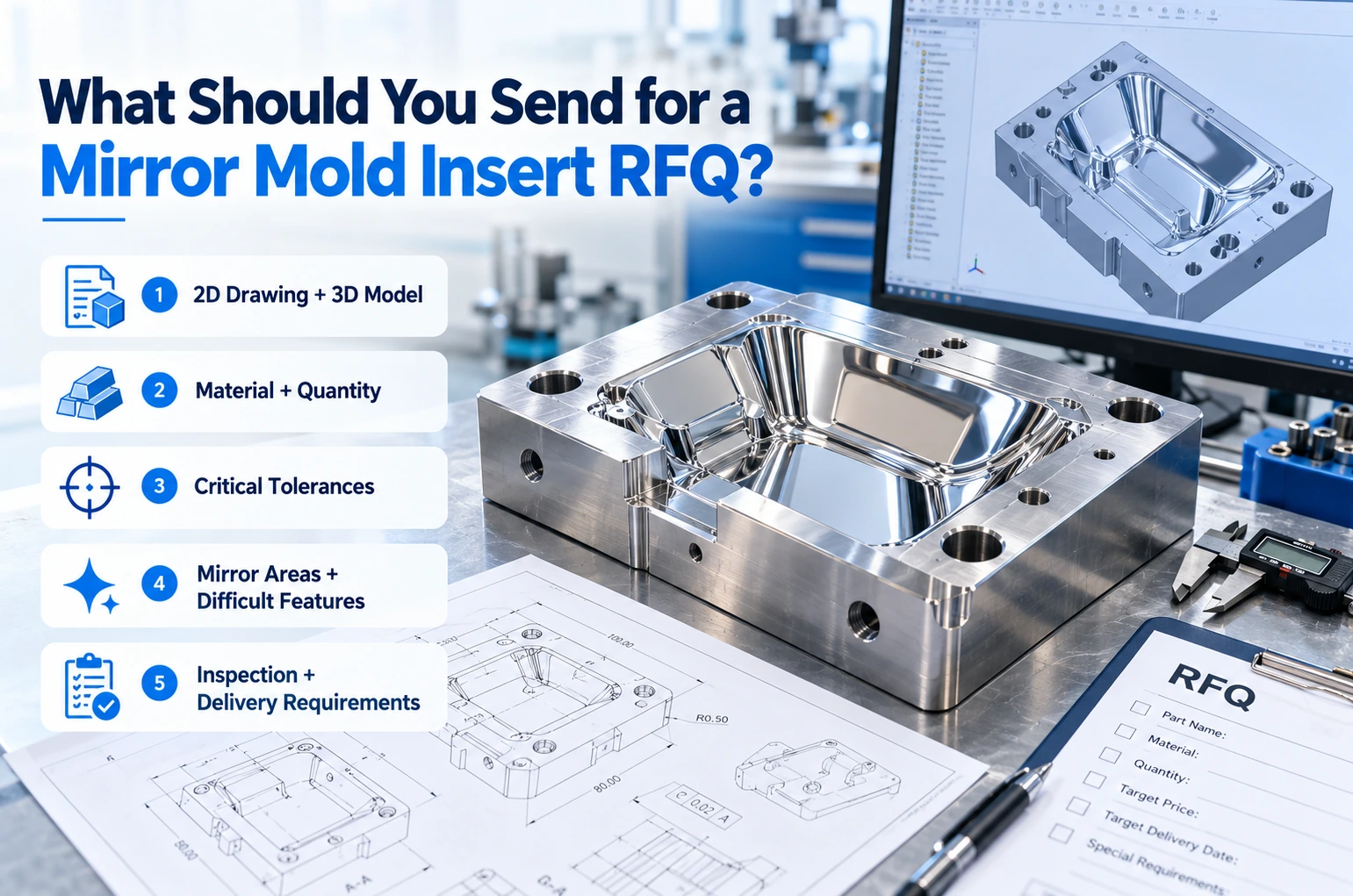
1. Send Both the 2D Drawing and 3D Model
The 2D drawing and 3D model serve different purposes.
The 3D model helps engineers understand the overall geometry, curved surfaces, deep cavities, narrow grooves, and tool accessibility.
The 2D drawing defines critical dimensions, tolerances, datums, surface requirements, and other manufacturing instructions.
Common formats include STEP, STP, IGES, X_T, DWG, DXF, and PDF, depending on the information being shared.
If the drawing and model do not match, confirm the approved revision before requesting a quotation. Different interpretations can affect the proposed process, inspection scope, and quoted cost.
2. Specify the Material and Quantity
Material selection affects machinability, surface finish, processing time, and inspection requirements.
Provide the material grade and, where applicable, the required hardness and heat-treatment condition. If the material has not been selected, identify the options being considered.
Quantity matters too. A single prototype, a replacement insert, and a batch of matching inserts may require different planning.
Include the required quantity and clarify whether the quotation covers one insert, a matched set, or multiple cavities.
3. Mark Critical Tolerances and Mirror Areas
A general note such as “mirror finish” leaves too much room for interpretation.
Mark the dimensions that require close control and clearly identify the surfaces that need a mirror finish.
Where applicable, specify:
- Critical dimensional and profile tolerances
- Datum references and positional relationships
- Surface roughness requirements, such as Ra
- Optical form or other geometry requirements
- Minimum radii and important edge conditions
- Visual acceptance criteria or an approved reference sample
Not every surface needs the same finish or tolerance. Separating functional surfaces from non-critical areas helps engineers focus on the requirements that actually affect performance and cost.
4. Highlight Difficult Features Before Quotation
Certain geometries can significantly affect process selection.
Small radii, deep cavities, narrow grooves, right-angle corners, internal holes, and long side walls may create tool-access, rigidity, or finishing challenges.
Mark these features on the drawing or highlight them in the 3D model. If a particular area has caused problems before, explain the issue rather than simply requesting a higher precision level.
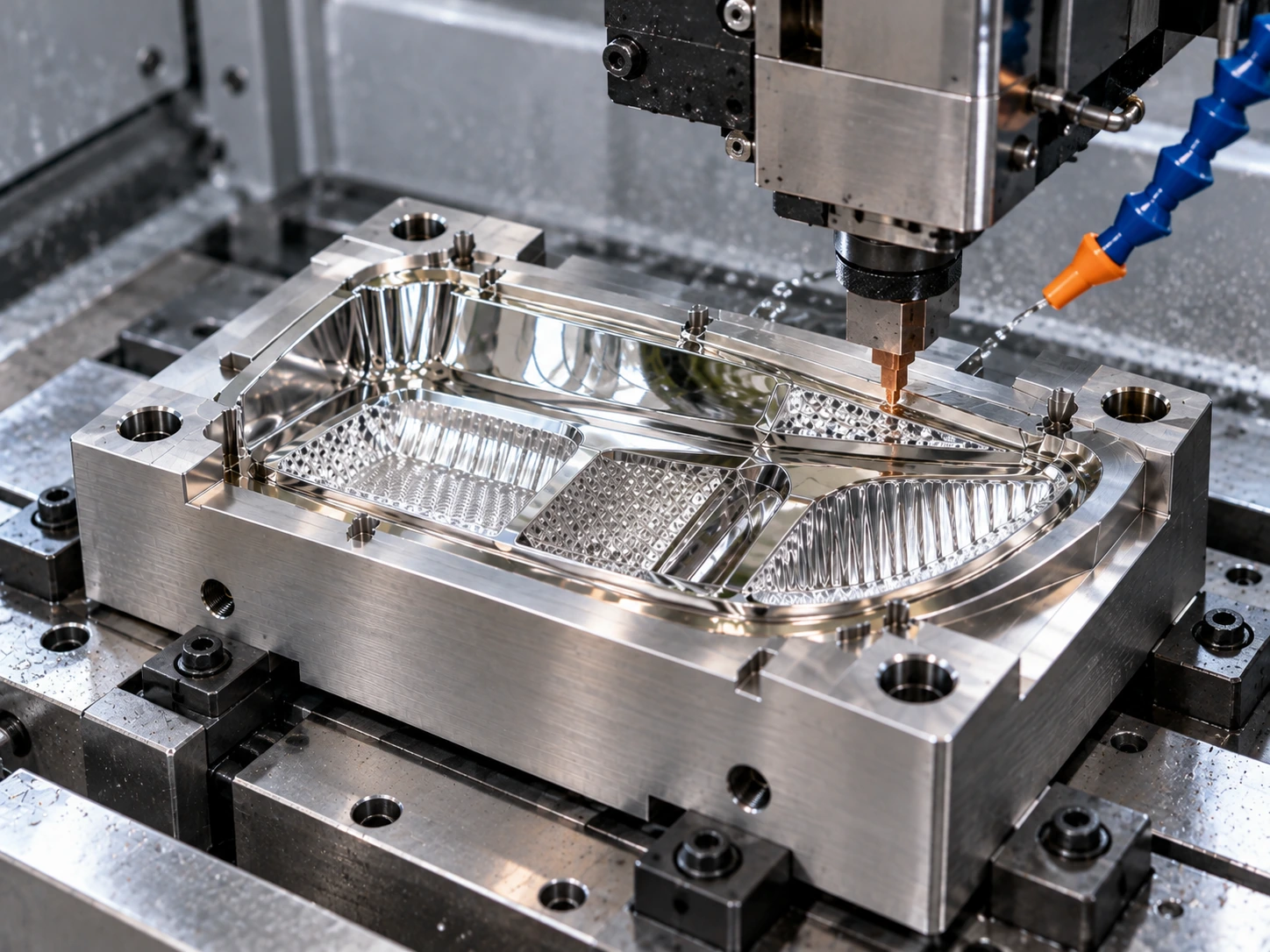
The suitable route depends on the material, geometry, accessibility, and required result. Depending on the part, the evaluation may involve high-speed mirror milling, five-axis machining, mirror EDM, oil-wire EDM, or a combination of processes.
A suitable mirror mold insert machining process should be selected according to the actual features and acceptance requirements, rather than assuming one method suits every area.
5. Confirm Inspection and Delivery Requirements
Inspection requirements should be discussed before the quotation is finalized.
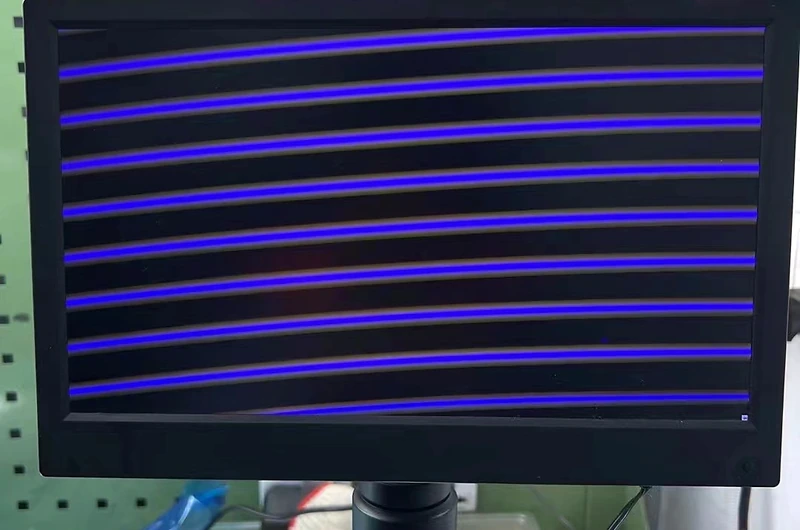
Specify whether you need a dimensional measurement report, surface roughness results, optical form verification, or other agreed checks. If a particular measurement method or reporting format is mandatory, include it in the RFQ.
Also state your target delivery date, packaging requirements, and any special handling instructions.
When comparing quotations, look beyond the machining price alone. Different proposed process routes may involve different finishing and inspection scopes, so the total cost of mirror machining and downstream finishing is worth considering alongside the initial quote.
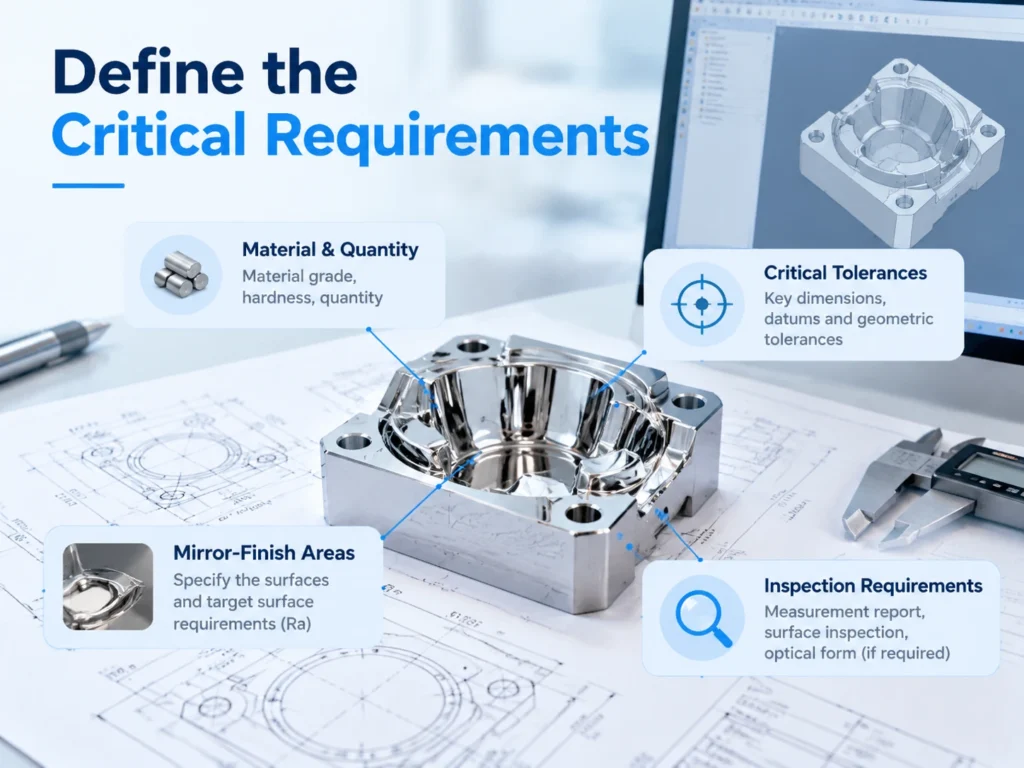
A Copyable Mirror Mold Insert RFQ Checklist
Use this checklist when preparing your next inquiry.
- 2D engineering drawing
- 3D CAD model
- Material grade, hardness, and heat-treatment requirements
- Quantity and order type: prototype, replacement, or batch
- Critical dimensions, tolerances, and datum references
- Mirror-finish areas and target surface requirements
- Minimum radii and other difficult geometric features
- Inspection methods and measurement report requirements
- Target delivery date and packaging requirements
- Application or performance requirements, where relevant
You do not need to disclose confidential product details that are irrelevant to machining. However, explaining the function of a critical surface or feature can help the engineer understand which requirements deserve the most attention.
If some specifications are still undecided, identify them as open questions rather than leaving them ambiguous.
Help Us Review Your Project Faster
A complete mirror mold insert RFQ does more than speed up quotation. It helps both sides identify technical risks, clarify inspection requirements, and select a suitable machining route before work begins.
At Yishun Optical, we review the drawing, material, geometry, surface requirements, and inspection expectations together. If information is missing or a feature needs further evaluation, we can identify the questions that need to be resolved before confirming the quotation.
To start your project review, prepare the 2D drawing, 3D model, material specification, quantity, critical tolerances, mirror areas, target finish, and inspection requirements.
Contact Yishun Optical to discuss your precision mold insert project.