Understanding the Cost of Optical Polishing: A Comprehensive Guide

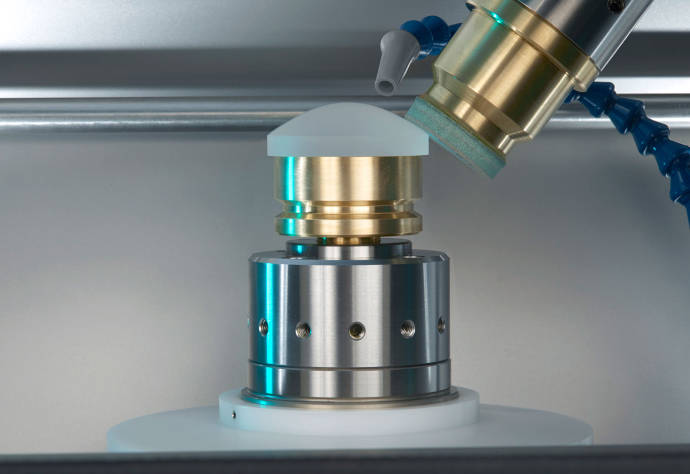
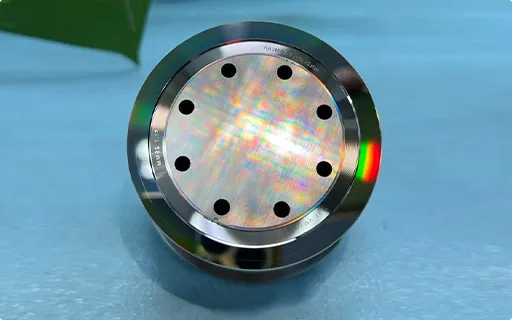
The cost of optical polishing is a complex calculation influenced by a multitude of factors, from the inherent properties of the optical material itself to the rigorous specifications of the final product and the advanced techniques employed. Understanding these variables is crucial for anyone involved in the design, manufacturing, or procurement of high-precision optical components. […]
Diamond Turning vs. Ultra-Precision Milling: Surface Finish, Materials, and Cost Compared

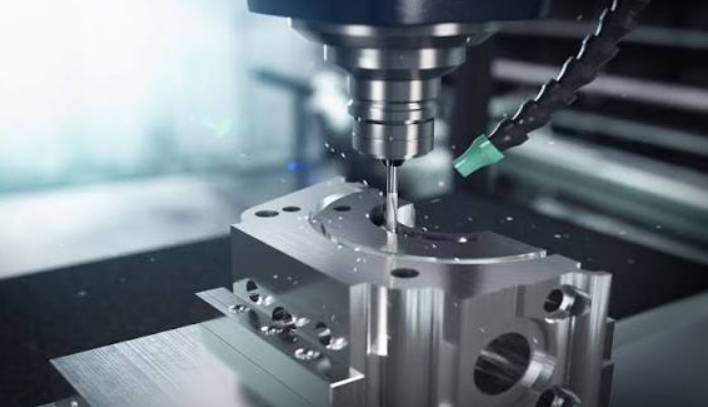
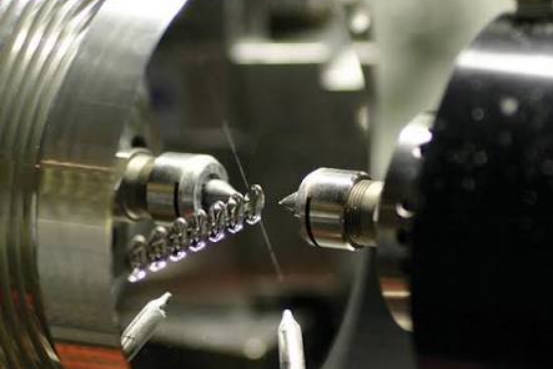
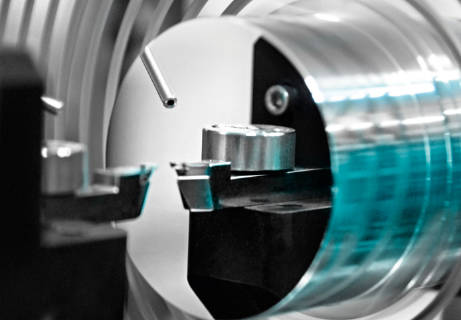
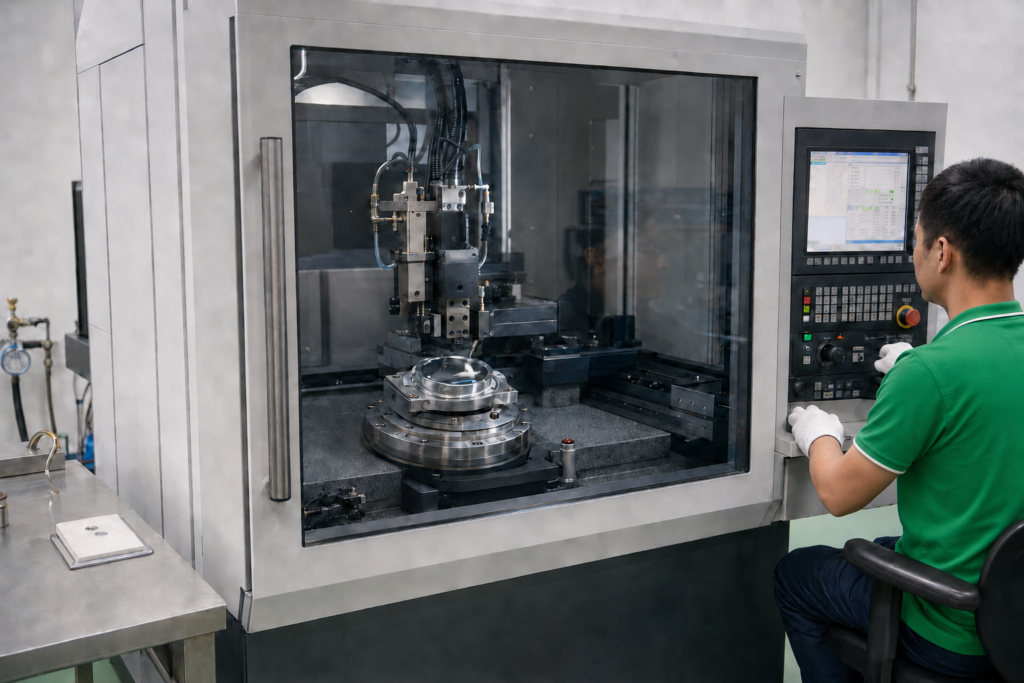
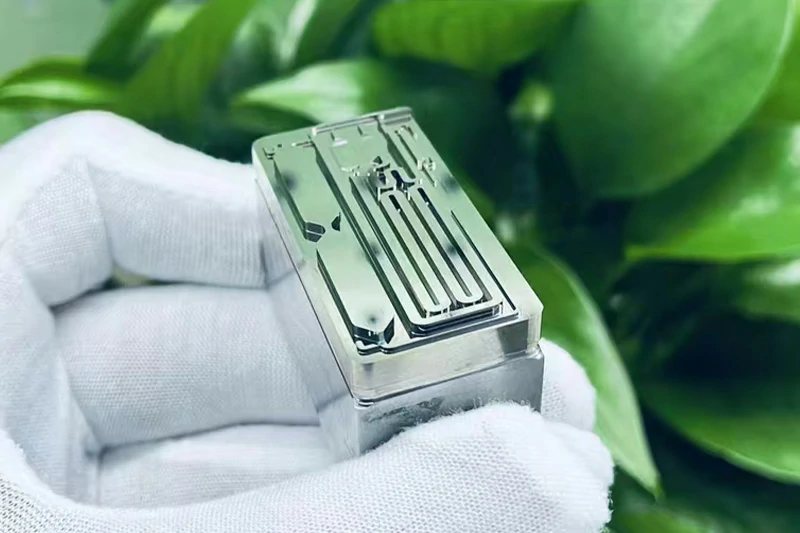
In the realm of high-end manufacturing, the bridge between “precise” and “ultra-precision” is defined by sub-micron tolerances and nanometer-level surface finishes. For industries ranging from aerospace optics to medical micro-fluidics, selecting the correct machining process is not just a technical choice—it is a financial and functional pivot point. Two technologies dominate this space: Single Point […]
Ultra-Precision Machining vs. Precision Machining vs. Micromachining: What’s the Difference and When to Use Each?

In the landscape of modern manufacturing, the word “precision” is often used loosely. However, for engineers developing next-generation optical systems, aerospace components, or medical implants, the difference between “precise” and “ultra-precise” is the difference between project success and catastrophic failure. As industries push the boundaries of physics, understanding the technical nuances between Precision Machining, Micromachining, […]
Optical Polishing vs Precision Grinding: What’s the Difference?

The primary difference between optical polishing and precision grinding lies in their function, mechanism, and resulting surface finish. Precision grinding is an abrasive machining process that uses a fixed-abrasive wheel to rapidly remove material and shape an optical component to its near-net form, resulting in a matte or hazy surface. In contrast, optical polishing is […]
When Do You Need Optical Lapping Instead of Polishing?

You need optical lapping instead of polishing when your primary goal is to establish precise geometric form, remove significant amounts of material, or correct major surface imperfections. Lapping is a shaping process that uses coarse, loose abrasives to achieve critical specifications like flatness, parallelism, or sphericity. Polishing, in contrast, is a finishing process that uses […]
What Surface Roughness Can Optical Polishing Achieve? A Deep Dive into Ultra-Precision Finishing

Optical polishing can achieve an extraordinary level of smoothness, with surface roughness values reaching the sub-angstrom level, often less than 1 Ångström (Å) RMS. This is equivalent to 0.1 nanometers (nm) and represents a surface that is smooth down to the scale of individual atoms. Achieving this pinnacle of surface finishing, however, is not a […]
Can Precision Lapping Improve Surface Finish? A Definitive Guide

Absolutely. Precision lapping is one of the most effective industrial processes specifically designed to improve surface finish, achieving exceptionally smooth, flat, and reflective surfaces that other machining methods cannot. This advanced abrasive machining technique removes microscopic amounts of material from a workpiece by using fine abrasive particles suspended in a liquid slurry between the part […]
What Tolerances Can High-Precision Lapping Achieve?

High-precision lapping is a superfinishing process capable of achieving extraordinary tolerances, including flatness to within one-millionth of an inch (0.000001″ or ~0.025 microns), surface finishes smoother than 1 micro-inch Ra (0.025 µm), and parallelism within 0.00005″ (1.27 µm). This level of precision is accomplished by using a loose abrasive slurry between a workpiece and a […]
Single-Point Diamond Turning vs. Multi-Axis Ultra-Precision Milling: Pros and Cons for Optical Components

In the rapidly evolving landscape of photonics, aerospace, and medical technology, the transition from simple spherical optics to complex freeform geometries is reshaping manufacturing requirements. For decades, the spherical lens was the standard. Today, engineers are designing Augmented Reality (AR) waveguides, Head-Up Display (HUD) mirrors, and Micro-Lens Arrays (MLAs) that defy traditional manufacturing logic. For […]