
Before or After Diamond Turning: When Should Holes and Slots Be Machined?

Machining holes and slots before or after diamond turning creates different risks. Review feature intersections, support, exit edges and surface protection before choosing the sequence.
Before Polishing a Diamond-Turned Insert: What Problem Are You Trying to Solve?
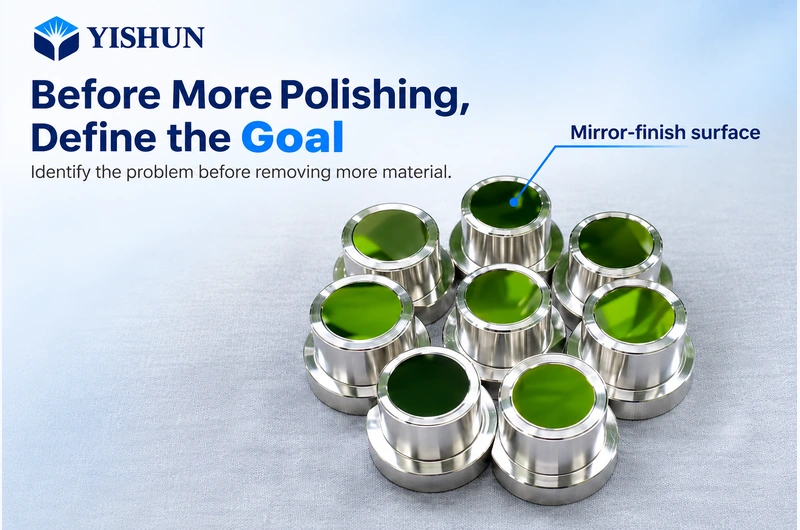
Additional polishing needs a clear purpose. Identify the surface concern, assess remaining allowance and define how improvement will be verified before removing more material.
The Roughness Value Changed—Did the Surface Change?

A revised roughness value does not automatically mean the surface changed. Compare the underlying measurement and evaluation settings before approving further finishing.
Near the Tolerance Limit: How Should Acceptance Be Decided?
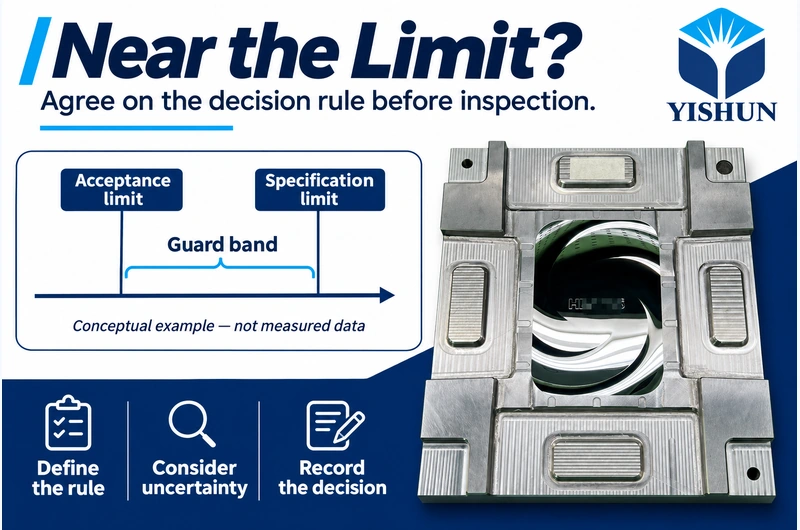
A measurement just inside tolerance does not explain the acceptance decision by itself. Agree on uncertainty treatment, decision rules and the response to unresolved results before inspection.
The Cutter Reaches the Surface—Does the Tool Holder Clear the Cavity?

A cutter that reaches the surface does not prove the complete assembly will clear the cavity. Review holder geometry, tool projection, tilt and connecting movements before machining.
Where Does the Inspection Area End on an Optical Mold Insert?

An acceptable result needs a clearly defined inspection boundary. Learn how to document actual coverage, explain unmeasured regions and control changes to the acceptance area.
A Round Insert Can Still Have a Required Direction

A round mold insert may fit in several rotational positions. Define its angular reference so machining, inspection and reinstallation preserve the intended orientation.
Small Parts Require Big Precision
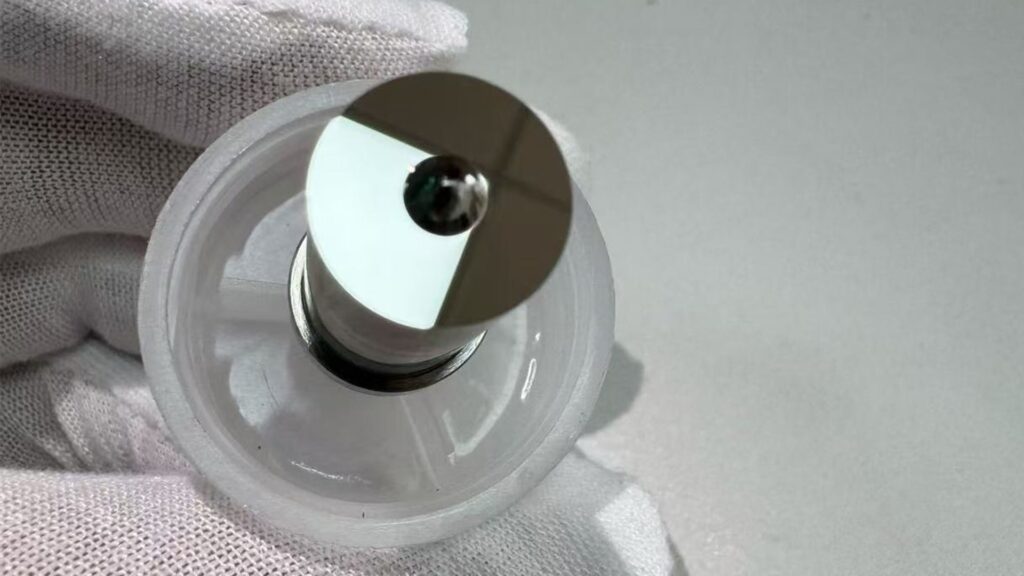
Small precision parts leave little room for error. Learn how tool control, geometry, finishing and inspection work together to maintain micro-scale accuracy.