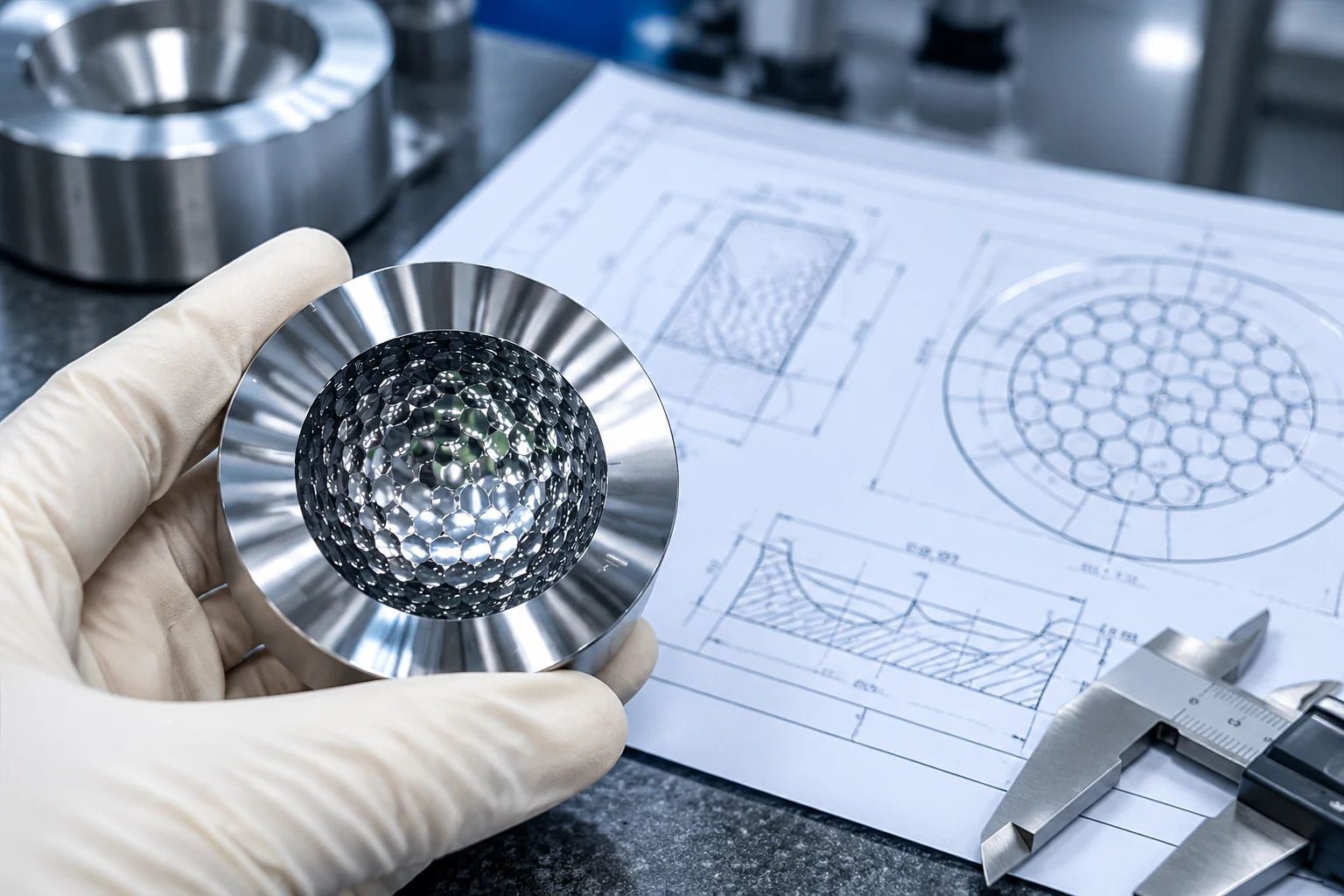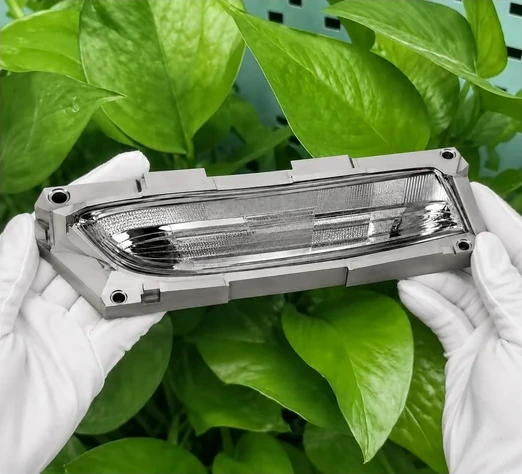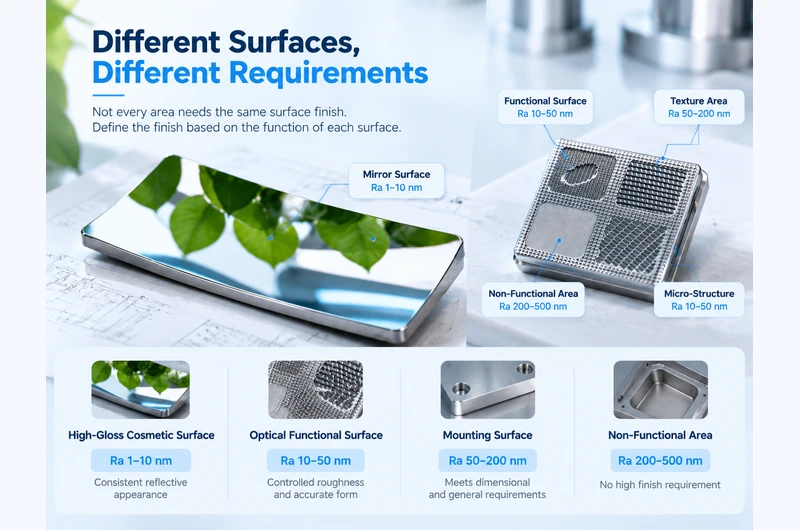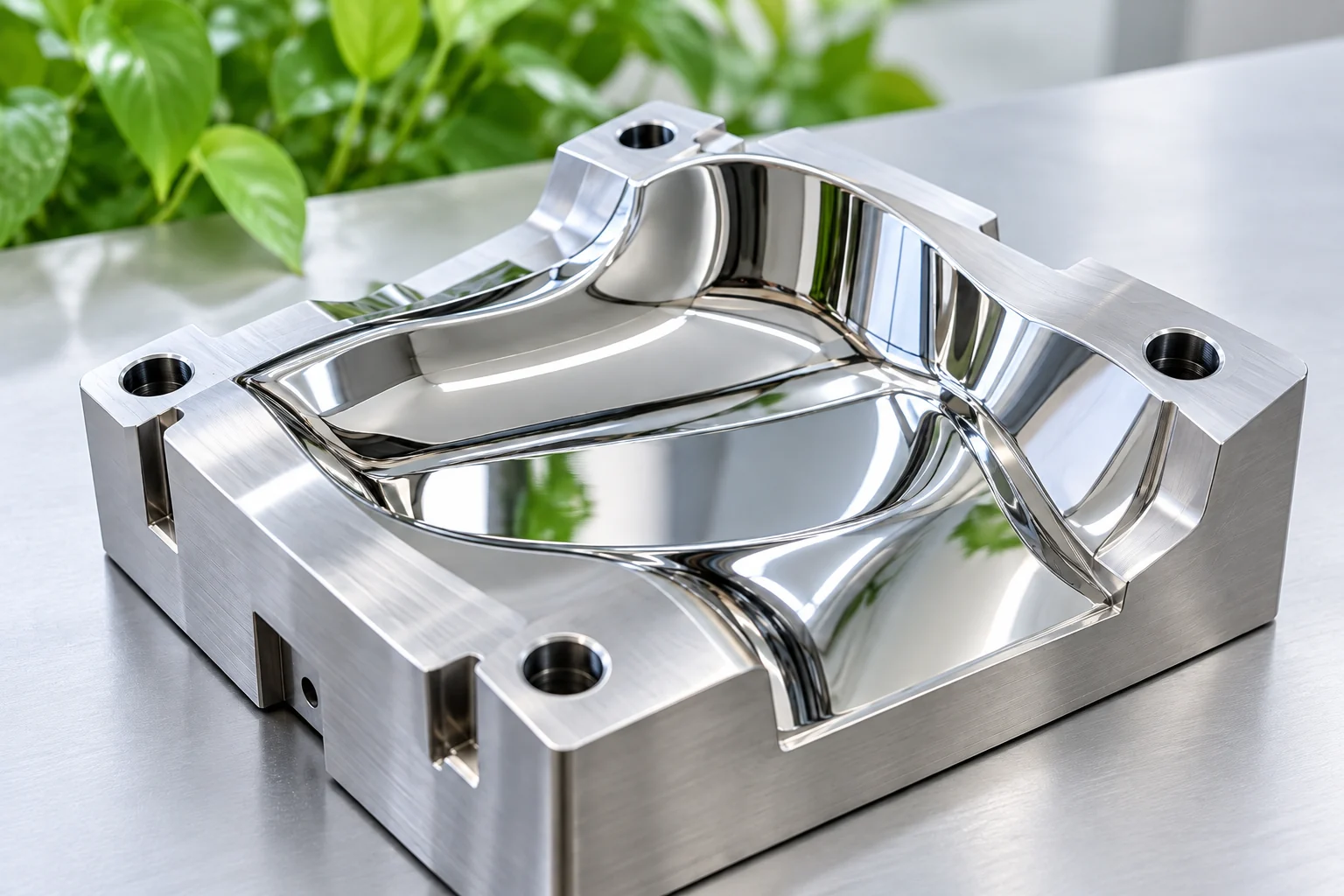
A mirror-finished mold insert passes final inspection. The dimensions have been checked, the surface has been examined, and the part is ready to leave the factory.
Then the customer opens the package and finds a scratch on the optical surface.
Sometimes the mark is small. Sometimes it is difficult to tell whether the surface has been scratched, contaminated, or damaged along an edge. But the consequences can be much bigger than the mark itself.
The customer now has to stop and investigate. Is the insert still suitable for assembly? Will the surface affect the molded part? Does the component need to be returned for inspection? If rework is necessary, how much time will it add to the project?
For an optical mold project, this is a frustrating situation. The machining may have been completed correctly, yet the customer still cannot move forward as planned.
The problem is not always the machining. Sometimes, the gap between a finished component and a safely delivered component is where the risk remains.
At Yishun Optical, we believe that surface protection deserves attention alongside machining quality and inspection. A component is not truly ready for its next stage simply because its manufacturing work is complete.
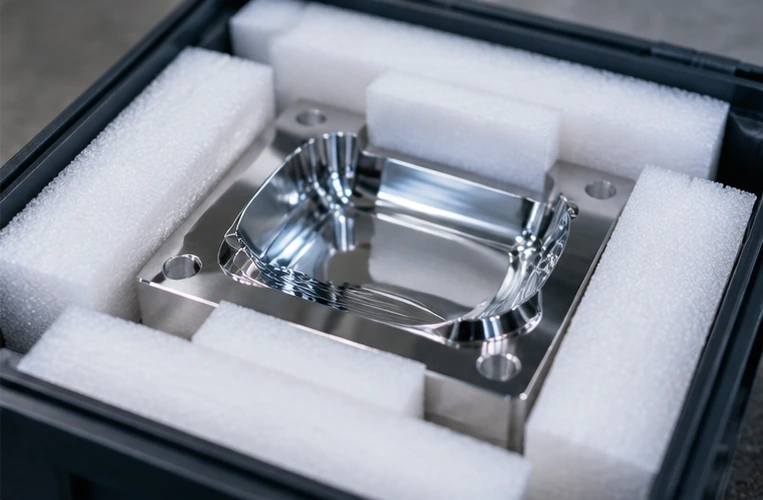
Why a Mirror Surface Can Be Damaged After Inspection
A mirror-finished surface can look extremely smooth, but that does not mean it can tolerate careless contact.
During handling, packing, storage, and transportation, several risks may appear.
One is direct contact with another hard object. If a finished optical surface touches a metal fixture, a tool, or another component, the contact may leave a mark. Even when the parts appear clean, a small hard particle trapped between them can cause damage if they move against each other.
Another risk is movement inside the package. A component that is not adequately restrained may shift during transportation. Repeated movement can cause rubbing, impact, or edge damage, particularly when the insert has protruding features or delicate transitions.
Contamination is another concern. Dust, loose particles, packaging residue, and fingerprints can affect the condition of a critical surface. Sometimes the visible mark is contamination rather than permanent damage, but it is not wise to assume that every mark can simply be wiped away.
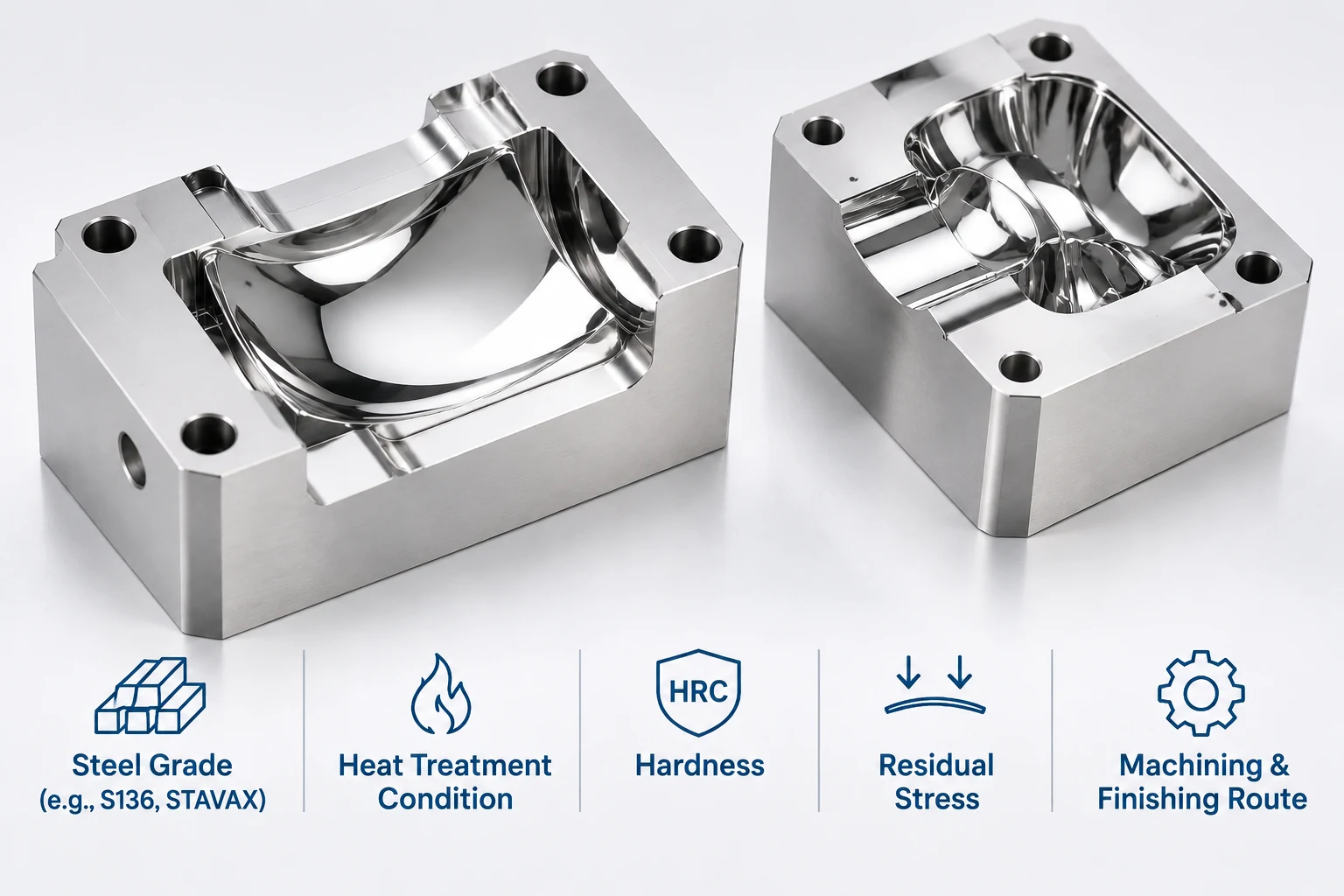
The geometry of the component matters, too. A compact insert with a broad, accessible surface presents different handling challenges from one with deep cavities, narrow edges, or several optical zones.
This is why I would not treat every precision component as if it needed exactly the same protection.
A Good Inspection Report Cannot Replace Surface Protection
Customers understandably pay close attention to inspection reports. They want to know whether the insert meets its drawing requirements before accepting it.
That is important, but inspection and transportation protection serve different purposes.
An inspection report records the condition of a component at a particular stage. It does not, by itself, establish that the surface will remain unchanged during every subsequent handling and transportation step.
Imagine that an insert meets the agreed dimensional and surface requirements before dispatch. If the optical area later comes into contact with a hard particle or rubs against an unsuitable packing material, its condition may change after the report has been completed.
The original inspection result may still accurately describe the part at the time of inspection. The question is whether the part remains in that condition when it reaches the customer.
For this reason, I recommend treating the final inspection and the protection plan as two connected but separate parts of the delivery process.
One verifies the manufacturing result. The other helps preserve that result.
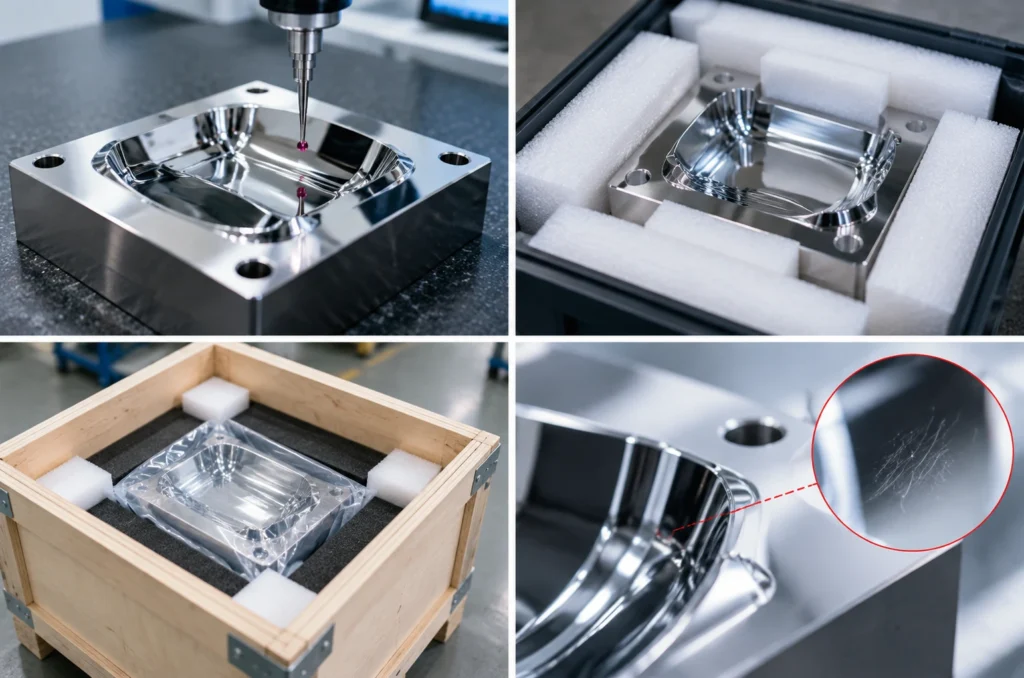
Why the Packaging Method Must Match the Part
There is no single packaging method that is automatically suitable for every optical mold insert.
The right approach depends on the component’s geometry, material, surface condition, weight, and transportation requirements.
For example, a component with a large mirror-finished optical area needs protection that prevents direct contact with that area. An insert with narrow edges or deep features may also require carefully positioned support so that the component does not move or bear an inappropriate load during transport.
I would start by identifying the areas that must not be touched, the surfaces that can safely support the component, and the features that may be vulnerable to impact.
This distinction is important. Protecting a part does not simply mean wrapping it in more material. If the packaging presses against a critical surface, traps hard particles, or allows the component to move, adding more wrapping may not solve the actual problem.
The support points also deserve attention. A component should not be held in place by applying pressure indiscriminately to its most delicate features. The support arrangement needs to suit the part’s actual geometry.
Packaging materials should be selected with the surface and material requirements in mind. Any protective film, separator, or cushioning material that could leave residue, introduce particles, or damage the surface through sliding contact needs careful consideration.
For components with specific storage or corrosion-protection requirements, those conditions should also be agreed before shipment.
The objective is straightforward: the packaging should protect the component without creating a new risk for the very surface it is intended to preserve.
What We Would Review Before a Precision Insert Is Shipped
When preparing a demanding optical mold insert for delivery, I would consider four questions.
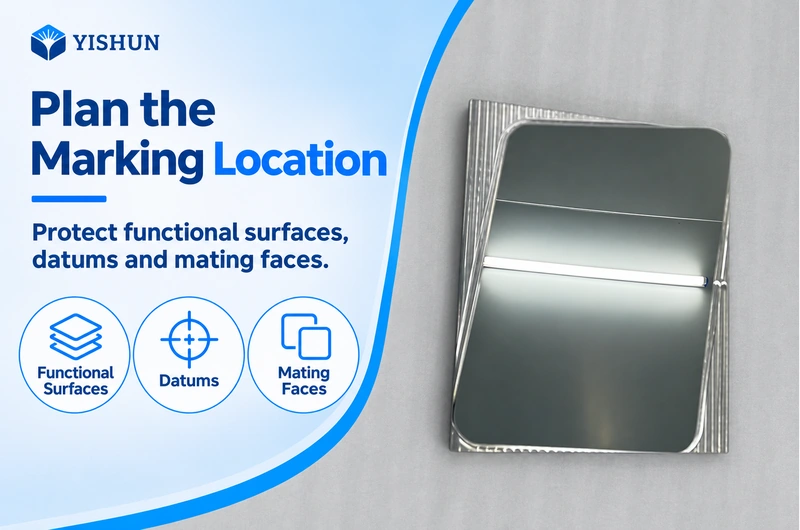
First, which surfaces are critical? The optical surface, mirror-finished area, functional datum, and delicate edges may need different levels of protection. Identifying them early helps avoid treating the whole component as an undifferentiated metal part.
Second, how will the component be supported? The insert needs to remain stable without placing unnecessary pressure on critical features. Its shape and weight should guide the support arrangement.
Third, what could happen during handling and transportation? The packaging should account for movement, contact, impact, and the possibility of contamination. The level of protection should reflect the actual shipment rather than relying on a generic solution.
Fourth, how will the receiving condition be checked? For projects where the surface condition is especially important, it is useful to agree in advance how the customer should inspect the delivered component and report any abnormality.
These questions do not require an unnecessarily complicated procedure. They help make sure that manufacturing quality, protection, and delivery expectations are aligned before the part leaves the supplier.
At Yishun Optical, our engineering judgment begins with understanding the component and its critical requirements. The same principle should guide the decisions made around handling and delivery: the protection method needs to fit the part, not just the packaging available.
What Should You Do If a Mirror Insert Arrives with a Scratch?
If a customer discovers a suspicious mark after opening the package, my first recommendation is not to start polishing the area.
The mark needs to be understood before anyone decides how to correct it.
A visible line may be loose contamination, a superficial mark, a scratch, or damage that extends beyond the surface appearance. These conditions should not be treated as equivalent.
Wiping the area aggressively can make the situation worse. Polishing without understanding the defect can also remove material, change local geometry, or affect an edge that was previously correct.
Instead, document the condition before further handling. Take clear photographs, note where the mark appears, and keep the packaging available for review. If possible, compare the affected area with the pre-shipment inspection records or photographs.
The next step is to arrange a technical assessment. The appropriate inspection method will depend on the surface, the suspected damage, and the acceptance requirements agreed for the project.
Only after the condition is understood should the parties decide whether cleaning, further inspection, rework, or replacement needs to be considered.
This approach helps avoid unnecessary correction and gives both the customer and supplier a clearer basis for discussing the next step.
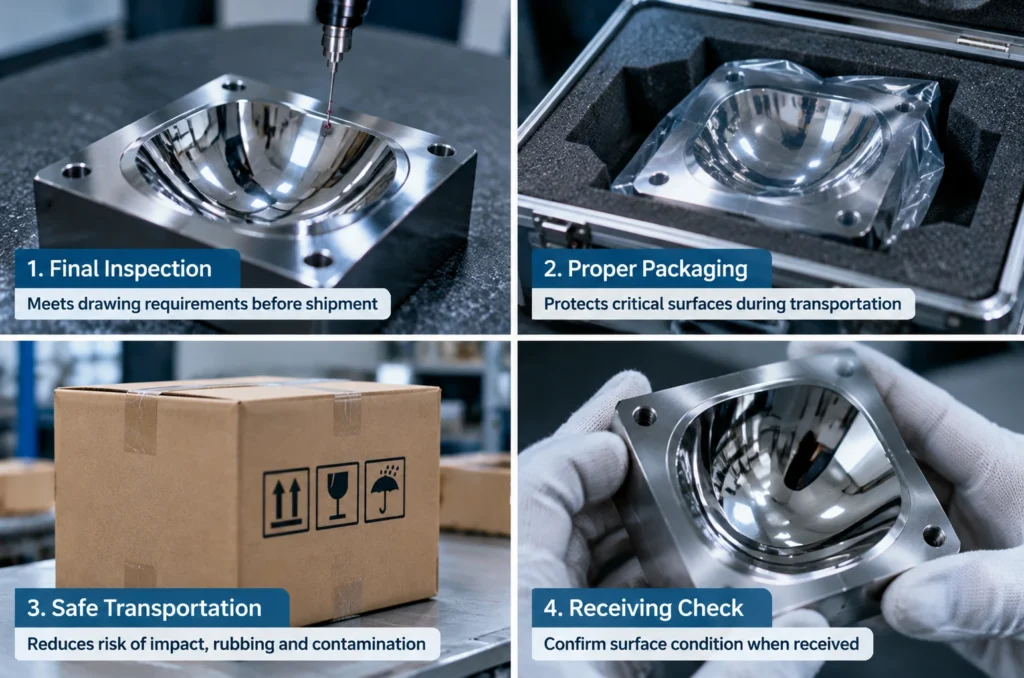
Protecting the Surface Is Part of Delivering the Result
When customers evaluate a precision machining supplier, they naturally focus on machining capability, tolerances, surface finish, and lead time. Those are all essential.
But there is another practical question worth asking before approving a shipment:
How will the supplier help protect the finished component between final inspection and receipt?
For a standard mechanical part, packaging may appear to be a routine detail. For a mirror-finished optical mold insert, it can be directly connected to the condition in which the customer receives the component and whether the next manufacturing stage can proceed as planned.
Good delivery preparation does not guarantee that transportation damage can never occur. It does, however, help identify avoidable risks and establish a clearer process for handling any problem that arises.
At Yishun Optical, we welcome these discussions before a project reaches the shipping stage. If your component has critical optical surfaces, delicate edges, complex geometry, or specific handling requirements, tell us about them when you send your drawing or RFQ.
We can review the requirements with you and clarify what needs to be considered for the component’s protection and delivery.
Because the goal is not simply to finish a mold insert.
It is to help ensure that the quality achieved during manufacturing is preserved for the customer’s next step.