You have selected a supplier for a precision mold insert project. The drawings have been shared, the technical requirements have been discussed, and a confidentiality agreement has been signed.
The project is progressing well.
Then, before delivery, the supplier asks whether they can photograph the finished mold insert and use it in a website case study.
For some customers, this is a straightforward request. For others, it creates an uncomfortable situation.
The product has not been launched. The geometry reflects years of engineering work. The end customer has its own confidentiality requirements. Even a photograph showing only part of the mold insert may reveal more than the buyer intended.
The customer now has to decide what can be shared, what must remain confidential, and whether refusing the request could affect the working relationship.
This is a reasonable concern. Agreeing to manufacture a component does not automatically mean agreeing to make its design or project details public.
At YISHUN Optical, we believe that technical cooperation and marketing permission should be treated as separate matters. Clear expectations help both customers and suppliers work together without unnecessary uncertainty.

A Confidentiality Agreement Is Only One Part of the Arrangement
An NDA can establish important obligations concerning confidential information. However, its actual scope depends on the agreement’s wording, applicable law, and the circumstances of the project.
Customers should not assume that every confidentiality agreement automatically answers every question about photography, portfolio use, or public disclosure.
For example, an agreement may define technical drawings and commercial information as confidential, but the parties may still need to clarify whether an anonymized photograph of a finished component can be published.
The reverse can also happen. A component may look generic in a photograph, yet its geometry, dimensions, surface features, or surrounding equipment may reveal information about a customer’s product.
The practical question is not simply whether an NDA exists.
It is whether both parties understand what information is protected, who may access it, how it may be used, and what requires separate approval.
For international projects, these details deserve particular attention because customers and suppliers may operate under different contractual requirements and internal approval processes.
A signed agreement is an important starting point, not a reason to leave every other boundary undefined.
A Finished Mold Insert Can Reveal More Than Its Appearance
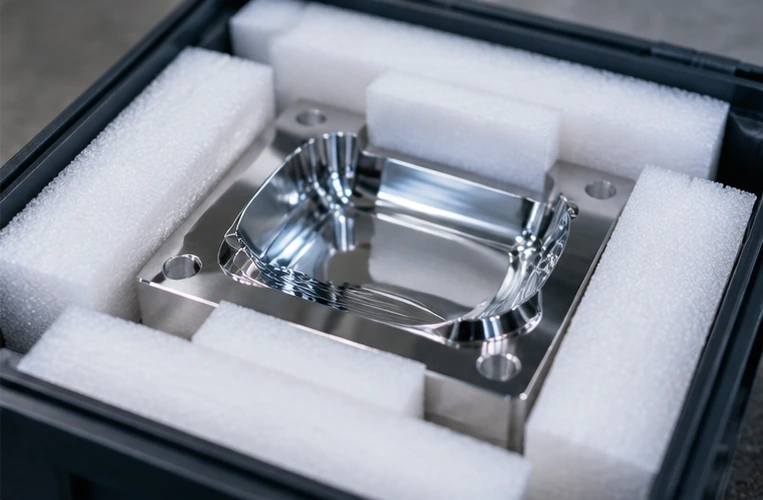
Customers sometimes assume that a supplier can safely publish a photograph as long as the customer’s company name is removed.
That is not always a reliable assumption.
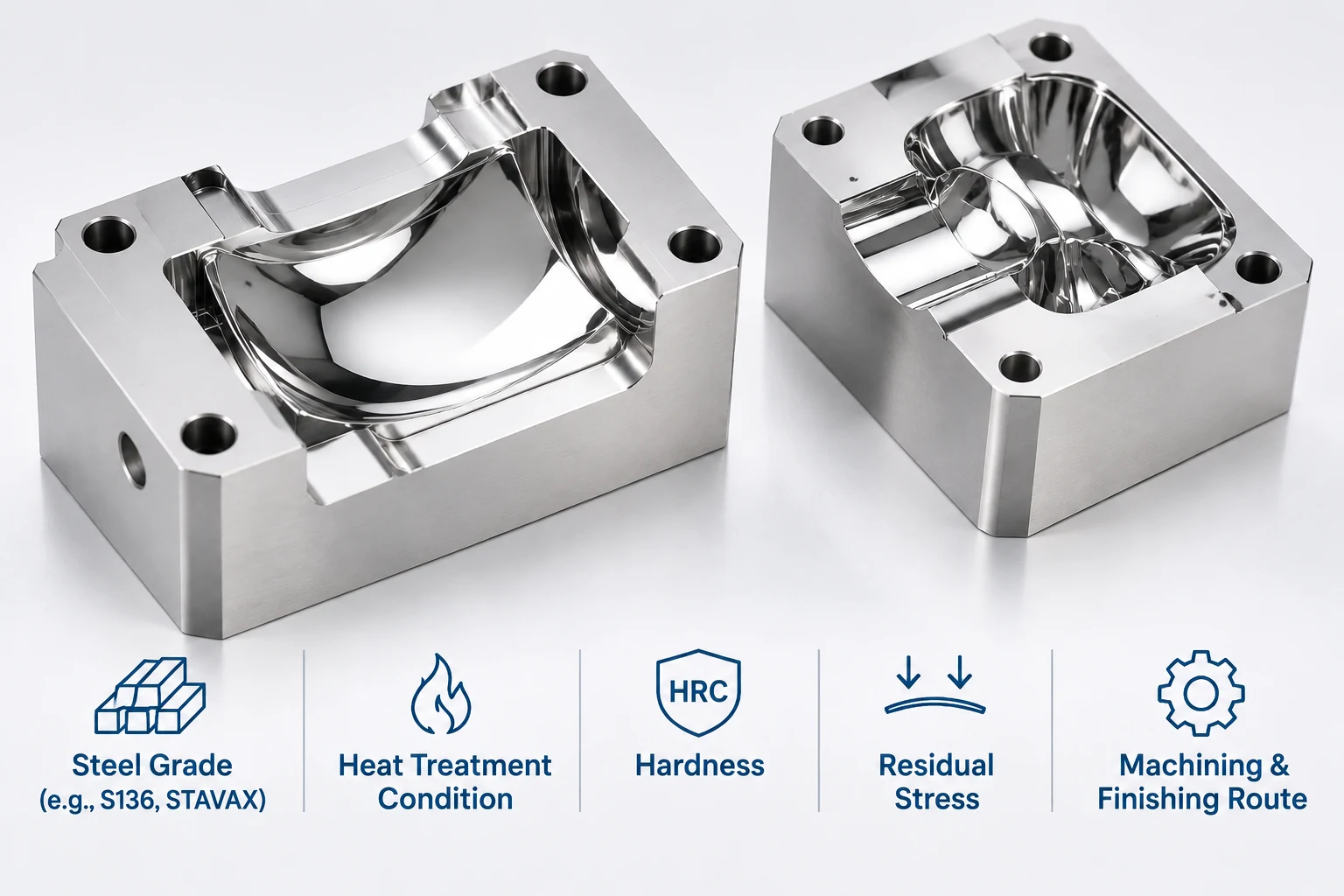
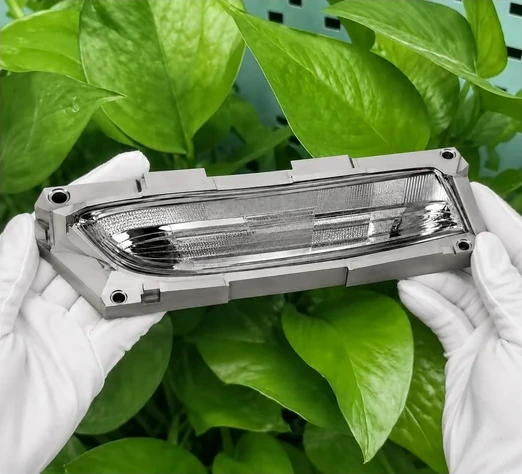
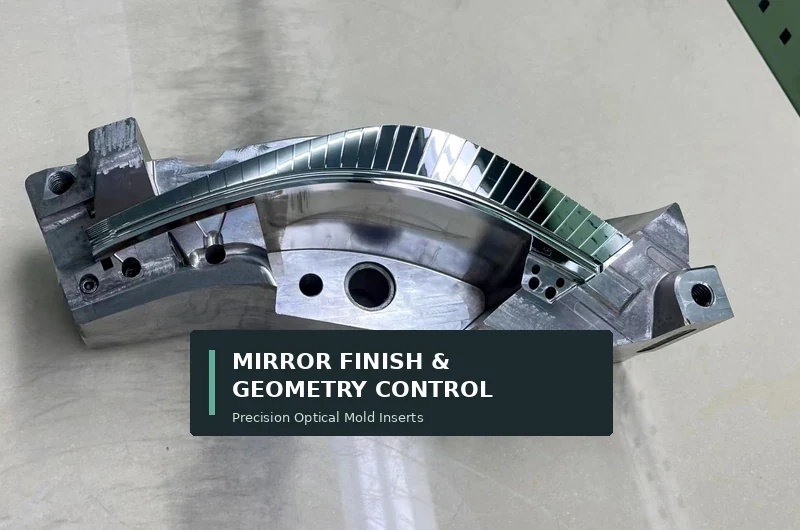
Consider a precision optical mold insert. Its cavity shape, mounting features, distinctive transitions, or arrangement of multiple surfaces may provide clues about the product it is intended to manufacture.
A photograph might also reveal details outside the component itself:
- A drawing or job sheet left on the workbench
- A product name, part number, or customer logo
- A machine display showing project information
- A production schedule or delivery label
- A recognizable component from a product that has not yet been launched
Even when no single detail identifies the customer, several details together may make the project recognizable to someone familiar with it.
The same concern applies to written case studies. Project quantities, development dates, performance targets, unusual geometries, and descriptions of manufacturing difficulties may disclose information that the customer has not approved for publication.
This does not mean suppliers should never share technical examples. It means that the proposed material needs to be reviewed from the customer’s perspective before it becomes public.
Removing a company name is one possible precaution. It is not a substitute for evaluating the complete image and accompanying text.

Separate Manufacturing Access From Publication Permission
A supplier may genuinely need technical information to assess a project.
For an optical mold insert, this could include the 2D drawing, 3D model, material specification, critical dimensions, surface requirements, and relevant datum relationships. Without sufficient information, the supplier may be unable to evaluate tool accessibility, machining feasibility, or inspection requirements accurately.
However, the information needed to manufacture a component is not necessarily the same information needed to promote the project.
I would separate these two decisions from the beginning.
First, define what the supplier needs to review the project.
Provide the information relevant to the manufacturing assessment. If the complete product assembly contains unrelated confidential details, discuss whether a suitable partial model or a limited set of drawings can support the initial review.
This should not mean removing geometry that is essential to assessing manufacturability. If an omitted feature affects tool access, clamping, surface continuity, or another critical requirement, the supplier needs to know that the available information is incomplete.
Second, define what the supplier may retain and use.
Agree on the handling of project files, any permitted internal use, access by relevant personnel or third parties, and the applicable retention or deletion requirements.
Third, treat external publication as a separate decision.
If the supplier wants to use a photograph, drawing excerpt, or project description in marketing, the proposed use should be checked against the agreement and the customer’s approval requirements.
A supplier’s need to understand a design should not be confused with permission to publish that design.
Agree on the Rules Before a Case Study Is Prepared
It is much easier to establish publication boundaries before a project begins than to negotiate them after a finished component has been photographed.
Customers and suppliers can clarify the following points during project setup.
1. Whether external publication is permitted
Some projects should not be discussed publicly at all. Others may allow a general description of the manufacturing challenge without identifying the product or customer.
The appropriate arrangement depends on the project’s confidentiality obligations and the customer’s requirements.
2. Which materials require approval
Specify whether approval is needed for product photographs, mold insert images, drawings, CAD screenshots, logos, technical data, and written case studies.
If only certain materials are permitted, identify those boundaries clearly.
3. Who approves the final content
A purchasing contact may approve the commercial arrangement but may not have authority to approve the use of an end customer’s design or branding.
The responsible technical, legal, marketing, or end-customer representative should be identified where necessary.
4. Where and when the material may appear
Approval for one website image should not automatically be treated as approval for every social platform, trade-show presentation, sales brochure, or future publication.
The intended content, channels, timing, and any editing restrictions should be clear enough to avoid different interpretations.
5. What happens when approval is not granted
The supplier should know whether the material must remain internal, be replaced with a different example, or be excluded from promotional use altogether.
These arrangements do not need to create an unnecessarily complicated process. Their purpose is to prevent an avoidable disagreement after the technical work has already been completed.

Cross-Border Projects Need Clear Information Boundaries
International cooperation introduces additional practical considerations.
A project may involve customer engineering teams, procurement departments, an overseas supplier, and other parties responsible for design, manufacturing, or quality approval.
Technical files may also move through email, file-transfer platforms, cloud storage, or approved collaboration systems.
For that reason, customers should understand not only which company receives their information, but also whether the information may be shared with subcontractors, external service providers, or other parties involved in the project.
Where third-party access is necessary, it should be handled in accordance with the relevant agreement and customer requirements.
File names, drawing revisions, access permissions, and approved communication channels also matter. These controls help reduce accidental disclosure and confusion about which information is authorized for use.
For a complex mold insert project, it may be appropriate to agree on the latest approved drawing set, identify the relevant contacts, and clarify how revised files will be exchanged.
A mirror mold insert RFQ checklist can help organize the technical information needed for quotation. Customers can use that information to distinguish manufacturing requirements from confidential details that are not necessary for the initial assessment.
Any additional confidentiality, data-transfer, or regulatory requirements should be reviewed according to the actual project and applicable contractual obligations. A general checklist cannot replace that review.

A Good Supplier Should Respect the Purpose of the Information
When evaluating an overseas precision machining supplier, customers naturally examine technical capability, quality control, delivery reliability, and commercial terms.
It is also worth asking a few direct questions about information management.
Who will have access to the drawings? Can project files be shared with third parties? How are requests to use customer components in marketing handled? What happens when a project ends and certain files are no longer required?
These questions are not signs of distrust. They help establish a professional working relationship.
At YISHUN Optical, we believe the purpose of technical information should remain clear throughout a project. Drawings and models support engineering evaluation and manufacturing decisions; any additional use should be considered separately and handled according to the applicable agreement and customer authorization.
If your project involves confidential optical geometry, an unreleased product, or strict end-customer requirements, explain those boundaries early. We can then discuss what information is needed for the technical review and which requirements need clarification before work proceeds.
You should not have to choose between protecting your intellectual property and obtaining a meaningful engineering assessment.
Clear information boundaries make international cooperation more predictable—and allow both sides to focus on getting the manufacturing result right.