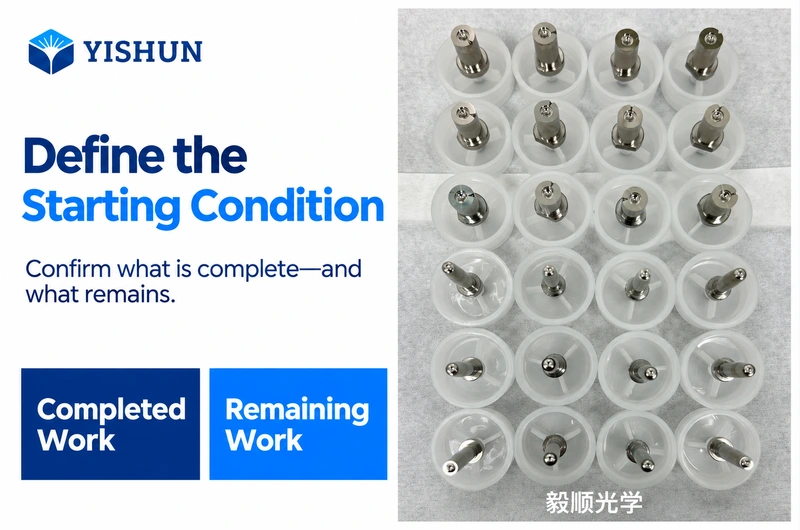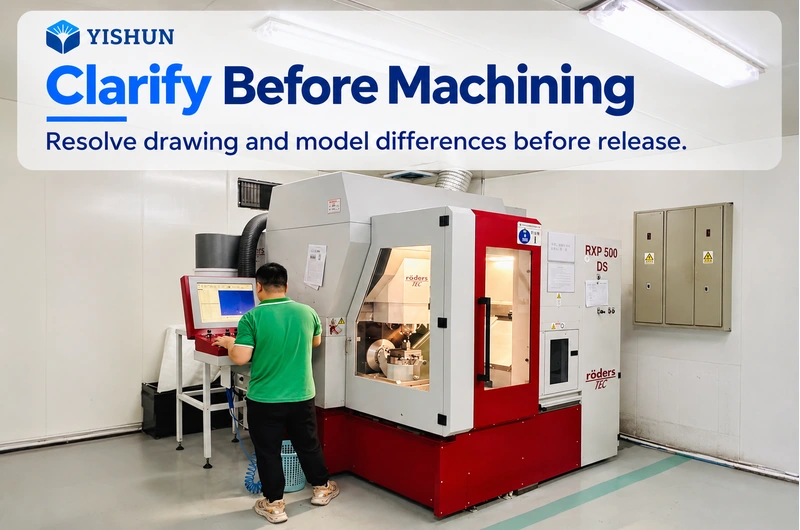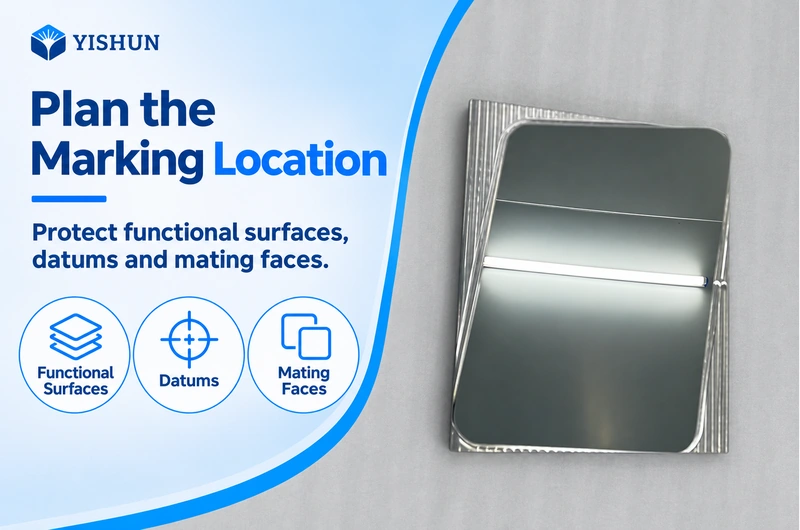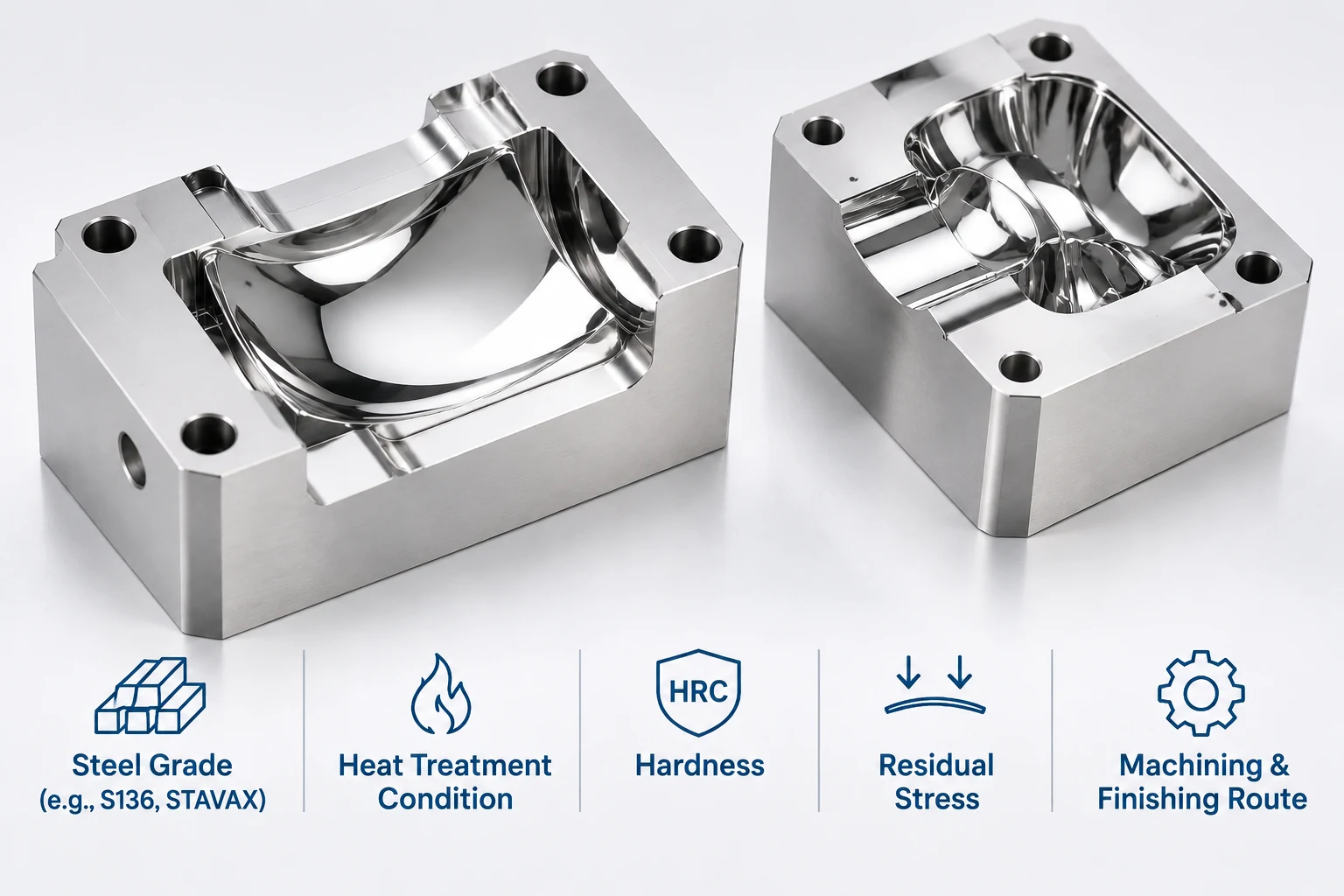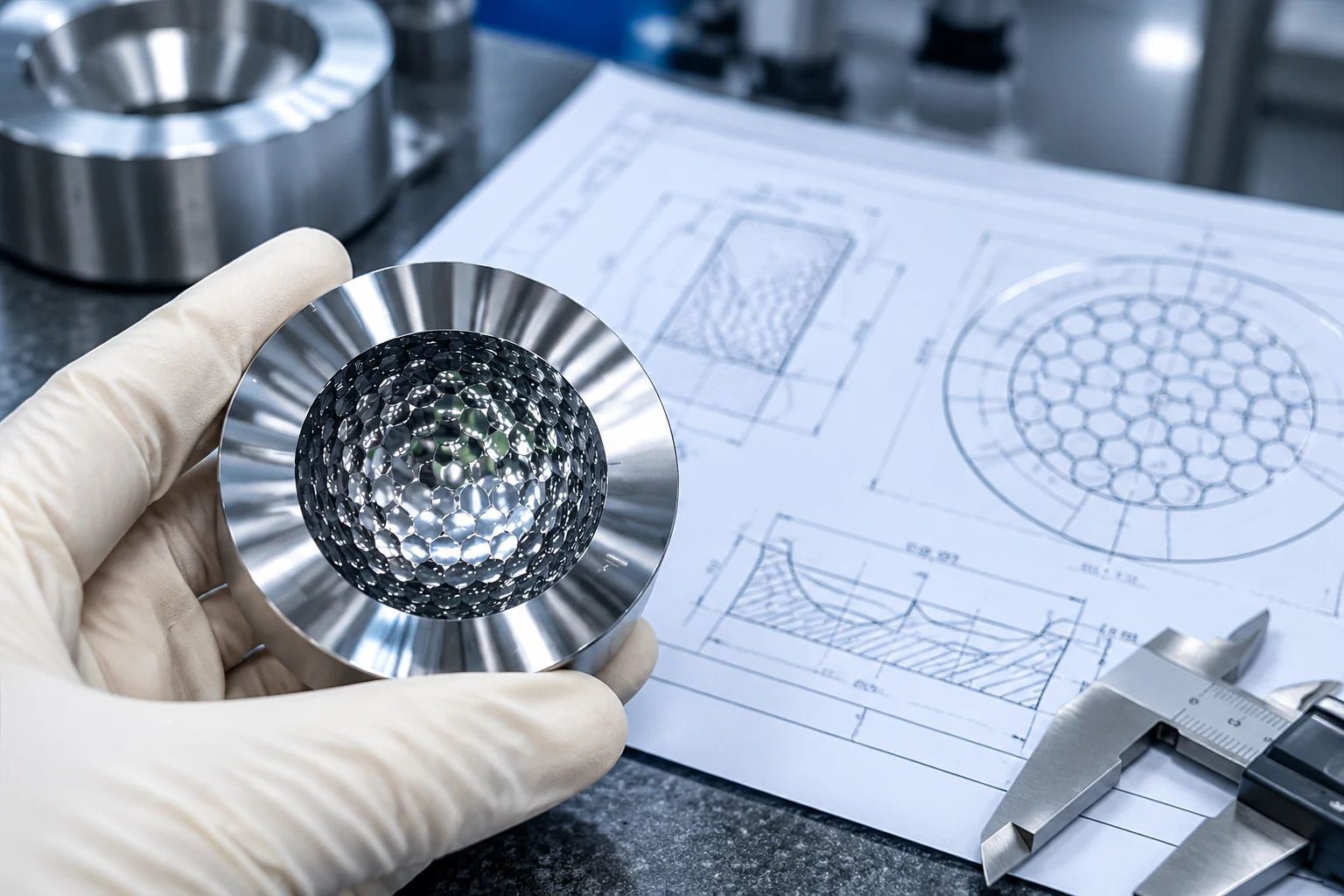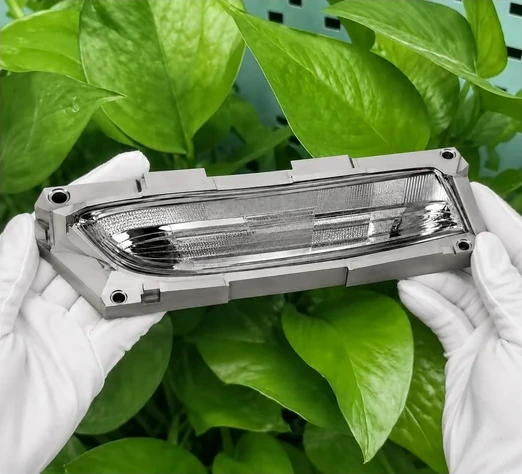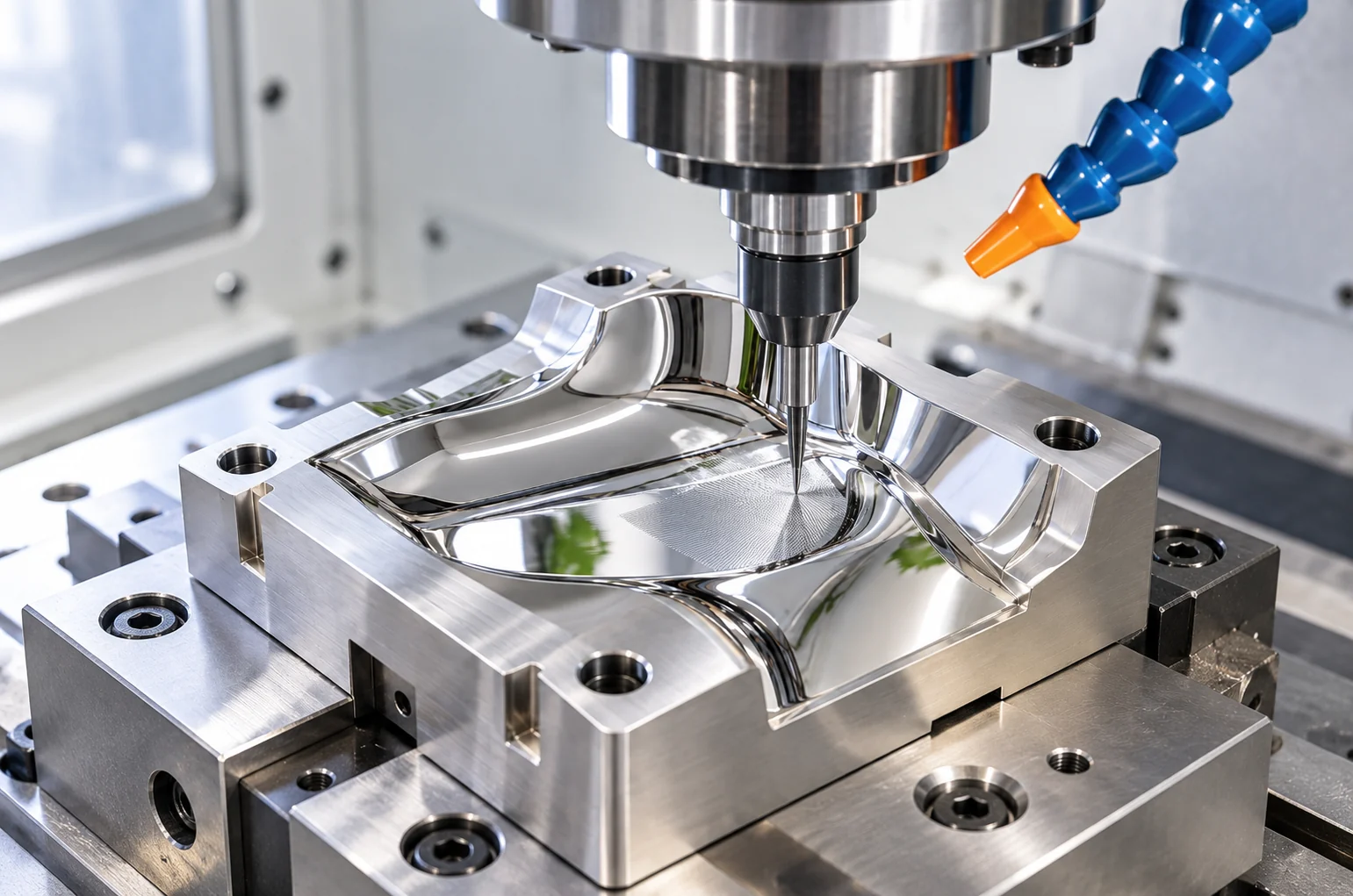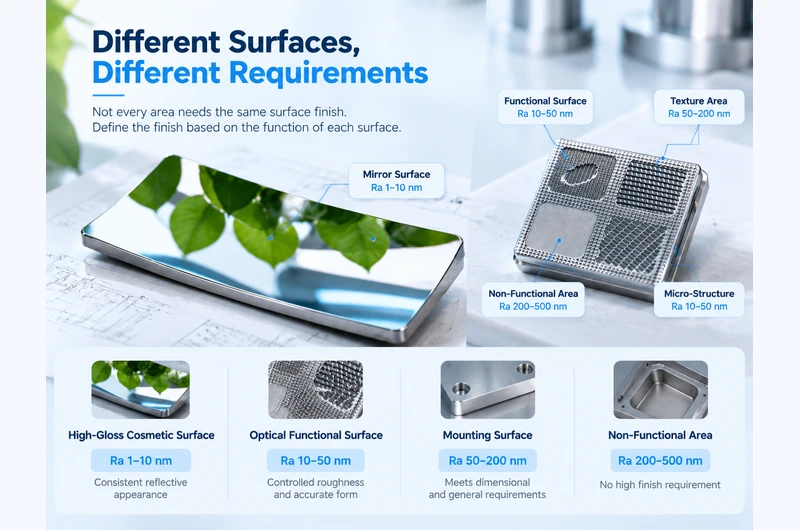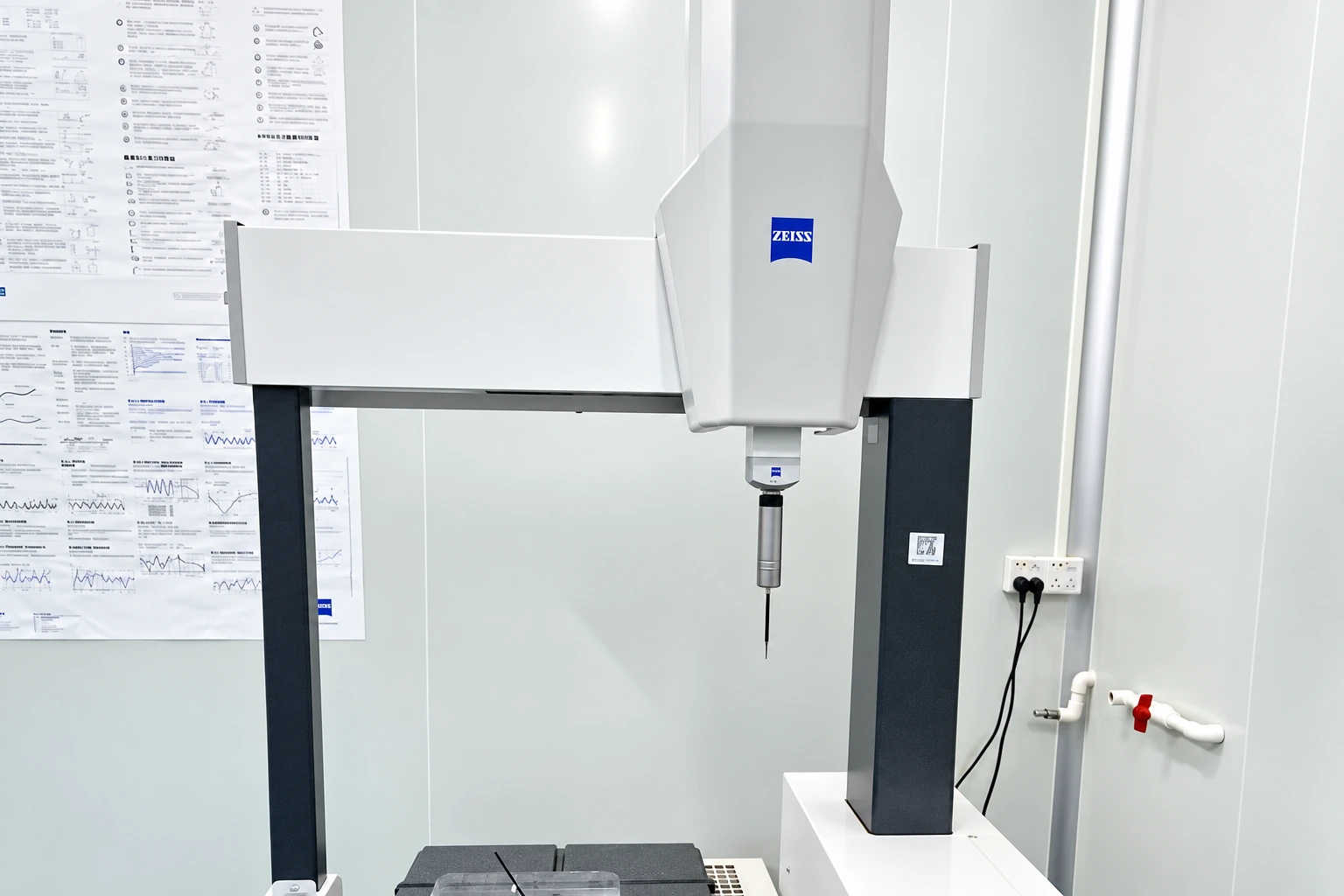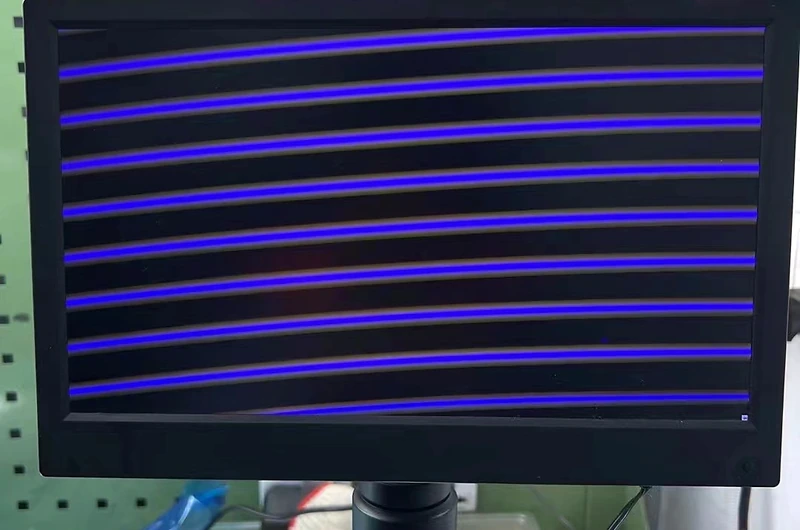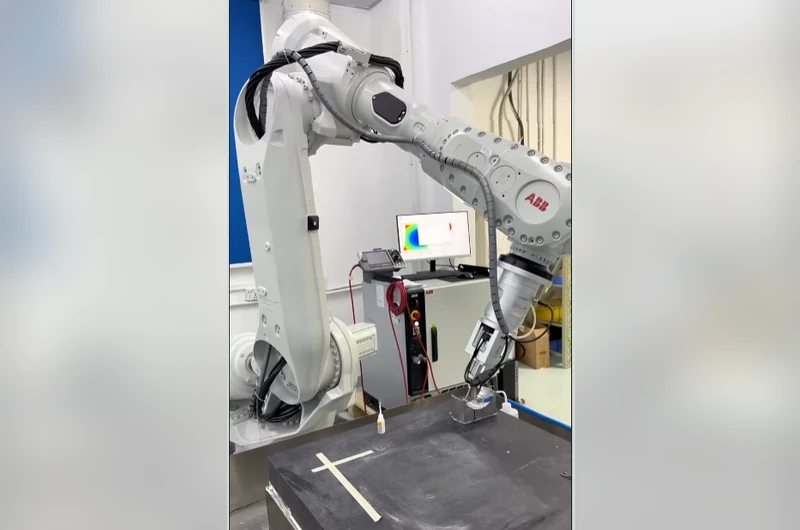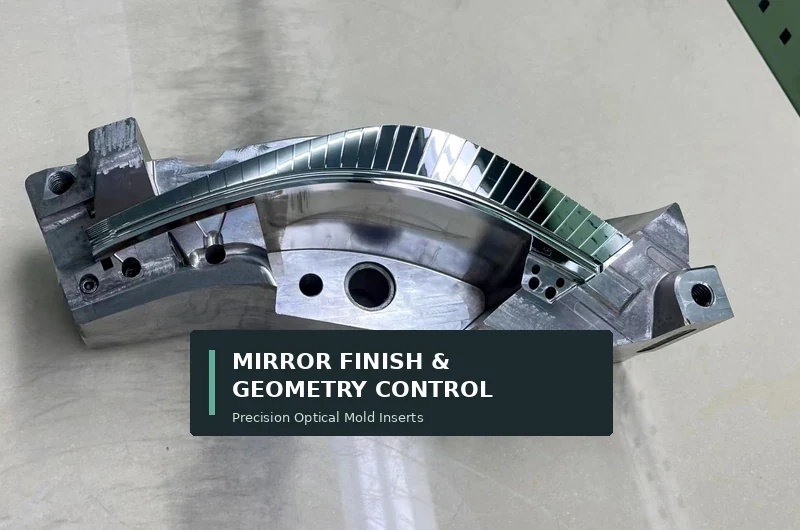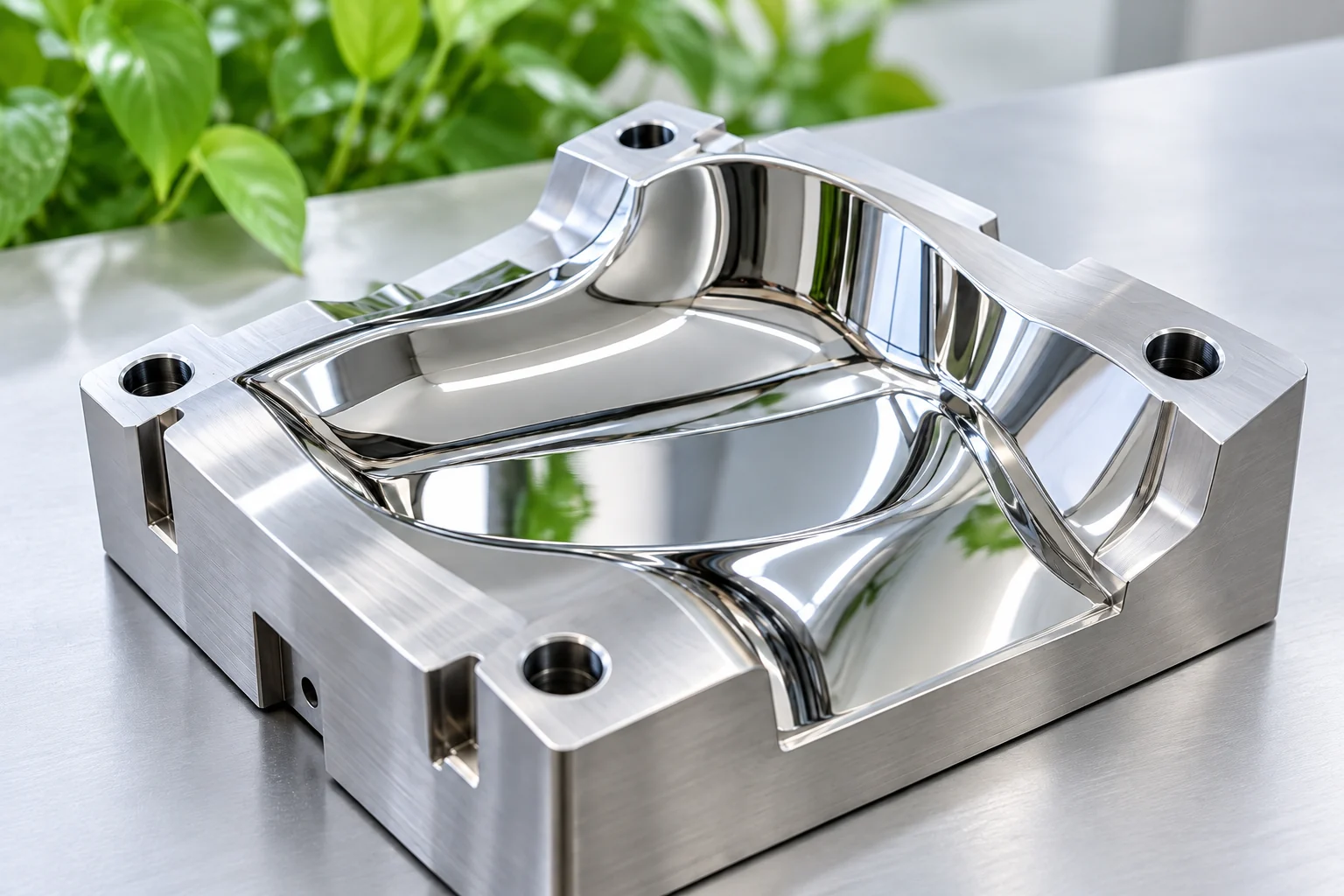
A complex mirror mold insert may require precision milling, EDM, mirror polishing and dimensional inspection.
When these operations are handled by different suppliers, each company may complete its own task correctly, yet the finished insert can still have problems.
The machining supplier focuses on geometry. The EDM supplier focuses on difficult features. The polishing supplier focuses on surface appearance. The inspection company checks the finished dimensions.
But who controls the relationship between all these operations?
This is where projects can become difficult to manage. The risk is not simply having several suppliers. It is losing consistent engineering control when the workpiece moves between them.
1. Every Supplier Transfer Creates Another Control Point
When a mold insert moves between workshops, it may need to be relocated, supported and measured again.
Even small differences in positioning or reference selection can affect how critical features relate to one another.
For complex inserts, this can create several risks:
- Datum differences: Different suppliers may use different locating surfaces or measurement references.
- Machining allowance: The polishing team may not know how much material was intentionally left for finishing.
- Surface inconsistency: Different finishing teams may interpret the mirror requirement differently.
- Communication gaps: Important instructions about sharp edges, small radii or optical areas may not reach the next supplier.
- Unclear responsibility: When a problem appears, it can be difficult to identify which operation caused it.
The more complicated the component, the more important it becomes to control these transitions.
2. The Machining Route Should Be Planned as One Process
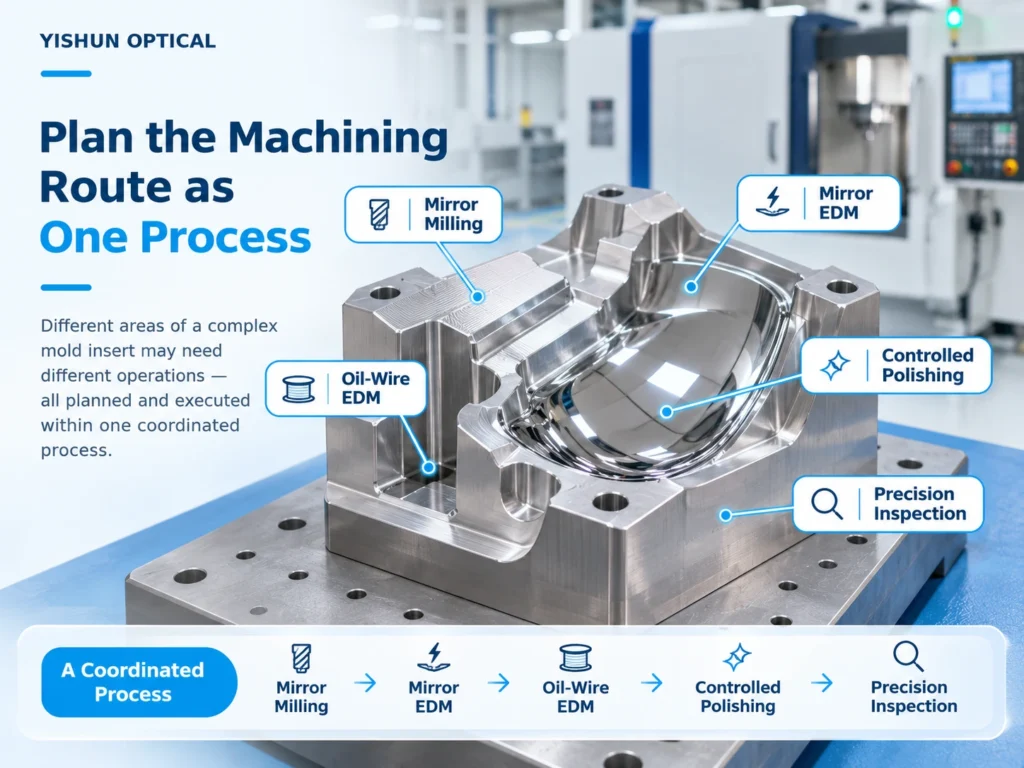
We believe a complex mold insert should be evaluated as a complete component before individual operations are assigned.
For example, an insert may contain:
- Open curved surfaces suitable for high-speed mirror milling.
- Narrow corners requiring mirror EDM.
- Through-hole features that may require oil-wire EDM.
- Critical mirror areas requiring controlled finishing.
- Dimensions and surface features requiring precision inspection.
These areas should not be treated as unrelated jobs.
The machining sequence needs to consider how each operation affects the next one.
A suitable mirror mold machining process should be selected according to geometry, material, tool accessibility and final requirements.
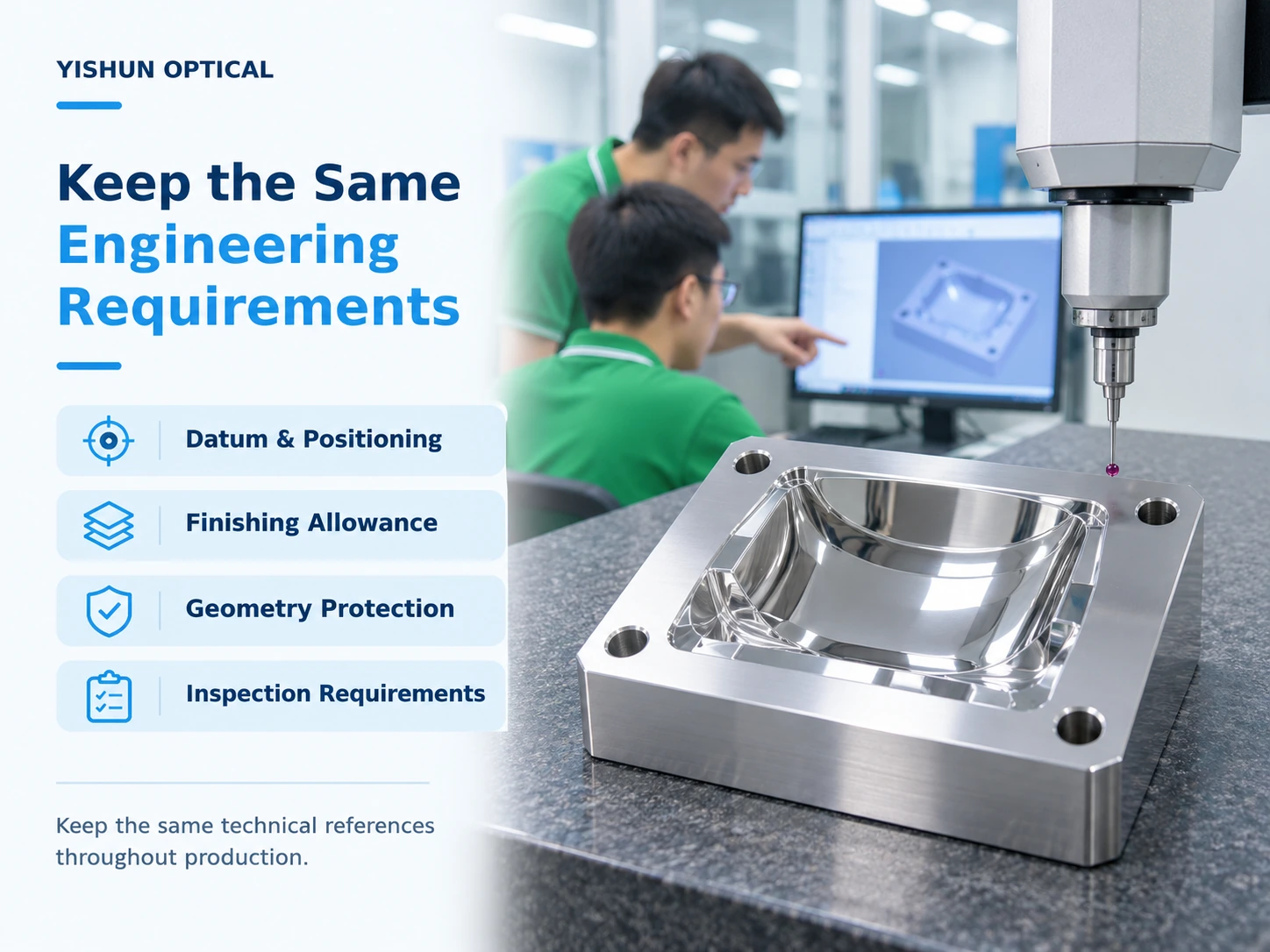
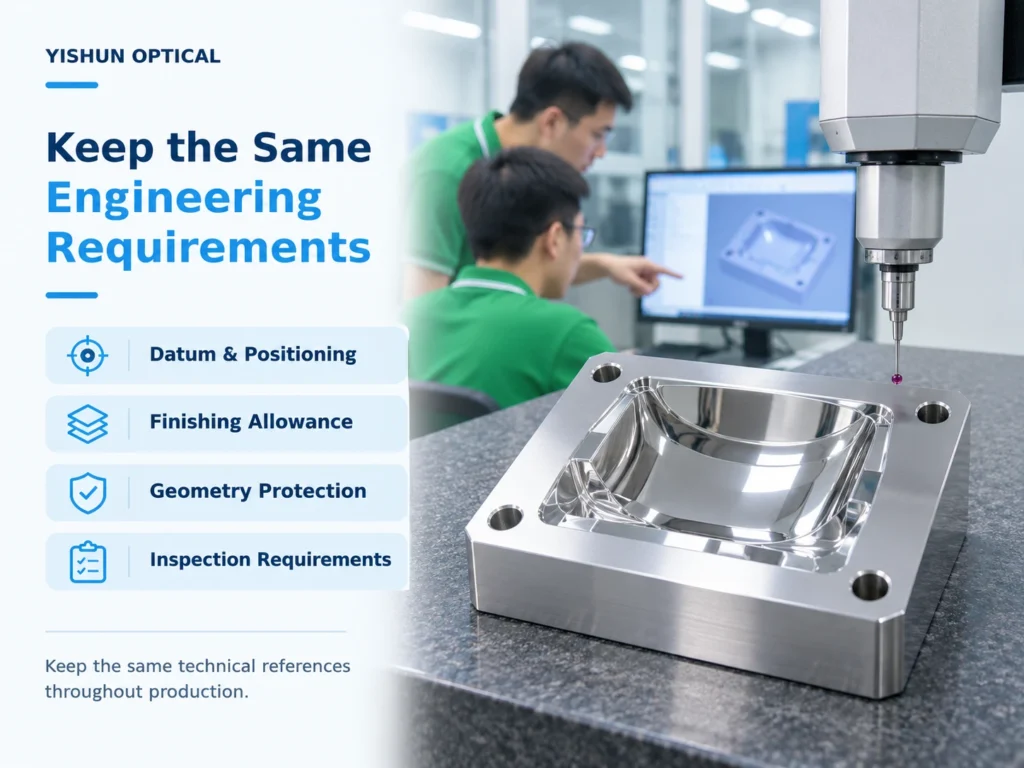
3. Keep the Same Engineering Requirements Throughout Production
One important advantage of coordinated manufacturing is the ability to maintain consistent technical references.
Before production, we recommend confirming:
Datum and positioning
Define the reference surfaces and critical locating relationships before machining begins.
Finishing allowance
Identify how much material should remain for polishing or other finishing operations.
Geometry protection
Clearly mark small radii, sharp edges, optical surfaces and features that must not be altered.
Inspection requirements
Agree on which dimensions, surface characteristics and geometric features need verification.
A precision mold inspection report should reflect the agreed requirements rather than simply provide a collection of measurement values.
4. One Supplier Does Not Automatically Mean Better Quality
We do not believe every process must always be completed by one company.
Some specialized operations may genuinely require an external specialist.
The important difference is whether the project has a clear engineering owner.
A coordinated supplier should be able to explain:
- Which operations are performed internally.
- Which operations require external support.
- How reference positions are maintained.
- How quality is checked between operations.
- Who is responsible for reviewing and resolving process problems.
Transparency is more valuable than simply claiming to provide a one-stop service.
It also helps customers understand the real manufacturing route instead of comparing quotations based only on the number of operations listed.
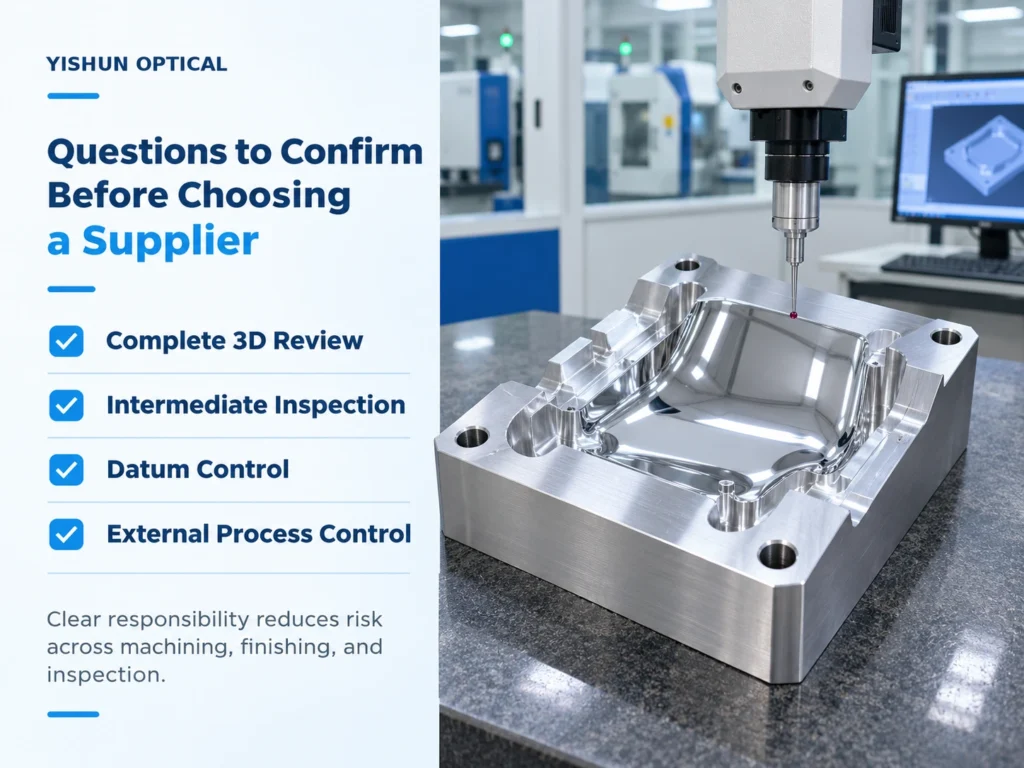
5. What Should You Confirm Before Choosing a Supplier?
For complex mirror mold inserts, we recommend asking:
- Can the supplier evaluate the complete 3D geometry?
- Can machining, EDM and polishing requirements be reviewed together?
- Are the critical datums maintained across operations?
- Is there intermediate inspection before finishing?
- Can the supplier provide the agreed dimensional and surface inspection results?
- If external processing is involved, who controls the quality and technical communication?
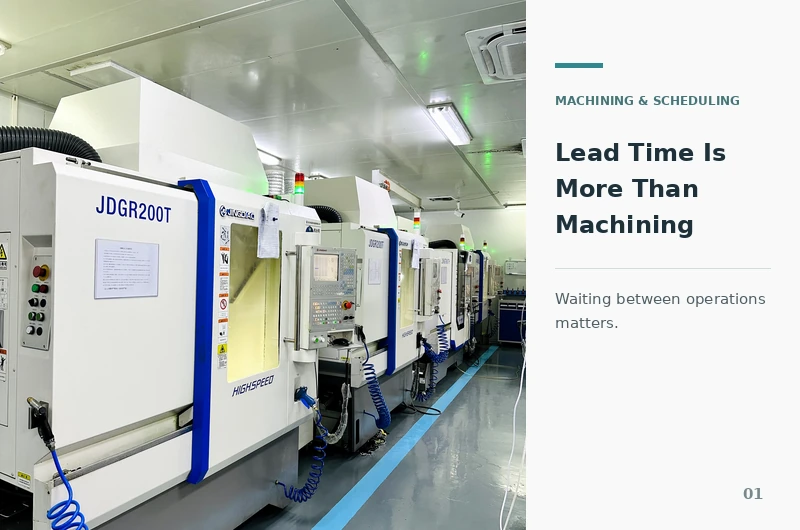
Delivery planning also deserves attention. Waiting between operations can affect the overall schedule, even when individual machining operations finish on time. This is why production handoffs and mold insert lead time should be considered during project planning.
How Yishun Optical Supports Integrated Mold Insert Projects
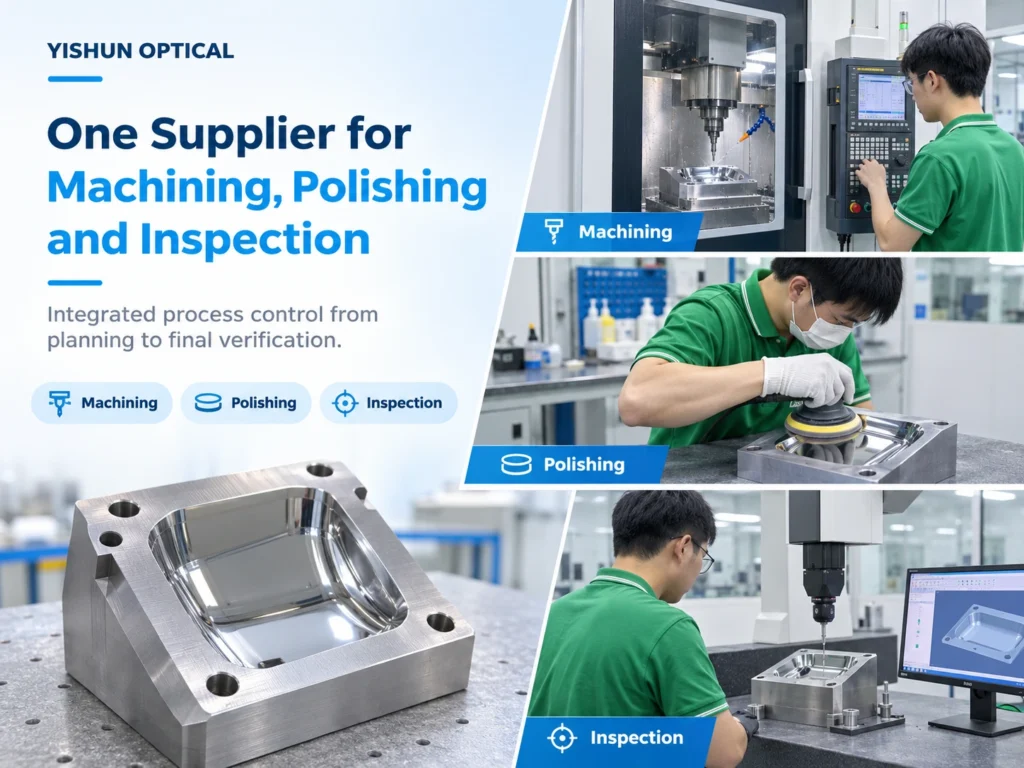
At Yishun Optical, we provide several complementary machining and finishing capabilities, including:
- High-speed mirror milling and five-axis machining.
- Selected mirror EDM and oil-wire EDM operations.
- Controlled optical polishing and localized finishing.
- Precision dimensional and surface inspection.
For suitable projects, these capabilities allow us to evaluate how different operations should work together.
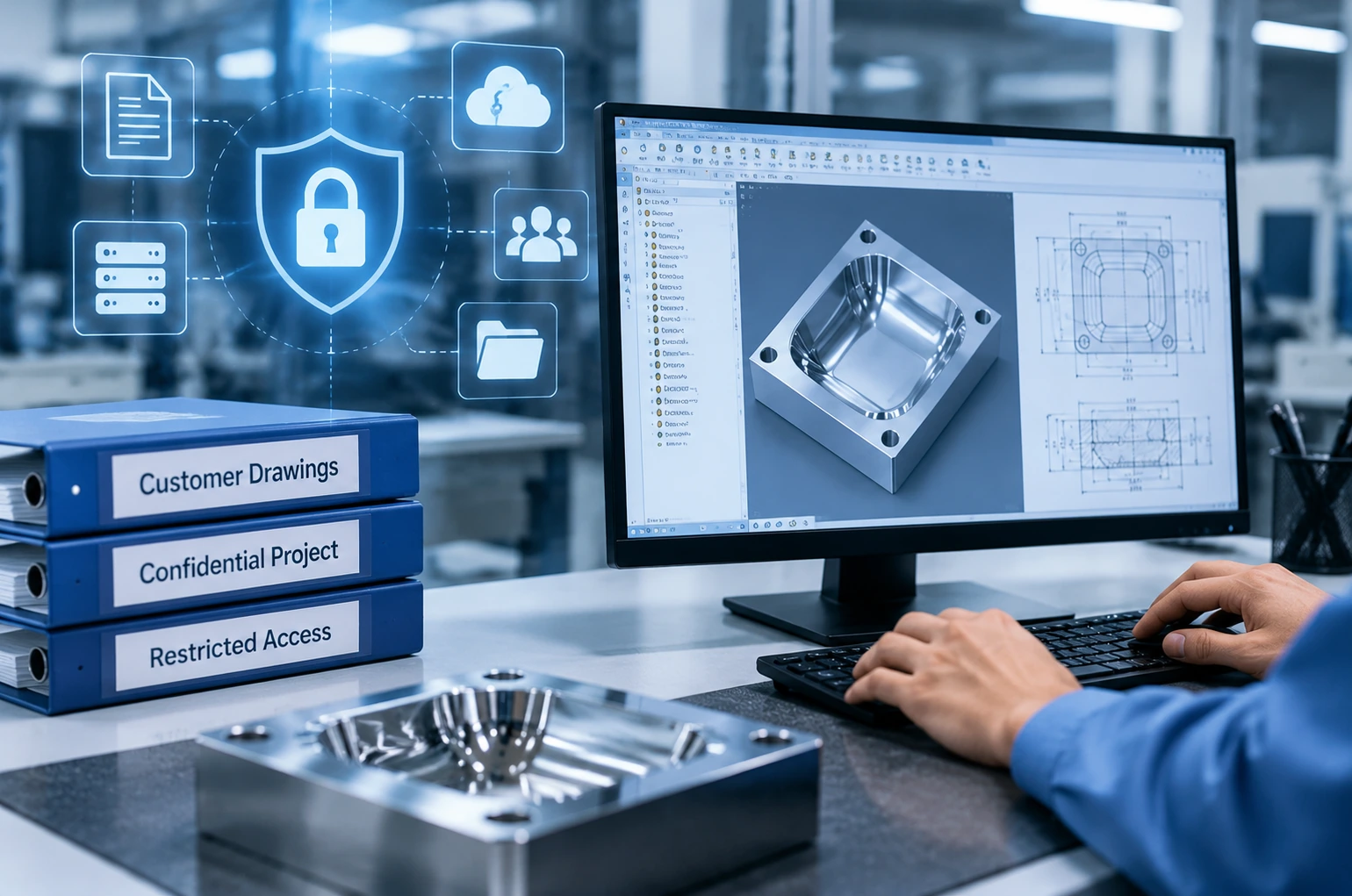
We first review the complete drawing and 3D model, identify difficult features, and determine which processes are appropriate for each area.
The objective is to reduce unnecessary transfers, maintain consistent engineering references and establish clear inspection requirements.
Not every insert needs every process. The correct combination depends on the actual geometry and material.
A Better Manufacturing Route Starts With Clear Responsibility
A mirror mold insert is not simply the result of several individual machining operations.
Its final quality depends on how those operations connect.
When machining, finishing and inspection follow a coordinated engineering plan, it becomes easier to control geometry, surface quality, dimensional requirements and overall project responsibility.
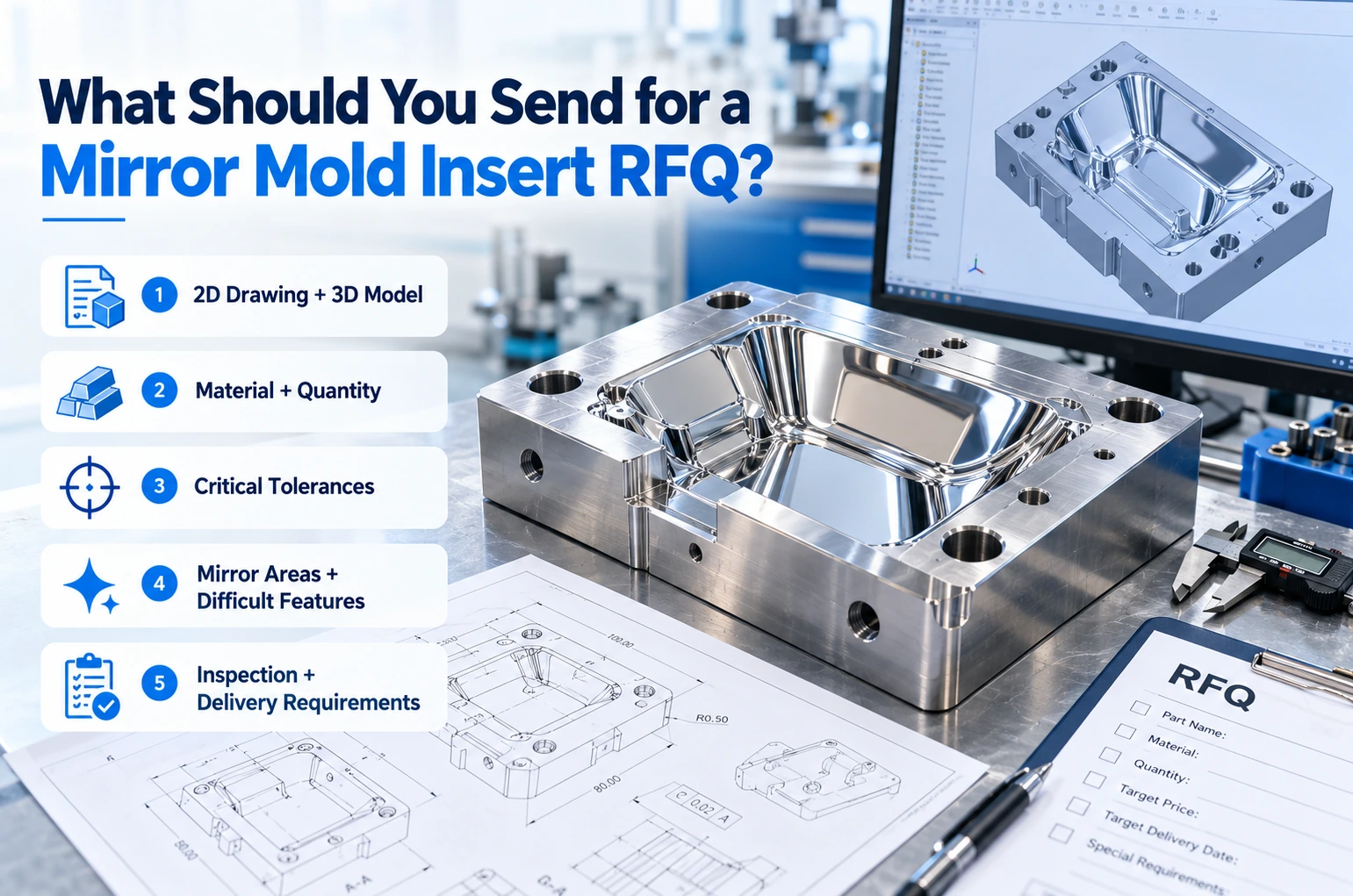
If your current mold insert project involves several external suppliers, send us the 2D drawing, 3D model, material specification, critical tolerances and surface requirements.
We can review the complete manufacturing route and help identify where process coordination may reduce quality risks and unnecessary rework.
Yishun Optical – Ultra-Precision Optical Mold Insert & Mirror Machining Solutions