Key Takeaways
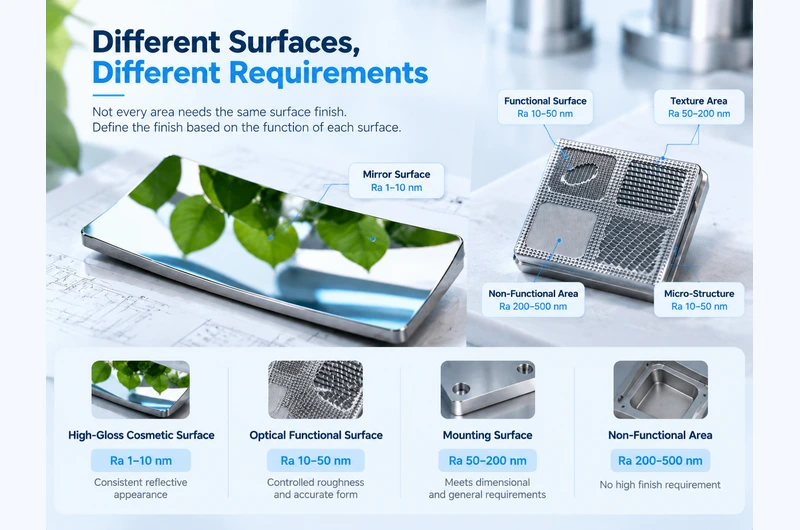
- ADAS optical components require surface roughness below Ra 1nm to ensure precise light transmission and sensor accuracy
- Tolerance control of ±0.5μm is mandatory for safety-critical applications in autonomous driving systems
- Multi-material manufacturing capabilities (aluminum, brass, PMMA, PC, optical glass) expand design flexibility
- Diamond-turned surfaces eliminate the need for post-polishing in many ADAS applications
- ISO 9001:2015 certified manufacturers ensure consistent quality for automotive supply chains
- YISHUN Optical’s 20+ years of experience supports Tier 1 automotive suppliers with ultra-precision manufacturing
The automotive industry’s rapid transition toward autonomous driving has placed unprecedented demands on optical component manufacturing. Advanced Driver Assistance Systems (ADAS) rely on sophisticated optical architectures to perceive, interpret, and respond to driving environments. Behind these safety-critical systems lies a manufacturing discipline where tolerances are measured in micrometers and surface quality in nanometers.
For procurement engineers and optical designers working on ADAS platforms, understanding the manufacturing challenges and supplier capabilities has become essential for project success. This article examines the technical requirements, manufacturing processes, and quality considerations that define today’s automotive ADAS optical components landscape.
Understanding ADAS Optical System Architecture
Modern ADAS platforms employ multiple optical subsystems working in concert to create a comprehensive perception envelope around the vehicle. Front-facing cameras, surround-view systems, LiDAR units, and infrared night-vision modules all depend on precision optical components to function effectively.
The optical chain in an ADAS camera typically includes protective covers, lens elements, apertures, filters, and image sensor windows. Each component must maintain precise geometric relationships and surface characteristics to ensure accurate image capture and processing. A deviation of just a few micrometers in lens positioning can result in measurable image degradation that compromises object recognition algorithms.
Environmental factors add another layer of complexity. Automotive optics must operate reliably across temperature ranges from -40°C to +85°C, resist vibration and shock, maintain performance in rain and fog, and remain stable under UV exposure. These conditions demand both material selection expertise and manufacturing processes capable of producing components that retain their optical properties over the vehicle’s lifetime.
Surface Quality Requirements for ADAS Applications
The surface quality of ADAS optical components directly impacts system performance in ways that differ significantly from traditional optical applications. While a camera lens with micro-scratches might produce acceptable images for consumer photography, the same defects in an ADAS lens could cause false readings in lane departure warning systems or missed detections in automatic emergency braking scenarios.
Surface Roughness Specifications
ADAS optical manufacturing typically requires surface roughness values of Ra 1nm or better for critical surfaces. This sub-nanometer finish ensures:
- Minimal light scatter that could introduce ghost images or reduce contrast
- Precise control of light transmission through optical elements
- Consistent performance across the component’s operational lifetime
- Compatibility with anti-reflective coatings that require ultra-smooth substrates
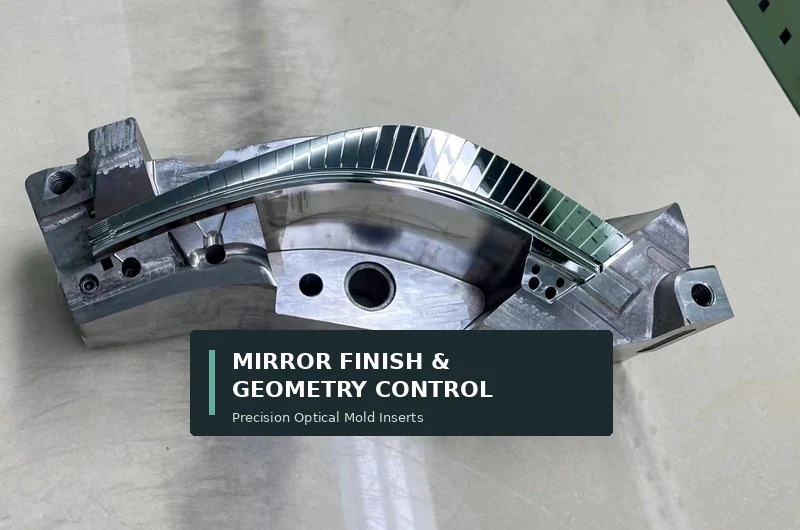
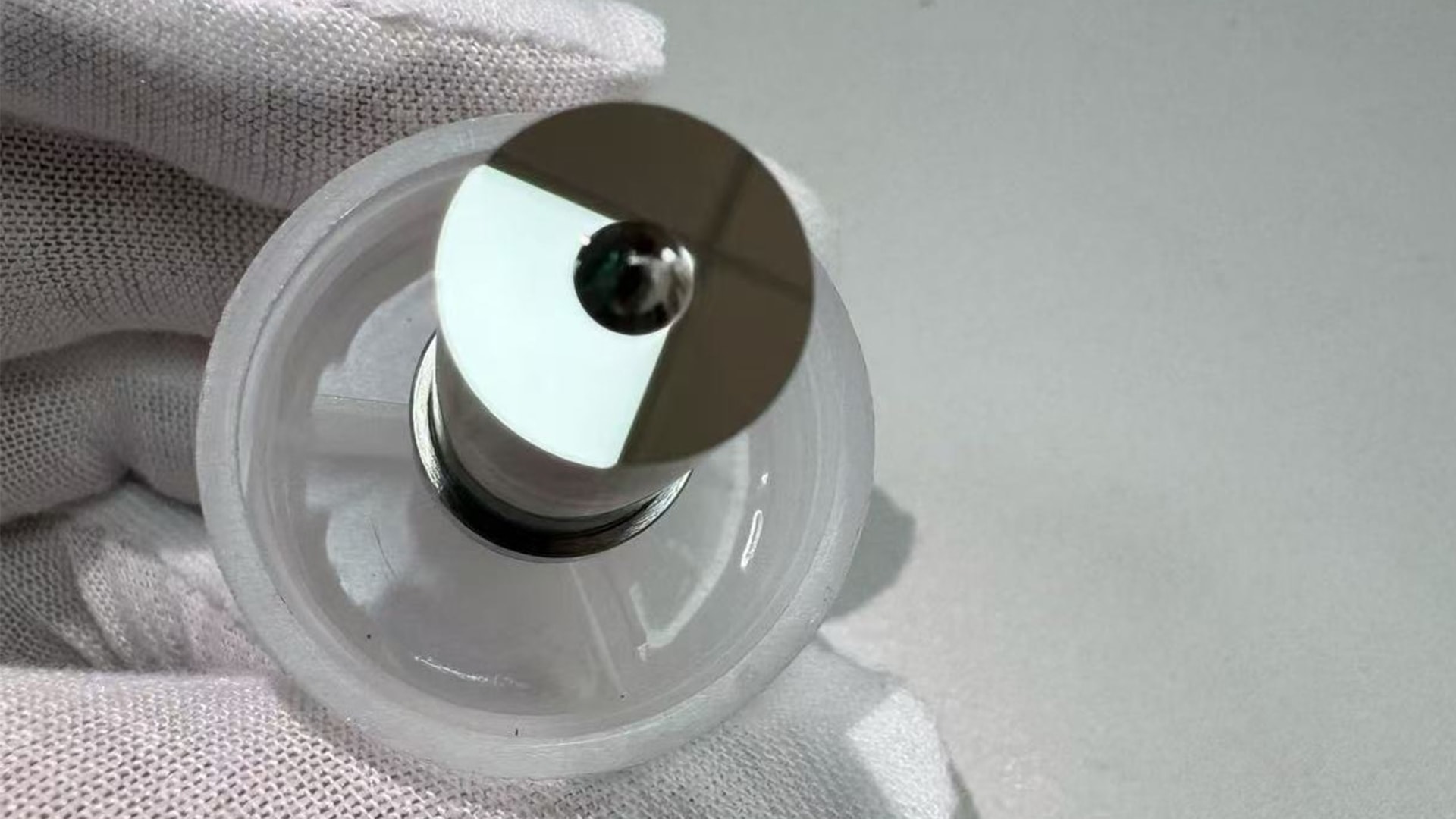
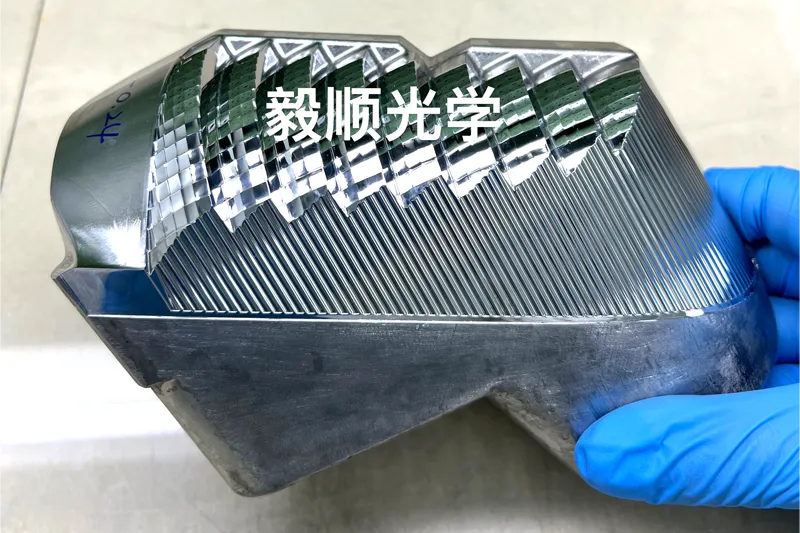
Traditional grinding and polishing processes struggle to achieve and maintain these specifications consistently. Single Point Diamond Turning (SPDT) technology has emerged as the preferred manufacturing method because it can produce these surface finishes directly from the machine, eliminating the variability associated with manual polishing operations.
Geometric Tolerance Control in ADAS Manufacturing
Beyond surface quality, ADAS optical components require exceptional geometric accuracy. Tolerance budgets of ±0.5μm are common for critical dimensions, with certain applications demanding even tighter specifications. These requirements stem from the mathematical relationships governing optical performance.
Consider a typical ADAS lens assembly where the distance between elements determines the focal length and field of view. An error of just 5μm in element spacing can shift the focal plane sufficiently to cause defocus at the image sensor. Similarly, surface figure errors translate directly into wavefront distortion that degrades image sharpness across the entire field of view.
Achieving ±0.5μm tolerances consistently requires:
- Ultra-precision machine tools with thermal stability systems
- Climate-controlled manufacturing environments
- High-resolution in-process measurement and verification
- Statistical process control throughout production runs
- Documentation and traceability for automotive quality systems
Material Considerations for ADAS Optics
ADAS optical components are manufactured from a diverse range of materials, each selected for specific performance requirements. Understanding material characteristics helps designers specify appropriate manufacturing processes and enables more productive discussions with suppliers.
| Material | Typical Application | Manufacturing Considerations |
|---|---|---|
| Aluminum alloys (6061, 7075) | Mirror substrates, housings | Excellent machinability, thermal conductivity |
| Brass (C360) | Reflective elements, frames | Good stability, excellent surface finish |
| PMMA (acrylic) | Lens elements, covers | Optical clarity, brittle, sensitive to heat |
| Polycarbonate | Protective windows, covers | Impact resistance, birefringence control |
| Optical glass (B270, BK7) | Precision lenses | Excellent optical properties, processing challenges |
| Germanium | IR optics, night vision | Specialized equipment required |
The diversity of materials in ADAS systems means manufacturers must maintain expertise across multiple process technologies. A supplier capable of diamond turning aluminum mirrors may not have the capabilities to machine optical glass elements, and vice versa. Selecting a partner with comprehensive multi-material capabilities streamlines supply chain management and ensures consistent quality across all optical components.
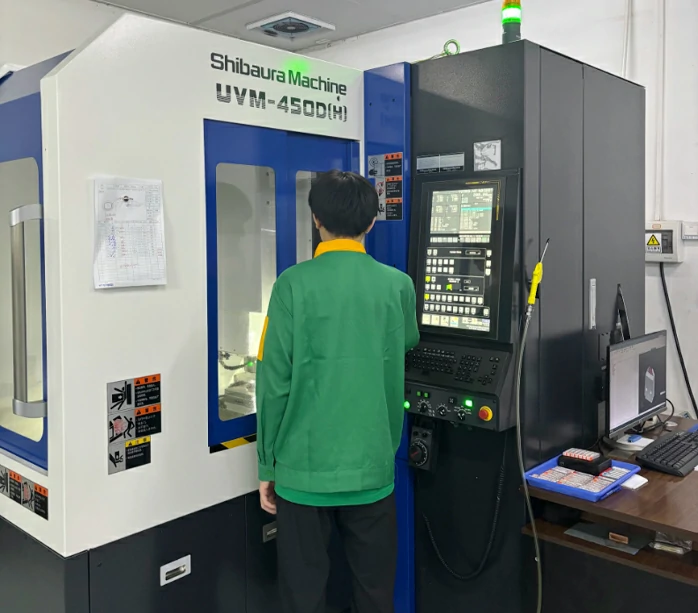
Manufacturing Equipment for ADAS Optical Components
The equipment used to manufacture ADAS optics distinguishes capable suppliers from those merely claiming precision capability. Key equipment categories include:
Diamond Turning Centers
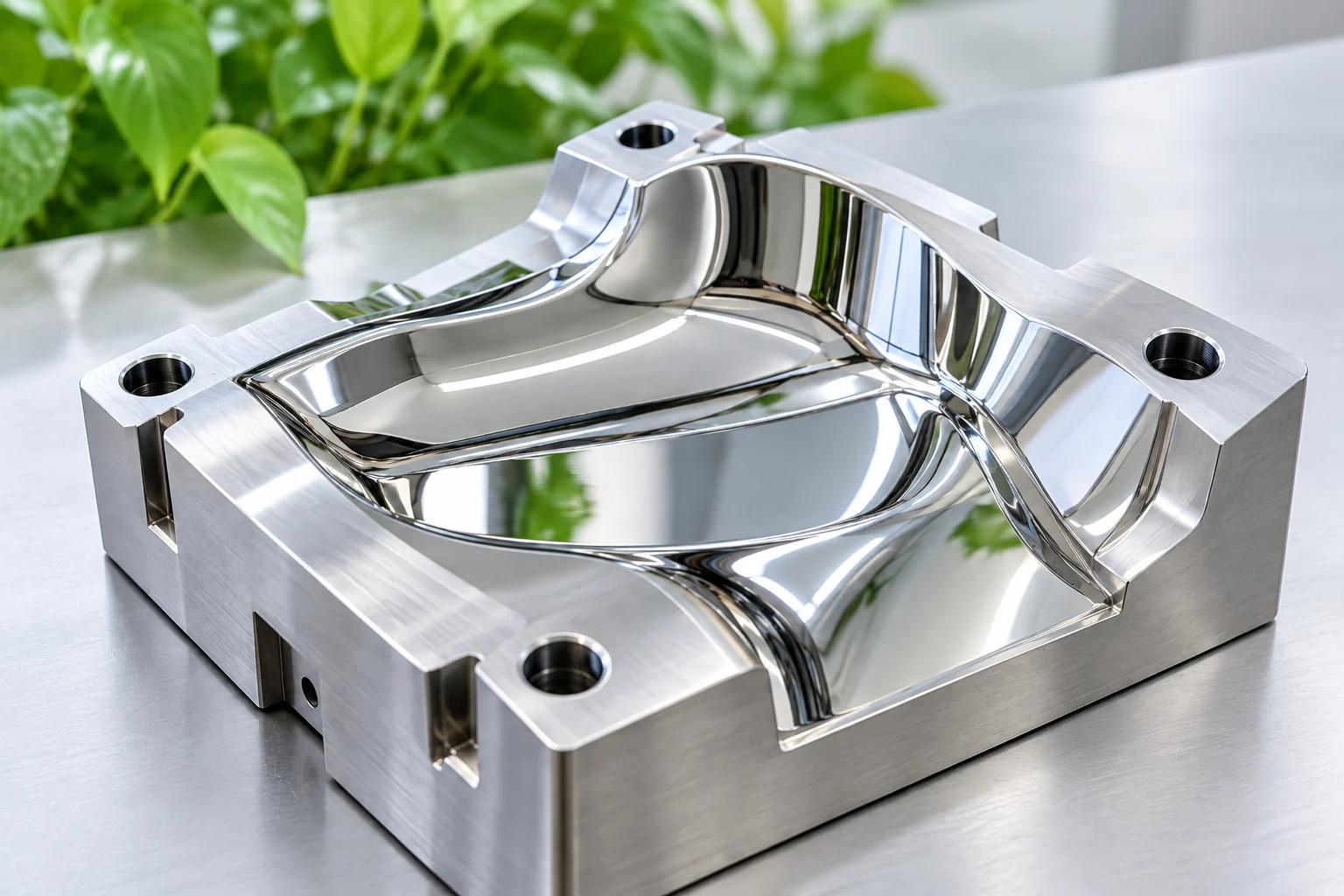
Single Point Diamond Turning (SPDT) machines like the Moore Nanocenter are specifically designed for producing optical-quality surfaces on non-ferrous materials. These machines achieve positioning accuracies measured in nanometers, with spindle runout below 50nm. The combination of ultra-rigid machine construction, precision aerostatic bearings, and specialized cutting tools enables production of surfaces that often require no subsequent polishing.
Multi-Axis Machining Centers
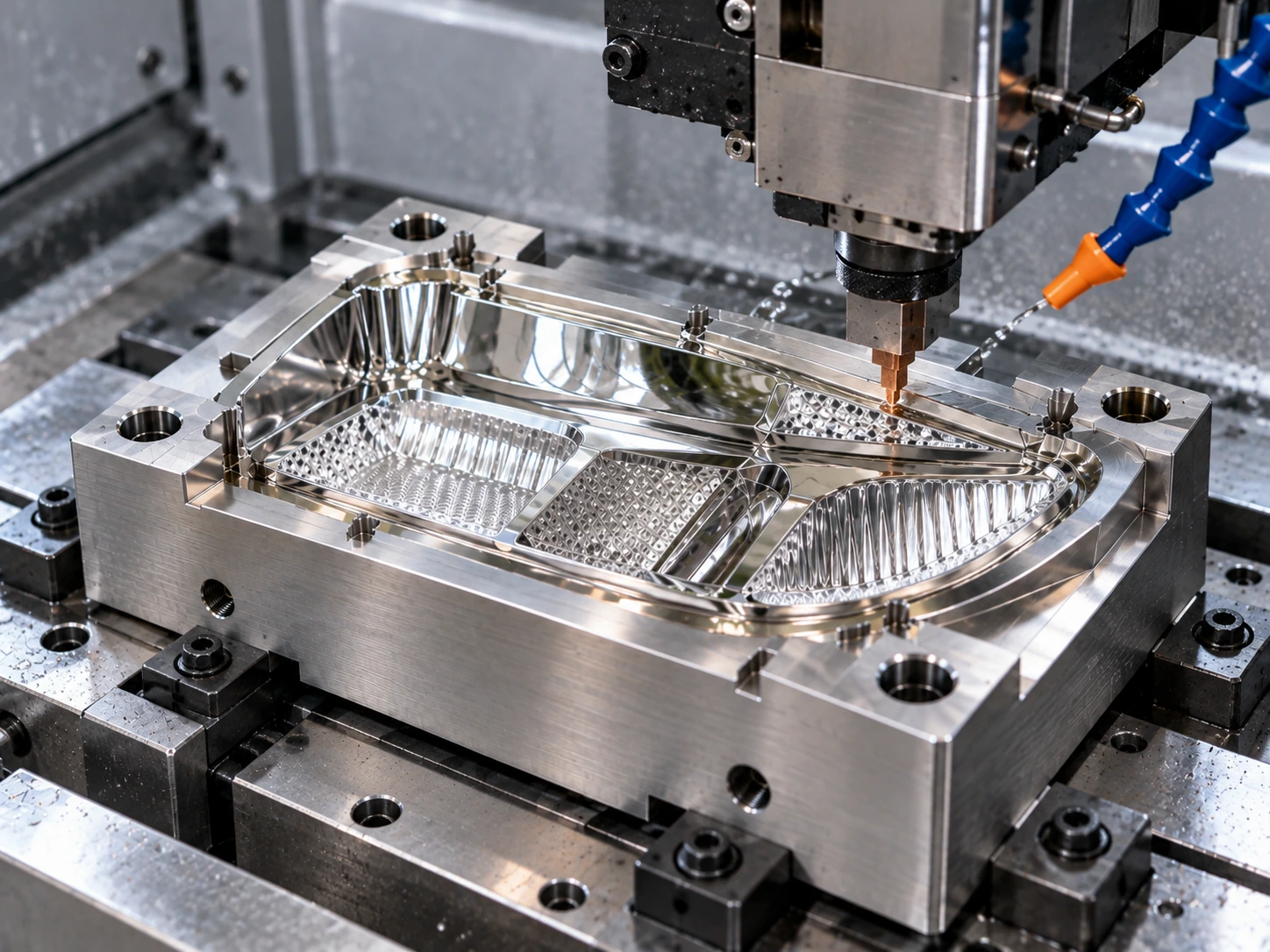
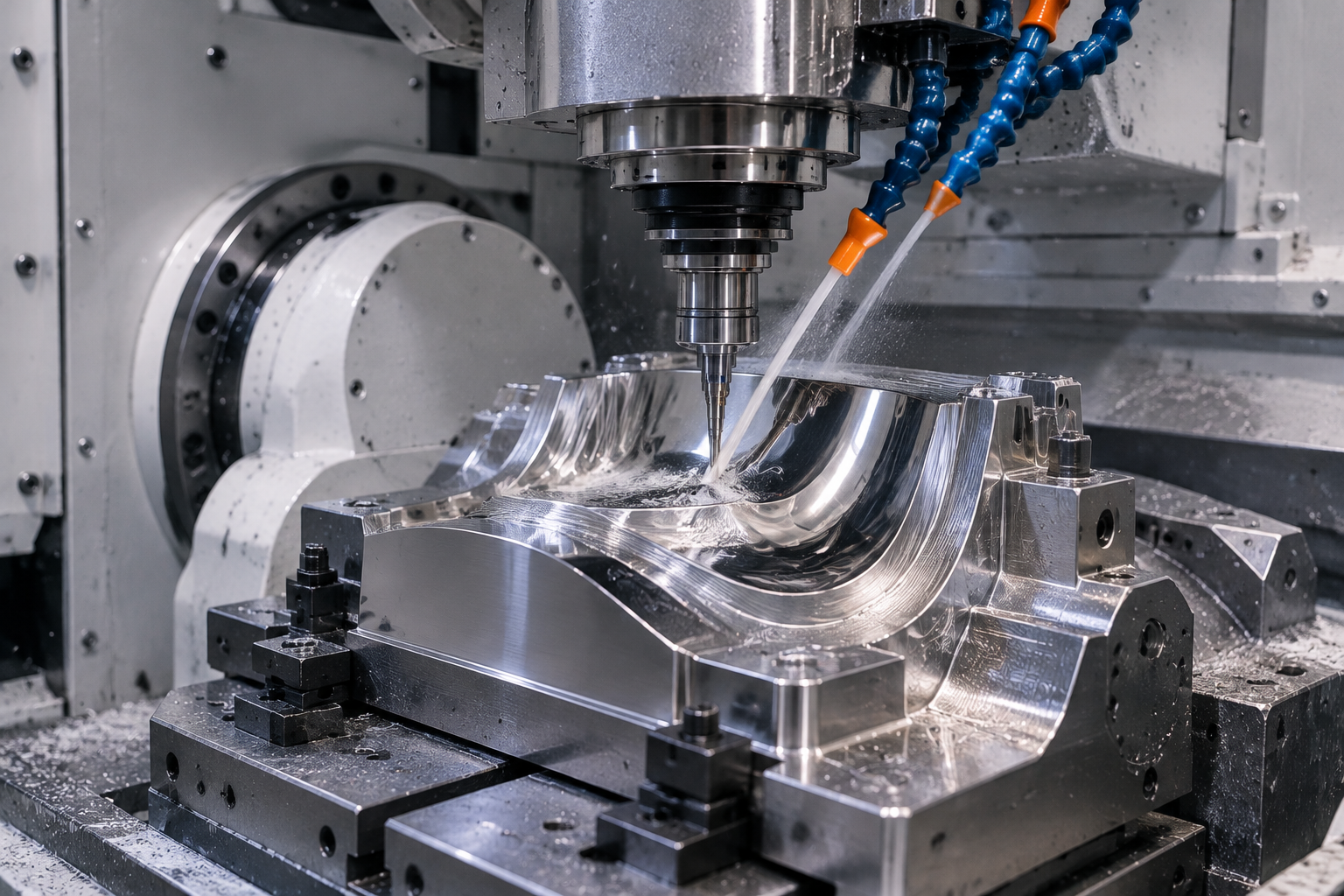
For components requiring complex 3D geometries, five-axis machining centers like RODERS systems provide the capability to produce contoured surfaces with sub-micrometer accuracy. These machines excel at producing housings, bezels, and mounting features that must integrate precisely with optical elements.
Measurement and Verification Systems
Zygo interferometers, coordinate measuring machines, and optical profilometers enable verification of manufactured components against specifications. These measurement systems must offer accuracy comparable to the manufacturing tolerances they verify, creating a closed-loop quality system.
Robotic Handling Systems
ABB six-axis robots enable automated handling and processing of delicate optical components, reducing the risk of surface contamination or damage from manual handling.
Quality Assurance for Automotive ADAS Components
Automotive quality systems impose requirements that extend far beyond dimensional verification. ADAS optical suppliers must demonstrate:
Process Capability Documentation
Statistical process capability indices (Cpk) must be established for all critical characteristics. Automotive customers typically require minimum Cpk values of 1.33 for dimensional features and 1.67 for critical safety-related characteristics.
Lot Traceability
Complete traceability from raw material through finished component enables rapid response to field quality issues. This requires document control systems that track production dates, machine assignments, operator records, and measurement results for each production lot.
PPAP Submission Capability
Production Part Approval Process documentation must demonstrate that the supplier’s manufacturing processes can produce parts meeting all specifications consistently. This includes process flow diagrams, PFMEA documents, control plans, and measurement system analysis results.
ISO Certification
ISO 9001:2015 certification demonstrates a quality management system suitable for automotive applications. ISO 14001:2015 certification addresses environmental management requirements that increasingly appear in automotive supplier agreements.
Design for Manufacturability in ADAS Optics
Successful ADAS optical programs begin with designs optimized for manufacturing. Collaboration between optical designers and manufacturing engineers early in the development process prevents costly design changes downstream.
Key DFM considerations for ADAS optics include:
- Feature accessibility: Diamond turning tools require clearance for tool approach and withdrawal that constrains possible surface geometries
- Datum referencing: Optical performance depends on relationships between surfaces, requiring precise and accessible datum features for measurement and assembly
- Tolerancing strategy: Optical tolerances must be achievable with available manufacturing processes while meeting system-level allocation
- Assembly considerations: Components designed for automated assembly reduce cost and improve consistency compared to manually assembled parts
- Testability: Designs that enable verification of optical performance during manufacturing enable cost-effective quality assurance
Common Manufacturing Challenges in ADAS Optics
Even experienced manufacturers encounter challenges specific to ADAS optical production. Anticipating these issues enables proactive design and process planning.
Subsurface Damage in Glass Materials
Diamond turning optical glass produces excellent surface finishes but can introduce subsurface damage that compromises strength and long-term stability. Careful selection of cutting parameters, tool geometry, and when necessary, subsequent annealing processes can minimize this issue.
Birefringence in Transparent Plastics
PMMA and polycarbonate exhibit stress-induced birefringence that can affect polarization-sensitive ADAS systems. Manufacturing processes must control cooling rates, clamping forces, and machining parameters to minimize residual stress.
Coating Compatibility
Anti-reflective and hydrophobic coatings require specific surface preparation and minimum surface roughness levels. Manufacturing processes must produce surfaces that are coating-ready without additional processing steps.
Temperature Stability
Coefficients of thermal expansion differ between materials, requiring careful consideration of thermal effects on optical performance. Manufacturing processes that induce residual stress can cause dimensional changes as components temperature-cycle during use.
Supply Chain Considerations for ADAS Optical Suppliers
Automotive supply chains impose requirements that extend beyond technical capability. ADAS optical suppliers must demonstrate:
- Financial stability and business continuity planning
- Capacity to scale production for high-volume programs
- Geographic presence supporting regional assembly operations
- Experience with automotive program timelines and milestones
- Track record with Tier 1 automotive customers
The development timeline for ADAS optical components typically spans 18-36 months from concept to production launch. Suppliers must commit engineering resources early in programs to influence design decisions and establish manufacturing processes before production commitments are finalized.
Future Trends in ADAS Optical Manufacturing
Several trends are shaping the evolution of ADAS optical manufacturing:
Increased Optical Complexity
Next-generation ADAS systems employ more lens elements, aspheric surfaces, and freeform geometries to achieve wider fields of view and improved image quality. Manufacturing processes must advance to produce these complex geometries consistently.
Higher Volume Requirements
As ADAS features become standard equipment rather than premium options, optical component volumes are increasing dramatically. Manufacturing processes must scale to meet demand while maintaining quality standards.
Cost Pressure Intensification
Automotive OEMs continue driving cost reductions across supply chains. ADAS optical suppliers must improve efficiency through process optimization, automation, and yield improvement while maintaining technical capability.
Regulatory Evolution
Safety regulations continue evolving, with autonomous vehicle frameworks requiring more rigorous verification of perception system performance. This may translate into tighter optical specifications and enhanced documentation requirements.
Selecting an ADAS Optical Manufacturing Partner
The choice of optical manufacturing partner significantly impacts ADAS program success. Key evaluation criteria include:
- Technical capability documentation: Verify equipment specifications, process capability data, and quality system certifications
- Relevant experience: Prior work with automotive Tier 1 suppliers and ADAS applications indicates process maturity
- Engineering support: In-house optical engineering capability enables productive design collaboration
- Capacity assessment: Current load and expansion capability affect delivery reliability
- Financial stability: Long-term supply continuity requires supplier business health
Conclusion
Automotive ADAS optical components represent some of the most demanding manufacturing requirements in modern industry. The combination of sub-nanometer surface quality, micrometer-level tolerances, diverse material requirements, and automotive quality system expectations creates a challenging environment that only specialized manufacturers can address effectively.
Understanding these requirements enables more productive collaboration between optical designers and manufacturing partners, leading to designs that are both optically optimal and manufacturally sound. As ADAS adoption continues accelerating, the importance of capable optical manufacturing partners will only increase.
Frequently Asked Questions
What surface roughness is required for ADAS camera optics?
ADAS camera lens elements typically require surface roughness of Ra 1nm or better to minimize light scatter and ensure precise image formation. Protective covers and windows may allow somewhat higher roughness specifications depending on their position in the optical chain.
How do ADAS optical tolerances compare to consumer optics?
ADAS optical tolerances are significantly tighter than consumer photography optics. Where consumer camera lenses may allow 10-20μm positioning tolerances, ADAS systems often require ±0.5μm or better to ensure consistent image quality across production volumes and environmental conditions.
Can diamond-turned surfaces meet ADAS requirements without post-processing?
In many cases, yes. Single Point Diamond Turning can produce surfaces meeting ADAS requirements directly from the machine. However, certain materials and applications may still require additional polishing or coating processes to achieve final specifications.
What materials are commonly used in ADAS optical components?
Common materials include aluminum alloys and brass for reflective components, PMMA and polycarbonate for transparent elements, and optical glasses like B270 and BK7 for high-performance lens elements. Material selection depends on optical, thermal, and structural requirements.
How does temperature affect ADAS optical performance?
Temperature changes cause materials to expand and contract, potentially shifting optical element positions and changing refractive indices. Manufacturing processes must minimize residual stress and designs must account for thermal effects to ensure consistent performance across the automotive operating temperature range.
What quality certifications should ADAS optical suppliers maintain?
At minimum, suppliers should hold ISO 9001:2015 certification. Automotive programs may require specific customer approvals, and certain safety-related applications may require additional certifications. ISO 14001:2015 is increasingly common in automotive supply chains.
How long does ADAS optical component development typically take?
Development timelines typically span 18-36 months from concept through production launch. This includes optical design, manufacturing process development, qualification testing, PPAP submission, and production ramp-up. Complex programs may require longer timelines.
Ready to discuss your ADAS optical component requirements? Contact YISHUN Optical’s engineering team at info@yishunoptical.com or visit yishunoptical.com to learn how our 20+ years of ultra-precision manufacturing experience can support your automotive optics program.