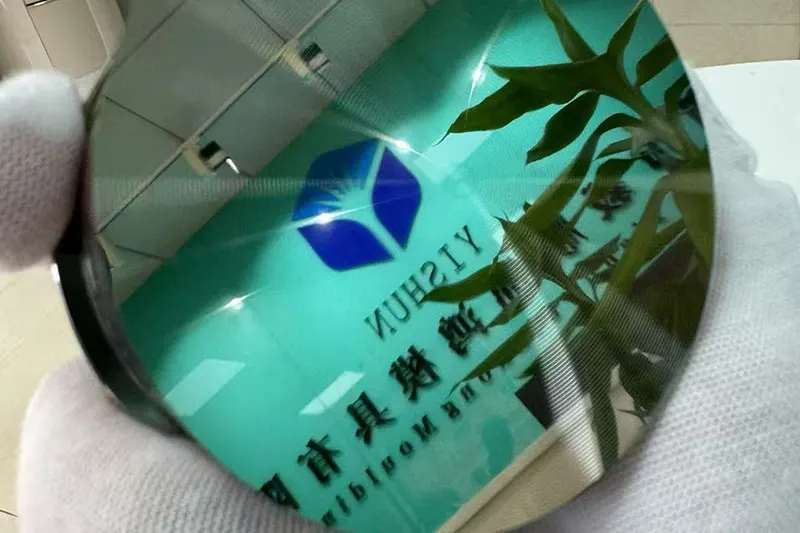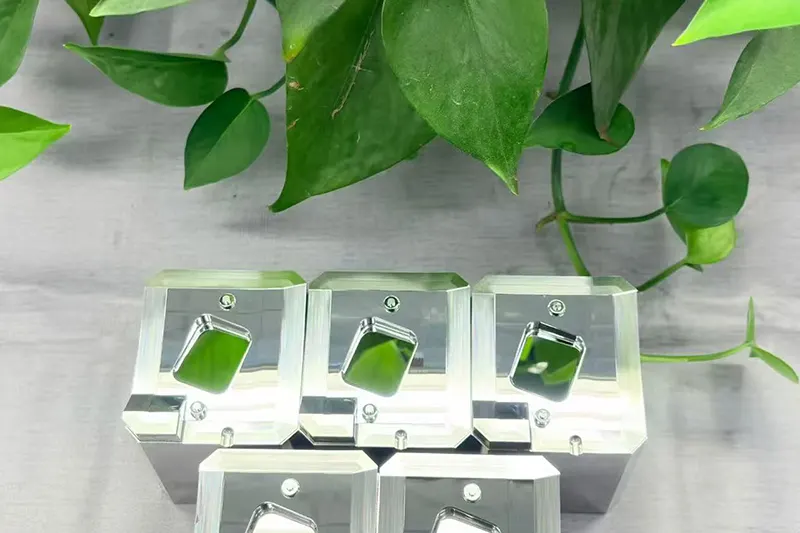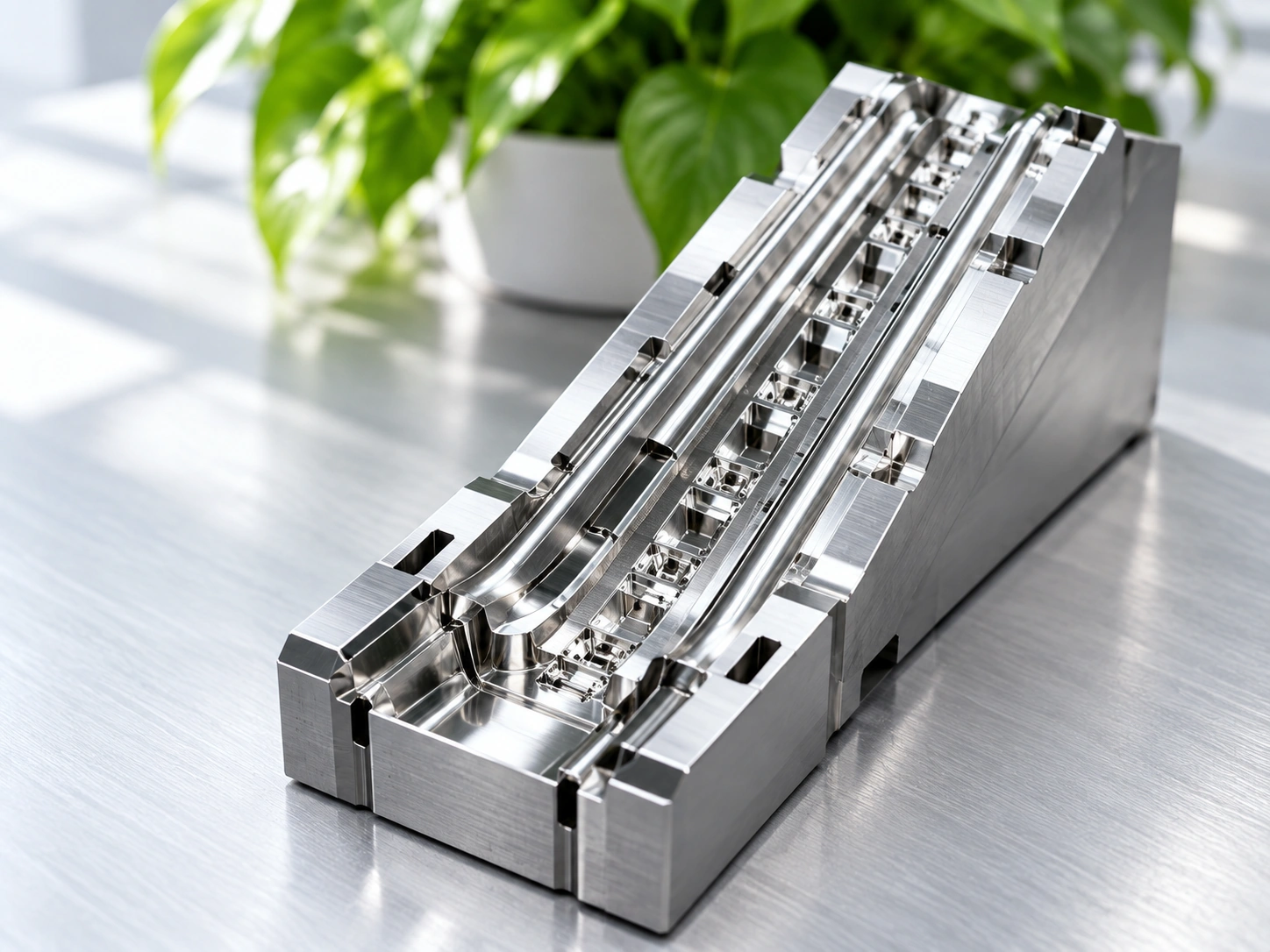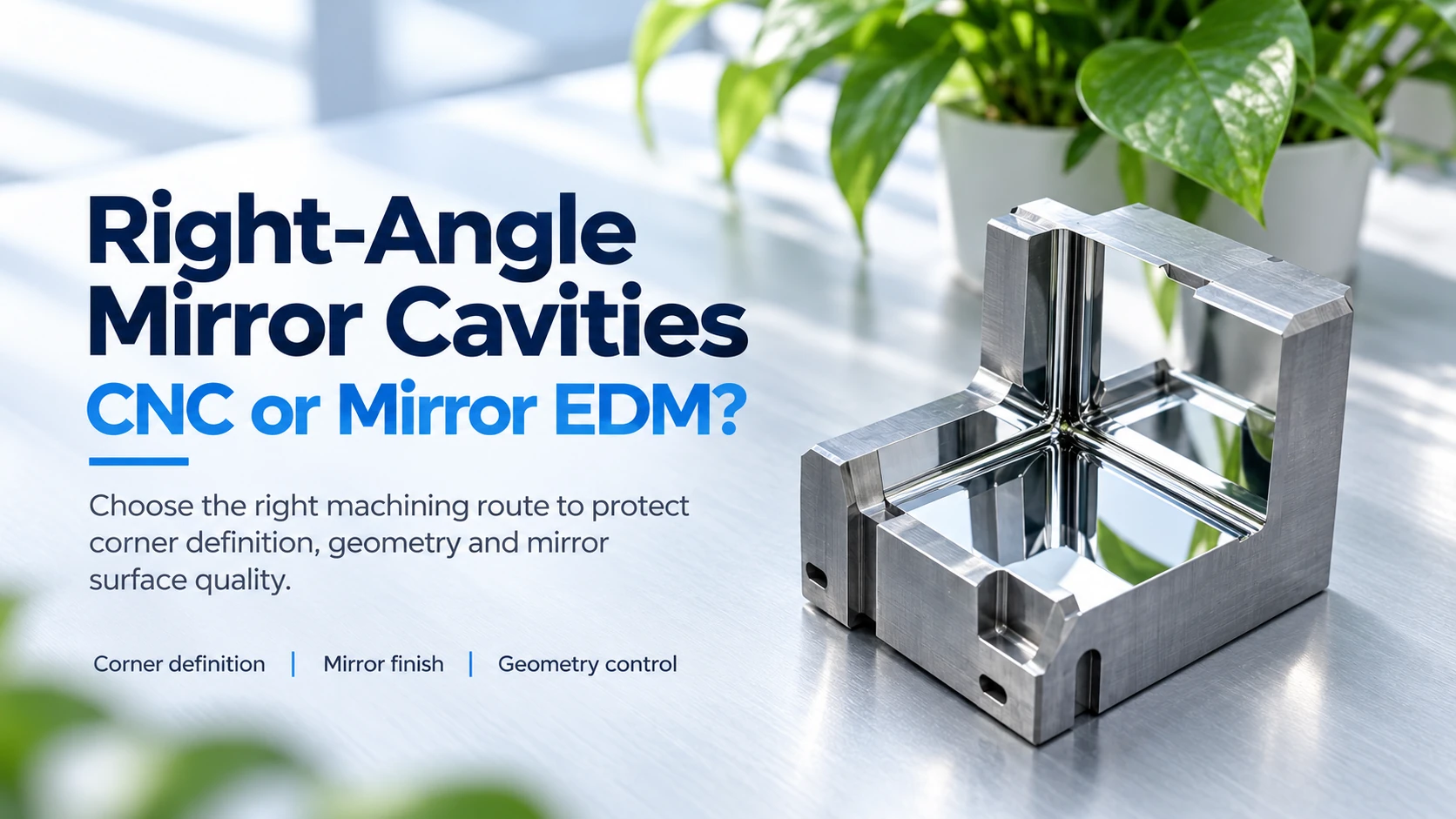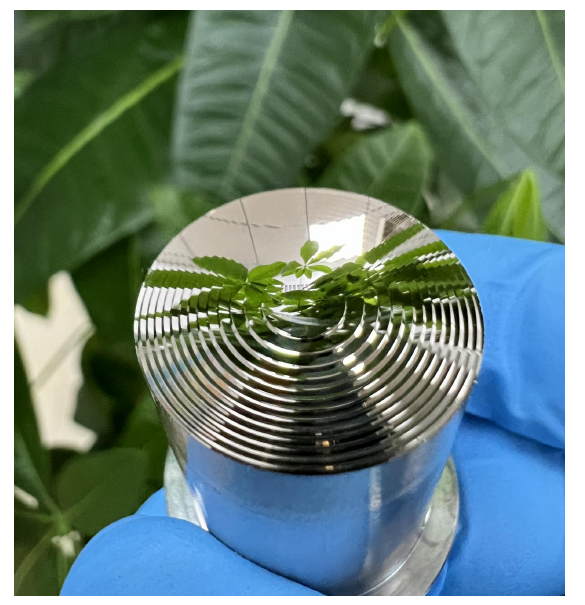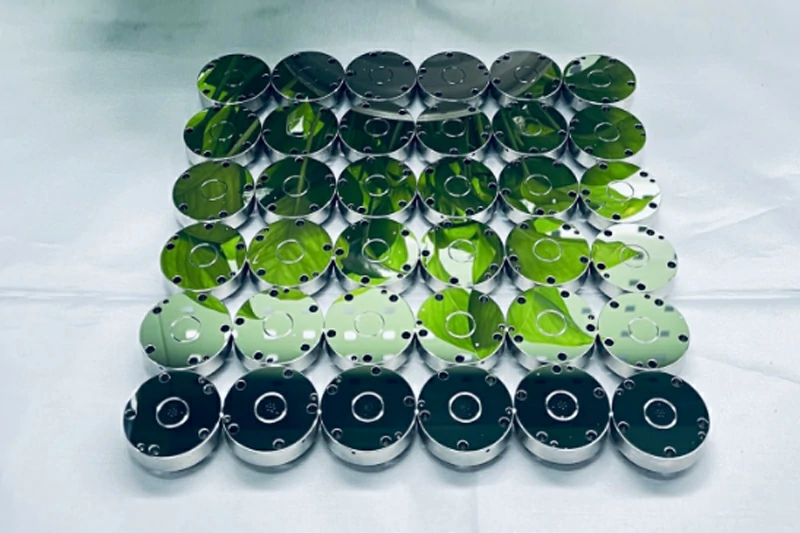
The global smartwatch market is projected to exceed 75 billion USD by 2027, driven by rising consumer expectations for premium build quality and refined aesthetics. Beneath every polished smartwatch case and every glossy TWS earphone housing lies a manufacturing process where surface quality is not cosmetic — it is structural. Mirror polishing processing has become the defining step that separates premium wearable devices from ordinary ones.
Yishun Optical, an Apple Gold Supplier based in Shenzhen, specializes in precision mold polishing and five-axis mirror machining for consumer electronics manufacturers worldwide. With surface roughness capabilities reaching Ra≤0.005μm, form accuracy of PV≤λ/4, and dimensional tolerances held to ±0.005mm, Yishun Optical delivers mold mirror polishing results that meet the exacting demands of leading wearable brands.
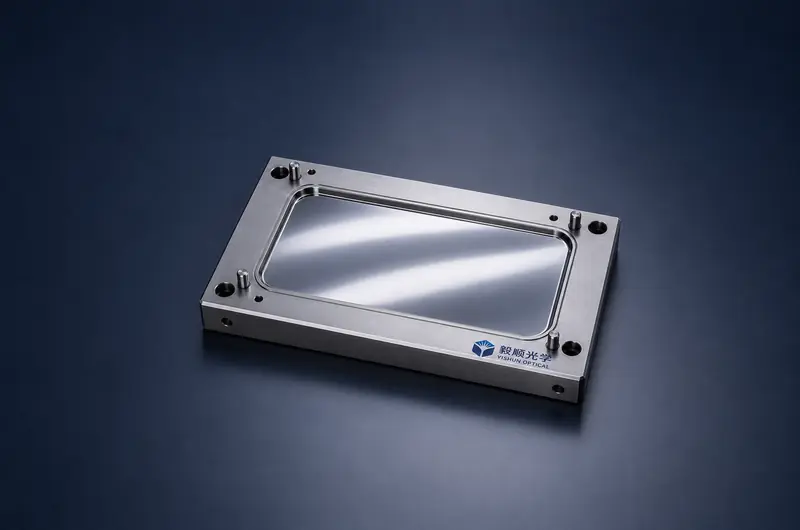
Why Surface Finish Quality Defines Consumer Perception in Wearables
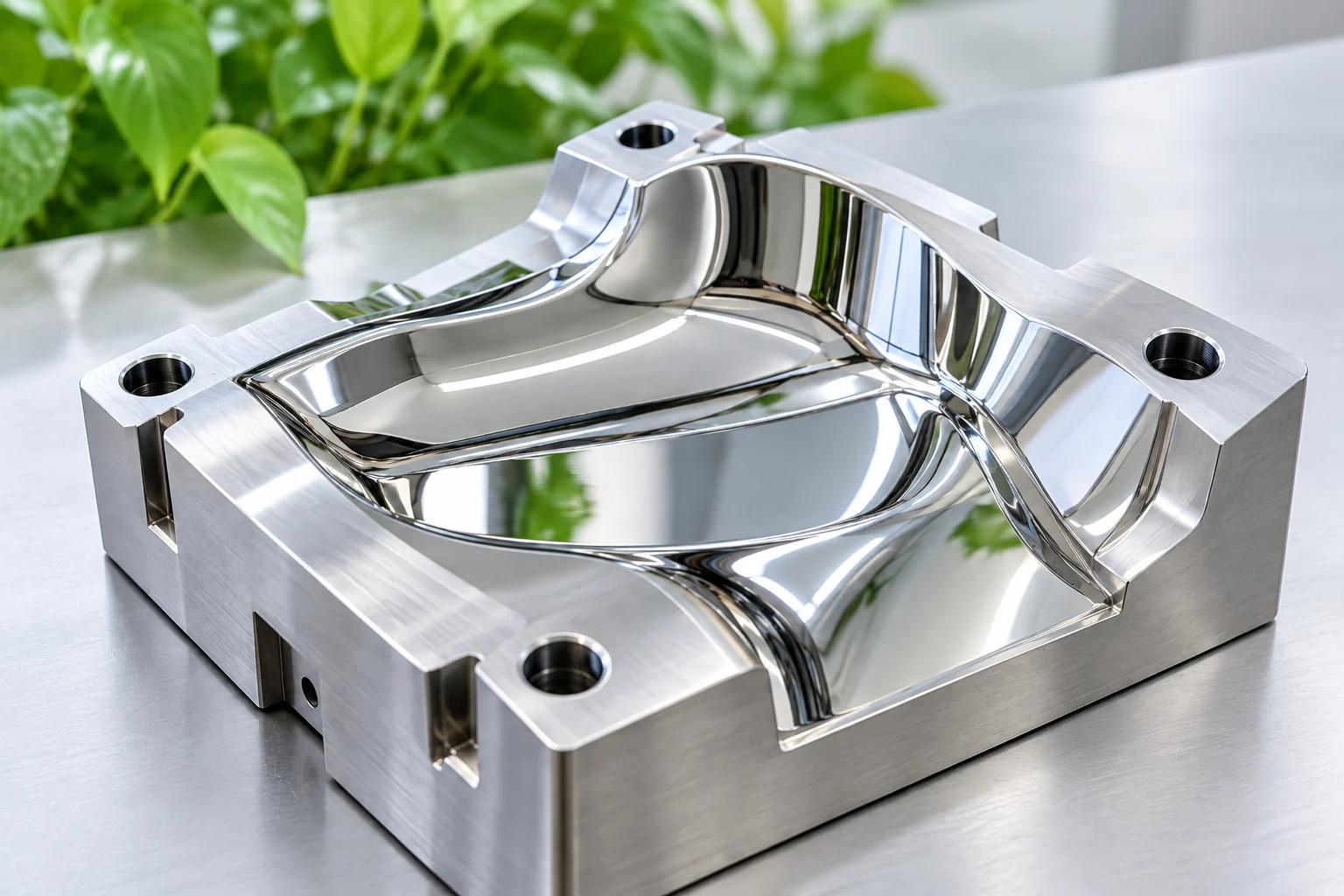
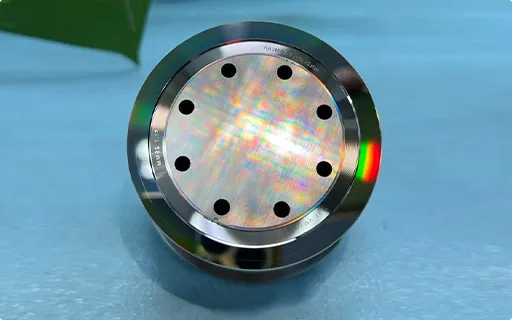
A smartwatch case is the first thing a customer touches and the last surface they examine before deciding whether a product feels premium. The mirror-like reflective finish on high-end smartwatch housings is not applied as a coating — it is molded directly into the component through precision mold polishing. When a consumer runs their fingertip along a curved smartwatch bezel or picks up a glossy TWS earphone case, the tactile response is determined entirely by the mold cavity surface quality.
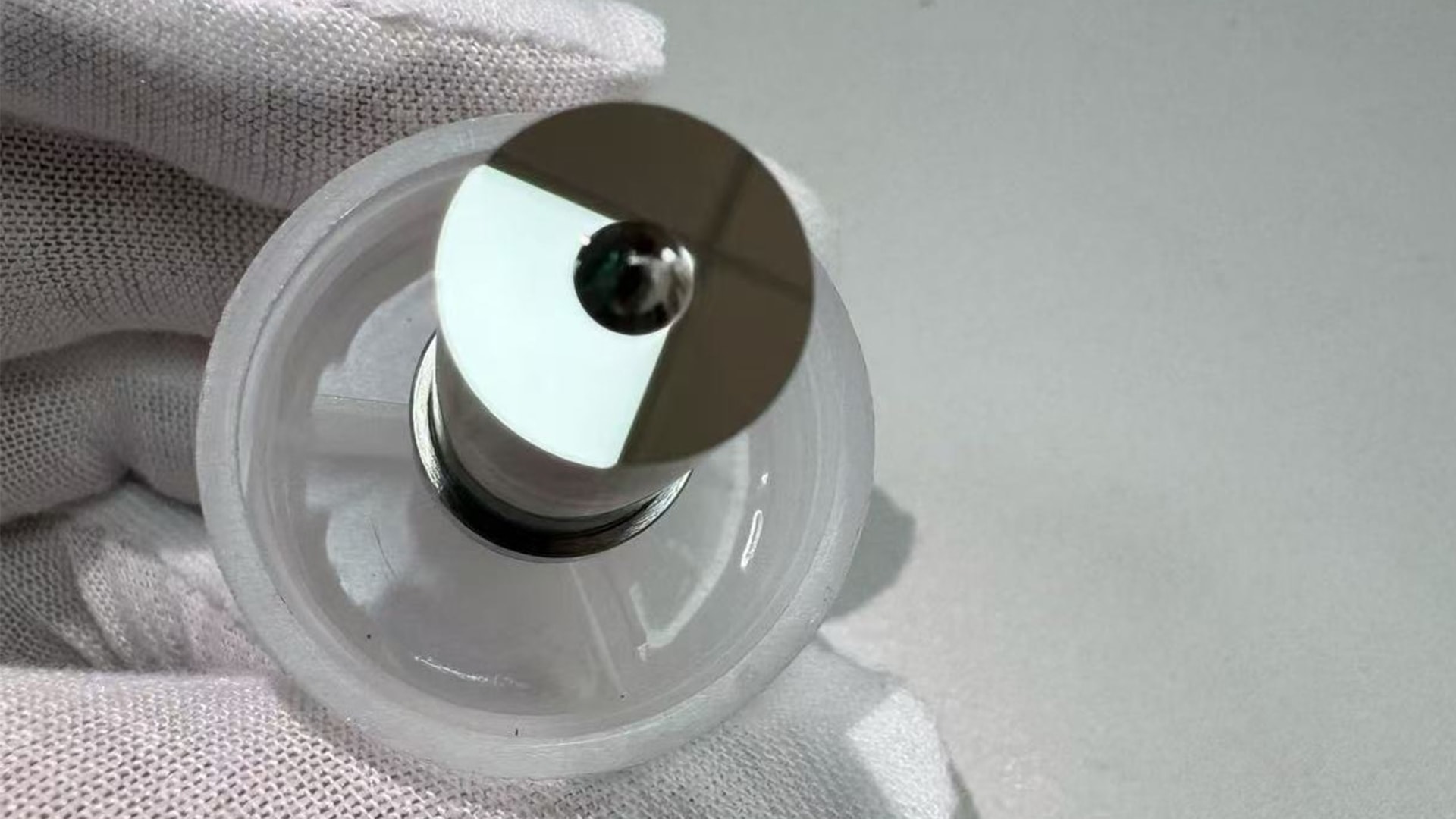
Surface roughness values below Ra 0.01μm produce what the industry calls a “Class A” mirror finish — a surface that reflects light uniformly without visible tool marks, waviness, or orange-peel texture. For wearable devices worn directly on the skin, this level of finish serves a dual purpose: visual appeal and comfort. Rough surfaces create friction against skin, cause uneven light reflection, and collect fingerprints more readily.
The shift from aluminum to stainless steel and titanium alloy cases in premium smartwatches has raised standards further. These harder materials transfer every cavity imperfection into the finished part with greater fidelity than softer alloys. A mold cavity with Ra 0.02μm might produce acceptable results on aluminum but will reveal visible defects when molding stainless steel at high injection pressures.
Brand owners are responding by tightening supplier qualification requirements. Apple’s supply chain standards require mold makers to demonstrate process capability indices (Cpk) above 1.67 for critical dimensions and surface finishes consistently below Ra 0.01μm. As an Apple Gold Supplier, Yishun Optical has met these requirements across multiple product generations, and the company’s precision mold polishing expertise ensures every wearable mold cavity meets Apple’s stringent surface quality benchmarks before production release.
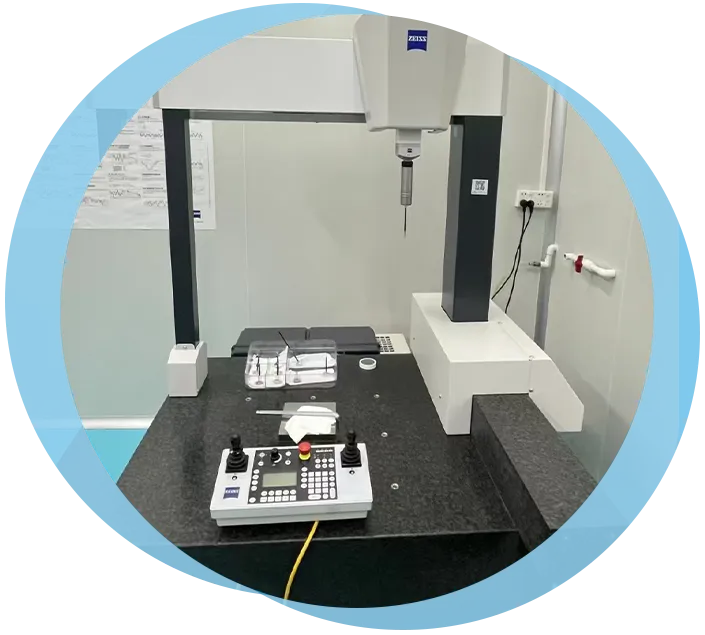
Miniaturization Challenges in Wearable Device Mold Making
Complex Curves in Tight Spaces
Smartwatch cases are among the most geometrically demanding components in consumer electronics. A typical round smartwatch case measures 40-45mm in diameter with wall thicknesses between 1.5mm and 3mm. Within this compact envelope, mold designers must accommodate curved display openings, button cutouts with tight radii, sensor window recesses, charging port channels, and band attachment lugs — all requiring mirror-quality surface finishes.
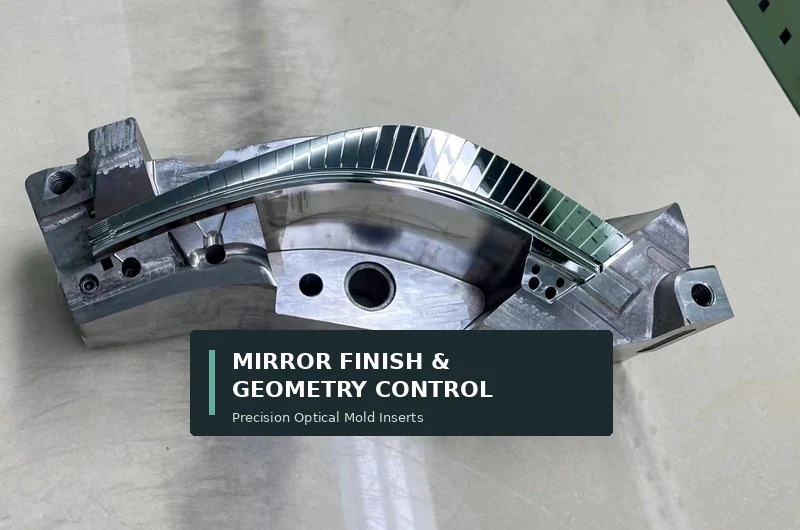
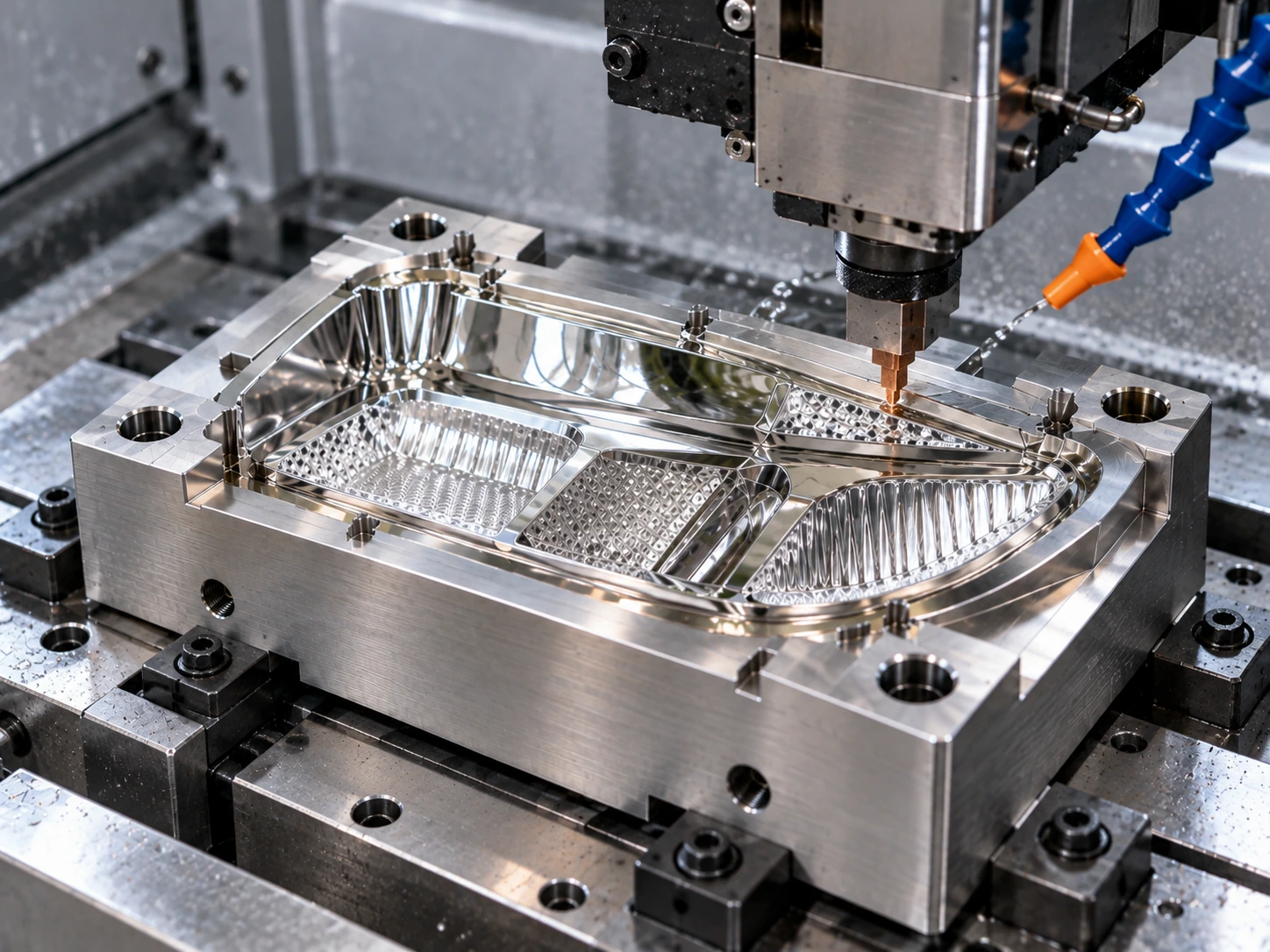
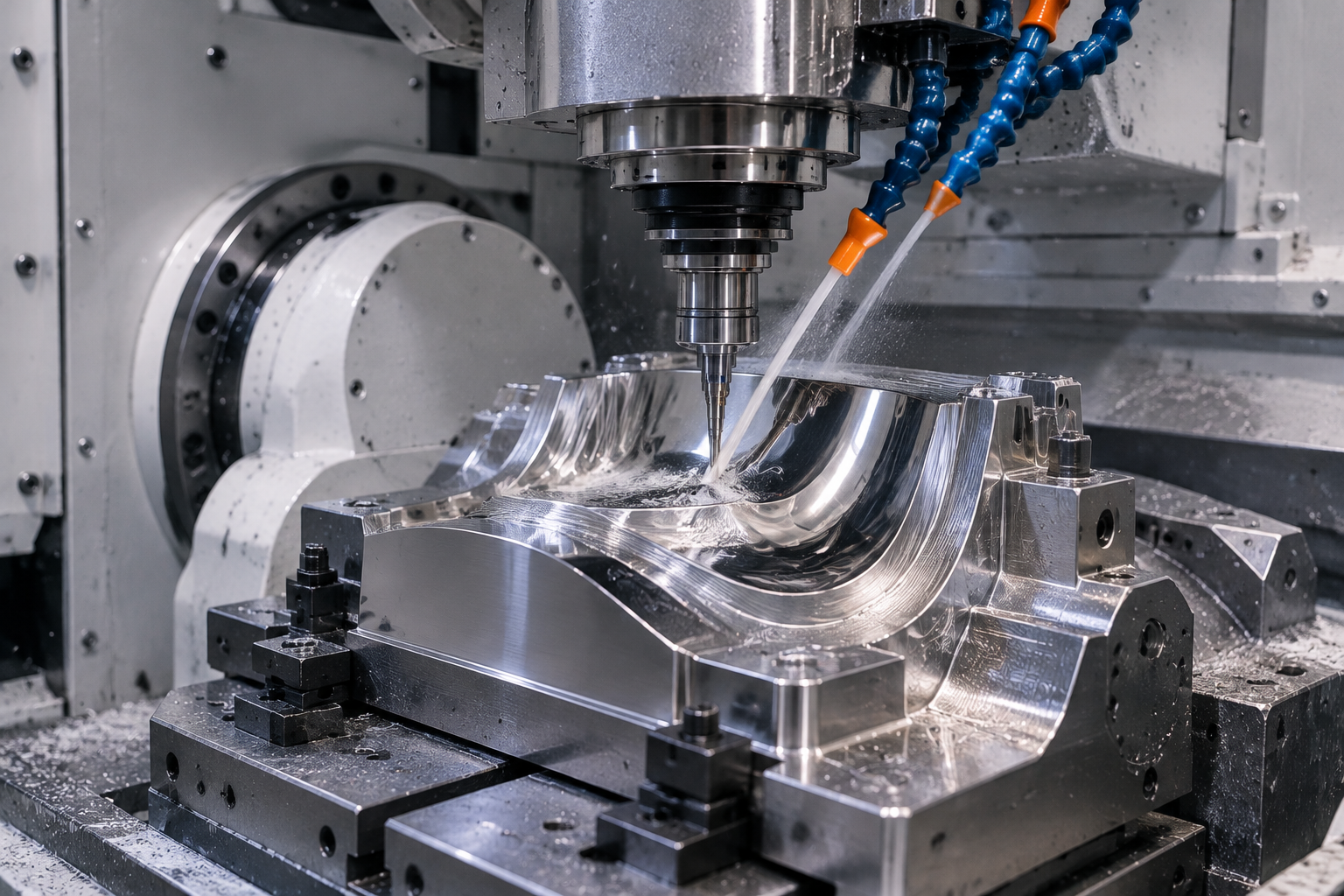
Traditional three-axis machining cannot reach many of these features at the angles required for mirror polishing processing. Deep, narrow recesses around sensor arrays require tool approaches from compound angles that only five-axis mirror machining can provide. The Kern Pyramid Nano ultra-precision five-axis machining center at Yishun Optical handles these complex geometries with nanometer-level positioning accuracy, enabling the tool to follow compound-curve paths without losing surface continuity.
Harder Alloys and Tighter Tolerances
Wearable components increasingly use titanium alloys (Grade 2 and Grade 5), 316L stainless steel, and metal matrix composites. These materials offer superior scratch resistance and biocompatibility but present significant challenges during mold mirror polishing. Titanium alloys tend to gall and smear if tool pressure and coolant flow are not precisely controlled. Stainless steel work-hardens rapidly, requiring progressive polishing sequences that manage subsurface deformation. Multi-material molds demand selective polishing where adjacent surfaces have different hardness values.
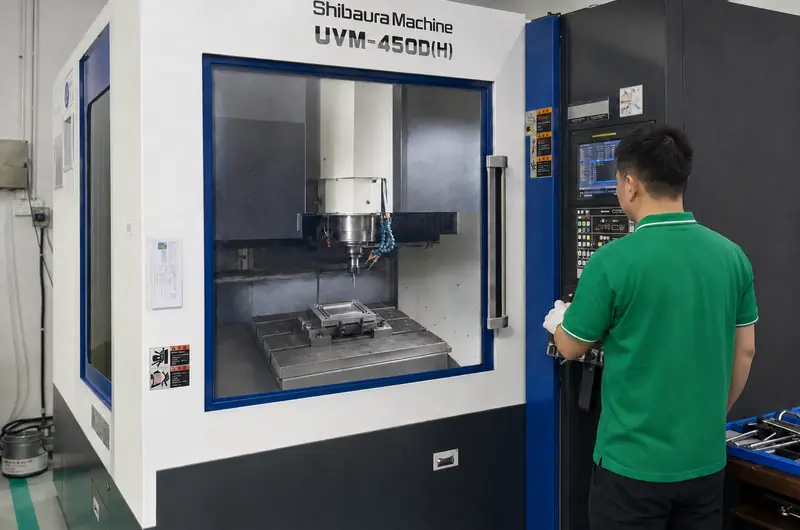
Yishun Optical addresses these challenges through a structured methodology: rough machining on the Toshiba TTV450E-AX vertical five-axis machining center, semi-finish grinding, robotic pre-polishing, and final hand-polishing by certified technicians. Each step removes the damage layer from the previous operation without introducing new subsurface defects.
For wearable molds, dimensional tolerance budgets are razor-thin. A smartwatch case mating with a sapphire crystal display, a sealed sensor back cover, and a removable band system has a total assembly tolerance often not exceeding ±0.02mm across all mating surfaces. Yishun Optical maintains these tolerances through closed-loop manufacturing: the Toshiba TTV450E-AX machines to near-net geometry, then the Zeiss Contura coordinate measuring machine verifies every critical dimension before polishing begins. If measurements indicate drift beyond ±0.003mm, corrective machining runs compensate automatically.
Yishun Optical’s Five-Axis Mirror Machining Process for Wearable Molds
Equipment Configuration
Yishun Optical’s wearable mold manufacturing line integrates three tiers of equipment, each selected for its role in the mirror polishing processing chain.
Primary Machining: Toshiba TTV450E-AX — This vertical five-axis machining center provides the rigidity needed for hard material removal while maintaining positional accuracy for subsequent polishing. Yishun Optical uses the TTV450E-AX to machine smartwatch case mold cavities from hardened tool steels (HRC 52-56) and pre-hardened stainless mold steels, achieving surface finishes of Ra 0.1-0.2μm as starting points for mirror polishing.
Ultra-Precision Finishing: Kern Pyramid Nano — For complex features requiring nanometer-level form accuracy, the Kern Pyramid Nano handles critical semi-finishing and finishing passes. Its five-axis ultra-precision configuration produces complex freeform surfaces on smartwatch case molds — curved display bezels, ergonomic case backs, and contoured band lugs — with form errors below PV≤λ/4. Yishun Optical operates this machine in a temperature-controlled environment at 20°C ±0.1°C, essential for maintaining accuracy at the microscopic scale required.
Measurement and Verification: Zeiss Contura — Every mold cavity undergoes full inspection on the Zeiss Contura. Its scanning probe system captures thousands of data points across the mold surface, generating a deviation map comparing the as-machined surface against the nominal CAD geometry. For wearable molds, Yishun Optical typically measures over 5,000 points per cavity to confirm form accuracy, dimensional tolerances, and surface transition quality.
The Seven-Step Polishing Workflow
Yishun Optical’s precision mold polishing workflow for wearable components follows a defined protocol:
- Machining Verification — Zeiss Contura confirms all dimensions are within ±0.005mm before polishing begins
- Stone Honing — Silicon carbide stones remove machining marks, progressing from 320-grit to 800-grit
- Diamond Paste Pre-Polish — 15μm and 9μm diamond suspensions on rigid laps eliminate stone marks
- Diamond Paste Semi-Polish — 6μm and 3μm diamond suspensions on semi-flexible pads begin generating specular reflection
- Diamond Paste Final Polish — 1μm and 0.25μm diamond suspensions on soft cloth media bring the surface to Ra≤0.01μm
- Inspection — Optical profilometry and visual inspection under 500-lux D65 lighting confirm Ra≤0.005μm and zero visible defects
- Protection — Mold cavities receive protective coating and packaging for shipment
For titanium alloy wearable molds, Yishun Optical inserts an electrochemical polishing step between steps 3 and 4 to remove the work-hardened subsurface layer, preventing micro-cracks during production use.
Case Study: Smartwatch Case and TWS Earphone Housing Molds
Smartwatch Case Mold: Titanium Alloy, Round Form Factor
A leading wearable brand commissioned Yishun Optical to produce the injection mold for a next-generation smartwatch case in titanium alloy (Ti-6Al-4V). The component required a 42mm circular form factor with integrated sapphire crystal seat, crown button recess, heart rate sensor window, and band spring-bar holes — all with mirror-quality interior surfaces.
The sapphire crystal seat required a step transition with a 0.05mm radius that had to maintain optical-quality surface continuity. Any visible texture change at this transition would be perceptible through the transparent crystal, creating a cosmetic defect on the finished watch.
The Kern Pyramid Nano machined the sapphire seat transition using a custom micro-ball end mill with a 0.03mm nose radius, executing the compound-curve path in a single continuous five-axis motion. Final mirror polishing processing by hand achieved Ra 0.003μm at the critical transition zone.
| Metric | Before (Previous Supplier) | After (Yishun Optical) |
|---|---|---|
| Surface roughness (transition zone) | Ra 0.015μm | Ra 0.003μm |
| Cosmetic reject rate | 12% | 1.8% |
| Mold life before re-polish | 8,000 shots | 22,000 shots |
| Lead time (first article) | 28 days | 18 days |
The cosmetic reject rate reduction from 12% to 1.8% represented annual savings exceeding 180,000 USD for the customer.
TWS Earphone Housing Mold: Multi-Cavity, High-Gloss Finish
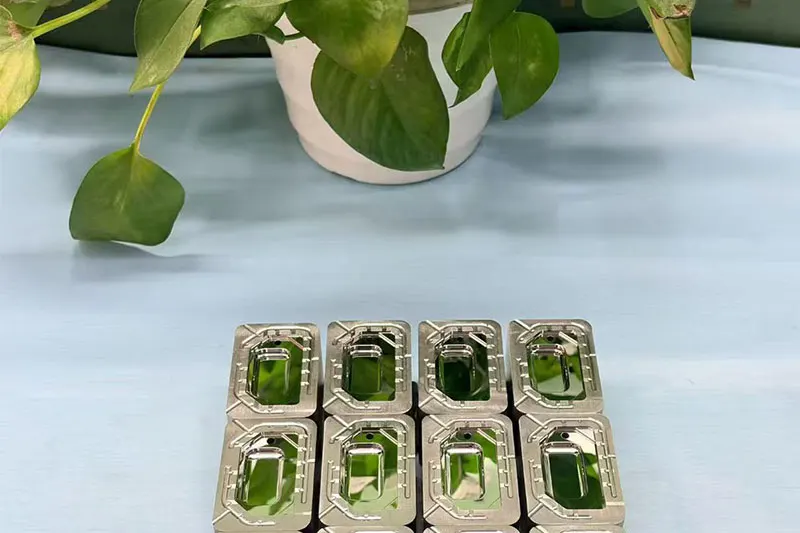
For a TWS earphone manufacturer, Yishun Optical produced a 4-cavity injection mold for glossy polycarbonate earphone housings. Each cavity required complex organic surface geometry with compound curves designed for ergonomic fit and aesthetic appeal.
Polycarbonate is exceptionally sensitive to mold surface texture. Any imperfection above Ra 0.008μm transfers directly to the molded part as a visible defect. The four cavities also had to produce optically identical surfaces — gloss variation exceeding 10% between cavities would cause visible mismatch when earphones were paired in the charging case.
Yishun Optical’s mold mirror polishing followed the seven-step protocol with the Zeiss Contura performing inter-step verification to ensure all four cavities tracked within ±0.003mm of each other. The Toshiba TTV450E-AX provided initial geometry with uniform polishing allowance across all cavities — critical for achieving matched surface finishes.
| Metric | Industry Average | Yishun Optical |
|---|---|---|
| Inter-cavity gloss variation | 15-20% | 4.2% |
| Surface roughness (all cavities) | Ra 0.008-0.012μm | Ra 0.004-0.006μm |
| First-pass yield | 88% | 97.3% |
| Production cycle time | 25 seconds | 22 seconds |
The 4.2% inter-cavity gloss variation was the lowest recorded in the customer’s benchmark testing across five mold suppliers, and the 97.3% first-pass yield exceeded the 95% target significantly.
Quality Assurance: The Yishun Optical Standard for Wearable Molds
Yishun Optical operates under ISO 9001, ISO 14001, and ISO 45001 certifications. As an Apple Gold Supplier, Yishun Optical undergoes annual supplier audits evaluating process capability, traceability, contamination control, and continuous improvement metrics.
Yishun Optical applies SPC methodology to its mirror polishing processing operations. Key process parameters — polishing pressure, diamond paste particle size distribution, ambient temperature, and humidity — are logged continuously during every cycle. When control charts indicate trends toward specification limits, the process adjusts before any out-of-specification work occurs.
This data-driven approach has enabled Yishun Optical to achieve a Cpk of 2.1 for surface roughness on wearable mold cavities — the natural process variation is more than six standard deviations from the upper specification limit. For customers, this translates to consistent, predictable mirror polishing processing quality across every mold and every production run. Yishun Optical’s commitment to precision mold polishing excellence ensures that Shenzhen mold polishing standards set by the company remain among the highest in the industry.
Yishun Optical reinvests approximately 8% of annual revenue into equipment upgrades and process development, including expanded temperature-controlled polishing environments, upgraded Zeiss Contura measurement software, and advanced diamond paste formulations developed with material science partners.
FAQ
Q1: What surface roughness can Yishun Optical achieve on smartwatch case molds?
A: Yishun Optical achieves Ra≤0.005μm on smartwatch case molds through a multi-stage mirror polishing processing workflow. This Class A mirror finish eliminates visible tool marks, orange-peel texture, and waviness — producing the flawless reflective surface required for premium wearable devices. Measurement is verified on the Zeiss Contura using optical profilometry.
Q2: How does five-axis mirror machining benefit wearable component mold production?
A: Five-axis mirror machining allows the cutting tool to approach the mold cavity from compound angles, reaching deep recesses and complex freeform surfaces that three-axis machines cannot access. For smartwatch cases with sensor windows and ergonomic curves, the Kern Pyramid Nano at Yishun Optical produces continuous tool paths that eliminate witness lines, reducing manual polishing time by up to 40%.
Q3: What materials can Yishun Optical polish to mirror finish for wearable applications?
A: Yishun Optical’s precision mold polishing covers hardened tool steels (up to HRC 62), stainless mold steels, titanium alloys (Grade 2, Ti-6Al-4V), 316L stainless steel, and tungsten carbide inserts. Each material requires a tailored polishing sequence, and Yishun Optical maintains documented process parameters for every material type.
Q4: What is the typical lead time for a smartwatch case mold at Yishun Optical?
A: A standard smartwatch case mold — single cavity, titanium alloy, with full mirror polishing processing — requires 18-22 working days from drawing approval to first article delivery. Multi-cavity TWS earphone molds require 22-28 working days. Expedited timelines are available for qualified customers.
Q5: How does Yishun Optical ensure dimensional accuracy during mirror polishing?
A: Yishun Optical uses a closed-loop verification process. The Toshiba TTV450E-AX machines the mold to near-net geometry, the Zeiss Contura measures all critical dimensions (typically 5,000+ data points per cavity), and any deviation beyond ±0.003mm triggers corrective action before polishing. Inter-step measurements maintain the ±0.005mm specification throughout the process.
Q6: Can Yishun Optical match surface finishes across multi-cavity molds?
A: Yes. Yishun Optical’s standardized mirror polishing processing protocol and SPC-controlled environment ensure inter-cavity gloss variation below 5% and surface roughness matching within ±0.002μm. In the TWS earphone case study, Yishun Optical achieved 4.2% inter-cavity gloss variation — the best result the customer had recorded across five mold suppliers.
Q7: Is Yishun Optical qualified as an Apple supplier for wearable component molds?
A: Yes. Yishun Optical holds Apple Gold Supplier status, requiring annual supplier audits covering process capability, traceability, contamination control, and continuous improvement. This qualification covers wearable component molds including smartwatch cases, TWS earphone housings, and related accessories, backed by ISO 9001, ISO 14001, and ISO 45001 certifications.
About Yishun Optical
Yishun Optical is a professional precision mold machining and mirror polishing processing specialist based in Shenzhen, China. As an Apple Gold Supplier, Yishun Optical serves leading consumer electronics, automotive, optical instrument, home appliance, and medical device manufacturers with five-axis mirror machining, mirror mold core customization, optical mold core customization, and precision mold polishing services.
Equipped with the Toshiba TTV450E-AX vertical five-axis machining center, Kern Pyramid Nano ultra-precision five-axis center, and Zeiss Contura coordinate measuring machine, Yishun Optical delivers surface finishes of Ra≤0.005μm, form accuracy of PV≤λ/4, and dimensional tolerances of ±0.005mm.