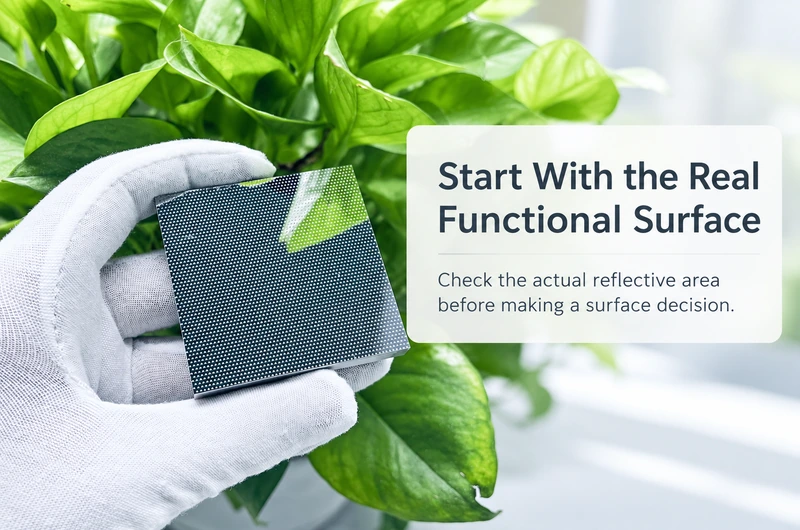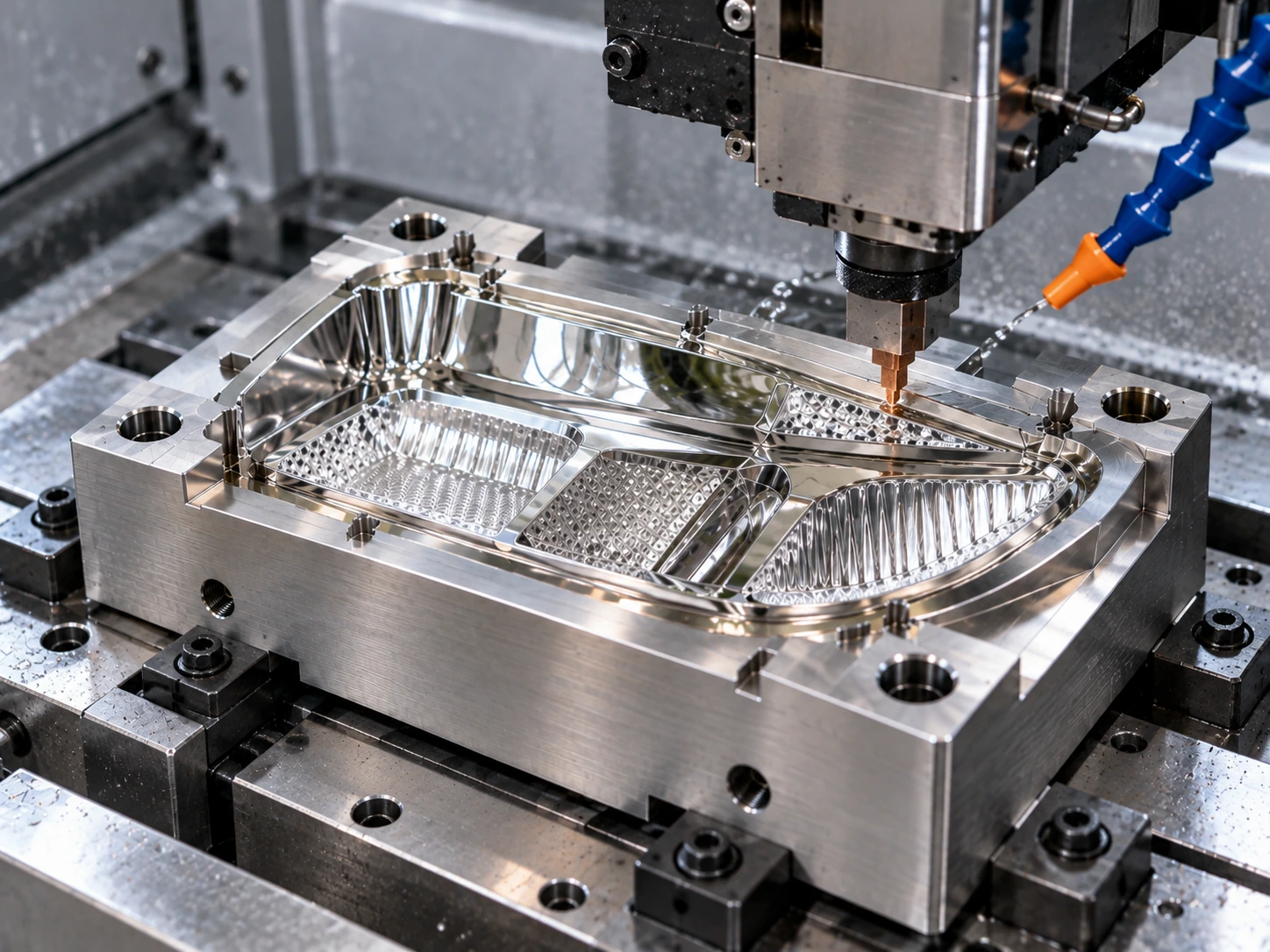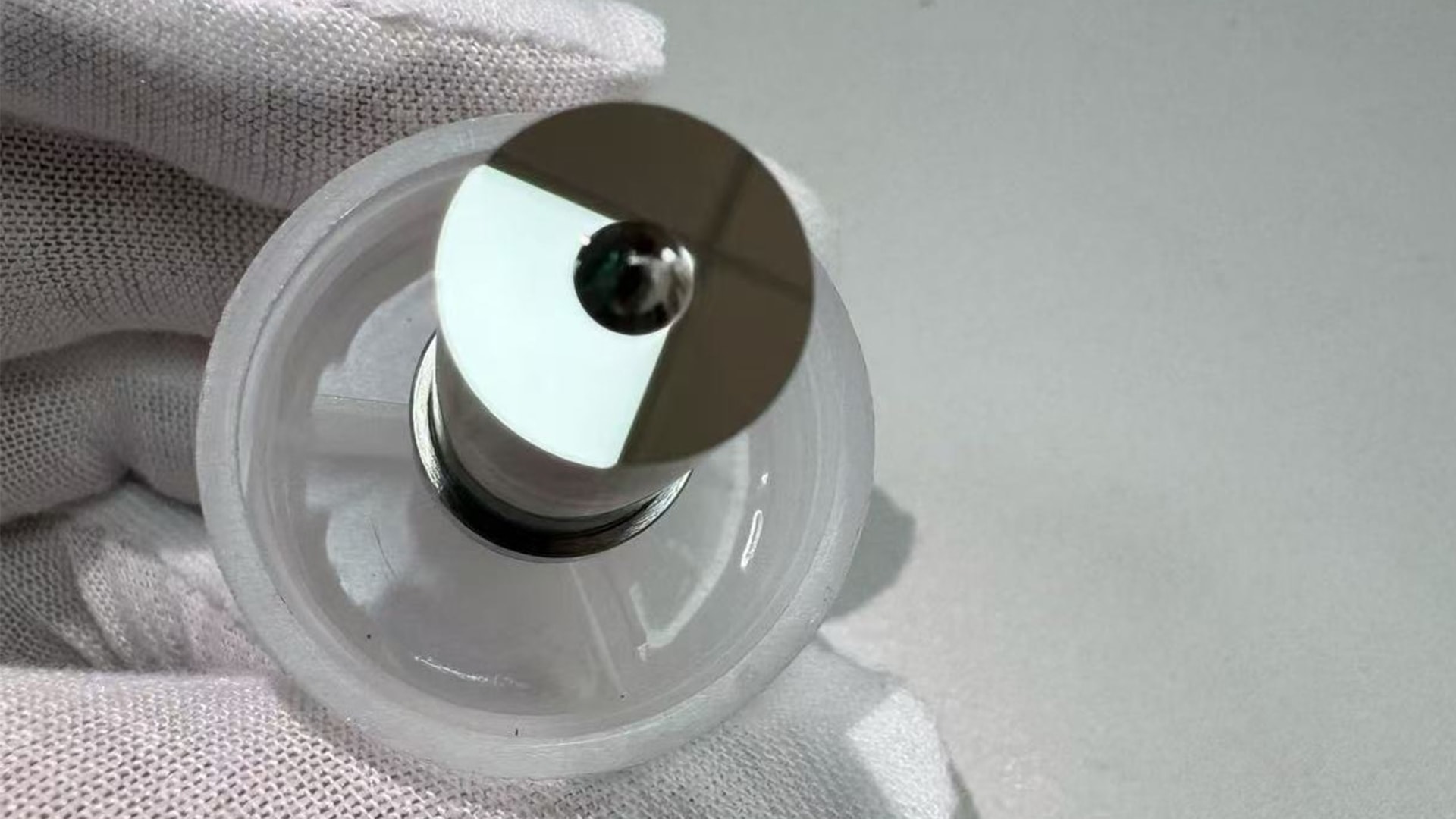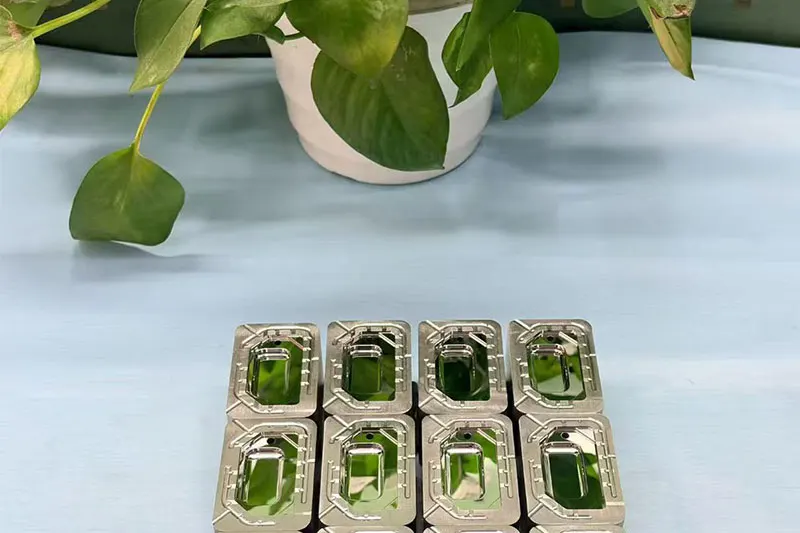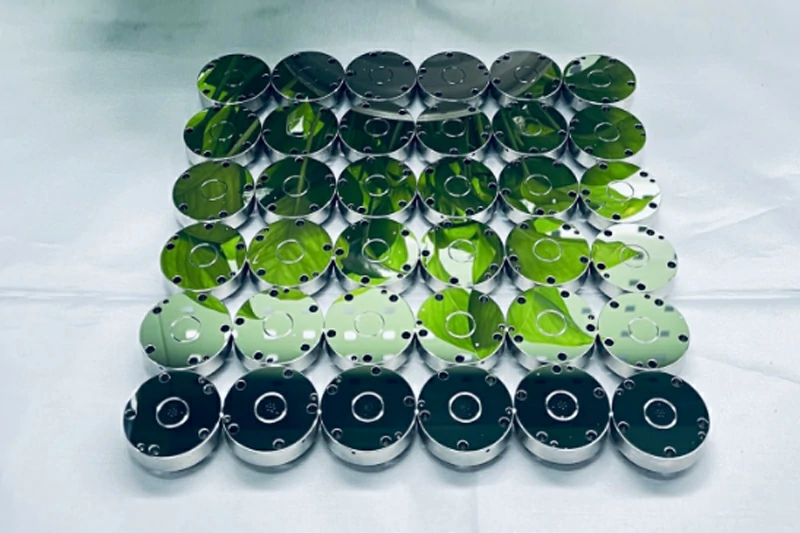
A good optical polishing RFQ should tell the supplier exactly what the component is, what condition it is in before polishing, what the finished surface must achieve, how many parts are required, and how compliance will be inspected.
At minimum, buyers should provide the material, drawing or dimensions, quantity, critical surfaces, dimensional tolerances, surface roughness, flatness or form requirements, surface-quality requirements, and any inspection or delivery expectations.
The more clearly an RFQ defines the finished condition of the part, the more accurately a supplier can evaluate process feasibility, tooling, inspection, cost, and lead time.
An incomplete inquiry may still receive a preliminary price, but that price is often based on assumptions. Once missing specifications are clarified, the actual process and quotation may change.
This guide explains what engineers and procurement teams should include when requesting an optical polishing quote and how to prepare an RFQ that reduces unnecessary back-and-forth.
Why Optical Polishing Quotes Need More Information Than General Machining Quotes
Optical polishing is a specification-driven finishing process.
Two components with the same outer dimensions can require very different manufacturing routes because of differences in:
- Material;
- Incoming surface condition;
- Geometry;
- Required material removal;
- Surface roughness;
- Flatness;
- Parallelism;
- Surface defects;
- Edge condition;
- Inspection method;
- Final quantity.
For example, polishing a part from a fine-ground condition is different from correcting a component with deep scratches or large geometry errors.
Likewise, a request for a visually smooth finish is not the same as a requirement for a measurable low-roughness surface with controlled flatness.
This is why a supplier usually cannot prepare a reliable optical polishing quotation from only:
“Please quote polishing for this part.”
The supplier needs enough information to determine the actual processing route.
The 10 Most Important Items in an Optical Polishing RFQ
A practical RFQ should cover the following ten categories.
| RFQ Information | Why It Matters | Priority |
| Material | Determines process compatibility and polishing behavior | Essential |
| Drawing or dimensions | Defines geometry and tolerances | Essential |
| Quantity | Affects setup, production planning, and unit cost | Essential |
| Incoming condition | Determines required material removal | Essential |
| Critical surfaces | Defines which areas require polishing | Essential |
| Surface roughness | Defines microscopic finish requirement | Usually essential |
| Flatness or form | Defines overall surface geometry | Project-dependent |
| Parallelism / thickness | Controls relationship between opposing faces | Project-dependent |
| Surface-quality requirement | Defines allowable scratches, pits, or visible defects | Project-dependent |
| Inspection requirement | Defines how acceptance will be verified | Strongly recommended |
These items should form the core of the RFQ package.
1. Specify the Material Clearly
Material is one of the first things an optical polishing supplier needs to know.
Different materials respond differently to grinding, lapping, polishing pressure, abrasive chemistry, edge loading, and cleaning.
Instead of writing:
Material: Glass
provide the actual material type or grade whenever possible.
For example:
Material: Fused silica
Material: Sapphire
Material: Quartz
Material: Optical glass, grade specified on drawing
Material: Technical ceramic, grade specified on drawing
Material information affects:
- Abrasive selection;
- Polishing rate;
- Tooling;
- Risk of chipping;
- Surface-defect control;
- Cleaning;
- Processing time.
“Glass” or “ceramic” may be too broad for final process planning because different grades can behave very differently during precision finishing.
If the exact material has not yet been selected, state that clearly and ask the supplier to quote based on the current candidate material.
2. Provide a Drawing Whenever Possible
A drawing is one of the most valuable pieces of information in an optical polishing RFQ.
It can communicate:
- Length;
- Width;
- Diameter;
- Thickness;
- Radius;
- Curvature;
- Datum structure;
- Critical surfaces;
- Tolerances;
- Edge geometry;
- Polished areas;
- Non-polished areas.
A 3D model may help explain complex geometry, but it should not replace a controlled 2D drawing when the drawing contains acceptance requirements.
A useful RFQ package may include:
- PDF drawing;
- STEP or other appropriate 3D model;
- Part number;
- Drawing revision.
Always identify the revision being quoted.
If the drawing changes after quotation, the supplier may need to review the process and price again.
Can You Request an Optical Polishing Quote Without a Drawing?
Yes, particularly during early development.
However, provide enough dimensional information for preliminary evaluation.
At minimum, describe:
- Component type;
- Material;
- Length and width or diameter;
- Thickness;
- Number of surfaces;
- Surface geometry;
- Required finish;
- Approximate quantity.
For example:
Rectangular fused silica plate, approximately 80 × 50 × 5 mm, both major surfaces require finishing. Target quantity: 20 prototype pieces.
This is much more useful than simply requesting a price for “polished fused silica.”
The supplier can then indicate which additional information is needed before providing a final quotation.
3. State the Quantity and Project Stage
Quantity affects much more than the number multiplied by a unit price.
It influences:
- Fixture strategy;
- Tool preparation;
- Batch processing;
- Inspection planning;
- Setup cost allocation;
- Production scheduling.
A useful optical polishing RFQ should distinguish between:
- One-off sample;
- Prototype batch;
- Pilot production;
- Recurring production.
Instead of writing:
Qty: TBD
consider providing a quotation structure such as:
Prototype: 5 pcs
Initial production: 50 pcs
Estimated repeat order: 200 pcs per batch
This allows the supplier to evaluate both development and repeat-production economics.
If future production quantities are known, include them even when the first order is only a small prototype batch.
4. Describe the Incoming Part Condition
This is frequently overlooked.
The supplier needs to know what condition the component will be in when it arrives for polishing.
Possible incoming conditions include:
- Cut blank;
- Machined surface;
- Ground surface;
- Fine-ground surface;
- Lapped surface;
- Previously polished surface;
- Used component requiring rework;
- Part with existing surface damage.
The starting condition affects the amount of material that must be removed.
For example, a fine-ground part requiring final polishing may follow a very different route from a damaged part containing deeper surface defects.
If possible, provide:
- Current roughness;
- Grinding condition;
- Remaining stock allowance;
- Existing damage;
- Photos of the actual surface.
For rework projects, clear photographs can be particularly useful during initial feasibility evaluation.
5. Identify Which Surfaces Need Polishing
Do not assume the supplier knows which areas are functional.
Mark polished surfaces clearly on the drawing.
For example:
- Surface A: precision polish;
- Surface B: lapped only;
- Surface C: no polishing required;
- Edge area: cosmetic requirement only.
This becomes especially important for components with multiple surfaces.
Processing every surface to the strictest requirement may add unnecessary cost.
A better specification separates:
- Functional optical areas;
- Mechanical reference surfaces;
- Bonding areas;
- Edge zones;
- Non-critical areas.
For flat components requiring both geometry control and final surface finishing, buyers can review YISHUN Optical’s precision optical polishing and lapping services when defining the required processing scope.
6. Define Surface Roughness
Surface roughness describes microscopic variations in the finished surface.
Common roughness parameters include:
- Ra;
- Rq;
- Sa;
- Sq.
Do not write only:
Mirror finish
or:
Optical polish
if a measurable roughness requirement actually exists.
Instead, state the required parameter and limit.
For example:
Surface roughness: Ra ≤ specified value
The appropriate value should come from the functional requirements of the component rather than from the assumption that a lower number is always better.
The RFQ should ideally also identify:
- Measurement method;
- Scan area;
- Sampling locations;
- Required reporting format.
This becomes increasingly important when very low roughness is specified.
7. Define Flatness or Surface Form
Flatness is different from surface roughness.
Roughness evaluates microscopic texture.
Flatness evaluates how far the overall surface departs from an ideal plane.
Depending on the component, flatness may be specified in:
- Micrometers;
- Nanometers;
- Peak-to-valley values;
- RMS values;
- Fractional wavelength notation.
If wavelength-based notation is used, the inspection wavelength and test area should also be defined.
Avoid sending:
Flatness: Very flat
or:
High precision flatness
These descriptions cannot be used as acceptance criteria.
For components requiring both controlled geometry and surface finish, the supplier may recommend a combination of lapping and polishing rather than polishing alone.
More information is available through YISHUN Optical’s optical polishing and lapping capabilities.
8. Include Parallelism and Thickness When They Matter
For components with two opposing functional surfaces, overall thickness and parallelism may be just as important as flatness.
A complete specification may include:
- Final thickness;
- Thickness tolerance;
- Total thickness variation;
- Parallelism;
- Wedge;
- Flatness of Surface A;
- Flatness of Surface B.
Do not assume flatness automatically controls parallelism.
Two individual surfaces can each be flat while still not being parallel.
This is particularly important for:
- Flat plates;
- Windows;
- Precision substrates;
- Spacers;
- Thin plane-parallel components.
If these relationships are functionally important, put them directly on the drawing or RFQ.
9. Define Surface Quality Instead of Saying “No Scratches”
Another common quotation problem is an RFQ that states:
Surface must have no scratches.
This sounds clear but is difficult to use as a manufacturing acceptance standard.
Almost every manufactured surface requires some defined acceptance limit.
If appearance or localized surface imperfections matter, specify the applicable requirement using an agreed standard or measurable acceptance criteria.
Depending on the project, the specification may control:
- Scratches;
- Pits;
- Edge chips;
- Handling marks;
- Other visible defects.
The important point is not simply to demand a visually perfect surface.
It is to define what constitutes an acceptable surface.
A measurable surface-quality requirement prevents the buyer and supplier from evaluating the same finished part using different expectations.
10. Specify How the Finished Part Should Be Inspected
If a characteristic is important enough to specify tightly, determine how it will be verified.
Inspection requirements may include:
- Dimensional measurement;
- Surface roughness measurement;
- Flatness measurement;
- Parallelism measurement;
- Visual surface inspection;
- Surface-defect inspection;
- Thickness measurement;
- Inspection report.
You may also request:
- First-article report;
- Full inspection;
- Sampling inspection;
- Measurement data;
- Surface map;
- Interferogram;
- Certificate of conformity.
The appropriate level depends on the project.
A prototype may require detailed measurement data for engineering evaluation.
Recurring production may use an agreed sampling plan after the process has been validated.
Essential vs Optional RFQ Information
Not every project requires every specification.
Use the following hierarchy.
| Information | Usually Required? | Notes |
| Material | Yes | Exact grade preferred |
| Dimensions | Yes | Drawing strongly recommended |
| Quantity | Yes | Include prototype and future quantity if known |
| Critical surface | Yes | Mark directly on drawing |
| Incoming condition | Yes | Especially important for customer-supplied parts |
| Surface roughness | Usually | Required when finish is functional |
| Flatness | Depends | Mainly for flat or controlled-form surfaces |
| Parallelism | Depends | Important when two surfaces interact |
| Thickness tolerance | Depends | Important for finished geometry |
| Surface-defect requirement | Depends | Important when appearance or localized defects matter |
| Final application | Recommended | Helps supplier understand functional priorities |
| Inspection requirements | Recommended | Prevents acceptance disagreements |
| Packaging | Recommended | Important for finished precision surfaces |
| Delivery target | Recommended | Helps production planning |
Should You Tell the Supplier the Final Application?
Usually, yes—at least at a functional level.
You do not need to disclose confidential product information.
However, explaining whether the component is used for:
- Imaging;
- Precision measurement;
- Medical equipment;
- Consumer electronics;
- Industrial sensing;
- Semiconductor equipment;
- Display systems;
- Coating;
- Bonding;
- Sealing;
can help the supplier understand why particular specifications matter.
For example, a surface used primarily for mechanical contact may have different priorities from a surface where optical transmission is critical.
Application context can also help identify specifications that may be unnecessarily tight.
What If You Do Not Know the Final Polishing Requirements Yet?
This is common during development.
Do not invent specifications simply to complete the RFQ.
Instead, separate confirmed requirements from open questions.
For example:
Material: Confirmed
Dimensions: Confirmed
Flatness: Target under engineering review
Roughness: Supplier recommendation requested
Quantity: 5 prototype pieces
This gives the supplier enough context to provide engineering feedback.
YISHUN Optical presents its polishing and lapping services as custom, specification-based processes supporting different materials, geometries, and surface requirements. Buyers with incomplete specifications can therefore begin from their current drawing and functional requirements rather than artificially defining every tolerance before technical review. (YISHUN Optical)
Why Different Suppliers May Give Very Different Optical Polishing Quotes
Large price differences do not necessarily mean one supplier is expensive and another is cheap.
They may be quoting different process scopes.
One quotation may include:
- Pre-lapping;
- Precision polishing;
- Full dimensional inspection;
- Surface measurement;
- Cleaning;
- Custom packaging.
Another may include only the polishing operation.
Before comparing prices, compare quotation scope.
| Quote Item | Supplier A | Supplier B |
| Pre-processing | Included | Not included |
| Polishing | Included | Included |
| Flatness inspection | Included | Extra |
| Roughness report | Included | Not specified |
| Cleaning | Included | Included |
| Special packaging | Included | Extra |
| Tooling | Included | Separate charge |
An optical polishing quote should be compared by process scope and acceptance criteria, not by unit price alone.
Six RFQ Mistakes That Delay Quotation
1. Sending Only a 3D Model
A model shows geometry but may not communicate tolerances, surface requirements, or inspection criteria.
Include a drawing whenever possible.
2. Writing “Mirror Polish” Without a Measurement Requirement
A visual description does not define surface roughness.
3. Failing to Identify Critical Surfaces
The supplier may assume more surfaces require polishing than actually necessary.
4. Omitting Incoming Condition
The amount of material removal may be impossible to estimate accurately.
5. Providing No Quantity
Setup decisions can differ substantially between one prototype and repeat production.
6. Asking Multiple Suppliers to Quote Different Specifications
If each supplier receives a slightly different requirement, the prices cannot be compared fairly.
Prepare one controlled RFQ package and issue the same revision to every supplier.
A Practical Optical Polishing RFQ Template
A concise RFQ can be organized like this:
| Item | Example Information |
| Part Name | Precision optical plate |
| Drawing Revision | Rev. B |
| Material | Material grade specified |
| Dimensions | See drawing |
| Incoming Condition | Fine ground |
| Surfaces to Polish | Surface A and Surface B |
| Final Thickness | Per drawing |
| Surface Roughness | Per drawing |
| Flatness | Per drawing |
| Parallelism | Per drawing |
| Surface Quality | Per agreed specification |
| Prototype Quantity | 5 pcs |
| Production Quantity | 100 pcs per batch |
| Inspection | Dimensional and surface inspection report |
| Packaging | Individual protective packaging |
| Delivery Requirement | Quote standard lead time |
| Additional Notes | Supplier to advise on manufacturability |
This format gives procurement and engineering teams a repeatable RFQ structure without forcing every project into exactly the same specification.
What Should You Check After Receiving the Quote?
An RFQ is only half of the process.
When the quotation arrives, verify that it references:
- Correct drawing revision;
- Correct material;
- Correct quantity;
- Correct polished surfaces;
- Required tolerances;
- Surface roughness;
- Flatness and parallelism where applicable;
- Inspection scope;
- Tooling charges;
- Packaging;
- Lead time;
- Any technical assumptions.
Pay particular attention to assumptions.
For example:
Quote assumes customer supplies fine-ground blanks.
If the actual parts arrive in a rougher condition, the quoted process may no longer be applicable.
How to Request an Optical Polishing Quote from YISHUN Optical
For a project-specific evaluation, prepare the material, drawing, quantity, incoming condition, critical surfaces, dimensional requirements, surface roughness, flatness, surface-quality criteria, and inspection needs.
YISHUN Optical provides precision optical polishing and lapping services for custom components requiring controlled surface finishing and dimensional requirements.
Its published service information includes precision polishing, lapping, customized surface processing, and metrology support for different project requirements. (YISHUN Optical)
If some specifications are still under development, clearly identify them as targets rather than final acceptance limits. This allows engineering review to focus on manufacturability before finalizing the quotation.
Buyers can also review the YISHUN Optical website for additional information about its precision processing services.
FAQ
What information is needed for an optical polishing quote?
Provide the material, drawing or dimensions, quantity, incoming surface condition, critical surfaces, tolerances, surface roughness, flatness, surface-quality requirements, and inspection expectations.
Can I request an optical polishing quote without a drawing?
Yes. A preliminary quotation may be possible if you provide the material, dimensions, geometry, quantity, surface requirements, and photos where applicable. A controlled drawing is recommended before final production approval.
Why does material matter in an optical polishing RFQ?
Material affects abrasive selection, polishing rate, edge behavior, surface quality, tooling, process time, and overall manufacturing difficulty. Exact material grades help suppliers plan the correct process.
Should surface roughness be included in polishing requirements?
Yes, when microscopic surface finish affects component performance. Specify a measurable roughness parameter such as Ra, Rq, Sa, or Sq rather than only using terms such as “mirror finish.”
What is the difference between flatness and surface roughness in an RFQ?
Flatness describes overall deviation from the desired surface geometry, while roughness describes microscopic surface texture. They control different characteristics and may both need to be specified.
Do I need to include scratch-dig in every optical polishing RFQ?
No. Include a surface-defect specification when localized scratches, pits, or cosmetic imperfections are important to the application. Not every component requires the same surface-quality standard.
Why does quantity affect an optical polishing quotation?
Quantity affects fixture design, setup, batch planning, inspection strategy, production scheduling, and how fixed processing costs are distributed across the order.
Should I tell the polishing supplier the final application?
It is usually helpful. Functional application information can help the supplier understand which specifications are critical and identify requirements that may need additional engineering review.
What if my polishing requirements are not finalized?
Provide the confirmed information and identify uncertain requirements as targets. The supplier can then review feasibility and provide feedback before the specifications are finalized.
How can I compare optical polishing quotes from different suppliers?
Compare the complete process scope, including pre-processing, polishing, inspection, tooling, cleaning, packaging, lead time, and technical assumptions. Do not compare unit price alone.
Conclusion
A well-prepared optical polishing RFQ does more than ask a supplier for a price.
It defines what the part is, how it arrives, which surfaces matter, what the finished component must achieve, how many parts are required, and how compliance will be verified.
Material, drawing, quantity, incoming condition, critical surfaces, tolerances, roughness, flatness, surface quality, and inspection requirements are the core information needed for an accurate optical polishing quote.
When some requirements are still being developed, state that clearly rather than using arbitrary specifications. This gives the supplier an opportunity to review manufacturability and helps prevent unnecessary cost.
For custom projects, engineers and procurement teams can submit their available drawings and requirements for evaluation through YISHUN Optical’s optical polishing and lapping services.