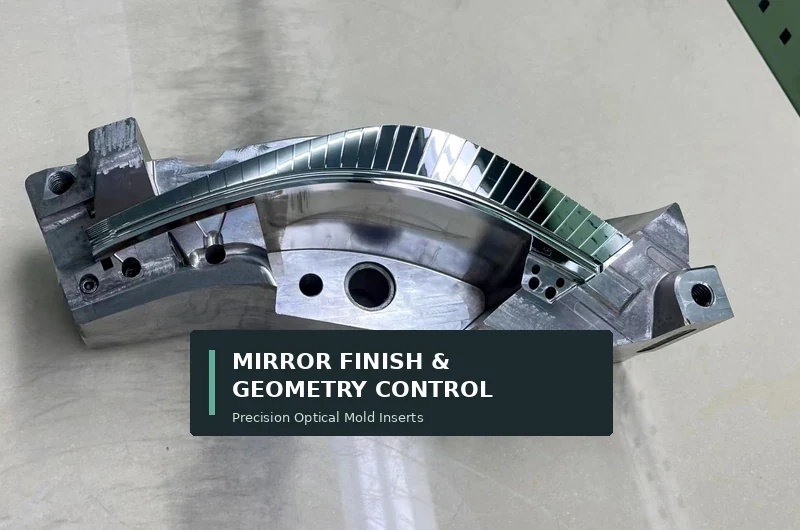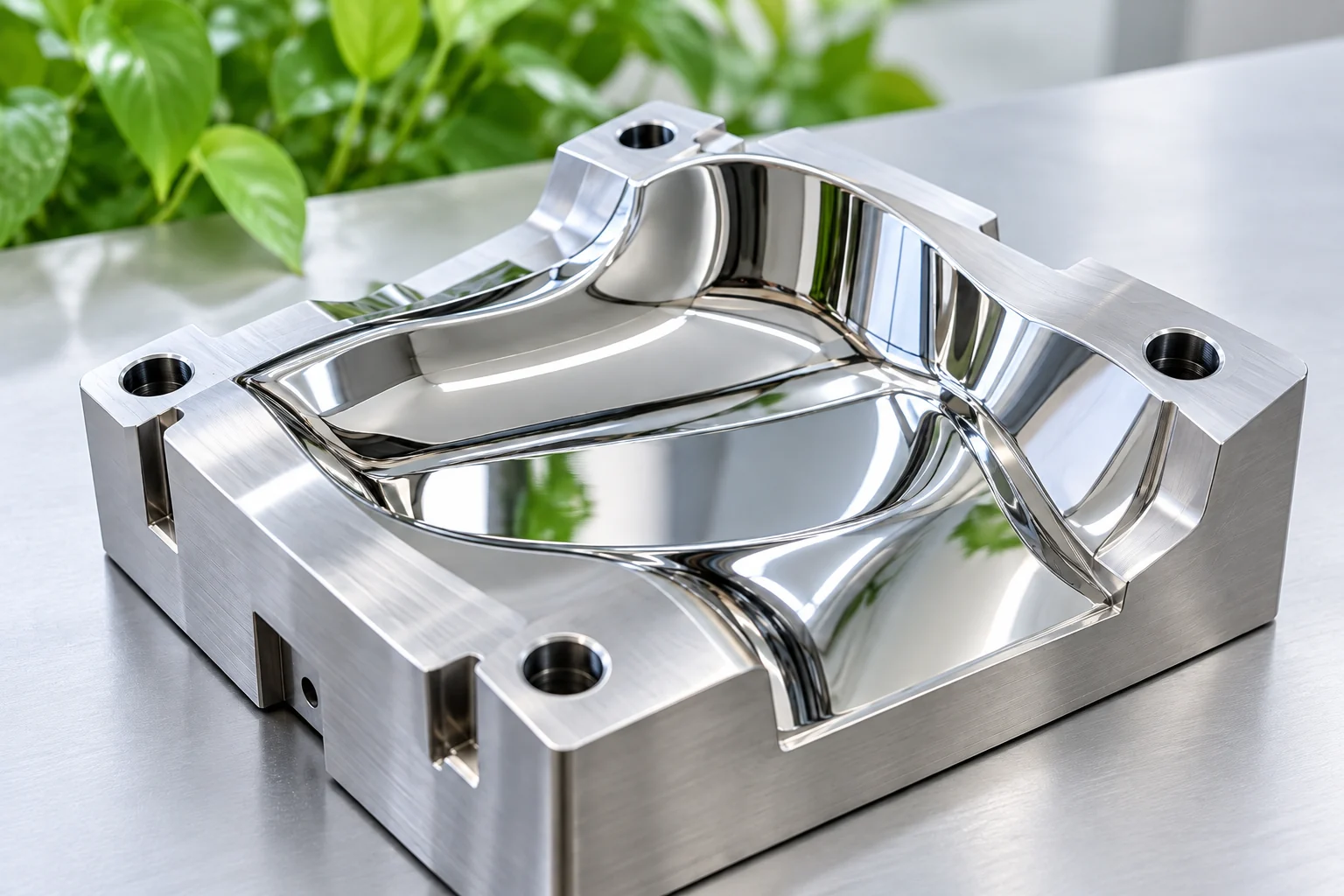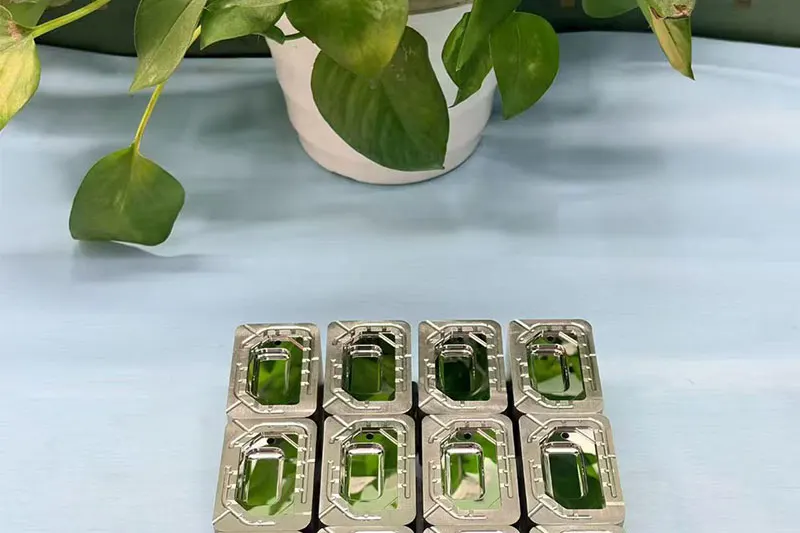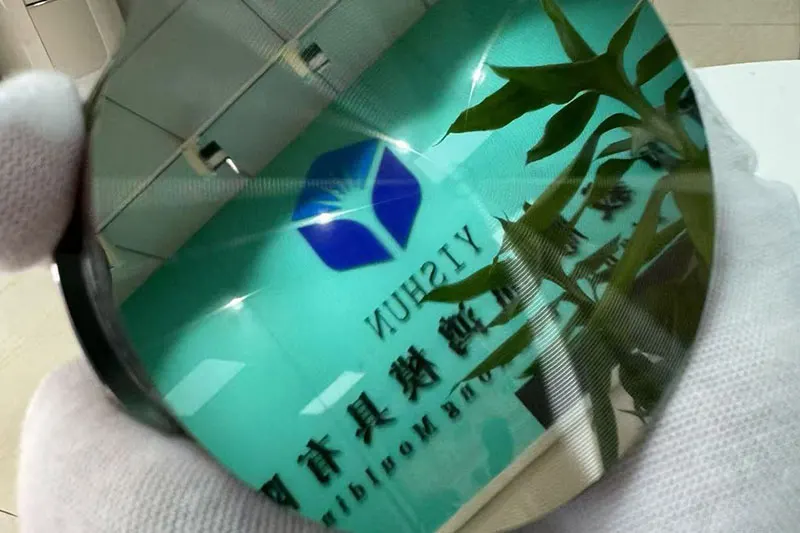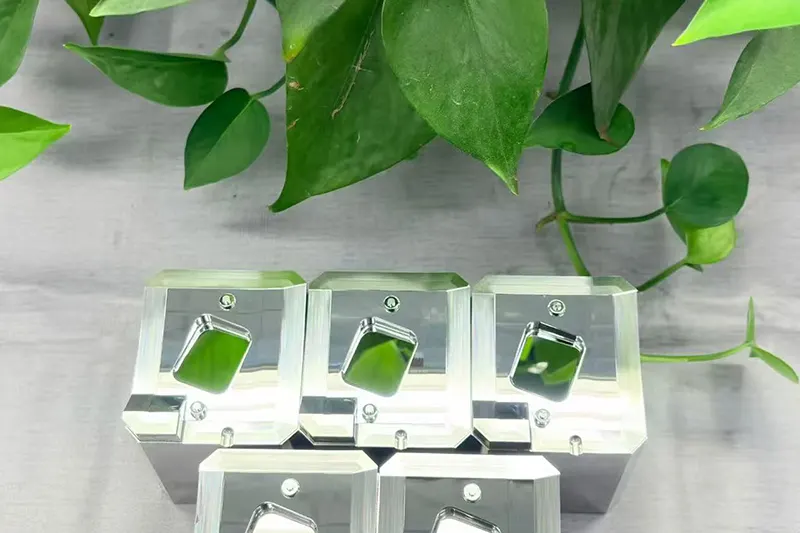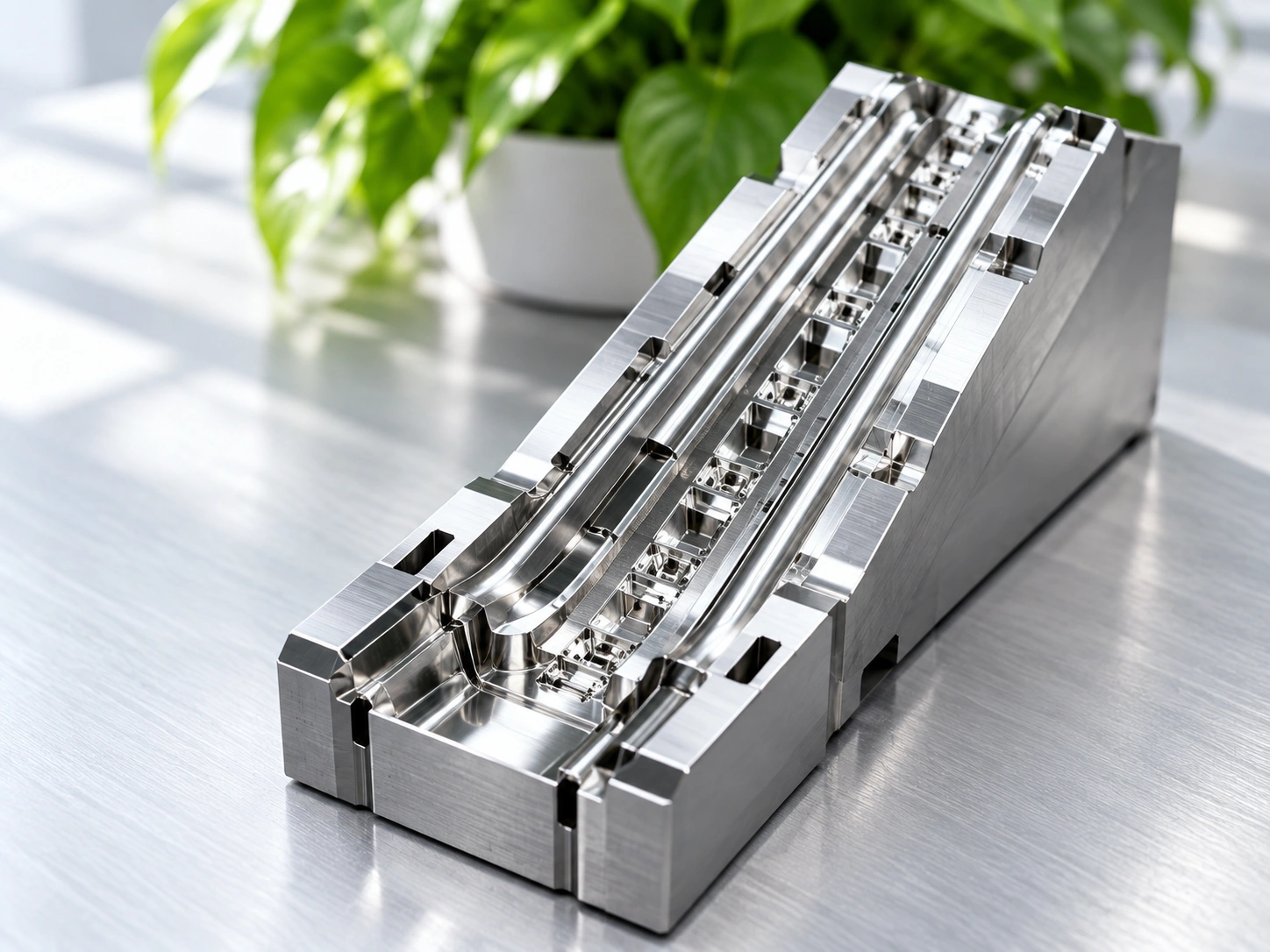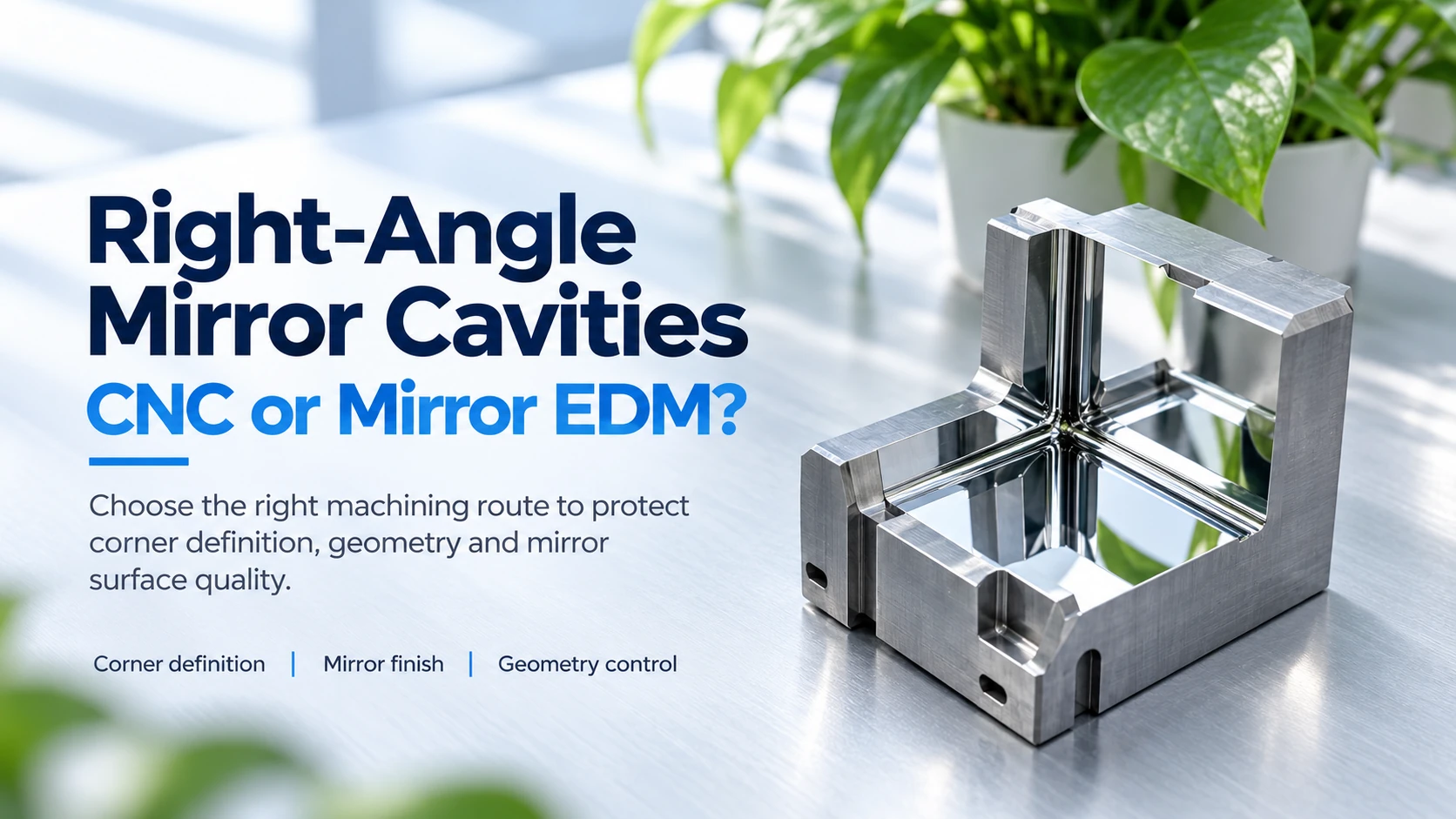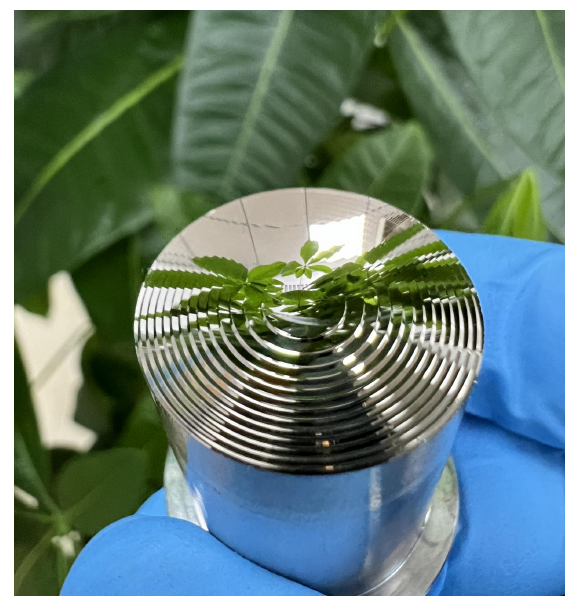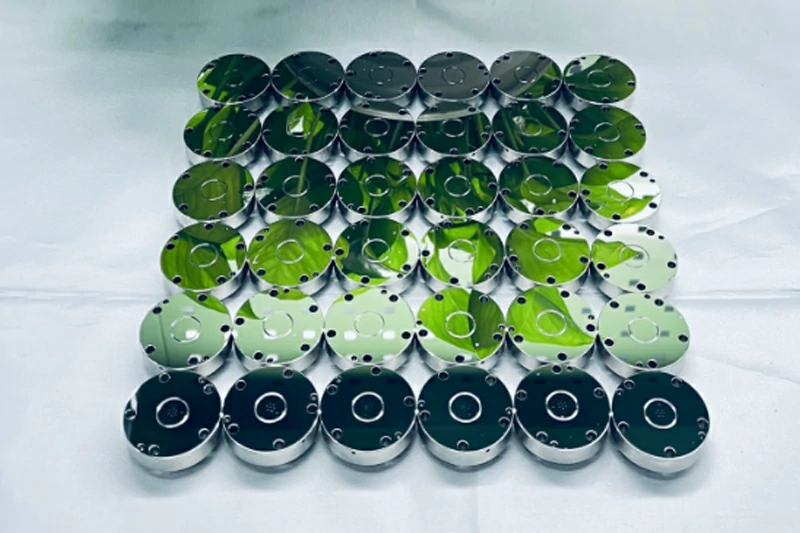
High-gloss mirror mold inserts often require extremely smooth surfaces and stable geometry.
However, when electrical discharge machining (EDM) is used, the surface may contain EDM texture that increases the difficulty of the following finishing process.
For many mold inserts, EDM itself is not the final problem.
The real challenge appears later:
- polishing takes much longer than expected;
- deep EDM marks are difficult to remove;
- excessive polishing changes critical dimensions;
- surface consistency becomes harder to control.
A high-gloss mold insert is not only about achieving a bright surface.
The process must also protect geometry, edges and functional areas during finishing.
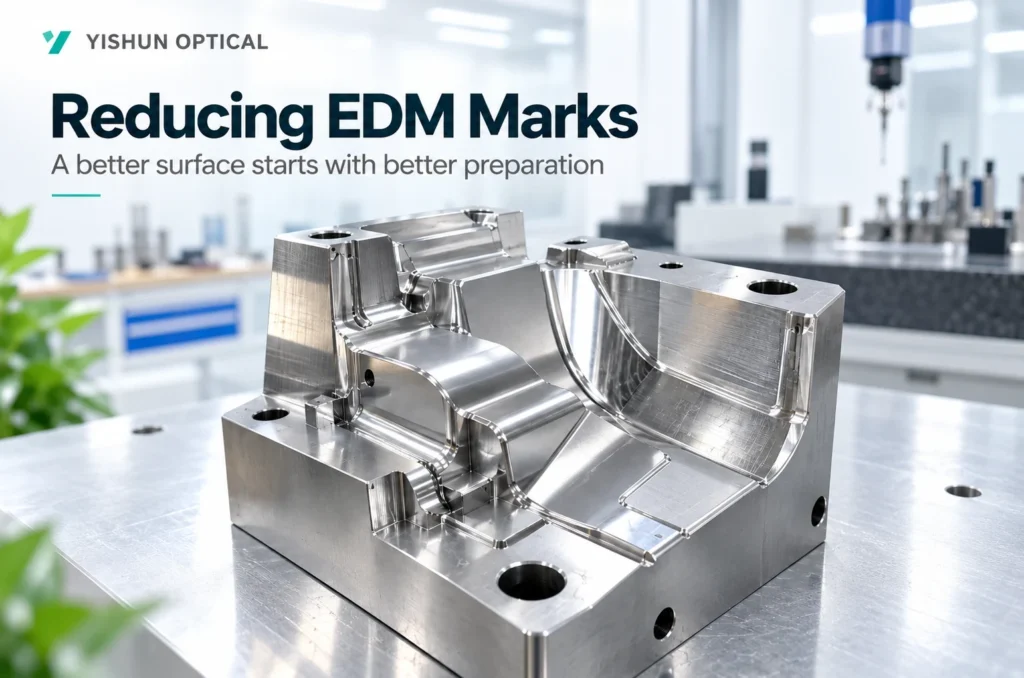
Why EDM Marks Become a Challenge on High-Gloss Mold Inserts
EDM is widely used because it can process difficult materials and complex structures.
For certain mold features, it provides an effective machining solution.
However, the EDM surface condition directly affects the following finishing process.
When the EDM texture is deeper or more aggressive, more material needs to be removed during polishing.
This can create several risks:
- longer polishing cycles;
- inconsistent surface appearance;
- increased manual finishing work;
- possible geometry changes.
For standard mold surfaces, these effects may be acceptable.
But for high-gloss mold inserts, especially those requiring mirror-like reflection, the remaining EDM texture becomes much more critical.
Deep EDM Texture Increases Polishing Difficulty
Many customers initially expect polishing to remove all EDM marks.
In practice, polishing has limitations.
When EDM marks are too deep, removing them requires additional material removal.
During this process, several problems may appear.
Surface geometry may change
The more material removed, the greater the possibility of affecting:
- corner definition;
- transition areas;
- cavity dimensions;
- fine structures.
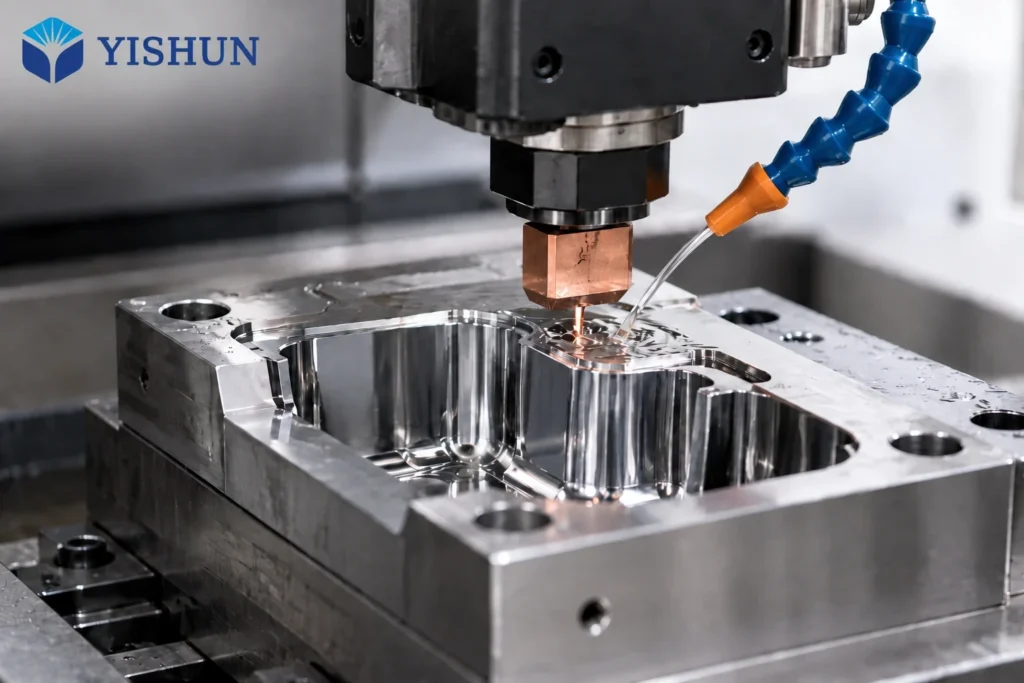
This is especially important for precision parts produced through ultra-precision machining, where maintaining the original geometry is often as important as achieving the required surface finish.
Polishing time increases
Deep EDM texture requires more finishing work.
This increases:
- labor cost;
- delivery time;
- process uncertainty.
Surface consistency becomes harder
Even if the surface eventually becomes bright, different areas may show different reflection characteristics.
This is especially challenging for appearance-critical parts.
Why High-Gloss Mold Inserts Need Better EDM Control
The goal of EDM is not only to remove material.
The surface condition after EDM should also support the next manufacturing stage.
For high-gloss mold inserts, process decisions should consider:
- required surface finish;
- cavity geometry;
- polishing accessibility;
- dimensional tolerance;
- final application requirements.
A suitable EDM strategy can reduce unnecessary finishing work.
This does not mean EDM should always be avoided.
Instead, EDM parameters and finishing requirements need to be considered together.
Mirror EDM and Mirror Milling Provide Different Solutions
Different mold structures require different approaches.
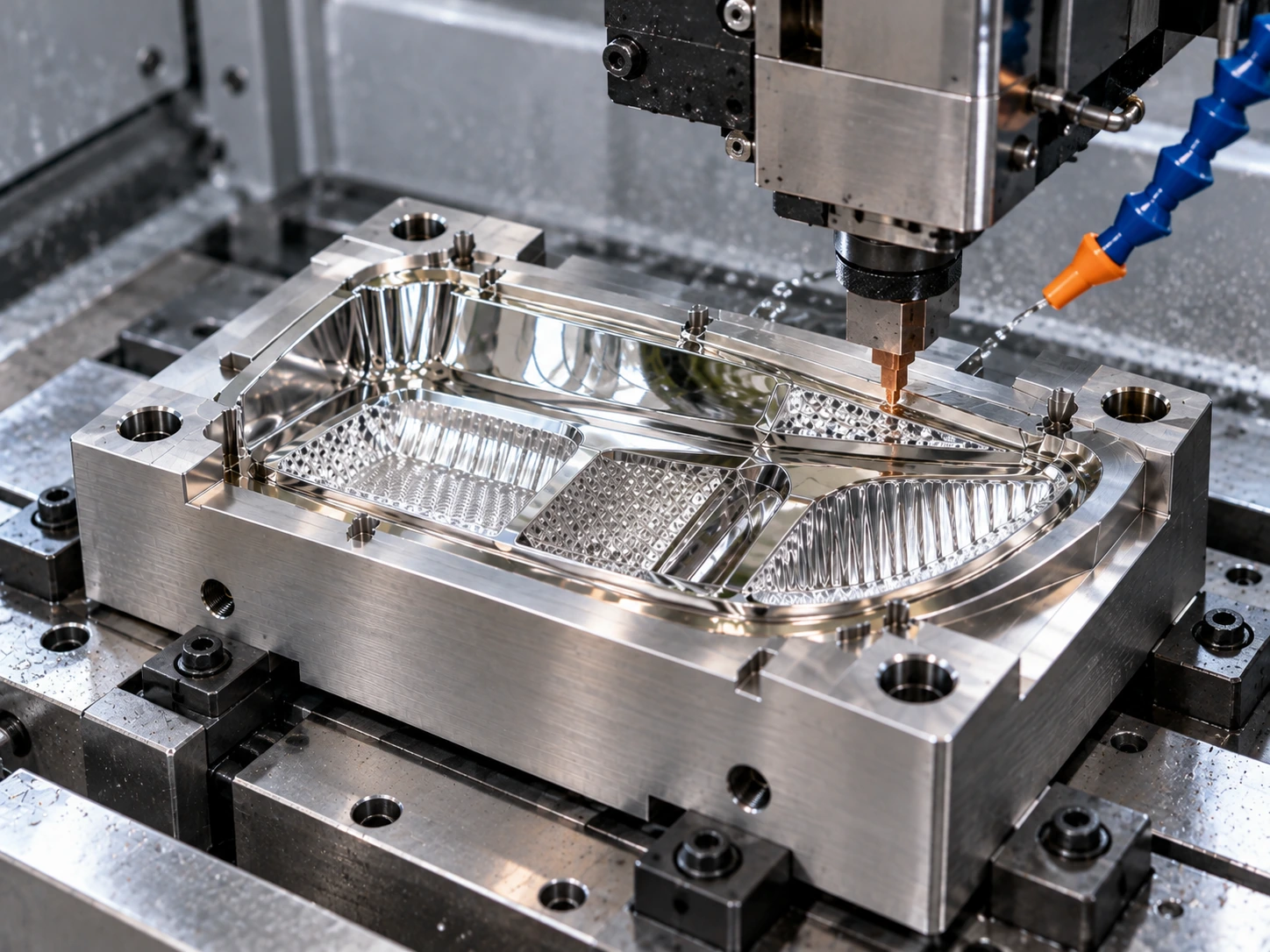
For some applications, optimized EDM processes can reduce surface texture and improve the starting condition before polishing.
For other applications, mirror milling may provide advantages when the geometry and material allow it.
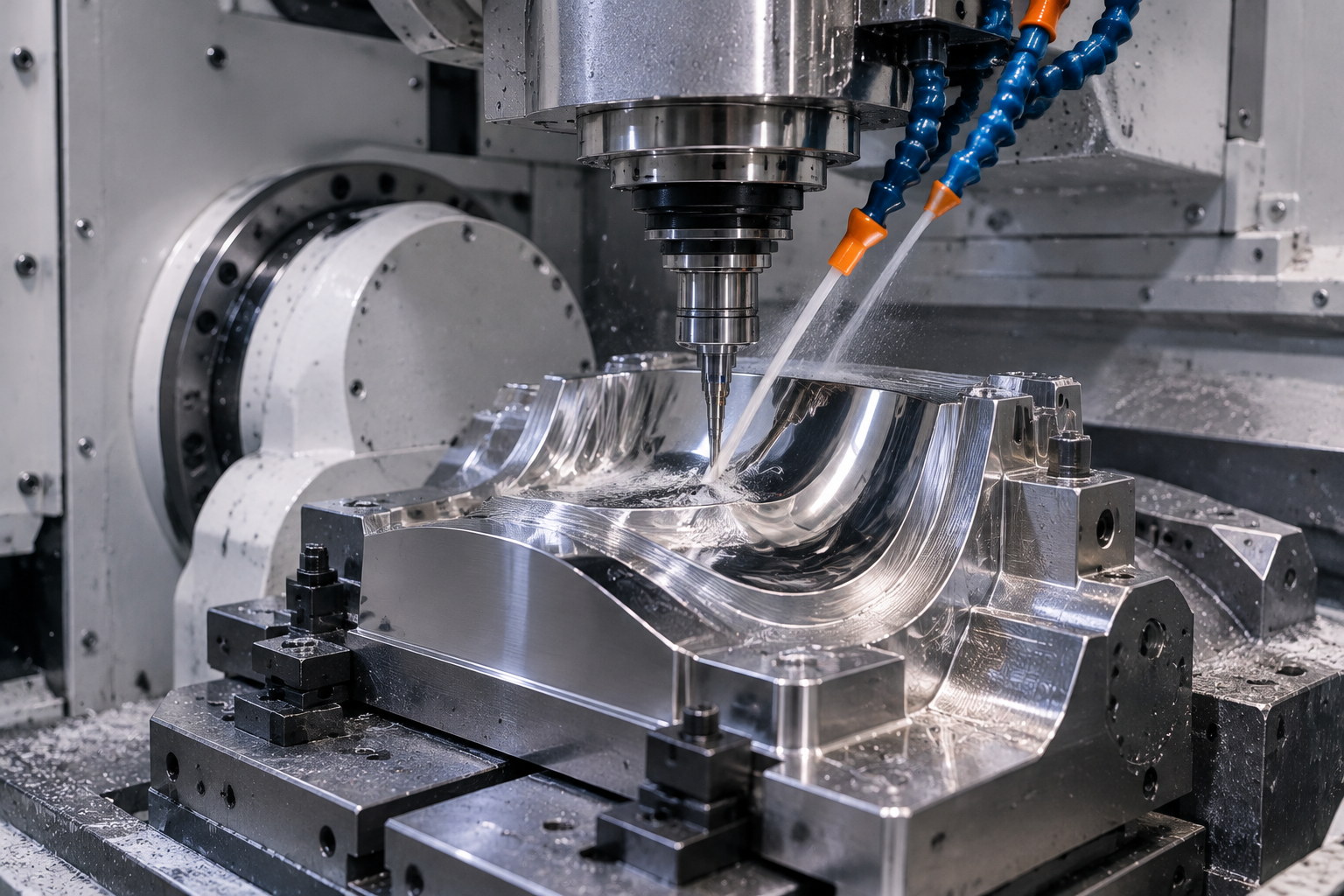
For complex curved surfaces, high precision 5-axis mold machining can also provide another processing option when surface quality and geometry control are both critical.
The choice depends on factors such as:
- material properties;
- cavity structure;
- required surface quality;
- dimensional requirements.
The important point is that the machining method should match the final surface target.
A process that works for one mold insert may not be suitable for another.
The Risk of Removing Too Much Material During Polishing
One common mistake is treating polishing as a correction step after EDM.
When EDM marks are too strong, polishing becomes responsible for removing excessive surface material.
This can create a difficult balance:
Remove enough material to achieve gloss.
But avoid removing so much that the original geometry changes.
For precision mold inserts, this balance is critical.
Especially in areas with:
- small radii;
- sharp transitions;
- optical surfaces;
- complex curved geometry.
A good finishing process should minimize correction rather than rely on correction.
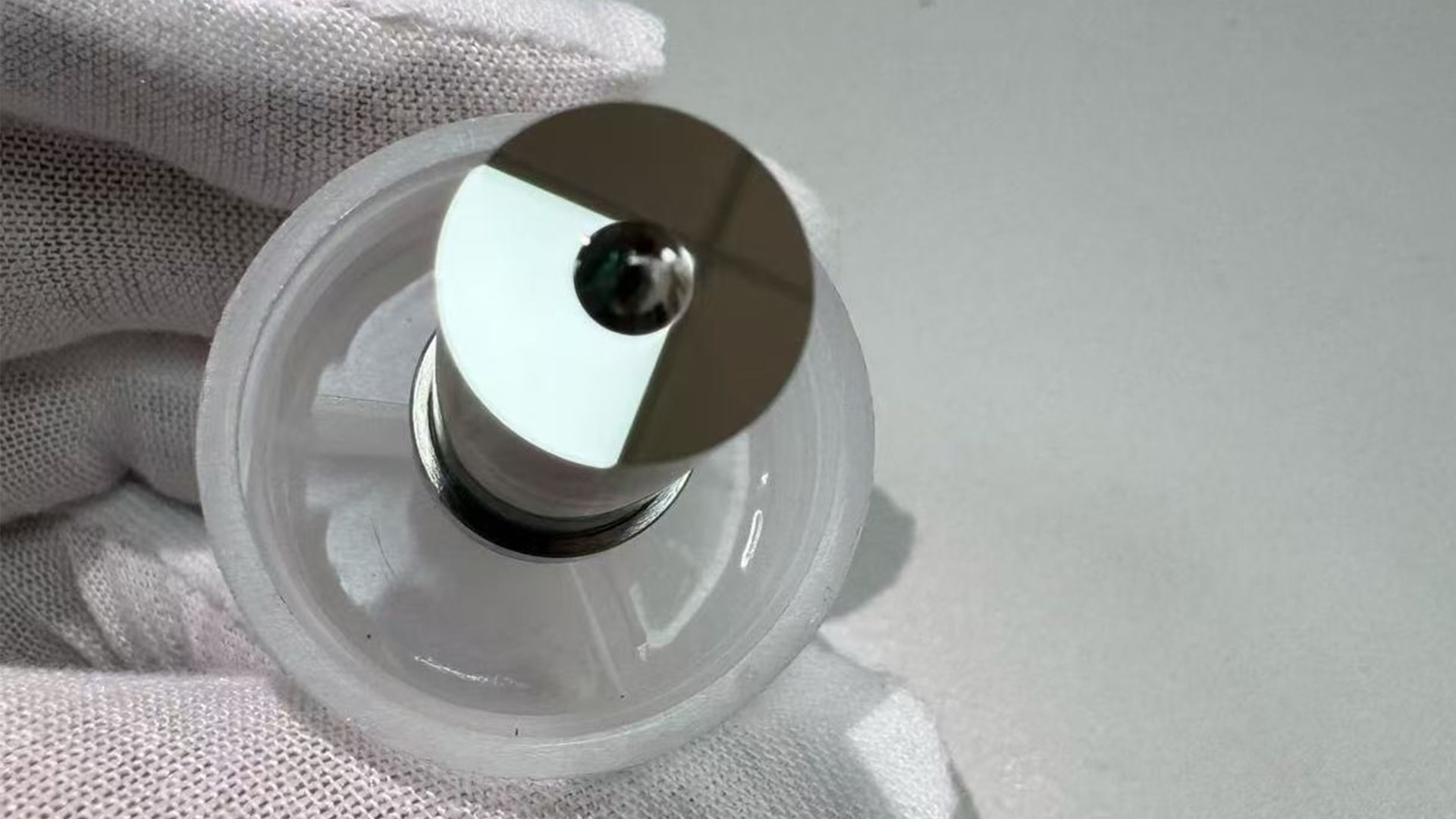
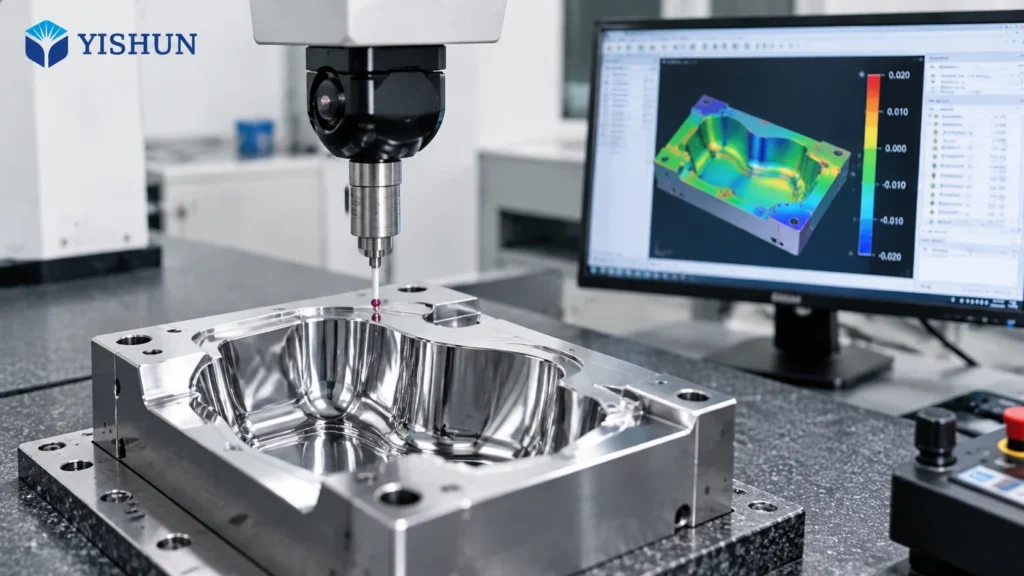
Controlled optical polishing services help maintain surface quality while reducing unnecessary material removal during the finishing stage.
Combining Machining Strategy and Finishing Requirements
High-gloss mold inserts require cooperation between machining and finishing processes.
Before production begins, important factors should be reviewed:
- Which surfaces require mirror finish?
- Which areas are appearance-critical?
- Which features cannot change?
- What inspection method will verify the final result?
When EDM, machining and polishing are planned separately, problems often appear during the final stage.
A coordinated process helps reduce unexpected finishing risks.
How Yishun Approaches EDM-Related Mirror Mold Insert Challenges
For high-gloss mold inserts, Yishun evaluates the complete process route based on the actual geometry and surface requirements.
The focus is not simply removing EDM marks after machining.
Instead, the process considers:
- suitable machining methods;
- controlled surface preparation;
- polishing allowance;
- geometry protection;
- final inspection requirements.
By understanding the relationship between EDM texture and finishing difficulty, the process can be planned earlier and unnecessary rework can be reduced.
The goal is to achieve both:
- stable mirror surface quality;
- reliable dimensional accuracy.
A complete quality verification process is also important during final acceptance. Through quality management, critical dimensions, surface condition and project requirements can be reviewed together before delivery.
Conclusion: Better Surface Quality Starts Before Polishing
EDM marks are not only a surface appearance issue.
For high-gloss mold inserts, they influence the entire finishing process.
Deep EDM texture can increase polishing workload, create dimensional risks and make surface consistency harder to maintain.
A better approach is to consider machining method, surface requirements and finishing strategy together.
The best mirror finish is achieved not by adding more polishing time, but by creating a better foundation before polishing begins.
FAQ
Why are EDM marks difficult to remove on high-gloss mold inserts?
Because deeper EDM texture requires more material removal during polishing, increasing time and geometry risks.
Can polishing completely eliminate EDM marks?
Polishing can reduce EDM texture, but excessive removal may affect dimensions and surface geometry.
Is EDM always unsuitable for mirror-finish mold inserts?
No. EDM can still be suitable when the process parameters and finishing requirements are properly controlled.
When should mirror milling be considered instead of EDM?
It depends on material, geometry, surface requirements and final application needs.
How do EDM marks affect mold insert quality?
They can increase polishing workload, affect surface consistency and create additional dimensional control challenges.
What information should be reviewed before selecting an EDM or mirror machining process?
Material, geometry, surface requirements, tolerance requirements and inspection standards should be evaluated together.