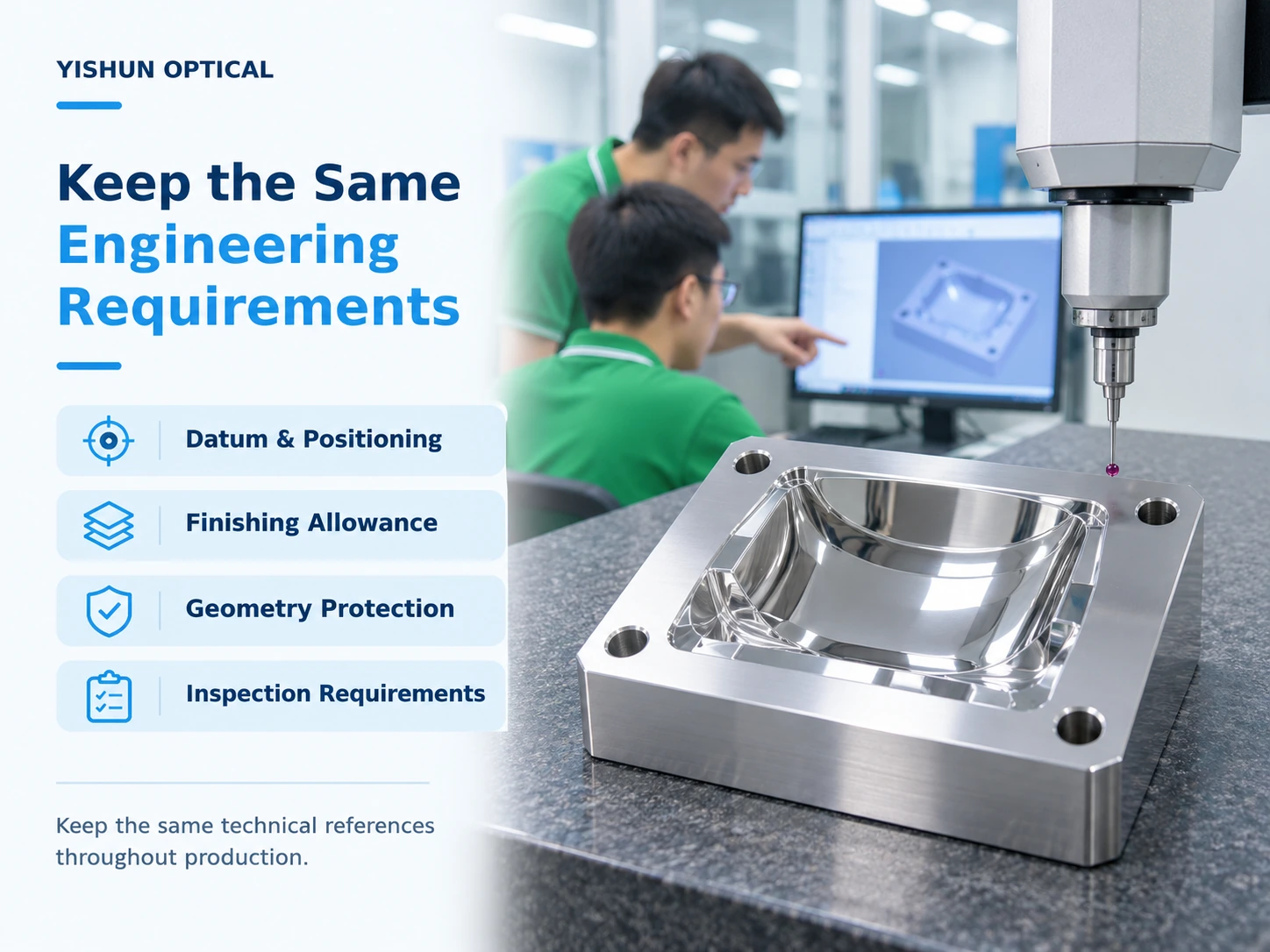
Comparing Ultra Precision Machining Services strictly by unit price is one of the fastest ways to trigger budget overruns, assembly failures, and project delays. When two suppliers quote dramatically different prices for the exact same CAD drawing, the gap rarely comes from profit margins alone—it usually reflects fundamental differences in machining processes, metrology depth, fixturing strategy, and yield risk.
To evaluate ultra precision machining quotes accurately, B2B buyers and engineering teams must shift from a price-per-part mindset to a total-cost-of-ownership (TCO) framework. This guide breaks down why quotes diverge so widely, outlines the six technical and commercial factors you must verify behind every number, and provides a practical normalization checklist to help you compare suppliers on an apples-to-apples basis.

Why Ultra Precision Machining Quotes Vary So Widely for the Same Drawing
When you send a technical drawing to five different machine shops, you are not always receiving five quotes for the same manufacturing reality. Quotes diverge primarily because suppliers make different assumptions about how to achieve your tolerances and how thoroughly to verify them.
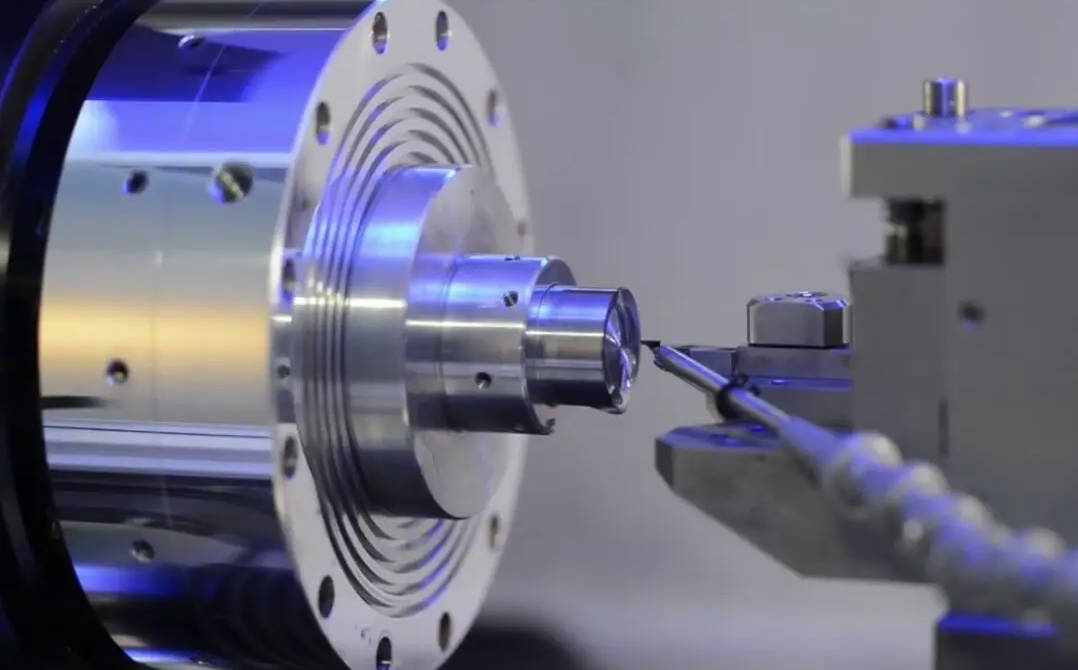
A standard precision CNC shop may quote a part assuming conventional multi-axis milling followed by manual polishing, which keeps upfront machine rates low but introduces form distortion and batch-to-batch inconsistency. In contrast, a dedicated ultra precision machining supplier evaluates the part for specialized processes—such as single-point diamond turning (SPDT), ultra precision milling, or deterministic optical grinding—paired with temperature-controlled environments and high-resolution optical metrology.
Other common sources of quote variance include:
- Unstated exclusions: One quote may bundle custom vacuum chucks, diamond tool wear, and full inspection reports into the unit price, while another excludes them or bills them later as change orders.
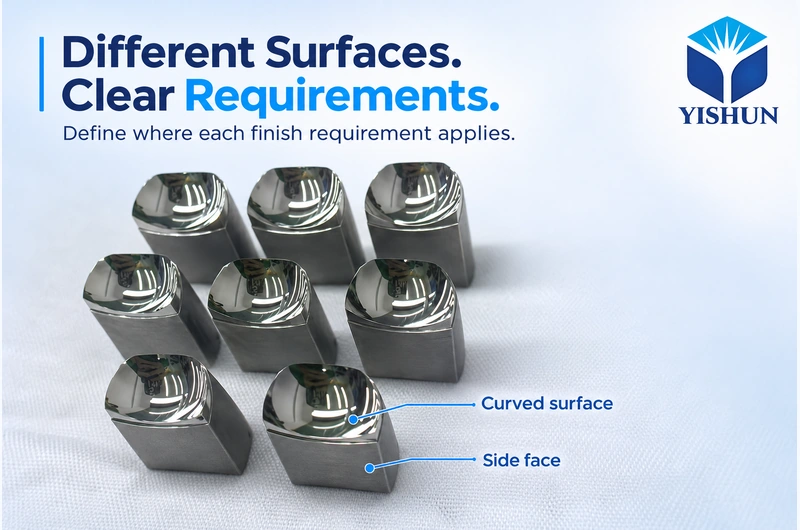
- Different interpretations of critical surfaces: A supplier that treats every dimension as equally tight will over-engineer the process, whereas a supplier that overlooks form accuracy or surface roughness callouts will underquote and fail during inspection.
- Batch size and setup amortization: Depending on the machine configuration and order volume, setup and programming time can outweigh actual cutting time. How a supplier amortizes these non-recurring costs heavily skews the apparent price per part.
6 Critical Factors to Evaluate Beyond Unit Price
To protect your project from hidden costs and quality escapes, audit every quote against these six operational and technical dimensions.
1. Process Route and Equipment Suitability
The machining method directly dictates achievable surface finish, form accuracy, and repeatability. A quote that does not clarify the intended process route leaves you blind to whether the supplier’s equipment can actually hold your drawing specifications without risky secondary handwork.
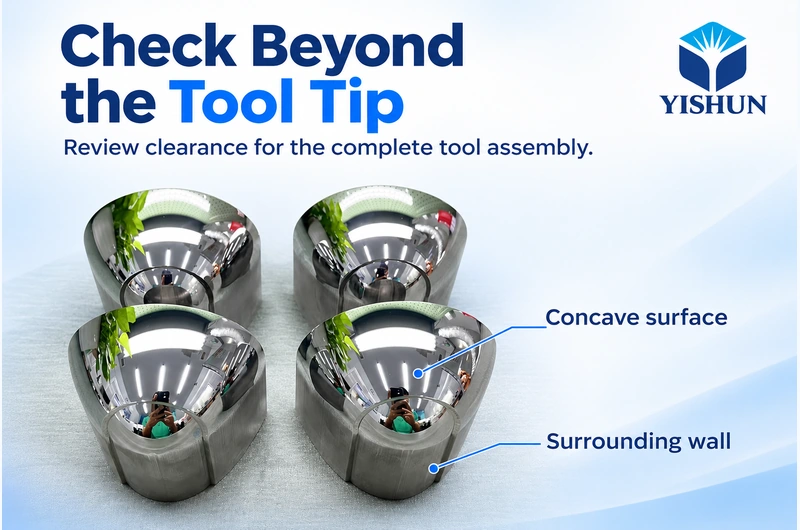
For example, optical-grade surfaces, aspheric profiles, and micro-structured molds typically require diamond turning or ultra precision multi-axis milling rather than conventional CNC machining. Understanding how diamond turning and ultra precision milling differ in surface finish, materials, and cost helps you judge whether the quoted process route actually matches your part geometry. If a supplier plans to rely on manual post-polishing to hit a surface roughness target, they may compromise edge sharpness or geometric form accuracy.
What to ask the supplier
- Which specific machining process will be used for the critical functional surfaces?
- Can the required surface finish and form accuracy be achieved directly off the machine, or is secondary polishing planned?
2. Tolerance Capability, Form Accuracy, and Surface Finish Assurance
In ultra precision manufacturing, dimensional tolerances are only part of the equation. Many optical, semiconductor, and medical components depend equally on form accuracy (such as peak-to-valley error) and surface roughness.
A low-cost quote often accounts only for basic dimensional tolerances while overlooking subsurface damage, waviness, or mid-spatial frequency errors. When evaluating a partner for Ultra Precision Machining Services, confirm that their engineering team has reviewed both the dimensional callouts and the surface texture requirements on your drawing—and that they understand which features are functionally critical versus non-critical.
What to ask the supplier
- Have your engineers reviewed all form accuracy and surface roughness callouts on the drawing?
- Are there any tolerance features that drive disproportionate cost or manufacturing risk?
3. Metrology, Inspection Scope, and Quality Documentation
If a supplier cannot measure a feature reliably, they cannot guarantee they machined it correctly. Metrology is frequently the largest hidden variable in precision machining quote comparison.
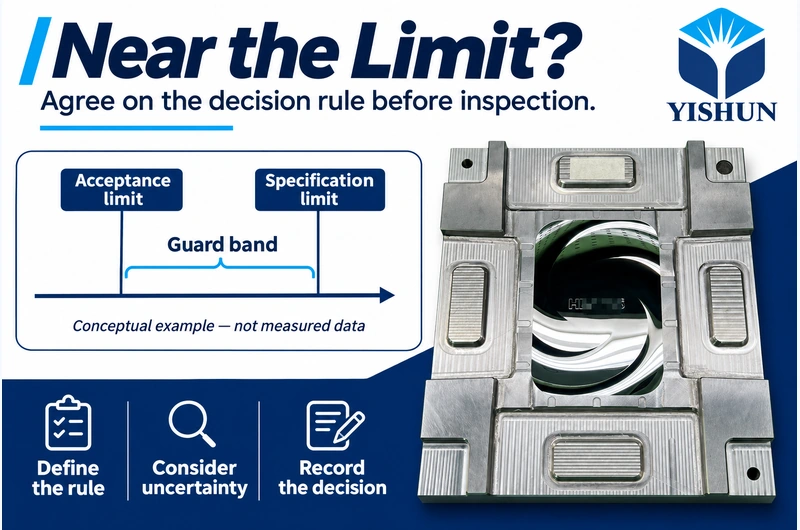
Verifying sub-micron form accuracy or nanometer-level surface roughness requires specialized, calibrated equipment—such as white-light interferometers, laser interferometers, or high-accuracy coordinate measuring machines (CMMs)—operated in environmentally controlled labs. A low quote may assume only basic sampling with standard shop-floor gauges, leaving your team to discover defects during final optical alignment or system integration.
What to ask the supplier
- Which specific inspection instruments will be used to verify critical dimensions and surface finish?
- Does the quote include 100% inspection of critical features or statistical sampling, and are full inspection reports included at no extra charge?
4. Non-Recurring Engineering (NRE), Tooling, and Custom Fixturing
Ultra precision parts are highly sensitive to clamping distortion. Standard vises or generic fixtures can warp thin-walled components, causing the part to spring out of tolerance the moment it is unclamped. Preventing this often requires custom vacuum chucks, stress-free bonding fixtures, or dedicated diamond tooling.
Suppliers handle these costs differently. Some list NRE, programming, and custom fixturing as separate line items, making the initial quote look higher up front while keeping repeat-order unit prices lower. Others bury tooling costs inside the unit price, which can cause you to overpay on subsequent production runs.
What to ask the supplier
- Are custom fixtures, specialized diamond tooling, and CAM programming billed separately as NRE or amortized into the unit price?
- If we place a repeat order for the same revision, how much will the unit price decrease?
5. Material Sourcing, Stress Relief, and Secondary Finishing
Material quality directly affects machinability and long-term dimensional stability. Optical-grade polymers, oxygen-free copper, specialized aluminum alloys, and electroless nickel plating (NiP) vary significantly in purity, grain structure, and internal stress.
A suspiciously low quote may be based on commercial-grade stock rather than certified, homogeneous material, or it may omit intermediate thermal stress-relief cycles needed to prevent post-machining warping. Similarly, confirm whether secondary processes—such as plating, optical coating, anodizing, ultrasonic cleaning, and cleanroom-grade protective packaging—are included in the quoted scope.
What to ask the supplier
- Will you provide material certifications verifying the exact alloy or optical grade used?
- Does the quote include stress-relief heat treatment, post-machining coatings, and protective packaging suitable for delicate surfaces?
6. Lead Time Realism, Batch Consistency, and Yield Risk
Ultra precision machining is inherently deliberate. Achieving thermal stability, running slow finishing passes, and executing thorough metrology takes time. An unusually short lead time can be a warning sign that a supplier intends to skip stabilization steps or rush inspection.
Equally important is yield risk. If a supplier lacks experience with your specific geometry or material, scrap rates during initial trials can delay delivery by weeks. The exact delivery schedule should always be confirmed with the supplier based on current machine capacity, material availability, and secondary processing requirements.
What to ask the supplier
- Does the quoted lead time account for material procurement, secondary finishing, and final metrology?
- How do you maintain repeatability across multi-piece batches or repeat production runs?
Side-by-Side Comparison Framework: Low-Cost Quote vs. Total-Value Quote
When presenting supplier options to internal stakeholders, use the following framework to compare a low-unit-price quote against a transparent, total-value quote.
| Evaluation Dimension | Low-Price Quote (Potential Risks) | Total-Value Quote (What to Look For) | Impact on Total Project Cost |
|---|---|---|---|
| Process Route | Unspecified or relies on standard CNC plus manual polishing | Explicitly states ultra precision process matched to part geometry | Prevents form distortion, rework, and optical/functional failure |
| Metrology & Reporting | Basic dimensional check; no specialized surface or form reports | Specifies exact metrology tools, sampling plan, and formal reports | Eliminates incoming inspection bottlenecks and assembly rejects |
| NRE & Fixturing | Hidden in unit price or omitted until after PO is issued | Transparently itemized with clear terms for repeat orders | Protects long-term unit economics on production runs |
| Material & Post-Processing | Generic material grade; excludes plating, cleaning, or special packaging | Verified material grade with defined finishing and protective packaging | Avoids cosmetic damage, corrosion, and surprise vendor add-ons |
| Engineering Feedback (DFM) | Automated or instant quote with zero technical questions | Proactive DFM review flagging tolerance risks or cost-saving adjustments | Reduces prototype iterations and accelerates time to market |
Red Flags to Watch for When Reviewing Ultra Precision Machining Quotes
Before issuing a purchase order, scan every quote for these common warning signs that indicate incomplete technical review or hidden downstream costs:
- Instant quoting with zero technical questions: Complex ultra precision drawings almost always warrant at least one clarification regarding datum references, functional surfaces, or inspection criteria. A quote returned without engineering review often signals guesswork.
- Vague inspection language: Phrases such as “inspected to industry standards” or “standard quality check” without naming specific metrology methods leave you with no recourse if surface roughness or form accuracy fails.
- No separation between prototype NRE and production unit cost: Without visibility into setup and tooling charges, you cannot accurately forecast scaling costs.
- Unclear exclusions on packaging and shipping: Precision optical or mirror-finished components can be ruined in transit if shipped in standard bulk trays rather than individual protective containers.
- Unwillingness to discuss tolerances or DFM: A capable supplier should be able to explain which features drive the bulk of the machining cost and suggest practical adjustments where design intent allows.
Practical Checklist: How to Normalize Quotes Before Making a Decision
Because every supplier formats quotes differently, follow this four-step process to bring all bids onto a single baseline before making your final selection.
- Standardize the scope: Create a simple spreadsheet listing the exact deliverables required—material certification, secondary finishing, inspection reports, and packaging—and verify whether each supplier included or excluded them. A structured RFQ preparation checklist ensures no deliverable slips through undefined.
- Separate NRE from recurring unit cost: Ask suppliers who bundled tooling and programming into the part price to break out those figures so you can compare true recurring costs.
- Send a targeted technical clarification email: Ask your top two or three candidates the same set of verification questions. Pay close attention to the speed, clarity, and engineering depth of their responses.
- Score total risk alongside total cost: Weigh the normalized price against the supplier’s demonstrated process capability, metrology transparency, and communication quality. Selecting a reliable custom ultra precision machining partner who identifies manufacturing risks before cutting metal almost always delivers a lower total cost than chasing the lowest initial bid.
Procurement Clarification Checklist
Use these quick checks before finalizing your supplier:
- Exact material grade and certification confirmed
- Machining process for critical surfaces explicitly stated
- Inspection equipment, sampling rate, and report format agreed upon
- NRE, tooling, and fixture ownership terms documented
- Secondary finishing (plating, coating, cleaning) included in scope
- Protective packaging method confirmed for delicate surfaces
- Lead time verified against all subcontracted processes
Get a Transparent, Engineering-Backed Quote for Your Next Project
Evaluating ultra precision machining quotes effectively comes down to visibility. When you look beyond price per part to verify process suitability, metrology depth, NRE structure, and material control, you eliminate the guesswork that leads to costly rework and missed launches.
If you are currently comparing quotes or preparing an RFQ for tight-tolerance optical, mold, or mechanical components, YISHUN can help you establish a clear technical and commercial baseline. Share your CAD files, tolerance requirements, and target quantities with our engineering team to review process options and receive an itemized quote tailored to your application.
Key Takeaways
- Unit price does not equal total cost: A low price per part in ultra precision machining frequently omits critical metrology, custom fixturing, stress-relief cycles, or specialized packaging, leading to higher total project costs through rework and delays.
- Process route determines quality: Confirm whether the supplier achieves surface finish and form accuracy directly through dedicated ultra precision equipment rather than relying on manual post-polishing.
- Metrology must match the tolerance: Always verify what specific inspection instruments will be used and whether full inspection reports are included in the quoted price.
- Normalize before deciding: Separate NRE and fixturing from recurring unit costs, confirm all material and secondary finishing inclusions, and evaluate the quality of each supplier’s DFM feedback before issuing a purchase order.
FAQ
Why is metrology often a significant part of an ultra precision machining quote?
Measuring sub-micron form accuracy and nanometer-level surface roughness requires specialized, calibrated equipment—such as optical interferometers and high-precision CMMs—operated in temperature-controlled environments. The time required for skilled technicians to set up, scan, and document each critical feature is a real operational cost that directly protects your part quality.
Should NRE and fixturing costs be amortized into the unit price or listed separately?
Listing NRE, programming, and custom fixturing separately is generally more transparent for B2B buyers. While it may make an initial prototype quote appear higher up front, it ensures you do not keep paying for one-time setup and tooling costs on repeat production orders.
Can relaxing non-critical tolerances reduce my ultra precision machining quote?
Yes. Applying tight ultra precision tolerances to non-functional surfaces forces unnecessary finishing passes, slower cycle times, and extra inspection steps. Clearly distinguishing critical functional surfaces from general-tolerance features on your drawing allows suppliers to optimize the process route and reduce cost without compromising performance.
What information should I include in an RFQ to get accurate, comparable quotes?
To receive apples-to-apples quotes, provide 3D CAD files alongside 2D drawings that clearly call out critical dimensions, form accuracy, surface roughness, exact material grade, required secondary finishes, target order quantities (prototype vs. production), and your required inspection documentation.