AR/VR Optical Design: Manufacturing Considerations for Next-Gen Headsets
Key Takeaways
- AR/VR optical systems require micro-display alignment within ±5μm for optimal image quality
- Waveguide optics demand surface accuracy below 0.1μm to prevent image distortion
- Aspheric and freeform lens surfaces require precision manufacturing exceeding Ra 1nm
- Multi-element lens stacks require sub-micron centration to avoid color fringing
- High-volume AR/VR production demands injection molding with exceptional consistency
- YISHUN Optical’s precision machining capabilities support high-quality AR/VR optical component manufacturing
The consumer electronics industry’s massive investment in augmented and virtual reality has created unprecedented demand for precision optical components. Meta, Apple, Microsoft, Sony, and numerous other technology leaders are racing to deliver AR/VR headsets that are lighter, sharper, and more comfortable than anything previously available. Meeting these consumer market requirements while achieving the volumes necessary for commercial success demands manufacturing capabilities that push the boundaries of precision optics.
For product engineers and procurement professionals working on AR/VR programs, understanding the manufacturing realities behind optical specifications enables better design decisions and more productive supplier discussions.
The AR/VR Optical Challenge
AR and VR optical systems face fundamentally different challenges than traditional optics:
Virtual Reality Optics
VR headsets create immersive experiences by displaying content on micro-displays positioned close to the eyes. The optical system must:
- Magnify small displays to fill the wearer’s field of view
- Present images at comfortable viewing distances (typically infinity focus)
- Provide sufficient field of view for immersion
- Maintain image quality across the entire viewing area
- Minimize the headset weight and bulk
Augmented Reality Optics
AR systems overlay digital content onto the real world, requiring:
- Transparent optics that don’t obstruct natural vision
- Accurate registration of virtual content with physical surroundings
- Wide field of view without excessive distortion
- Compatibility with prescription eyewear in many cases
- Sufficient brightness for outdoor use
Display Technologies and Optical Requirements
AR/VR headsets employ various display technologies, each imposing specific optical requirements:
OLED Micro-displays
Organic LED micro-displays offer excellent contrast and fast response:
- Resolution up to 4K per eye in current systems
- Self-emissive operation eliminating backlight requirements
- Wide color gamut for vivid imagery
- Optical systems optimized for emissive source characteristics
LCoS (Liquid Crystal on Silicon)
LCoS displays provide high resolution with excellent fill factor:
- Common in waveguide-based AR systems
- Sequential color operation requires careful synchronization
- Polarization management critical for efficiency
MicroLED
Emerging MicroLED technology promises improved brightness and efficiency:
- Higher brightness enabling outdoor AR use
- Excellent contrast ratios
- Manufacturing challenges limiting current availability
Waveguide Combiners
Many AR systems employ waveguide optics to overlay content:
- Thin, eyeglass-like form factors possible
- Complex diffractive or reflective elements
- Manufacturing tolerances extremely demanding
- Multiple layers often required for color separation
Optical System Architectures
AR/VR optical systems employ various architectures optimized for different requirements:
Birdbath Optics
Common in VR headsets, birdbath designs use reflective surfaces:
- Relatively simple optical design
- Good image quality with moderate complexity
- Limited field of view compared to alternatives
- Surface quality requirements manageable
Pancake Optics
Compact optical systems using polarization management:
- Significantly reduced headset depth
- Multiple optical elements with coating requirements
- Higher surface quality demands
- Stricter tolerance requirements
Waveguide AR Optics
Waveguide combiners enable AR form factors:
- Extremely thin optical elements
- Complex grating or holographic structures
- Surface accuracy requirements extraordinary
- Volume manufacturing challenges significant
Surface Quality Requirements for AR/VR Optics
AR/VR optical components require surface qualities that ensure optimal image formation:
Surface Roughness
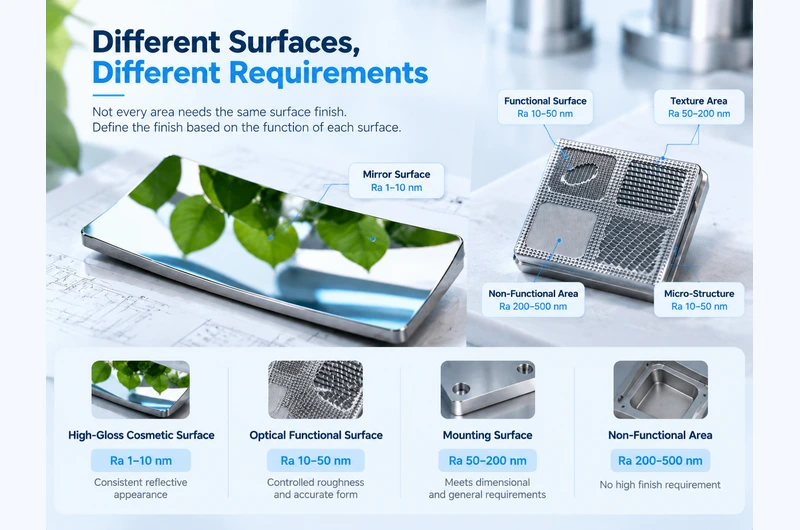
Modern AR/VR optics require surface roughness below Ra 1nm to ensure:
- Maximum light transmission without scatter
- Sharp image formation without ghost images
- Effective anti-reflective coating adhesion
- Consistent performance across production volumes
Surface Figure
Optical surface figure directly impacts image quality:
- Aspheric surfaces with complex geometries
- Figure accuracies measured in micrometers
- Gradient index effects in plastic materials
- Stress-induced distortion in mounted components
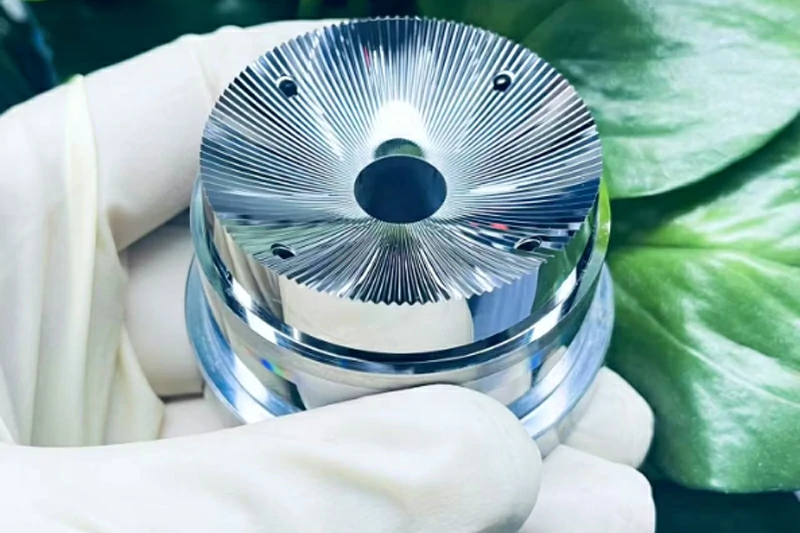
Aspheric and Freeform Surface Manufacturing
AR/VR optics increasingly employ aspheric and freeform surfaces:
Aspheric Surfaces
Aspheric optics correct spherical aberration enabling:
- Lighter, more compact optical systems
- Improved image quality across the field
- Reduced element count compared to spherical designs
Freeform Surfaces
Freeform optics provide design freedom for:
- Asymmetric prescriptions
- Improved off-axis performance
- Compensating for display non-uniformities
- Enabling waveguide input/output couplers
Manufacturing Methods
Producing these surfaces requires precision manufacturing:
- Single Point Diamond Turning (SPDT) for plastic elements
- Glass molding for high-volume production
- Computer-controlled polishing for final surfaces
- Metrology ensuring form accuracy across surfaces
Tolerance Analysis for AR/VR Optical Systems
AR/VR optical systems exhibit tight error budgets:
Alignment Tolerances
Micro-display positioning affects image quality:
- Lateral alignment: ±5μm typical
- Axial focus: ±10μm typical
- Angular alignment: ±0.1° typical
- Tilt between elements: seconds of arc
Element-to-Element Tolerances
Multi-element systems require precise relationships:
- Air spacing: ±20μm typical
- Centration: ±10μm typical
- Surface tilt: minutes of arc
- Decentration effects on image quality
Material Tolerances
Material properties affect optical performance:
- Refractive index variation: ±0.001 typical
- Thickness variation: ±10μm typical
- Surface parallelism: seconds of arc
- Birefringence in plastics: minimal
Material Selection for AR/VR Optics
Material selection balances optical performance, weight, and manufacturability:
| Material | Applications | Manufacturing Considerations |
|---|---|---|
| PMMA (Acrylic) | VR lenses, waveguides | Excellent optical clarity, moldable, brittle |
| Polycarbonate | Durable optics, covers | Impact resistant, birefringence concerns |
| Cyclic Olefin Polymer | High-performance optics | Low birefringence, molding challenging |
| Optical Glass (B270, BK7) | Precision elements | Superior optical properties, heavier, not moldable |
| High-index glass | Compact designs | Enables fewer elements, difficult to mold |
Injection Molding for AR/VR Optics
High-volume AR/VR production typically requires injection molding:
Molding Challenges
Molding precision optics presents unique challenges:
-纳米-level surface replication required
- Residual stress causing birefringence
- Warpage affecting centration and alignment
- Surface ejection marks and defects
- Material degradation at high temperatures
Precision Molding Equipment
Modern precision molding employs specialized equipment:
- High-precision injection molding machines
- Strict temperature control (mold, material, ambient)
- Vacuum or inert gas environments
- Precision mold tooling with cooling control
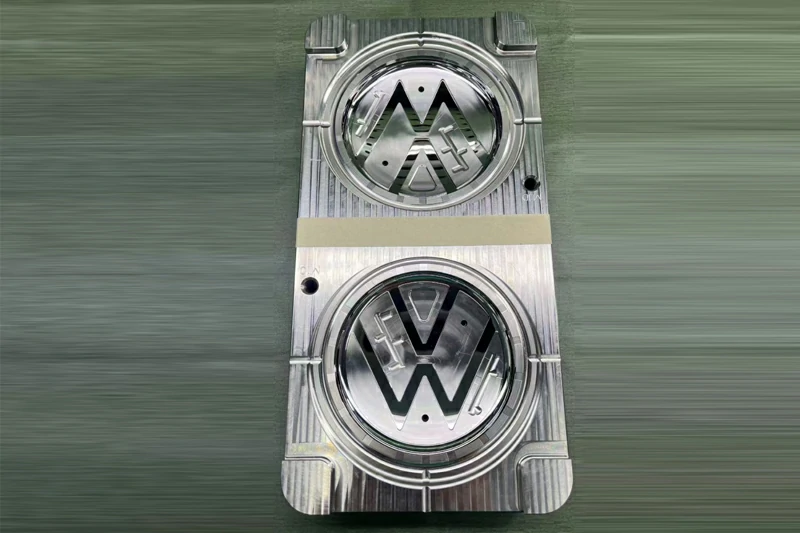
Mold Manufacturing
Mold quality determines optics quality:
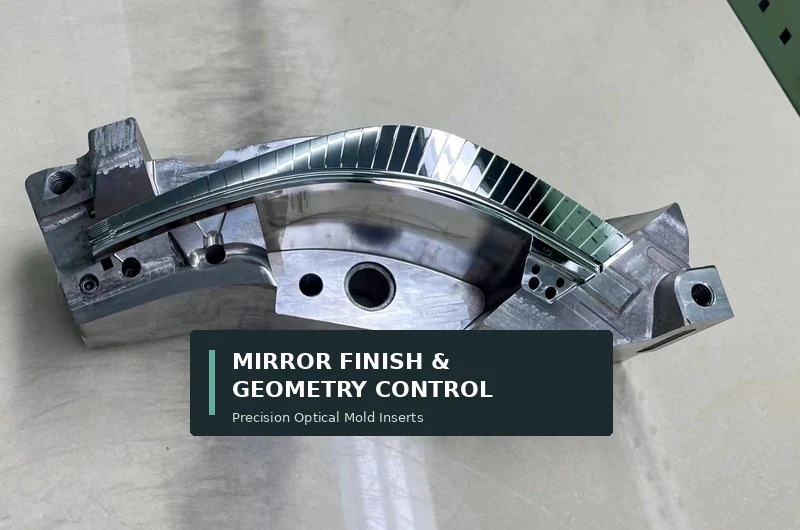
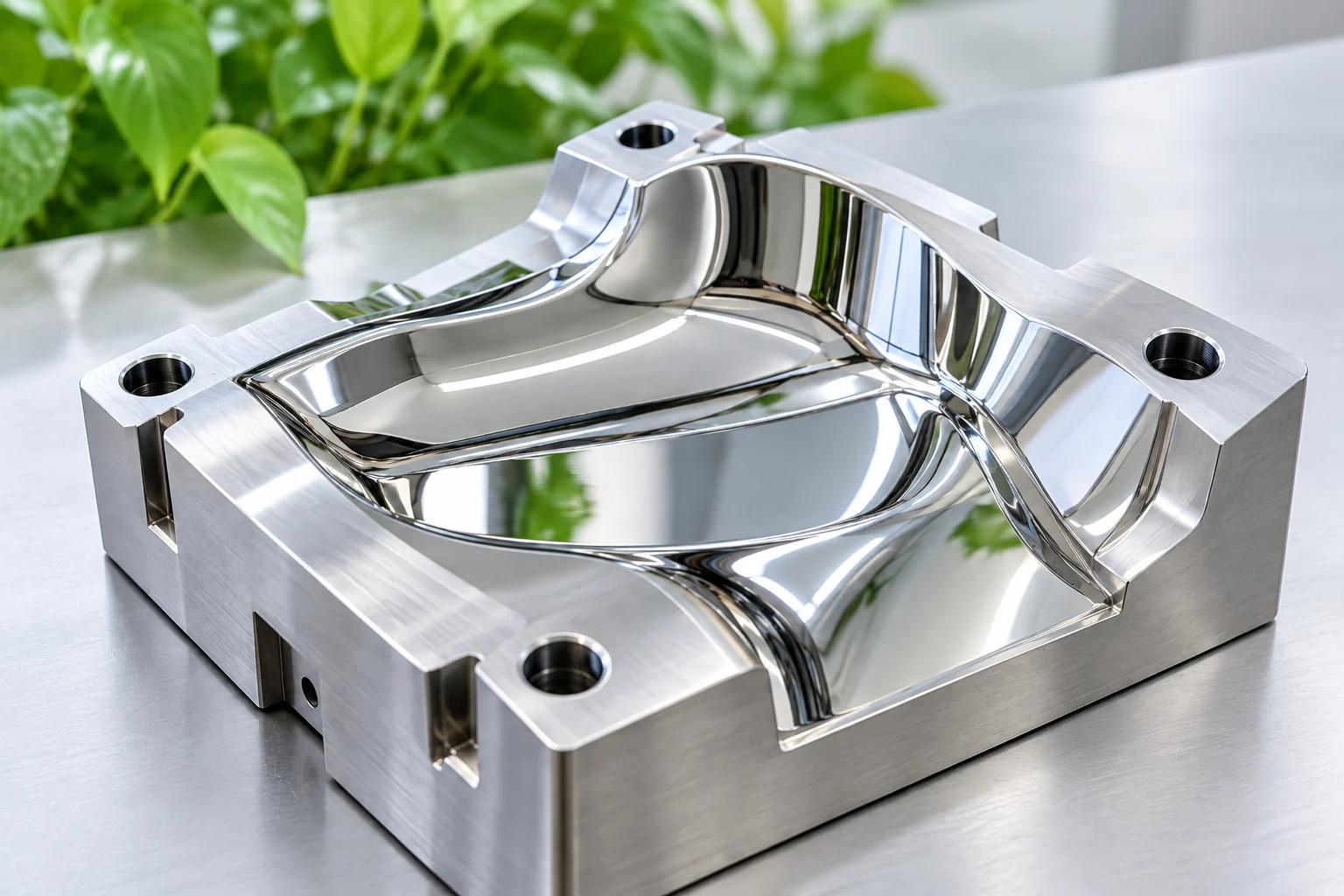
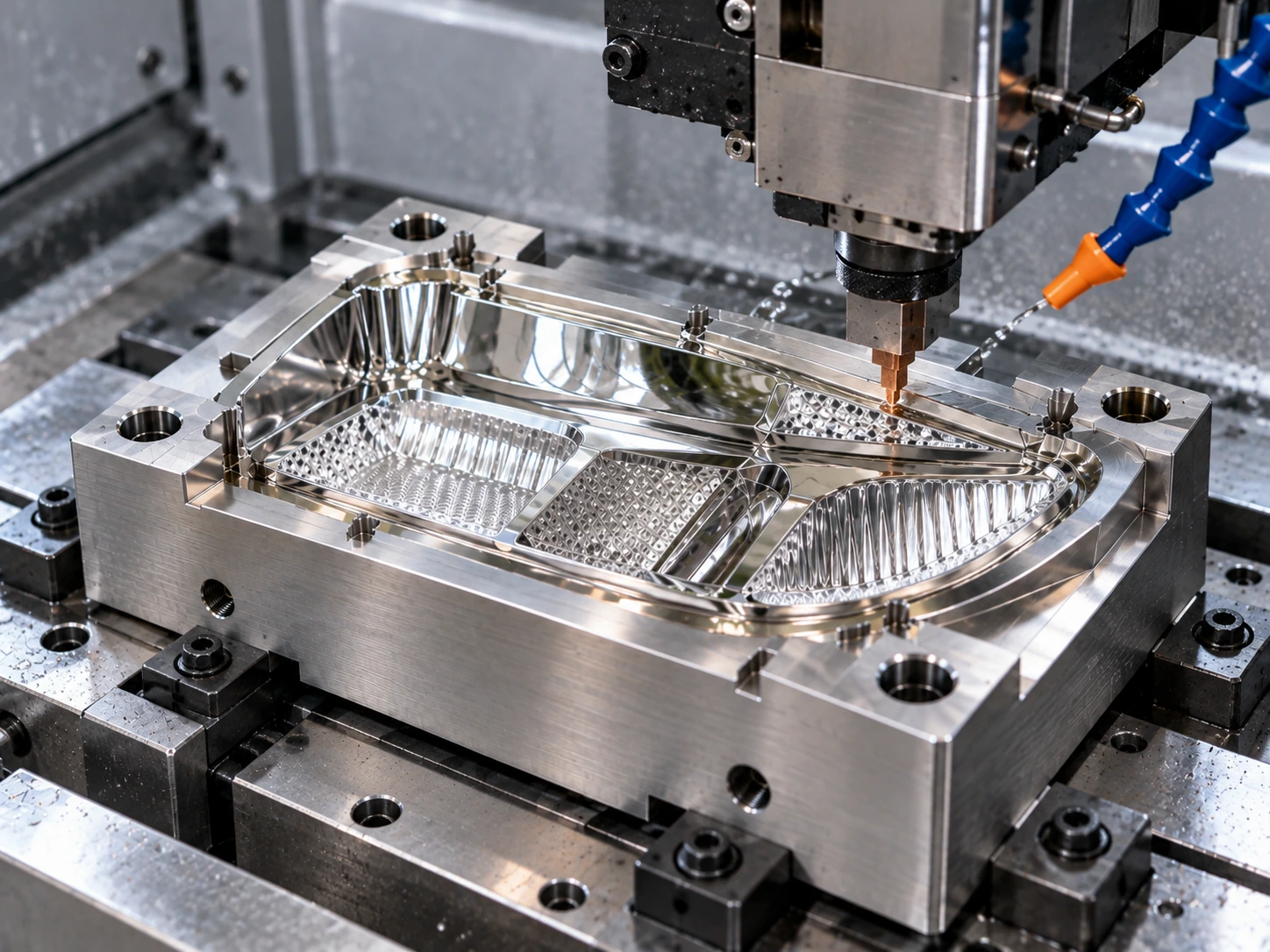
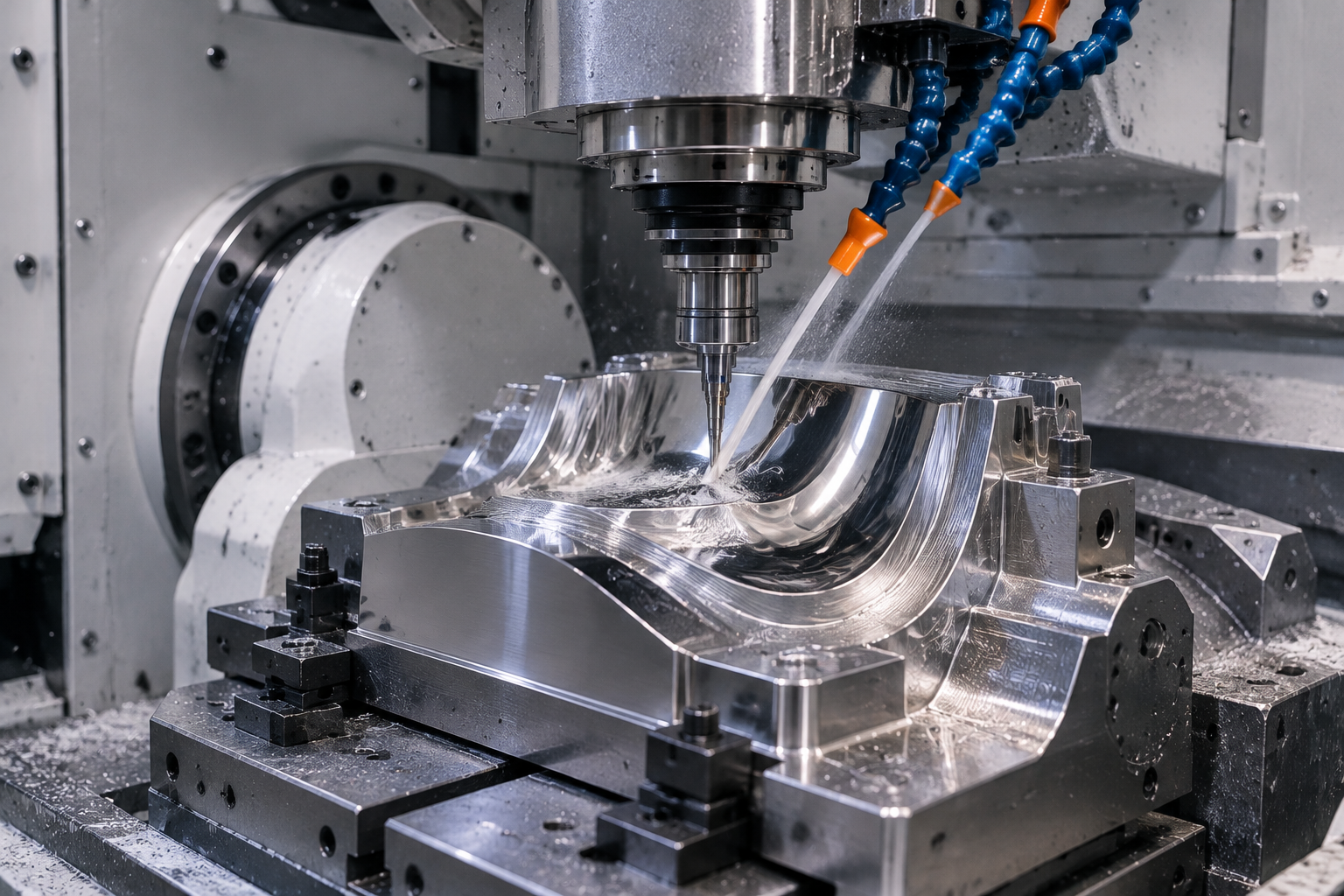
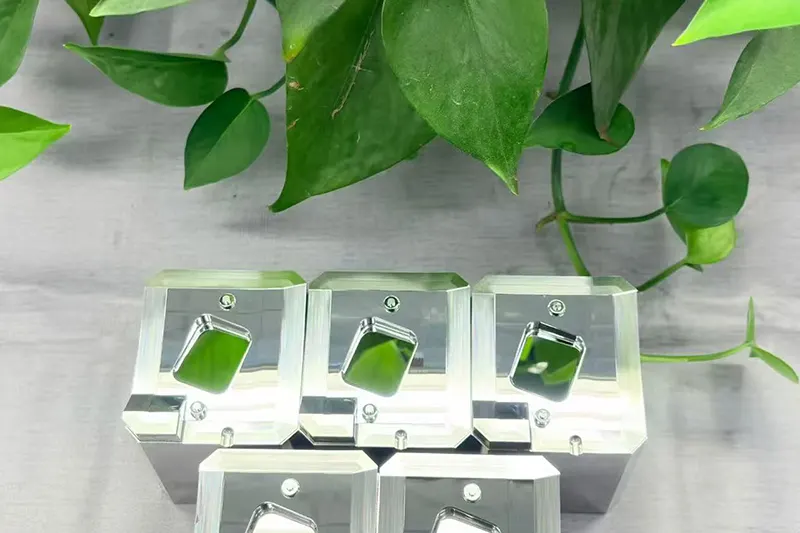
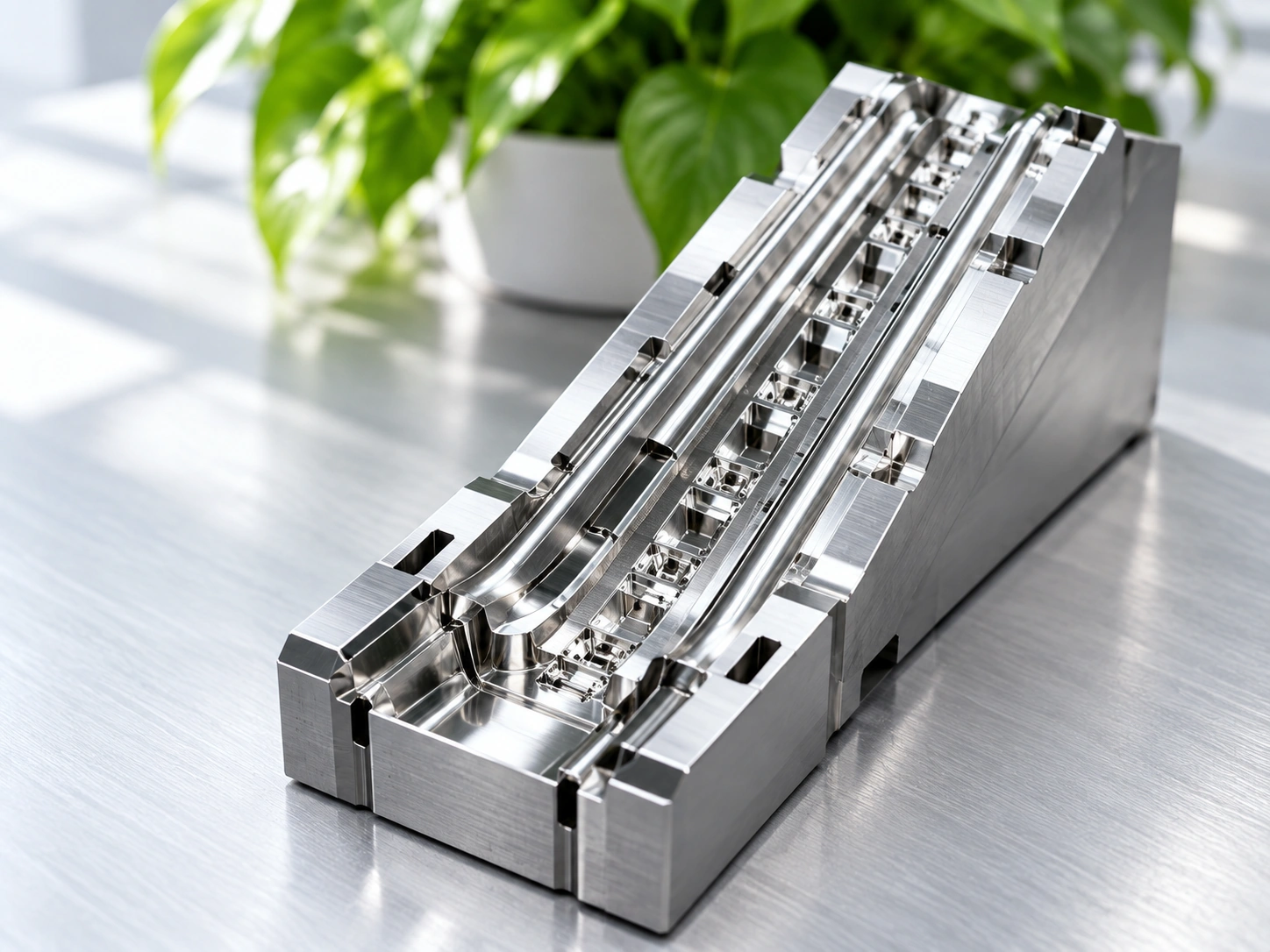
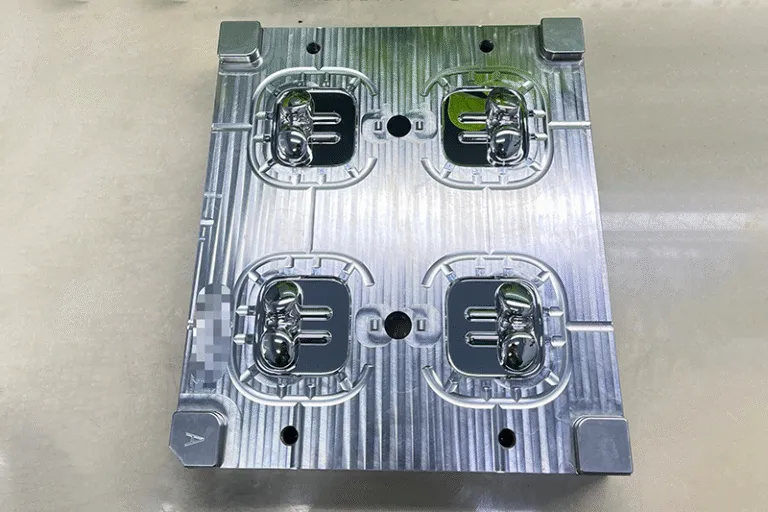
- Ultra-precision machining of mold cavities
- Surface finish replication to optics
- Multi-cavity tooling for production volumes
- Careful maintenance and cleaning protocols
Coating Requirements for AR/VR Optics
AR/VR optics often require specialized coatings:
Anti-Reflective Coatings
Multi-layer AR coatings minimize surface reflections:
- Typically 4-6 layers for visible wavelengths
- Broadband coverage for color content
- Durable enough for consumer handling
- Compatible with plastic substrates
High-Reflector Coatings
Birdbath and other reflective systems require:
- High reflectance across visible spectrum
- Environmentally durable
- Controlled color balance
- Stress-free application
Waveguide Gratings
Diffractive waveguide elements require:
- Etched grating structures
- Depth and width control at micron scale
- Replication from master gratings
- Uniformity across large areas
Quality Verification for AR/VR Optical Components
Verification ensures manufactured components meet specifications:
Optical Testing
Complete optical testing verifies performance:
- MTF (Modulation Transfer Function) measurement
- Distortion measurement
- Transmittance and reflectance testing
- Color balance verification
Dimensional Verification
Precise dimensional verification confirms fit and function:
- Coordinate measuring for critical dimensions
- Optical centration measurement
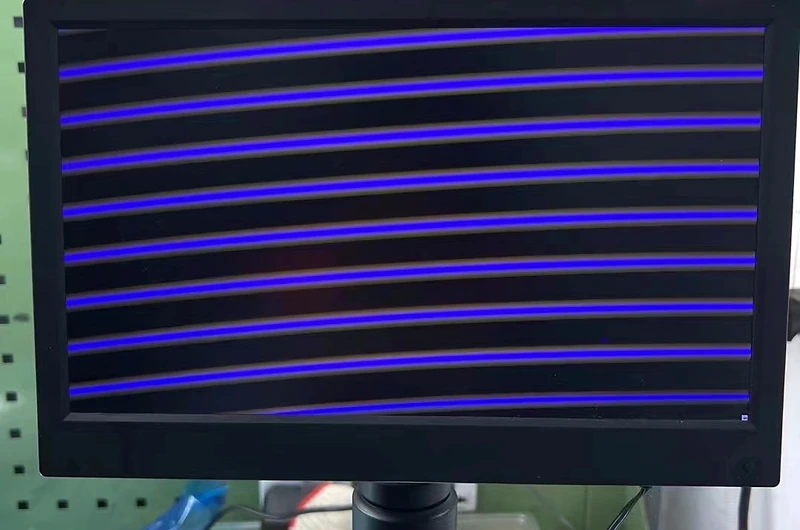
- Surface form interferometry
- Stress birefringence analysis
Environmental Testing
Components must survive consumer use:
- Thermal cycling testing
- Humidity exposure
- Mechanical shock testing
- UV exposure for outdoor-capable devices
Manufacturing Scalability
Consumer AR/VR demands manufacturing at unprecedented volumes:
Yield Considerations
High-volume production requires excellent yields:
- Statistical process control essential
- Process capability indices (Cpk > 1.33 minimum)
- Continuous improvement focus
- Cost of poor quality at scale
Production Capacity
Meeting demand requires:
- Sufficient manufacturing equipment
- Trained workforce availability
- Supply chain capacity
- Quality system infrastructure
Cost Management
Consumer pricing pressures require:
- Manufacturing efficiency
- Material optimization
- Automation where possible
- Yield improvement programs
Design for Manufacturability
Successful AR/VR optical design considers manufacturing from the start:
DFM Considerations
- Feature accessibility for tooling
- Draft angles for mold release
- Uniform wall thicknesses
- Gating and ejection optimization
- Assembly sequence consideration
Design Collaboration
Early collaboration between designers and manufacturers:
- Identifies potential manufacturing issues
- Optimizes design for process capabilities
- Reduces costly design changes
- Accelerates time to production
Future Trends in AR/VR Optics
AR/VR optical technology continues advancing:
Larger Fields of View
Next-generation systems will expand FOV:
- Current systems: 90-110° horizontal
- Target systems: 120°+ horizontal
- Requires new optical architectures
- Challenges manufacturing capabilities
Higher Resolutions
Display resolution continues increasing:
- Current: 2K-4K per eye
- Target: 8K+ per eye
- Demands tighter optical tolerances
- Pixel-level alignment requirements
Waveguide Advances
AR waveguide technology improving:
- Larger exit pupil enabling better fit
- Wider field of view
- Higher efficiency
- More affordable manufacturing
Eye Tracking Integration
Gaze tracking becoming standard:
- Adds optical complexity
- Requires precise positioning
- Thermal management challenges
- Enables foveated rendering
Conclusion
AR/VR optical manufacturing represents some of the most demanding precision optics work outside of semiconductor lithography. The combination of extreme precision requirements, complex surface geometries, plastic material challenges, and high-volume production demands creates manufacturing challenges that require exceptional capability and experience.
For AR/VR product developers, understanding manufacturing realities enables design decisions that balance optical performance with producibility. For procurement professionals, supplier qualification must verify not only metrology capability but also process stability and yield history. As AR/VR markets mature, manufacturing excellence will increasingly differentiate successful products from also-rans.
Frequently Asked Questions
What surface quality is required for AR/VR optical lenses?
AR/VR optical lenses typically require surface roughness below Ra 1nm to ensure optimal image quality without light scatter or ghost images. Aspheric surfaces require figure accuracies measured in micrometers.
How do waveguide AR optics differ from VR optics in manufacturing?
Waveguide AR optics require extraordinarily precise diffractive or holographic structures with surface accuracy specifications measured in nanometers. VR optics typically employ refractive elements with more achievable tolerances.
What tolerances affect AR/VR optical alignment?
Critical tolerances include lateral alignment (±5μm), axial spacing (±10μm), and angular alignment (±0.1°). Multi-element systems also require centration and tilt control to avoid image degradation.
What materials are used for AR/VR optical components?
PMMA and polycarbonate dominate plastic optics, with cyclic olefin polymers used for low-birefringence applications. Optical glass is used for premium applications where weight is less critical.
How is injection molding used in AR/VR optics?
High-volume AR/VR headsets typically use injection-molded plastic optics. Mold tooling must achieve nano-level surface replication, with process control ensuring consistency across millions of parts.
What coating requirements exist for AR/VR optics?
Multi-layer anti-reflective coatings are standard, with 4-6 layers for visible wavelengths. Reflective coatings for birdbath systems and specialized gratings for waveguides require additional processes.
Why is birefringence a concern for AR/VR optics?
Stress-induced birefringence in plastic optics causes polarization effects that can create visible artifacts, particularly with polarized displays. Manufacturing processes must minimize residual stress.
Developing AR/VR products requiring precision optical components? Contact YISHUN Optical at info@yishunoptical.com or visit yishunoptical.com to discuss how our precision manufacturing capabilities can support your AR/VR optical requirements.