1. SEO Strategy Summary
Choosing the right optical polishing service supplier means evaluating more than price. A qualified supplier should understand optical materials, surface quality requirements, flatness, scratch-dig standards, inspection methods, cleaning control, edge protection, and the final application of the component. For optical windows, lenses, mirrors, prisms, filters, substrates, and precision optical parts, polishing quality can directly affect transmission, reflection, scattering, coating performance, and assembly reliability.
In B2B optical manufacturing, polishing is not a simple finishing step. It is a precision process that must be controlled according to drawings, tolerances, material behavior, and inspection criteria. A low-cost optical polishing company may still create expensive problems if it cannot control scratches, edge chips, haze, poor flatness, or inconsistent surface quality.
This guide explains how to evaluate an optical polishing manufacturer or service supplier before sending a purchase order. It also provides a practical RFQ checklist for buyers who need custom optical components for photonics, laser systems, semiconductor equipment, imaging devices, metrology instruments, and high-precision industrial applications.
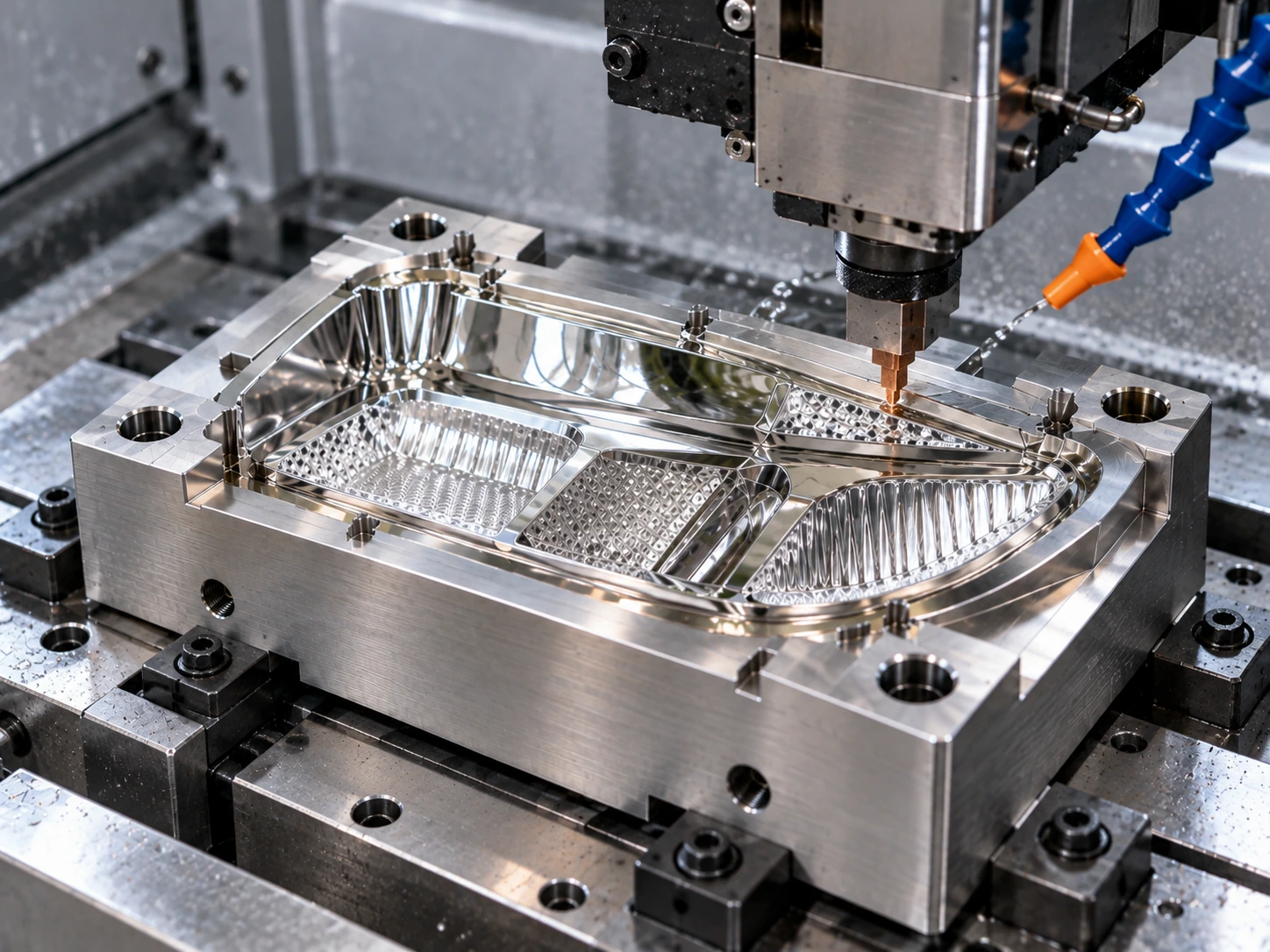
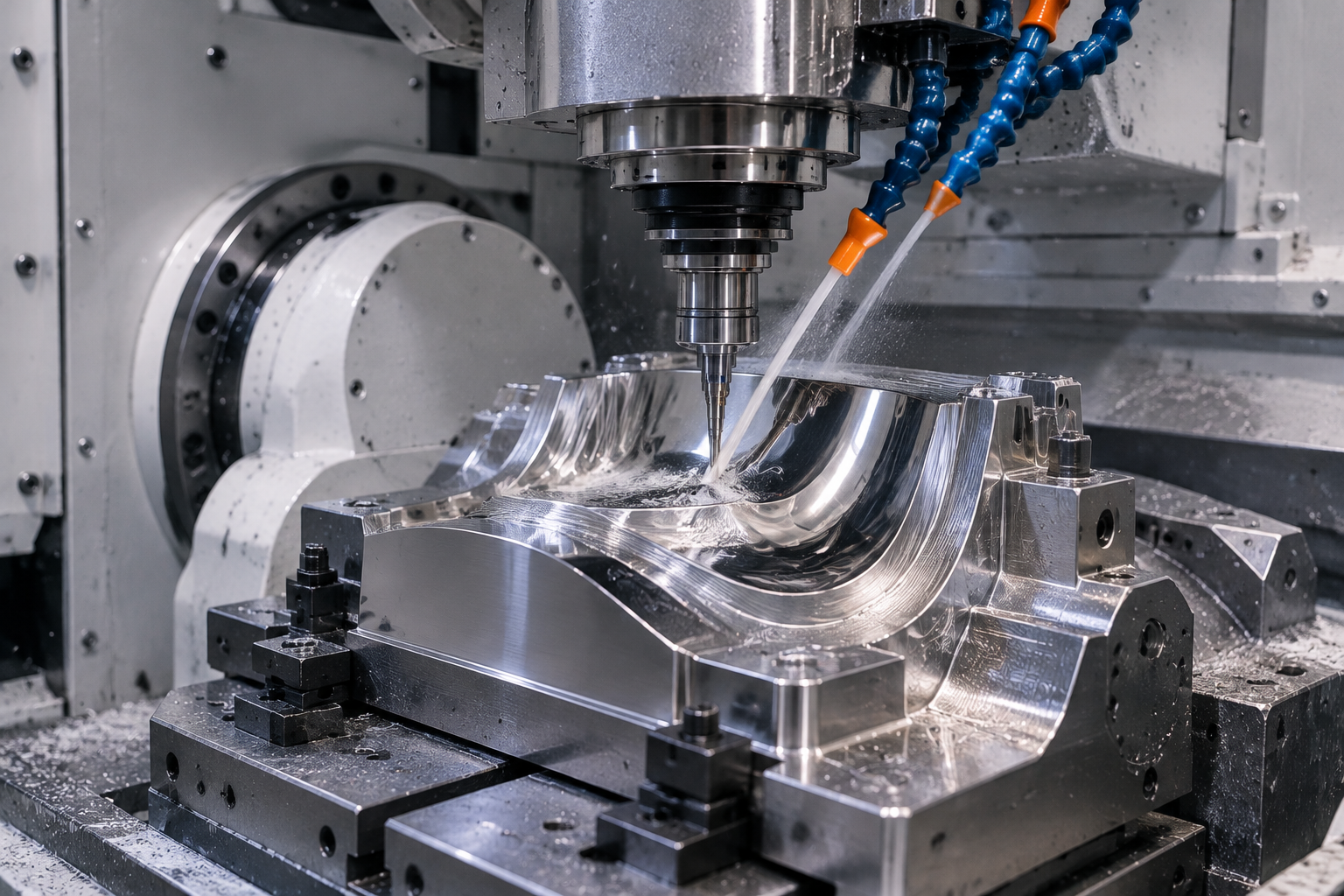
For projects that also involve tight-tolerance optical structures or high-accuracy machined components, YISHUN Optical’s ultra precision machining service can support related precision manufacturing requirements.
What Does an Optical Polishing Service Supplier Do?
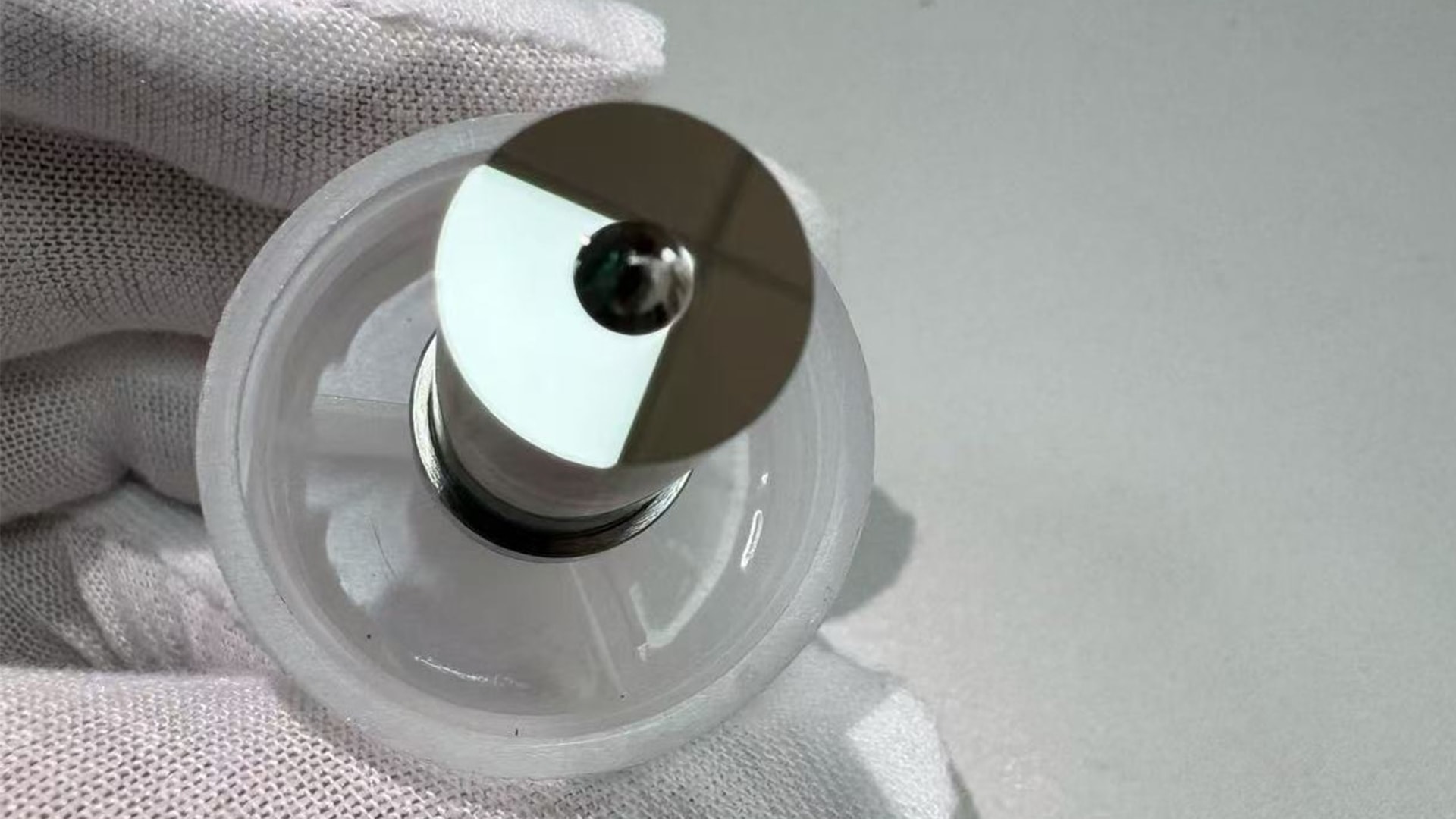
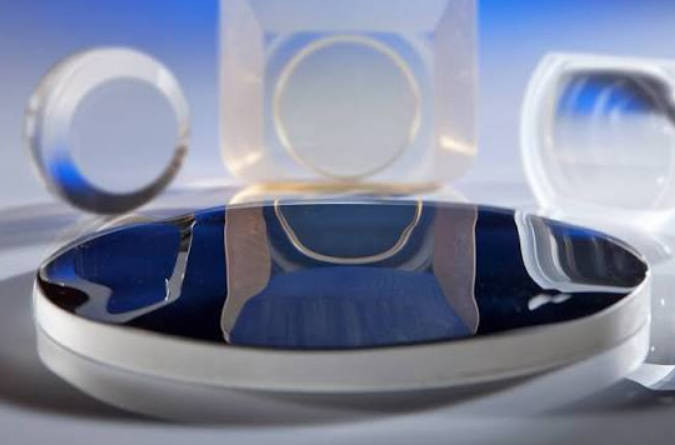
An optical polishing service supplier processes optical components to improve surface quality, surface roughness, flatness, clarity, scratch-dig quality, and functional performance. Depending on the component, polishing may be performed after cutting, grinding, lapping, machining, or forming.
Typical components processed by optical polishing suppliers include:
| Component Type | Common Polishing Purpose |
| Optical windows | Improve transmission, clarity, flatness, and coating readiness |
| Lenses | Improve optical surface quality for imaging or beam control |
| Mirrors | Prepare smooth reflective or coating-ready surfaces |
| Prisms | Improve light path clarity and functional surfaces |
| Filters | Improve surface consistency before coating or assembly |
| Glass substrates | Improve flatness, surface quality, and thickness control |
| Sapphire windows | Improve surface clarity and reduce processing marks |
| Quartz and fused silica parts | Support optical, laser, and thermal applications |
| Ceramic or silicon parts | Improve flatness, contact surfaces, or functional surface quality |
A good optical polishing supplier should not only polish the surface; it should understand why the surface matters in the final optical system.
This distinction is important. A decorative polishing supplier may make a part look smooth, but an optical polishing supplier must process parts according to measurable optical and mechanical specifications.
Why Supplier Selection Matters in Optical Polishing
Optical components often fail not because the material is wrong, but because the finishing process is not controlled well enough. Scratches, digs, haze, edge chips, poor flatness, and residue can all cause rejection during incoming inspection or later system testing.
Poor supplier selection may lead to:
- Inconsistent surface quality
- High scrap rates
- Delayed project timelines
- Coating defects
- Optical performance loss
- Assembly problems
- Poor communication during prototype development
- Unclear responsibility when parts fail inspection
- Higher total cost despite a lower unit price
For example, if an optical window requires good transmission and low scattering, uncontrolled scratches or haze may make the part unsuitable. If a mirror substrate requires a coating-ready surface, poor polishing marks or contamination may affect coating uniformity. If a thin glass plate requires flatness, polishing without proper geometry control may cause warping or uneven contact.
The right optical polishing service supplier helps reduce technical risk before production by reviewing material, drawings, tolerances, process route, inspection method, and application requirements.
Key Supplier Capability 1: Material Experience
Material experience is one of the first factors to check. Different optical and technical materials behave differently during polishing. A supplier that can polish standard glass may not automatically be suitable for sapphire, fused silica, quartz, ceramics, silicon, or specialty optical crystals.
| Material | Supplier Capability to Check |
| Optical glass | Scratch control, surface roughness, edge quality |
| Quartz | Clean surface preparation, flatness, polishing stability |
| Fused silica | Low-contamination processing and careful surface control |
| Sapphire | Hard-material polishing, edge chip prevention, slow controlled removal |
| Ceramics | Brittleness control, surface pull-out reduction, flatness control |
| Silicon | Thickness, flatness, surface condition, contamination control |
| Optical crystals | Material-specific handling and orientation awareness |
| Metal mirror substrates | Surface preparation, form control, coating readiness |
When discussing a project, ask the supplier what similar materials it has processed and what typical risks should be considered. A supplier with real experience should be able to explain material-specific challenges clearly.
Key Supplier Capability 2: Process Range
Optical polishing is often only one part of the full manufacturing route. Many components need cutting, grinding, lapping, machining, cleaning, inspection, and packaging before they can be delivered.
A supplier with a broader process range may be more useful when the part requires both geometry control and final surface finishing.
| Process | Why It Matters |
| Cutting or shaping | Prepares blanks close to final size |
| Grinding | Removes larger material allowance and prepares geometry |
| Lapping | Controls flatness, parallelism, and thickness uniformity |
| Polishing | Improves surface roughness, clarity, and defect control |
| Cleaning | Removes slurry, particles, and contamination |
| Inspection | Verifies surface quality and dimensional requirements |
| Packaging | Protects polished surfaces and fragile edges |
If flatness, parallelism, or thickness uniformity is important, polishing alone may not be enough; lapping or precision machining may also be required before final polishing.
For components that combine optical surfaces with tight mechanical features, a supplier with related precision processing capability may reduce coordination risk. YISHUN Optical provides ultra precision machining services for custom components where high accuracy, surface control, and precision manufacturing are required.
Key Supplier Capability 3: Surface Quality Control
Surface quality is central to optical polishing. Buyers should check whether the supplier can understand and control surface defects, not just deliver a shiny surface.
Important surface quality factors include:
| Surface Factor | Why It Matters |
| Surface roughness | Affects scattering, coating quality, reflection, and sealing |
| Scratch-dig quality | Controls visible and functional surface defects |
| Haze | May reduce clarity and transmission |
| Pits and digs | Can affect optical performance and inspection acceptance |
| Polishing marks | May create optical inconsistency or coating problems |
| Edge chips | Can affect assembly, sealing, handling, and reliability |
| Contamination | Can cause coating failure or downstream cleaning problems |
Ask the supplier how scratches, digs, haze, and polishing marks are prevented. A capable supplier should be able to discuss abrasive control, pad condition, cleaning process, handling methods, and inspection.
Key Supplier Capability 4: Flatness, Parallelism and Geometry Control
Not every optical polishing project only requires surface clarity. Many optical windows, mirrors, substrates, wafers, and precision plates also require controlled geometry.
Flatness and parallelism may be important when components are used for:
- Optical windows
- Mirror substrates
- Filters
- Glass plates
- Quartz plates
- Sapphire windows
- Semiconductor-related substrates
- Sealing surfaces
- Bonding surfaces
- Precision assemblies
If the supplier focuses only on polishing appearance but does not understand geometry control, the final part may fail in assembly or optical testing.
| Geometry Requirement | Why It Matters |
| Flatness | Affects optical path, bonding, sealing, and contact quality |
| Parallelism | Reduces wedge error and supports consistent optical path |
| Thickness control | Supports assembly fit and optical design requirements |
| Surface form | Important for lenses, mirrors, and precision optical features |
| Edge geometry | Helps reduce chipping and mounting issues |
For optical windows, substrates, and mirrors, flatness and parallelism can be as important as surface roughness.
When requesting a quote, buyers should specify whether lapping, polishing, or a combined process is needed.
Key Supplier Capability 5: Inspection and Metrology
A supplier should be able to inspect the features it claims to control. Inspection capability is not a secondary detail; it is part of supplier qualification.
Depending on the component, inspection may include:
- Dimensional measurement
- Thickness measurement
- Flatness inspection
- Parallelism verification
- Surface roughness measurement
- Visual defect inspection
- Scratch-dig evaluation
- Microscopy
- Surface form measurement
- Cleanliness inspection
| Inspection Requirement | Typical Purpose |
| Surface roughness | Verifies finish quality |
| Scratch-dig | Defines acceptable scratches and digs |
| Flatness | Confirms geometry of windows, mirrors, and substrates |
| Thickness | Ensures assembly compatibility |
| Parallelism | Reduces wedge and alignment issues |
| Visual inspection | Detects chips, stains, haze, and surface marks |
| Dimensional inspection | Confirms external size and fit |
Before placing an order, ask what inspection methods will be used and whether reports can be provided if required. Buyers should also clarify acceptance criteria before production begins.
Key Supplier Capability 6: Prototype and Production Support
Prototype polishing and production polishing are different. A supplier may be good at one-off samples but weak at batch consistency. Another supplier may be efficient in production but less flexible during early-stage development.
| Item | Prototype Optical Polishing | Production Optical Polishing |
| Main Goal | Validate feasibility and refine requirements | Maintain repeatable quality and delivery |
| Quantity | Usually small | Usually larger or recurring |
| Engineering Support | Very important | Important but more standardized |
| Process Stability | Under development | Must be controlled and repeatable |
| Inspection | Helps confirm feasibility | Confirms batch consistency |
| Buyer Concern | Can this design be polished? | Can this be repeated reliably? |
A strong optical polishing supplier should help buyers move from prototype validation to stable production without losing control of surface quality and inspection requirements.
For new materials, thin components, difficult shapes, or demanding surface quality, prototype testing is often useful before scaling to production.
Key Supplier Capability 7: Engineering Communication
Good supplier communication reduces risk. Optical polishing projects often involve technical trade-offs between cost, lead time, tolerance, material, surface quality, and inspection.
A qualified supplier should be able to:
- Review drawings before quoting
- Identify unclear specifications
- Ask about application requirements
- Recommend practical tolerance adjustments
- Explain material risks
- Suggest whether lapping is needed
- Clarify inspection methods
- Discuss packaging and handling requirements
- Support prototype-to-production transition
Avoid suppliers that only reply with a price but do not ask technical questions. In optical polishing, silence may indicate that the supplier has not evaluated the real process risk.
Common Mistakes When Choosing an Optical Polishing Company
| Mistake | Why It Creates Risk | Better Approach |
| Choosing only by lowest price | May lead to poor quality, rework, or delays | Compare capability, inspection, and communication |
| Not checking material experience | Supplier may not understand sapphire, quartz, or ceramic risks | Ask for relevant material experience |
| Providing vague specifications | Supplier cannot control or inspect expectations | Define roughness, flatness, scratch-dig, and edge quality |
| Ignoring lapping requirements | Finished surface may look polished but fail flatness | Confirm geometry requirements early |
| Not discussing inspection | Acceptance disputes may occur | Agree on inspection methods before production |
| Treating prototype and production the same | Sample success may not ensure batch consistency | Ask about production process control |
| Forgetting packaging requirements | Parts may arrive scratched or chipped | Confirm protective packaging for optical surfaces |
The cheapest optical polishing supplier is not always the lowest-cost option if poor quality causes rework, project delays, or failed inspection.
How to Prepare an RFQ for Optical Polishing Services
A complete RFQ helps the supplier evaluate feasibility, quote accurately, and reduce technical risk.
| RFQ Item | Why It Is Needed |
| Component type | Window, lens, mirror, substrate, prism, filter, etc. |
| Material | Determines polishing difficulty and process route |
| Drawing or CAD file | Defines dimensions, geometry, and critical surfaces |
| Quantity | Supports prototype or production planning |
| Surface roughness | Defines surface finish requirement |
| Flatness | Important for optical path, bonding, sealing, and assembly |
| Parallelism | Important for windows, plates, substrates, and filters |
| Scratch-dig requirement | Defines acceptable visual surface defects |
| Edge quality | Helps reduce chips during processing and handling |
| Coating or bonding needs | Affects surface preparation and cleanliness |
| Application | Helps supplier understand functional priorities |
| Inspection requirement | Defines acceptance criteria |
| Packaging requirement | Protects finished optical surfaces |
If you are not sure how to specify a tolerance, explain the final application first. A qualified supplier can help recommend practical requirements.
How to Compare Optical Polishing Suppliers
When comparing suppliers, use a structured checklist rather than only comparing quotation price.
| Evaluation Area | Questions to Ask |
| Material capability | Have they processed your material before? |
| Component experience | Do they understand your part type and application? |
| Process range | Can they support lapping, polishing, cleaning, and inspection? |
| Surface quality | Can they control scratches, digs, haze, and polishing marks? |
| Geometry control | Can they manage flatness, thickness, and parallelism? |
| Inspection | Can they verify the required parameters? |
| Engineering support | Do they review drawings and ask technical questions? |
| Production consistency | Can they support repeat orders and batch control? |
| Packaging | Can they protect polished surfaces and fragile edges? |
| Communication | Are they responsive and technically clear? |
A supplier that performs well across these areas is usually a safer choice for precision optical projects.
When a Supplier with Ultra Precision Machining Capability Is Useful
Although optical polishing and ultra precision machining are different processes, they may overlap in some high-accuracy projects. Some optical components require both polished surfaces and precisely machined features.
A supplier with ultra precision machining support may be useful when a project involves:
- Precision optical mechanical parts
- Optical mounts with tight tolerances
- Mirror substrates with machined features
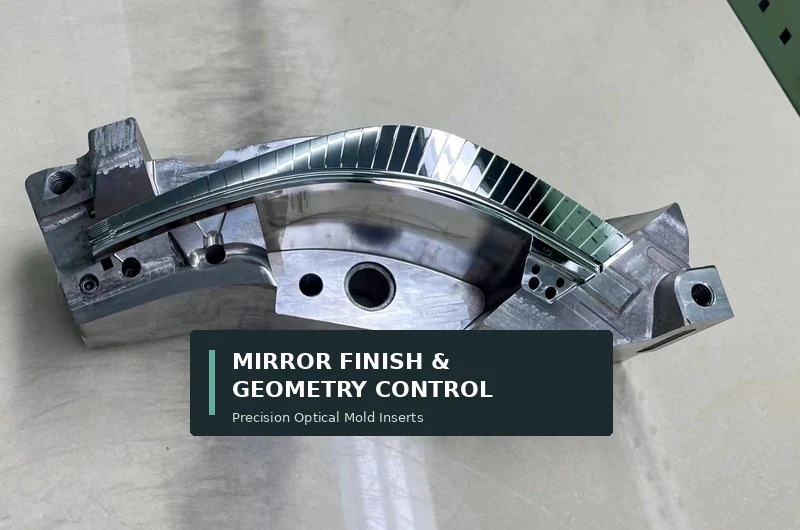
- Mold inserts or optical tooling
- Components requiring both surface finish and accurate geometry
- Photonics or semiconductor-related precision parts
- Custom prototypes with complex shapes
In these cases, machining accuracy, surface preparation, and finishing requirements should be reviewed together. YISHUN Optical’s ultra precision machining capabilities can be relevant for projects where optical components also require high-accuracy mechanical processing.
Red Flags to Watch for Before Ordering
Before selecting an optical polishing service supplier, watch for warning signs that may indicate higher project risk.
Red flags include:
- The supplier does not ask about application
- The supplier cannot discuss surface quality requirements
- The supplier avoids inspection details
- The supplier gives a quote without reviewing drawings
- The supplier does not ask about material grade
- The supplier cannot explain how scratches or edge chips are controlled
- The supplier only says “we can do it” without process details
- The supplier cannot support prototype testing
- The supplier has no clear packaging method for polished surfaces
- The supplier cannot discuss flatness or parallelism requirements
A reliable supplier does not need to overpromise. It should be able to explain what is practical, what is risky, and what information is needed before production.
Conclusion
Choosing an optical polishing service supplier requires careful evaluation of material experience, process range, surface quality control, flatness and geometry capability, inspection methods, prototype support, production consistency, and engineering communication. Optical polishing affects real product performance, including transmission, reflection, coating quality, image clarity, assembly fit, and long-term reliability.
For B2B buyers, the safest approach is to provide complete drawings, material information, surface requirements, flatness, parallelism, scratch-dig expectations, edge quality, inspection criteria, and application details before requesting a quotation. A qualified supplier should help evaluate feasibility and recommend a practical process route.
If your optical project also involves high-accuracy machined features, precision structures, or custom technical components, YISHUN Optical can support related requirements through ultra precision machining services. You can also visit YISHUN Optical to learn more about the company and its precision manufacturing direction.
FAQ
How do I choose an optical polishing service supplier?
Choose an optical polishing service supplier by checking material experience, polishing and lapping capability, surface quality control, inspection methods, engineering communication, prototype support, and production consistency. Do not choose based only on price.
What should I ask an optical polishing company before ordering?
Ask about material experience, surface roughness capability, scratch-dig control, flatness and parallelism inspection, edge chip prevention, cleaning process, packaging method, and whether the supplier can review your drawing before quoting.
What is the difference between an optical polishing company and a general polishing company?
An optical polishing company processes components according to measurable optical requirements such as roughness, flatness, scratch-dig, clarity, and inspection criteria. A general polishing company may focus mainly on visual appearance.
Why is inspection important when choosing an optical polishing manufacturer?
Inspection is important because optical surfaces must meet defined requirements. Without proper inspection, it is difficult to confirm roughness, flatness, scratch-dig quality, thickness, parallelism, and surface defects.
What information should I provide for an optical polishing RFQ?
Provide material, component type, drawings, quantity, surface roughness, flatness, parallelism, scratch-dig requirement, edge quality, coating or bonding needs, application, inspection requirement, and packaging requirement.
Should an optical polishing supplier also offer lapping?
A supplier with lapping capability is useful when your component requires flatness, parallelism, or thickness control before polishing. Lapping controls geometry, while polishing improves final surface quality.
Is the lowest-price optical polishing supplier a good choice?
Not always. A lower price may become more expensive if it leads to scratches, poor flatness, failed inspection, coating defects, rework, or delivery delays. Capability and quality control should be evaluated together with price.