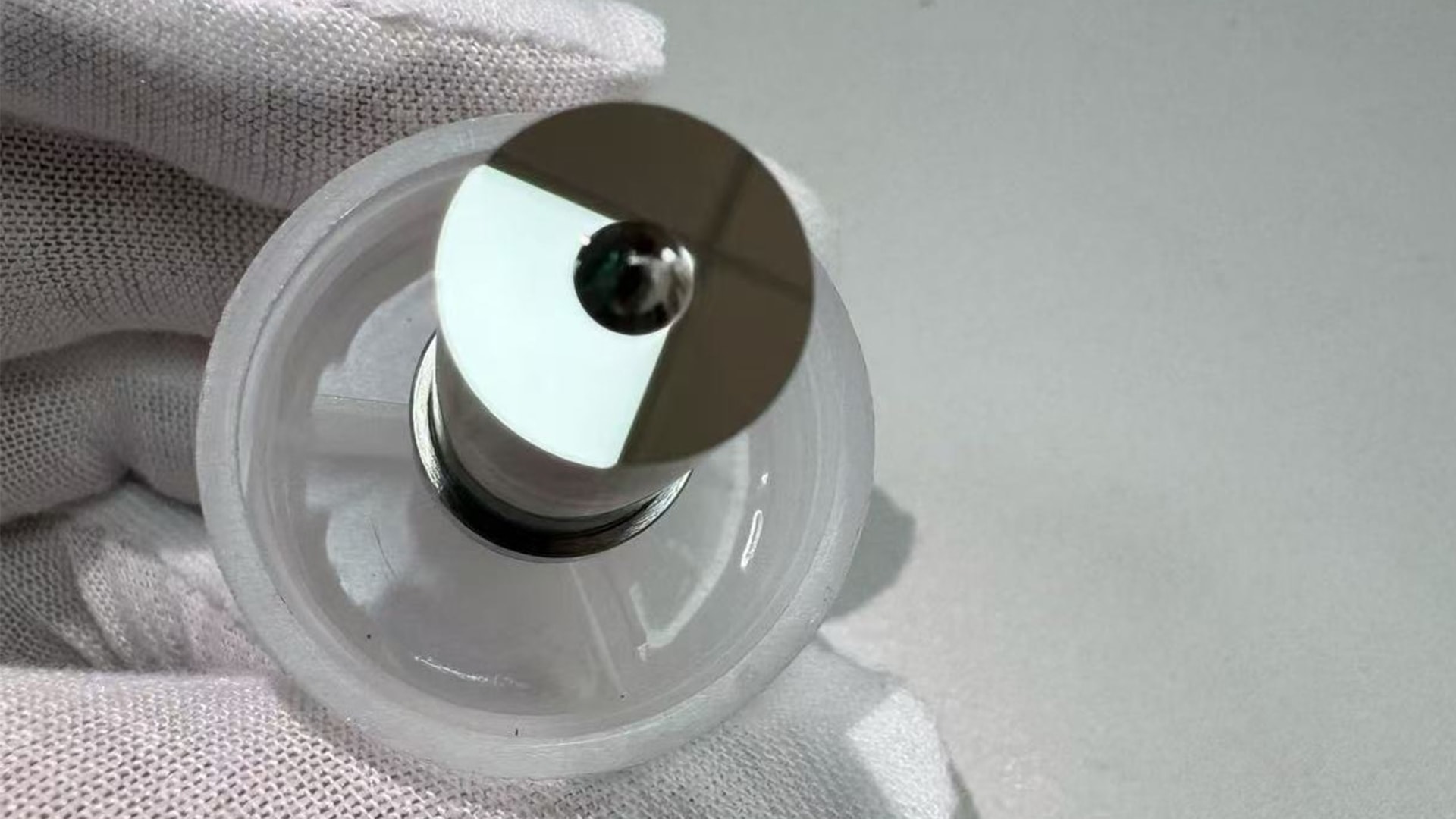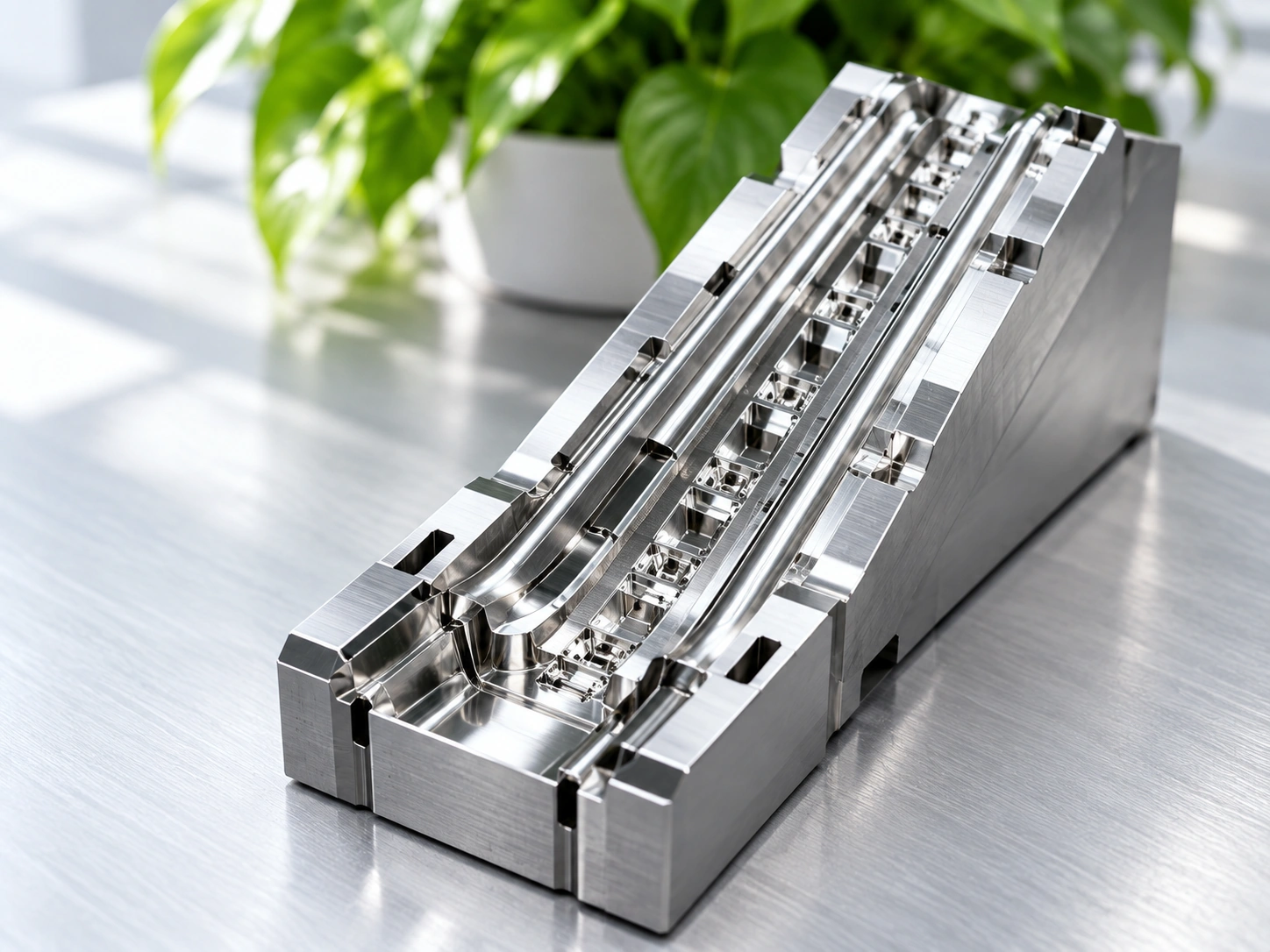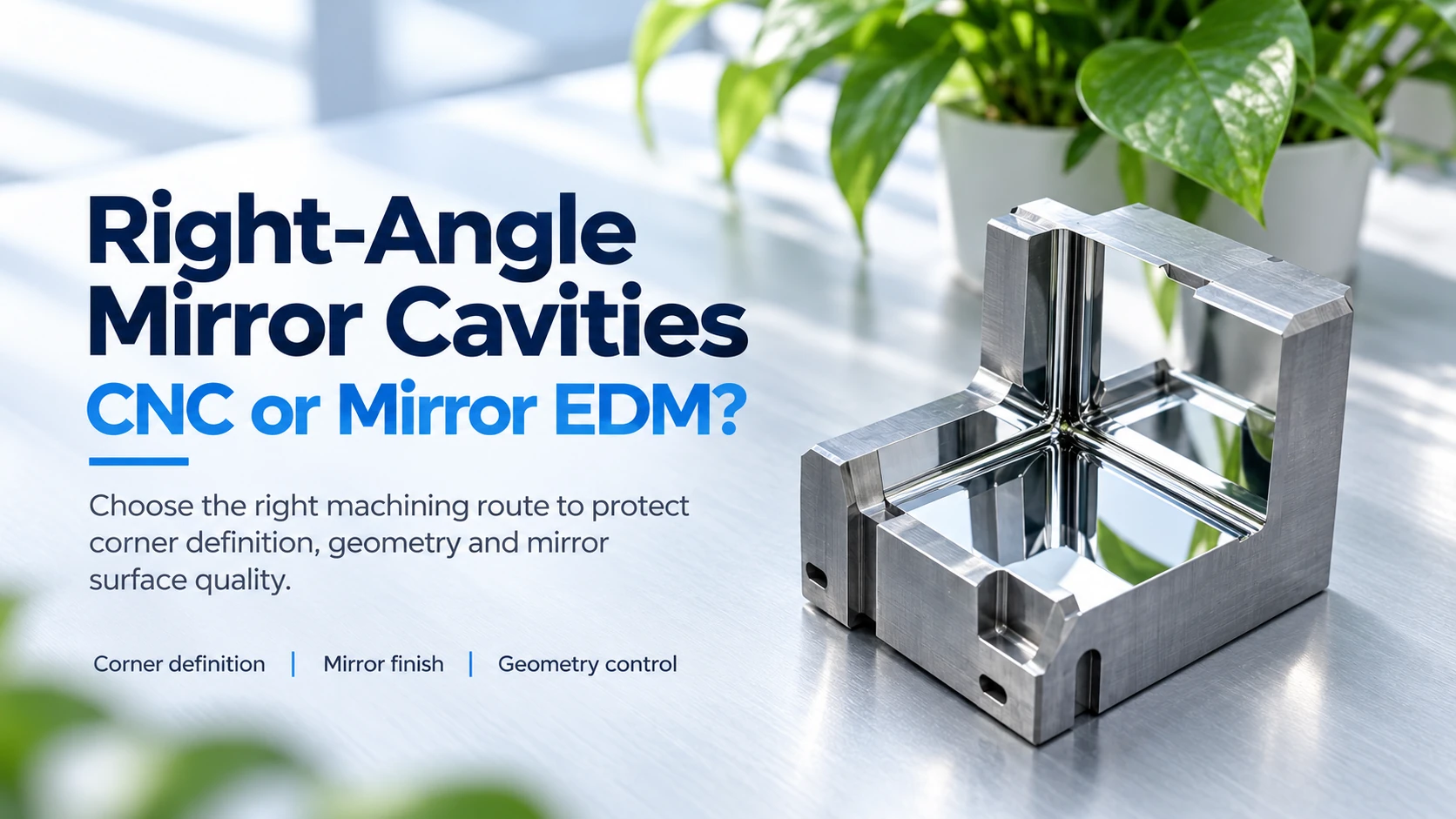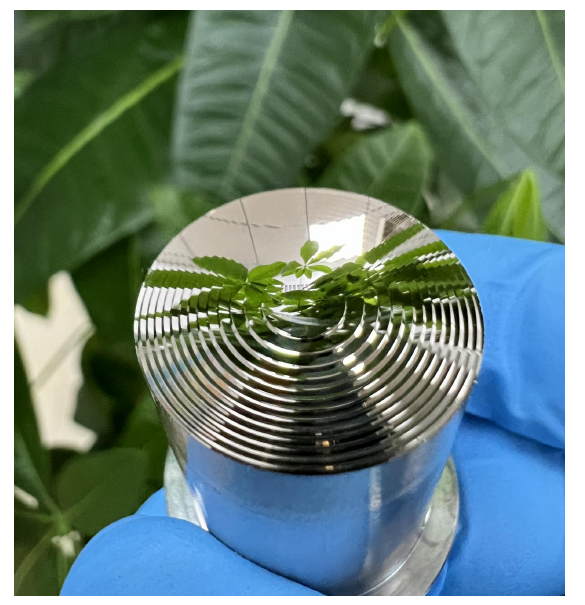
The premium home appliance market no longer competes on function alone. A refrigerator door panel, an air conditioner faceplate, or a washing machine control cover must look as refined as the smartphone sitting beside it. That shift in consumer expectation has pushed appliance manufacturers to rethink mold surface quality from the ground up. Retail showrooms now place side-by-side comparisons under identical lighting, and the visual gap between a panel with Ra 0.02μm and one with Ra 0.005μm is immediately obvious to even an untrained eye.
At Yishun Optical, we have spent years refining mold mirror polishing and precision mold polishing processes that meet the exacting demands of high-end appliance production. The shift toward premium aesthetics has created a new class of mold requirements — specifications that previously belonged exclusively to optical and consumer electronics applications now appear on production orders for kitchen and laundry appliances. Yishun Optical has invested accordingly, building a Shenzhen mold polishing capability that addresses this convergence.
Our facility combines Kern Pyramid Nano five-axis machining, Toshiba TTV450E-AX centers, and Zeiss Contura measurement systems to deliver mirror-finish mold surfaces consistently at scale. Every mold that passes through Yishun Optical undergoes the same disciplined workflow, whether it serves a flagship refrigerator program or a next-generation smart appliance interface.

Why Surface Quality Defines the Premium Appliance Segment
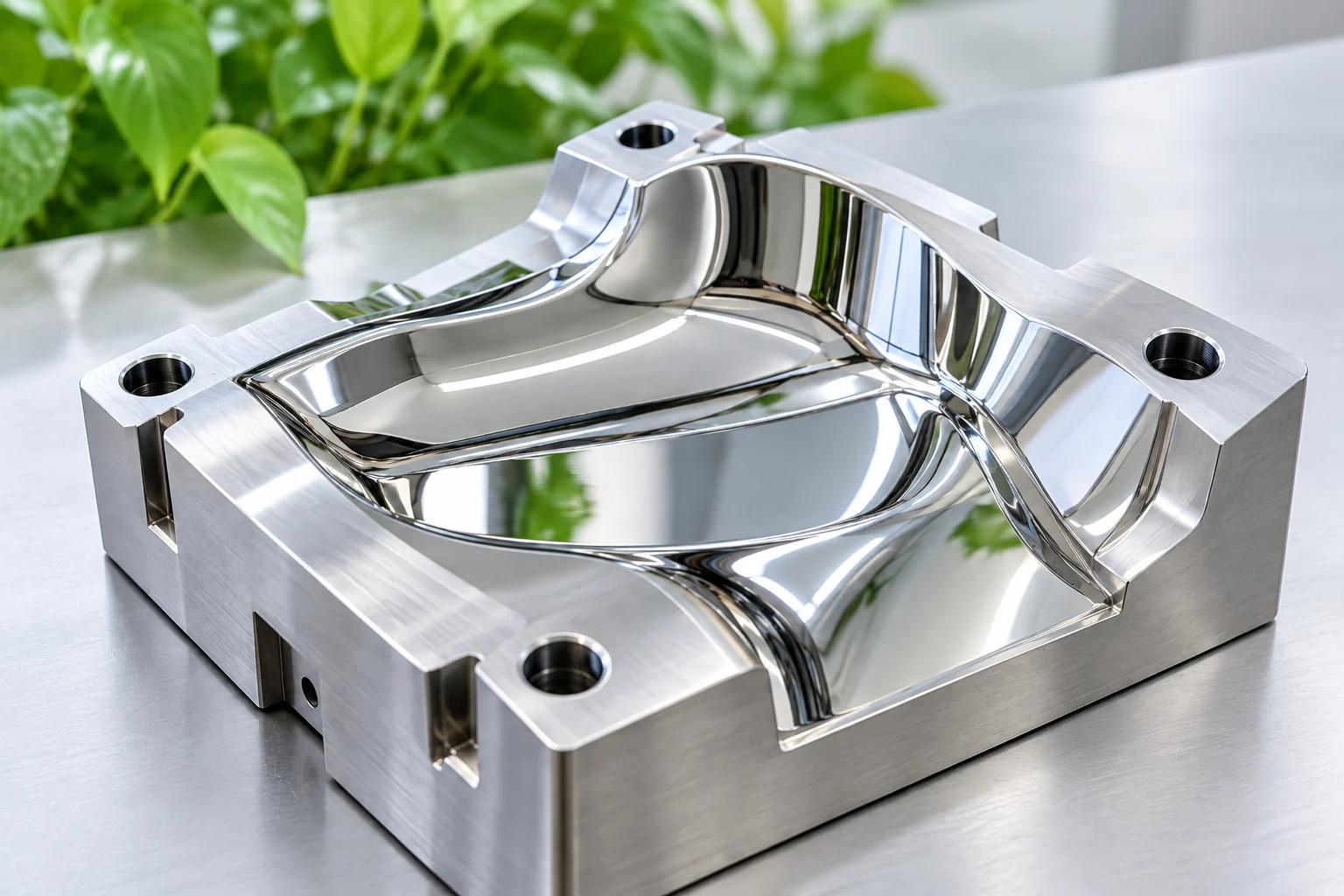
The boundary between a mid-range appliance and a premium one is often drawn at a single detail: surface finish. A refrigerator panel with a subtle orange-peel texture under showroom lighting signals “mass market.” A panel that reflects clean, undistorted light reads as luxury. This distinction is entirely a function of mold surface quality, and it places enormous responsibility on the mold mirror polishing stage of production.
Appliance manufacturers have responded by moving through distinct material generations. Early premium appliances relied on printed glass panels. These offered visual appeal but added weight and fragility. The next wave introduced brushed stainless steel and coated aluminum, which improved durability but limited design flexibility. Today, the leading brands are exploring ceramic composites and micro-textured metal alloys that demand mold surfaces far smoother than what conventional polishing can deliver.
Each material transition raises the bar for precision mold polishing. Glass panels require mold surfaces free of subsurface micro-cracks. Metal panels demand Ra values below 0.01μm to avoid visible tooling marks after stamping. Ceramic composites, which bond mineral fillers into polymer matrices, are particularly unforgiving — even minor mold surface defects transfer directly to the molded part, creating rejects that cost hundreds of dollars each at the panel level.
Beyond aesthetics, surface quality directly affects production economics. A mold with superior mirror finish produces fewer rejected panels per injection cycle. When each rejected panel represents significant material and energy cost — particularly with engineered ceramic composites — the yield improvement from precision mold polishing translates into substantial savings over a mold’s production life. Manufacturers running high-volume appliance lines can see the return on mold quality investment within the first few thousand cycles.
The global expansion of Chinese appliance brands has further intensified these requirements. As brands enter European, North American, and Middle Eastern markets, they encounter retail environments where visual perfection is the baseline expectation. Export-grade appliance panels must meet surface quality standards that would have been considered exceptional just a decade ago. Yishun Optical recognized this trend early. As appliance OEMs began specifying optical-grade surface finishes for visible panels, Yishun Optical invested in five-axis mirror machining infrastructure specifically calibrated for large-format appliance mold cavities. The result is a mirror polishing processing capability that bridges the gap between optical precision and industrial throughput.
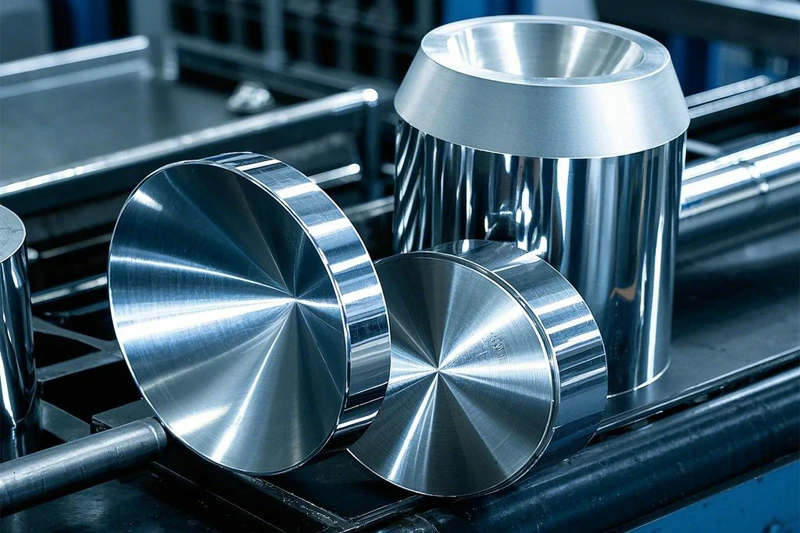
Five-Axis Mirror Machining Meets Appliance Mold Requirements
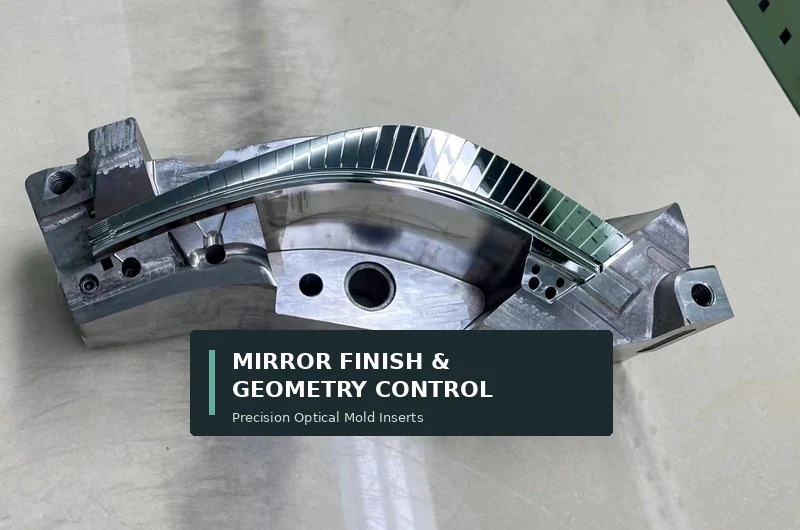
Achieving a mirror finish on a refrigerator door panel mold is fundamentally different from polishing a small optical lens. The mold cavity may exceed 800mm in one dimension, yet the surface must maintain uniform reflectivity across its entire area. Localized high spots, even at the micron level, create visible bright dots in the finished panel. Shallow regions trap light differently, producing dull zones. Only five-axis mirror machining can simultaneously control geometry and surface texture at this scale.
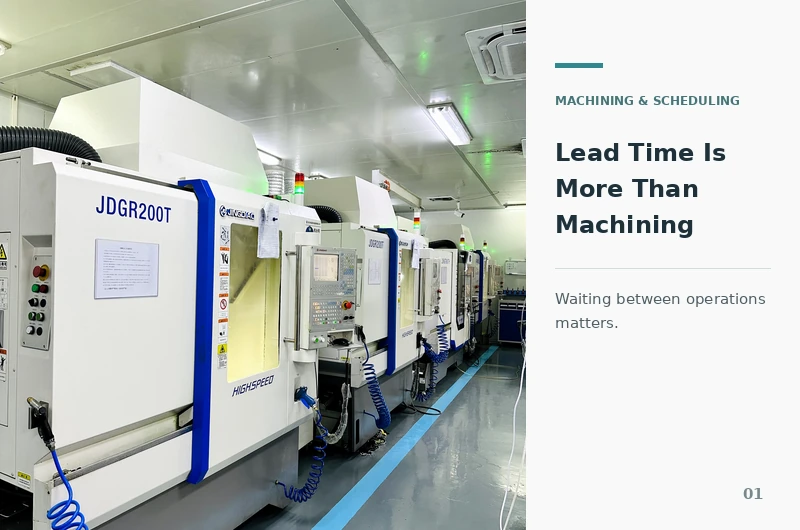
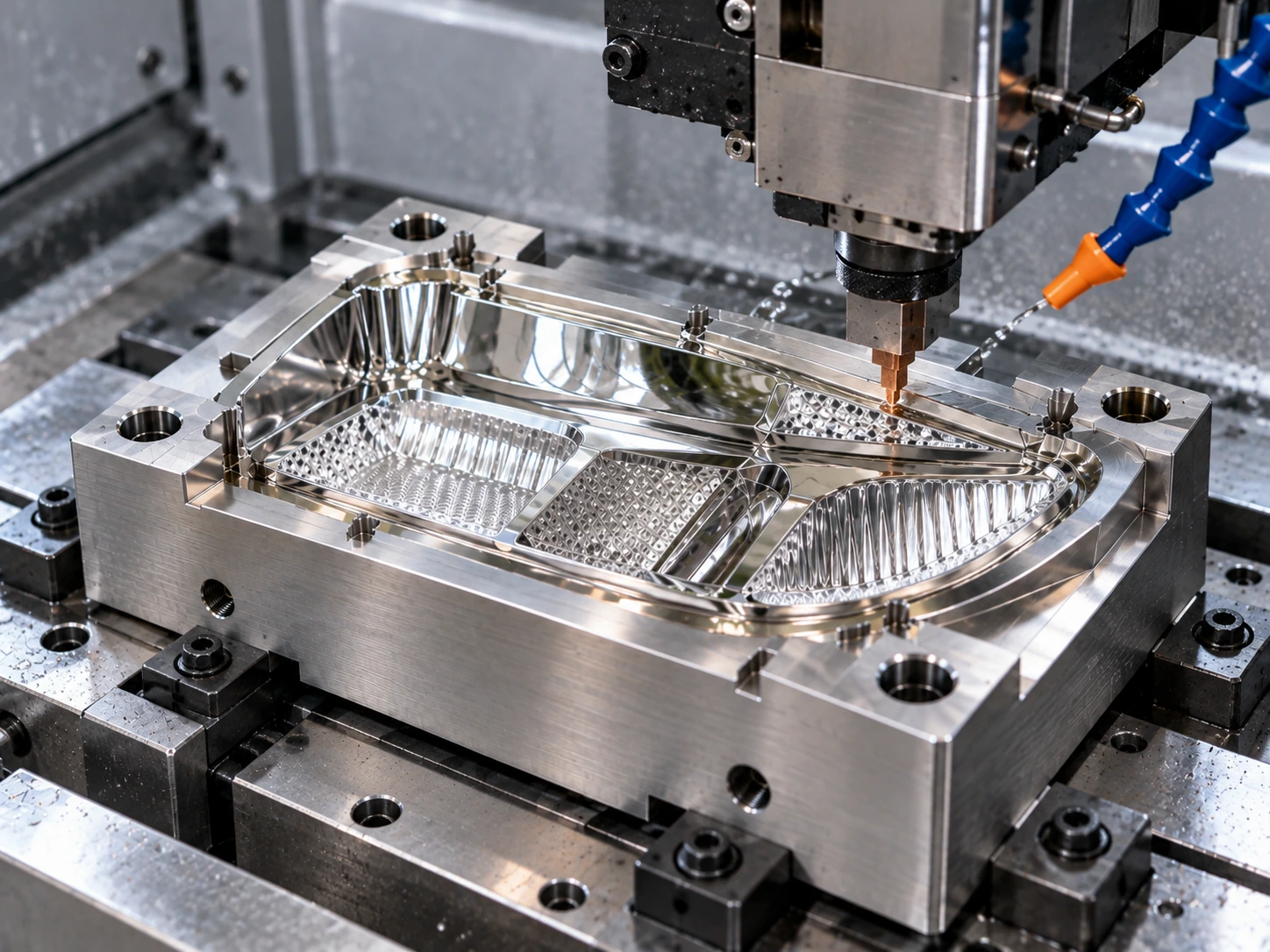
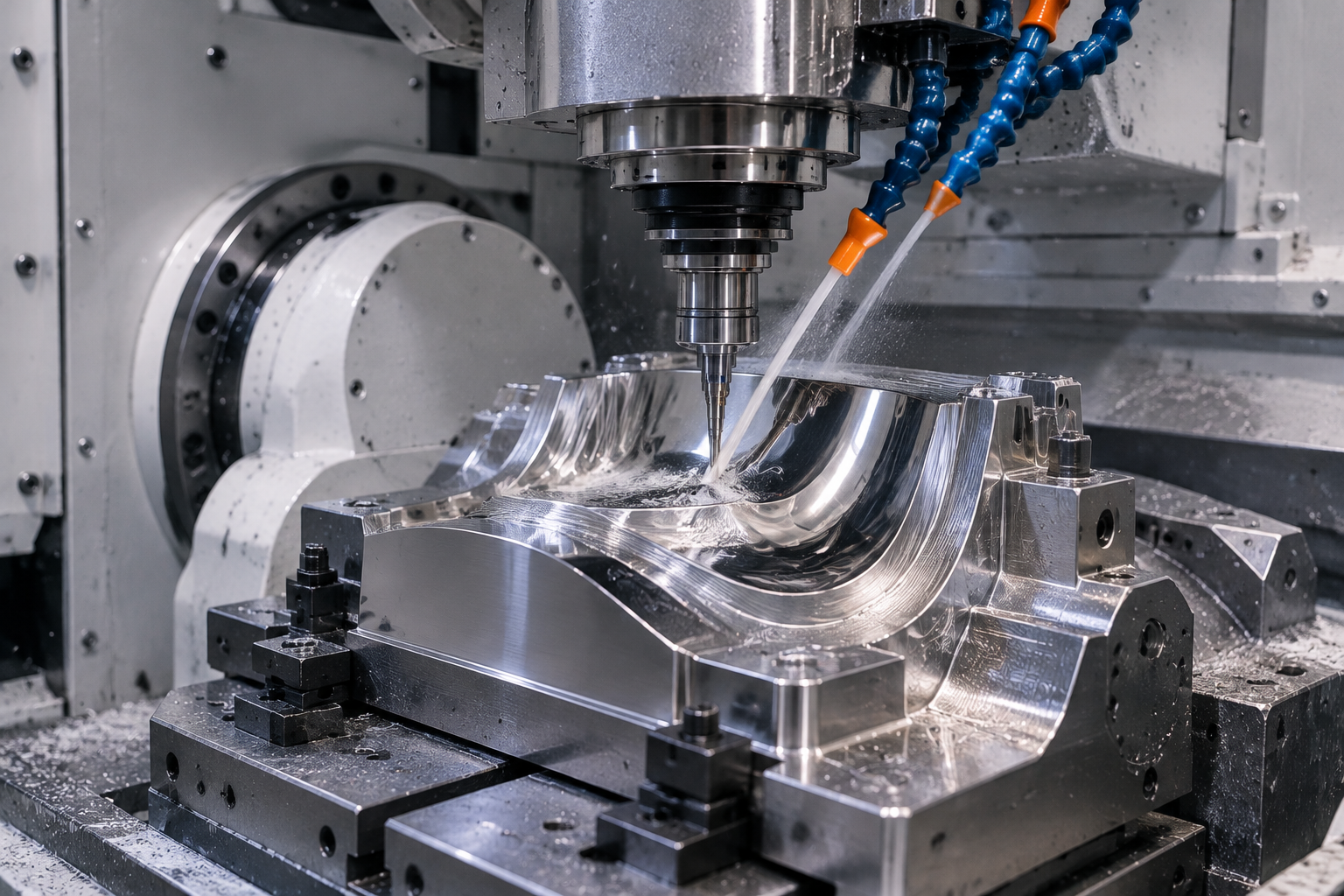
Yishun Optical deploys the Kern Pyramid Nano for the critical finishing passes on appliance mold cavities. The Kern Pyramid Nano provides nanometer-level positioning resolution across five simultaneous axes, allowing the tool to follow complex compound curves on refrigerator door contours, air conditioner panel profiles, and washing machine control panel recesses without re-fixturing. Re-fixturing introduces alignment error; eliminating it is essential for maintaining ±0.005mm dimensional tolerance on large cavities.
For mold blocks that require high-rigidity material removal before the finishing stage, Yishun Optical uses the Toshiba TTV450E-AX. This vertical five-axis machining center handles the heavy-cut semi-finishing operations that bring the cavity within 10–15μm of final dimension. The Toshiba TTV450E-AX then transitions to fine finishing with sub-micron stepovers, producing a surface that requires minimal hand polishing to reach the target Ra≤0.005μm. The Toshiba TTV450E-AX thermal stabilization system ensures that dimensional drift during long machining cycles stays within acceptable bounds — a critical factor when a single refrigerator panel mold may require 20 or more hours of continuous machining.
The mirror polishing processing workflow at Yishun Optical follows a structured sequence:
- Rough machining on conventional CNC to remove bulk material
- Semi-finishing on the Toshiba TTV450E-AX to establish near-net geometry
- Five-axis mirror machining on the Kern Pyramid Nano for final surface generation
- Controlled hand polishing by experienced technicians for edge transitions and textural uniformity
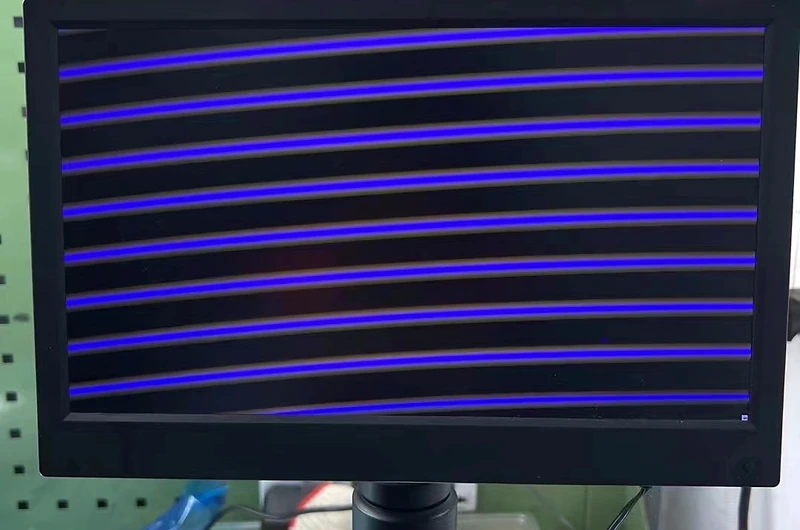
- Full-field measurement on the Zeiss Contura to validate surface quality before mold assembly
Each stage has defined acceptance criteria. The Kern Pyramid Nano finishing pass targets Ra≤0.008μm; the subsequent hand polishing brings it to Ra≤0.005μm. The Zeiss Contura then performs a comprehensive surface scan, generating a topographic map that confirms PV≤λ/4 across the entire cavity.
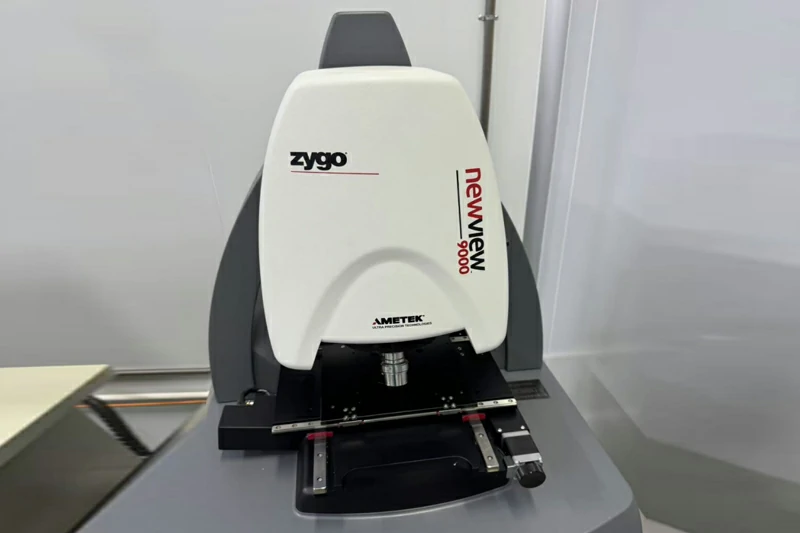
Case Study: Premium Refrigerator Mirror Panel Mold
A major domestic refrigerator manufacturer approached Yishun Optical with a challenge that illustrates the real demands of the premium appliance sector. The client was launching a flagship French-door refrigerator with a full-height mirror-polished door panel. The specification called for a surface reflectivity above 85%, with zero visible defects at a viewing distance of 50cm under standard retail lighting conditions. The mold material was P20 pre-hardened steel with a chromium-plated cavity surface.
Previous suppliers had struggled with this requirement. Conventional Shenzhen mold polishing methods produced acceptable center-zone finishes but degraded toward the cavity edges and corners — precisely where the door panel curvature is most aggressive. The resulting panels showed a characteristic “edge haze” that failed visual inspection.
Yishun Optical proposed a complete re-engineering of the mirror polishing processing approach. Using the Kern Pyramid Nano, the engineering team programmed toolpaths that maintained constant tool-normal orientation relative to the cavity surface at every point, including the tight corner radii. This five-axis mirror machining strategy ensured that cutting forces remained uniform, preventing the surface tearing that caused edge haze.
The Toshiba TTV450E-AX performed the semi-finishing operations with customized tooling that left a consistent 5μm scallop pattern across the entire cavity. This uniform baseline allowed the Kern Pyramid Nano finishing pass to operate with predictable, repeatable material removal rates. The Zeiss Contura measurement after the Kern Pyramid Nano pass confirmed Ra values between 0.003μm and 0.005μm across 97% of the cavity surface — well within the specification envelope.
The outcomes were measurable:
- Yield rate improvement: From 82% (previous supplier) to 96.3% using Yishun Optical’s mold
- Cycle time reduction: Mold polishing time decreased by 35% compared to the client’s prior process
- Consistency: Surface roughness variation across the cavity dropped from ±0.012μm to ±0.002μm
- Production lifespan: The mold maintained specification quality for over 50,000 injection cycles before requiring re-polishing
This project demonstrated that precision mold polishing for appliance panels is not simply a finishing operation — it is a systems engineering challenge that integrates machine capability, process sequencing, and metrology into a coherent solution. Yishun Optical delivered the complete system, and the client’s flagship refrigerator entered production on schedule.
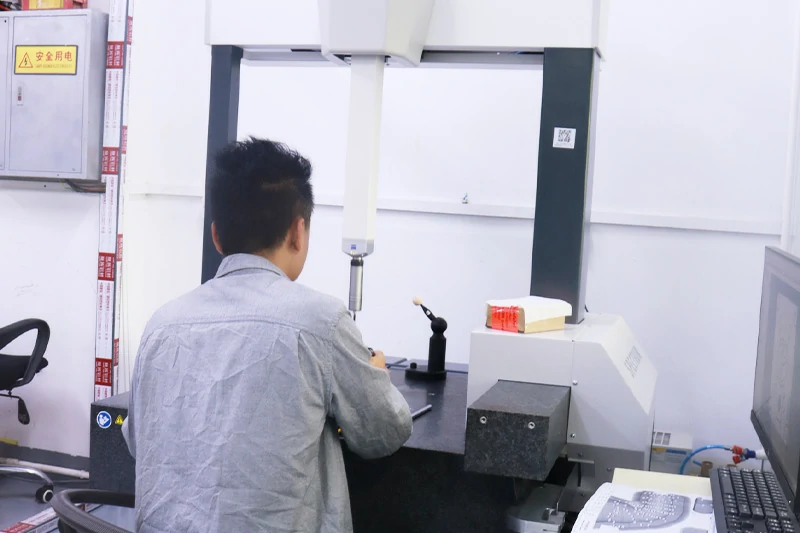
Quality Assurance: From Measurement to Certification
Precision without verification is merely aspiration. Yishun Optical’s quality infrastructure ensures that every mold leaving the Shenzhen facility meets its specified surface and dimensional requirements before shipment.
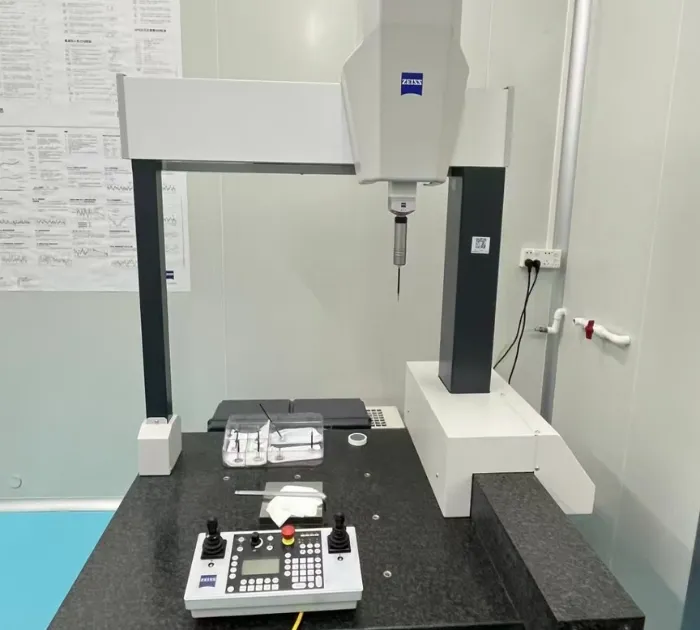
The Zeiss Contura industrial CT scanner serves as the primary measurement platform for appliance mold validation. With probing accuracy down to 0.1μm, the Zeiss Contura captures full-field surface topography across complex three-dimensional cavity geometries. Unlike point-by-point measurement methods that sample only selected locations, the Zeiss Contura generates a complete data set that reveals localized anomalies — a single scratch, a subtle tool mark, or a material inclusion — that spot checks would miss.
Yishun Optical supplements Zeiss Contura scanning with dedicated surface roughness testers calibrated against traceable reference standards. For PV (peak-to-valley) measurements, interferometric analysis confirms PV≤λ/4 compliance on optical-grade surfaces. Dimensional tolerance verification against ±0.005mm specifications uses the Zeiss Contura’s coordinate measurement capability, cross-referenced with physical gauge measurements on critical features.
This multi-layered measurement approach underpins Yishun Optical’s quality management certifications. Yishun Optical maintains ISO 9001 for quality management, ISO 14001 for environmental management, and ISO 45001 for occupational health and safety. These are not peripheral credentials — they represent the systematic discipline that enables Yishun Optical to deliver consistent precision mold polishing results across hundreds of mold projects each year.
As a certified Apple Gold Supplier, Yishun Optical has demonstrated the ability to meet consumer electronics quality benchmarks. That same discipline now extends into the home appliance sector, where Yishun Optical’s clients increasingly expect electronics-grade finish quality on panels and housings.
The scope of appliance applications that benefit from Yishun Optical’s precision mold polishing extends well beyond refrigerator doors. Air conditioner wall-mount panels require uniform gloss across curved surfaces that span 300mm or more — surfaces where conventional polishing often leaves visible blend lines between manual passes. Washing machine control panels, which sit at eye level in laundry rooms, must resist fingerprint visibility while maintaining a premium luster. Yishun Optical’s five-axis mirror machining process produces surface textures that meet both requirements simultaneously, achieving the right balance between reflectivity and fingerprint resistance through controlled micro-geometry.
Yishun Optical also supports mold maintenance and re-polishing programs for appliance manufacturers running mature production lines. When a mold begins to show surface degradation after extended production runs, Yishun Optical can restore the cavity to original specification using the same Kern Pyramid Nano and Zeiss Contura verification process applied to new molds. This extends mold service life and protects the manufacturer’s capital investment in tooling.
FAQ
Q1: What surface roughness can Yishun Optical achieve on appliance panel molds?
A: Yishun Optical’s mirror polishing processing achieves Ra≤0.005μm on hardened steel and ceramic-composite mold cavities. This surface quality produces injection-molded or stamped panels with mirror-class reflectivity suitable for premium refrigerator doors, air conditioner faceplates, and washing machine control panels.
Q2: How does five-axis mirror machining improve appliance mold quality?
A: Five-axis mirror machining allows Yishun Optical to maintain constant tool orientation relative to complex cavity surfaces, eliminating the edge defects and corner inconsistencies common with three-axis approaches. The Kern Pyramid Nano and Toshiba TTV450E-AX platforms enable Yishun Optical to process large-format appliance mold cavities with uniform surface quality across the entire part.
Q3: What is the typical lead time for a premium appliance panel mold?
A: For a standard refrigerator door panel mold, Yishun Optical typically completes the full cycle — from drawing review through final measurement — in 4 to 6 weeks. Complex multi-cavity molds or molds requiring ceramic-composite surface treatments may require 6 to 8 weeks. Yishun Optical provides detailed project timelines at the quotation stage.
Q4: Can Yishun Optical handle both the machining and polishing of appliance molds?
A: Yes. Yishun Optical provides end-to-end mold manufacturing services, from initial CNC roughing through five-axis mirror machining on the Kern Pyramid Nano, precision hand polishing, and final metrology on the Zeiss Contura. This integrated approach eliminates handoff errors between suppliers and ensures accountability for the complete surface quality result.
Q5: What materials does Yishun Optical work with for appliance panel molds?
A: Yishun Optical processes P20, H13, S136, and NK800 mold steels, as well as engineered ceramics and metal-matrix composites used in next-generation appliance panels. The Toshiba TTV450E-AX handles high-hardness materials with consistent precision, while the Kern Pyramid Nano excels on pre-hardened and through-hardened cavity surfaces.
Q6: Where is Yishun Optical located, and what regions does the company serve?
A: Yishun Optical is headquartered in Shenzhen, Guangdong Province, China. As a leading Shenzhen mold polishing provider, Yishun Optical serves appliance manufacturers across China and exports mold solutions to clients in Southeast Asia, Europe, and North America. Yishun Optical also operates capacity for Dongguan mold polishing projects.
Q7: How does Yishun Optical ensure consistency across production runs?
A: Every mold undergoes full-cavity surface scanning on the Zeiss Contura before approval. Yishun Optical maintains process parameter records for each mold, enabling repeatable reproduction of surface quality in re-polishing or cavity modification scenarios. This data-driven approach supports Yishun Optical’s ISO 9001 quality management system and meets the traceability requirements of premium appliance brands.
About Yishun Optical
Yishun Optical is a precision mold manufacturing specialist based in Shenzhen, China, delivering mold mirror polishing, five-axis mirror machining, and optical mold core customization services to the consumer electronics, automotive, optical instrument, home appliance, and medical device industries. With equipment including the Kern Pyramid Nano, Toshiba TTV450E-AX, and Zeiss Contura measurement systems, Yishun Optical achieves surface finishes of Ra≤0.005μm, form accuracy of PV≤λ/4, and dimensional tolerance of ±0.005mm. Yishun Optical holds ISO 9001, ISO 14001, and ISO 45001 certifications and is recognized as an Apple Gold Supplier.