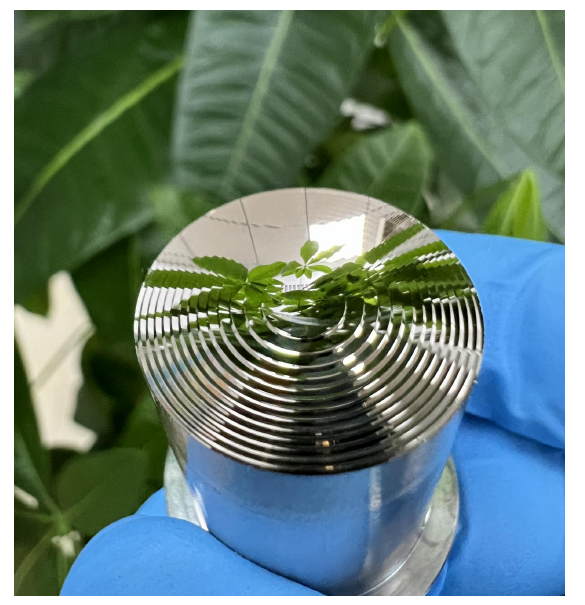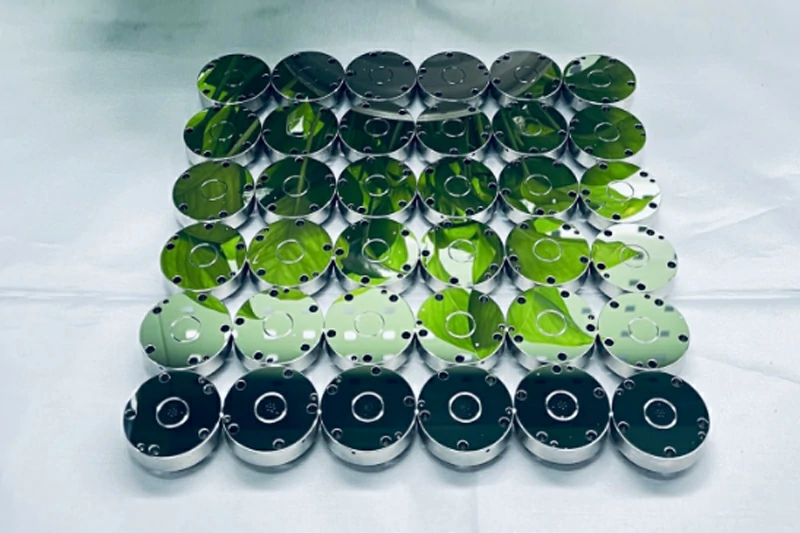
Precision lapping is a controlled abrasive process used to improve flatness, parallelism, thickness uniformity, and surface condition on hard and brittle materials such as glass, quartz, sapphire, and ceramics. It is widely used before polishing, coating, bonding, sealing, or assembly when a component requires accurate geometry and stable surface preparation.
For optical, photonics, semiconductor, laser, metrology, and precision instrument applications, lapping is often more than a simple material-removal step. It helps control the functional geometry of a component. If flatness, parallelism, or thickness variation is not properly controlled, the final part may fail even if the material and external dimensions are correct.
Glass, quartz, sapphire, and ceramic components are challenging because they can chip, crack, warp, or develop surface damage if the process is not properly controlled. For this reason, buyers should work with a supplier that understands material behavior, abrasive selection, lapping pressure, edge protection, cleaning, and inspection.
YISHUN Optical provides optical polishing and lapping services for precision components that require controlled flatness, surface preparation, and finishing support.
What Is Precision Lapping?
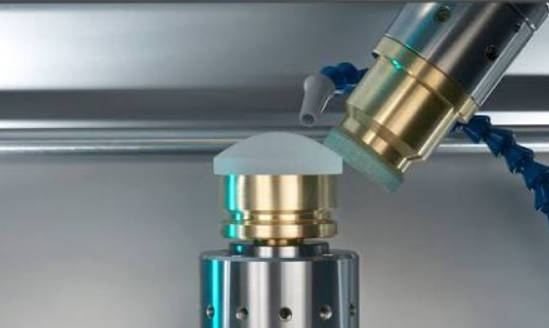
Precision lapping is a finishing process that removes a controlled amount of material using abrasive particles between a workpiece and a lapping plate. The process can be used on one side or both sides of a component, depending on the part geometry and tolerance requirements.
The main purpose of precision lapping is to control geometry, especially flatness, parallelism, and thickness, before final polishing or functional use.
Unlike grinding, which often removes more material and leaves a rougher surface, lapping uses finer abrasive action to improve surface consistency. Unlike polishing, which focuses on final surface smoothness and optical clarity, lapping focuses more on accurate surface geometry.
Precision lapping is commonly used for:
- Optical windows
- Glass plates and substrates
- Quartz and fused silica components
- Sapphire windows and plates
- Ceramic precision parts
- Silicon wafers and substrates
- Optical filters
- Laser components
- Semiconductor-related parts
- Precision sealing surfaces
- Technical substrates
- Flat reference components
In many projects, lapping is followed by polishing. Lapping prepares the part by improving flatness and thickness uniformity, while polishing improves the final surface roughness, clarity, and optical quality.
Why Hard and Brittle Materials Need Controlled Lapping
Glass, quartz, sapphire, and ceramics are often selected because of their optical, thermal, mechanical, chemical, or wear-resistant properties. However, these materials are also more difficult to process than many metals or plastics.
They may be sensitive to:
- Edge chipping
- Micro-cracks
- Subsurface damage
- Brittle fracture
- Warping in thin parts
- Uneven material removal
- Surface scratches
- Particle contamination
- Thermal or mechanical stress
For hard and brittle materials, lapping quality depends on both material knowledge and process control. A process that works well for standard optical glass may not be suitable for sapphire or advanced ceramics.
This is why material-specific lapping strategy is important. Abrasive type, particle size, pressure, speed, carrier design, plate condition, and cleaning method all affect the final result.
Glass Lapping for Optical and Technical Components
Glass lapping is used for optical windows, display-related plates, filters, substrates, precision covers, and technical glass components. The goal is usually to improve flatness, thickness consistency, and surface preparation before polishing or coating.
Common Goals of Glass Lapping
| Goal | Why It Matters |
|---|---|
| Improve flatness | Supports optical path stability, bonding, and assembly |
| Control thickness | Helps the part fit into mechanical or optical systems |
| Improve parallelism | Reduces wedge and beam deviation |
| Prepare for polishing | Reduces surface irregularities before final finishing |
| Reduce surface unevenness | Helps improve coating or bonding performance |
| Improve edge condition | Reduces chipping risk during handling and assembly |
Glass is brittle, so edge control is especially important. Sharp edges, high pressure, or poor handling can cause chips that may lead to part rejection.
Glass Lapping Challenges
Glass lapping may involve several challenges:
- Edge chips during processing
- Scratches from abrasive contamination
- Residual subsurface damage from earlier cutting or grinding
- Thickness variation in larger plates
- Surface haze if polishing preparation is poor
- Handling damage after lapping
To reduce these risks, suppliers should control the earlier cutting and grinding steps, choose suitable abrasives, maintain clean lapping conditions, and inspect the surface before moving to final polishing.
Quartz Lapping and Fused Silica Lapping
Quartz and fused silica are widely used in optical, laser, thermal, chemical, semiconductor, and precision instrument applications. These materials are valued for stability and optical properties, but they still require careful processing.
Why Quartz Components Are Lapped
Quartz lapping may be required for:
- Optical plates
- UV-related components
- Laser system parts
- Precision windows
- Semiconductor-related substrates
- Laboratory and scientific instrument components
- Thermal-resistant components
- Chemical-resistant parts
Quartz and fused silica components often require controlled flatness and surface preparation before polishing, coating, or assembly.
Key Considerations for Quartz Lapping
| Consideration | Explanation |
|---|---|
| Surface cleanliness | Important for optical and coating applications |
| Edge protection | Helps reduce chips and cracks |
| Flatness control | Important for windows, substrates, and bonding surfaces |
| Polishing readiness | Lapping should support later optical finishing |
| Material sensitivity | Process should reduce risk of micro-damage |
| Inspection | Flatness, thickness, and surface condition should be verified |
Quartz lapping services are often used when components require stable flatness, clean surface preparation, and controlled thickness before final optical finishing.
For high-value quartz parts, it is important to define the required final use. A part used as a protective window may have different requirements than a part used for bonding, coating, or laser transmission.
Sapphire Lapping for Hard Wear-Resistant Components
Sapphire is much harder than standard optical glass and is often selected for applications requiring durability, scratch resistance, wear resistance, optical transmission, or harsh-environment performance. It is commonly used for protective windows, watch covers, sensor covers, laser components, and technical substrates.
However, sapphire is also more difficult to lap and polish.
Common Challenges in Sapphire Lapping
Sapphire lapping may involve:
- Slow material removal
- Higher tool and abrasive wear
- Edge chipping risk
- Surface scratches
- Longer process time
- Difficulty achieving uniform thickness
- Need for careful polishing after lapping
Because sapphire is hard and brittle, aggressive processing can create surface and edge damage. A controlled process is needed to balance productivity and quality.
Sapphire Lapping Requirements
| Requirement | Why It Matters |
|---|---|
| Flatness control | Supports sealing, bonding, and optical path stability |
| Thickness uniformity | Important for fit and optical consistency |
| Edge quality | Reduces risk of chips and cracks |
| Surface preparation | Supports later polishing and coating |
| Scratch control | Important because defects may be difficult to remove |
| Clean handling | Prevents contamination and surface damage |
Sapphire lapping requires slower, more controlled material removal than many standard glass materials because of its hardness and brittleness.
For sapphire components, it is often practical to discuss tolerance, edge chamfer, surface finish, and inspection requirements before quotation.
Ceramic Lapping for Precision Technical Components
Ceramic components are used in applications that require hardness, wear resistance, electrical insulation, thermal stability, or chemical resistance. Precision ceramic lapping is commonly used for technical ceramics, sealing surfaces, substrates, spacers, insulating components, and high-precision mechanical parts.
Unlike optical glass or quartz, ceramics may be used more often for mechanical, electrical, or thermal functions. However, flatness and surface quality can still be critical.
Why Ceramic Lapping Is Used
Ceramic lapping may help improve:
- Flatness
- Parallelism
- Thickness uniformity
- Surface contact
- Sealing performance
- Assembly accuracy
- Surface consistency
- Preparation for polishing or coating
Ceramic Lapping Challenges
Ceramics can be difficult to process because they are hard and brittle. Depending on the ceramic type, the process may need to manage edge chipping, surface pull-out, micro-cracks, or uneven material response.
| Challenge | Possible Risk |
|---|---|
| High hardness | Slow removal and increased tool wear |
| Brittleness | Edge chips and cracks |
| Material grain structure | Surface pull-out or pitting |
| Thin part geometry | Warping or breakage |
| Tight flatness requirement | More process and inspection control |
| Surface quality requirement | May require additional polishing |
Ceramic lapping should be planned based on both material type and component function. A ceramic sealing part, for example, may prioritize flatness and contact surface quality, while a ceramic substrate may also require thickness uniformity and clean surfaces.
Comparison: Glass, Quartz, Sapphire and Ceramic Lapping
Although these materials may all be processed by lapping, their behavior and process priorities are different.
| Material | Typical Use | Main Lapping Focus | Key Processing Risk |
|---|---|---|---|
| Glass | Optical windows, filters, substrates | Flatness, thickness, surface preparation | Scratches and edge chips |
| Quartz / Fused Silica | Laser, UV, thermal, optical components | Clean surface preparation, flatness, stability | Micro-damage and contamination |
| Sapphire | Protective windows, durable optical parts | Thickness control, flatness, edge quality | Slow removal, scratches, edge chips |
| Ceramics | Sealing parts, substrates, technical components | Flatness, parallelism, surface contact | Brittleness, pull-out, cracking |
This comparison shows why one standard process cannot be used for every hard brittle material. Each material requires a suitable combination of abrasive, pressure, speed, carrier design, and inspection method.
Single-Sided vs Double-Sided Lapping
Precision lapping can be performed on one side or both sides of a component. The right method depends on geometry and tolerance requirements.
| Item | Single-Sided Lapping | Double-Sided Lapping |
|---|---|---|
| Processing Method | One surface is lapped at a time | Both surfaces are lapped simultaneously |
| Best For | One functional surface or non-symmetric parts | Plates, windows, wafers, substrates, spacers |
| Flatness Control | Good for single surfaces | Good for two-sided components |
| Parallelism Control | More setup-dependent | Commonly used for parallelism and thickness uniformity |
| Thickness Uniformity | Possible, but requires careful control | Often more suitable for uniform thickness |
| Limitation | May require multiple setups | Less suitable for some irregular geometries |
Double-sided lapping is commonly used when both flatness and parallelism are important, while single-sided lapping is useful when only one surface requires controlled finishing.
For optical windows, glass substrates, sapphire plates, quartz plates, and ceramic spacers, double-sided lapping may be considered when both surfaces are functional.
Key Specifications for Precision Lapping Projects
Clear specifications are essential for successful lapping. Vague requirements such as “high precision” or “good surface” are not enough for process planning or inspection.
| Specification | What It Controls | Why It Matters |
|---|---|---|
| Material | Glass, quartz, sapphire, ceramic, etc. | Determines process strategy and risk |
| Dimensions | Length, width, diameter, thickness | Ensures mechanical fit |
| Flatness | Surface deviation from a plane | Affects bonding, sealing, optical path, or assembly |
| Parallelism | Relationship between opposite surfaces | Important for windows, plates, substrates, and spacers |
| Thickness tolerance | Final thickness variation | Affects assembly and optical/mechanical behavior |
| Surface roughness | Microscopic surface texture | Determines surface function and polishing readiness |
| Edge quality | Chamfer, bevel, chip allowance | Reduces damage during processing and assembly |
| Quantity | Prototype or production volume | Affects setup, cost, and process planning |
| Inspection method | How quality is verified | Prevents acceptance disputes |
| Downstream process | Polishing, coating, bonding, sealing | Determines final surface preparation needs |
The most important RFQ details for precision lapping are material, drawing, final thickness, flatness, parallelism, surface requirement, edge quality, quantity, and application.
When Is Polishing Needed After Lapping?
Lapping improves geometry, but it may not produce the final optical surface required for transmission, reflection, or visual clarity. Polishing is needed when the component must achieve better surface smoothness, lower haze, improved optical clarity, or coating-ready quality.
| Application Requirement | Lapping Only May Be Enough | Polishing Usually Needed |
|---|---|---|
| Mechanical flat contact | Yes, depending on surface requirement | Sometimes |
| Sealing surface | Sometimes | If smoother surface is required |
| Optical transmission | Usually no | Yes |
| Mirror surface | Usually no | Yes |
| Coating-ready optical surface | Sometimes | Often |
| Thickness and flatness control only | Yes | Not always |
| Cosmetic clarity | Usually no | Yes |
For many custom optical parts, the ideal process is lapping plus polishing. Lapping controls the geometry, while polishing improves the final surface condition.
YISHUN Optical provides precision optical polishing and lapping services for components requiring both dimensional control and surface finishing.
Common Defects in Hard Brittle Material Lapping
Lapping hard brittle materials requires careful defect prevention. Common defects include:
| Defect | Possible Cause | Prevention Focus |
|---|---|---|
| Edge chips | Sharp edges, high pressure, poor handling | Chamfer design, fixture support, careful packaging |
| Scratches | Contamination, coarse particles, dirty process | Clean slurry, pad control, cleaning between steps |
| Cracks | Stress, impact, aggressive processing | Controlled pressure and proper handling |
| Pits or pull-out | Material structure or abrasive action | Process adjustment and material review |
| Poor flatness | Uneven pressure, unstable plate, thin part deformation | Plate maintenance, fixture design, process control |
| Thickness variation | Uneven removal or poor carrier design | Double-sided process and regular inspection |
| Warping | Internal stress or thin geometry | Stress-aware process planning and inspection |
For brittle materials, defect prevention should begin during design and RFQ review. Edge condition, thickness, shape, and tolerance requirements all affect processing risk.
How to Choose a Precision Lapping Supplier
Choosing a lapping supplier for hard and brittle materials should not be based only on price. Material knowledge and process control are critical.
1. Confirm Material Experience
Ask whether the supplier has experience with your specific material. Glass, quartz, sapphire, and ceramics behave differently during lapping. A supplier that can process glass may not automatically be suitable for sapphire or advanced ceramics.
2. Check Flatness and Parallelism Capability
The supplier should evaluate flatness and parallelism based on your actual part size, thickness, and material. General capability claims are less useful than application-specific review.
3. Evaluate Lapping and Polishing Support
Many parts require polishing after lapping. A supplier with both capabilities can better manage the full process from geometry control to final surface quality.
You can review YISHUN Optical’s optical polishing and lapping capabilities to understand the service direction for hard brittle optical and technical components.
4. Review Inspection Capability
The supplier should be able to inspect the parameters that matter to your project, such as flatness, thickness, parallelism, surface condition, and edge quality.
5. Assess Engineering Communication
A qualified supplier should review your drawing, identify unclear requirements, and suggest practical options. For prototype projects, this communication is especially important.
For broader company information and optical processing support, you can also visit YISHUN Optical.
RFQ Checklist for Glass, Quartz, Sapphire and Ceramic Lapping
To receive an accurate quotation, prepare the following information:
| RFQ Information | Why It Is Needed |
|---|---|
| Material | Determines abrasive selection and process difficulty |
| Component type | Window, plate, substrate, wafer, spacer, ceramic part, etc. |
| Drawing or CAD file | Defines dimensions, tolerance, and geometry |
| Starting thickness | Helps estimate removal allowance |
| Final thickness | Required for process planning |
| Flatness requirement | Defines the main surface geometry target |
| Parallelism requirement | Important for two-sided components |
| Surface roughness target | Helps decide whether polishing is needed |
| Edge requirement | Reduces chipping and handling risks |
| Quantity | Affects setup and production planning |
| Downstream process | Polishing, coating, bonding, sealing, or assembly |
| Inspection requirement | Defines acceptance criteria |
| Application | Helps supplier understand functional priorities |
Providing complete RFQ details helps the supplier recommend a realistic process route, reduce quotation delays, and identify potential risks early.
Conclusion
Precision lapping for glass, quartz, sapphire, and ceramic components is essential when hard brittle materials require controlled flatness, parallelism, thickness uniformity, and surface preparation. Each material has different processing challenges. Glass requires scratch and chip control. Quartz and fused silica require stable, clean processing. Sapphire requires slower and more controlled removal due to its hardness. Ceramics require careful management of brittleness, surface pull-out, and edge quality.
For B2B buyers, successful lapping starts with clear specifications. Material, drawing, thickness, flatness, parallelism, edge requirements, surface roughness, quantity, inspection method, and final application should be communicated before production begins.
If your project requires glass lapping, quartz lapping, sapphire lapping, ceramic lapping, or combined lapping and polishing for custom optical components, YISHUN Optical can support your project with precision optical polishing and lapping services from technical review to finished component delivery.
FAQ
What is precision lapping used for?
Precision lapping is used to improve flatness, parallelism, thickness uniformity, and surface condition of components. It is commonly used for glass, quartz, sapphire, ceramic, silicon, optical windows, substrates, wafers, and sealing surfaces.
What is the difference between glass lapping and sapphire lapping?
Glass lapping usually focuses on flatness, thickness, and scratch control. Sapphire lapping is more difficult because sapphire is much harder and often requires slower, more controlled material removal to reduce scratches and edge chips.
Can quartz components be lapped and polished?
Yes. Quartz and fused silica components are commonly lapped to control flatness and thickness, then polished when optical clarity, low roughness, or coating-ready surface quality is required.
Why do ceramic components need precision lapping?
Ceramic components may need precision lapping to improve flatness, parallelism, sealing contact, surface consistency, and assembly accuracy. Because ceramics are hard and brittle, controlled processing is important to reduce chips and cracks.
Is lapping enough for optical glass components?
Lapping may be enough for some mechanical or flatness-focused applications. However, if the glass component requires optical transmission, clarity, low roughness, or coating-ready quality, polishing is usually needed after lapping.
What causes edge chips during sapphire or ceramic lapping?
Edge chips may be caused by sharp edges, brittle material behavior, excessive pressure, poor fixtures, impact during handling, or inadequate packaging. Edge chamfers and careful process control can help reduce chipping risk.
What should I provide for a precision lapping RFQ?
A useful RFQ should include material, drawing, component type, starting thickness, final thickness, flatness, parallelism, surface roughness, edge requirement, quantity, downstream process, inspection requirement, and application.