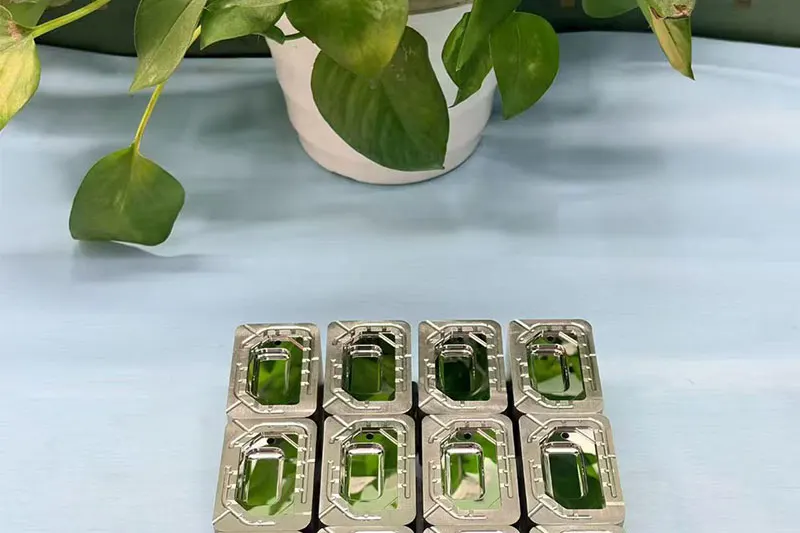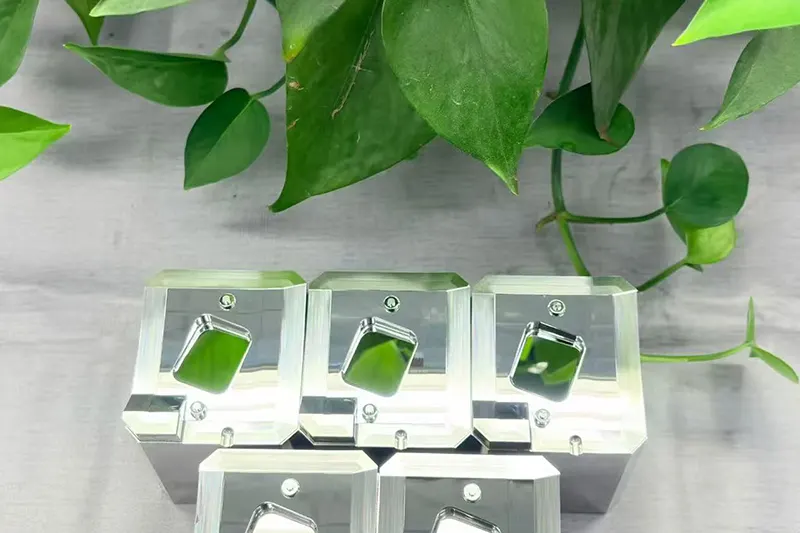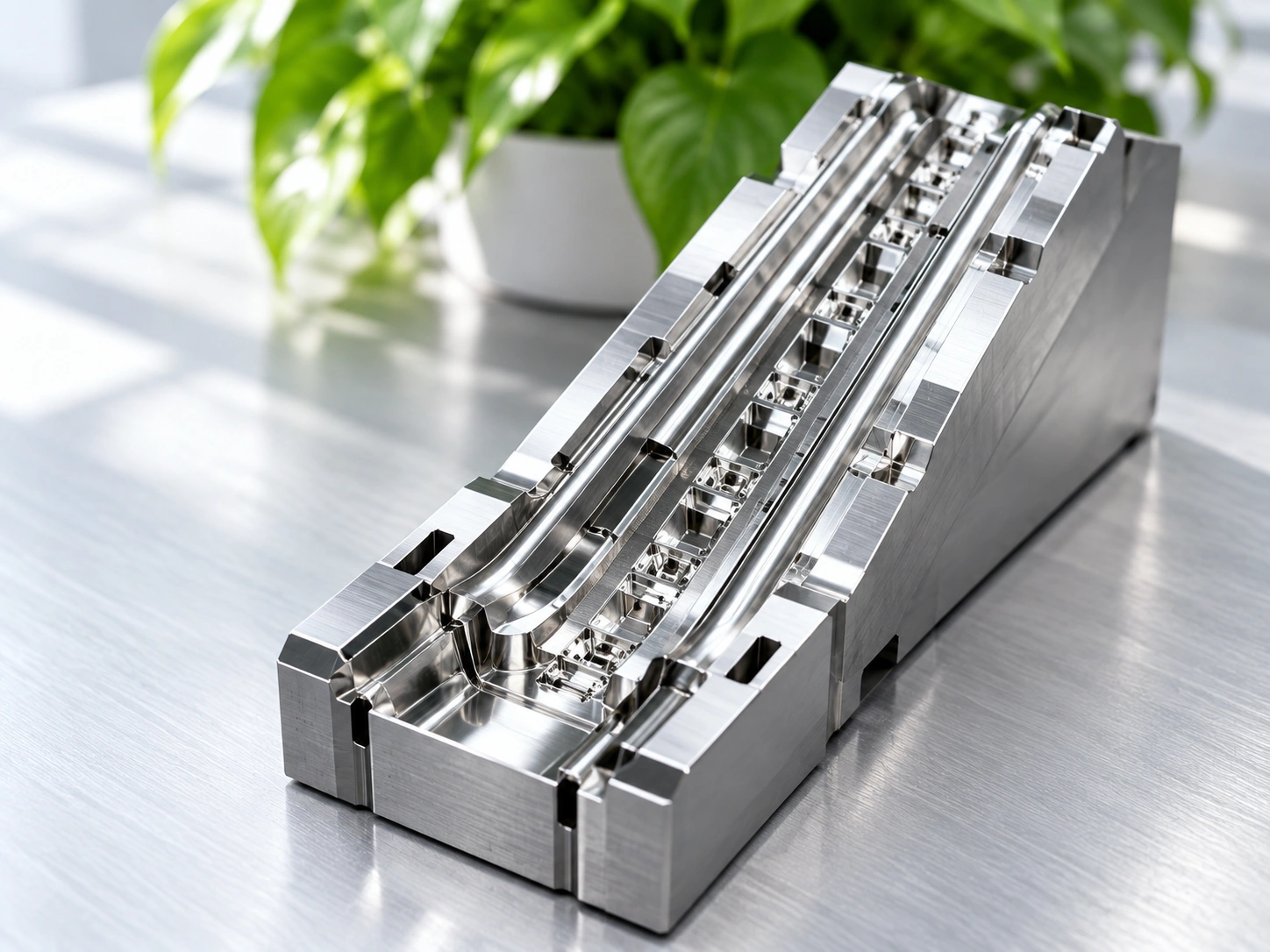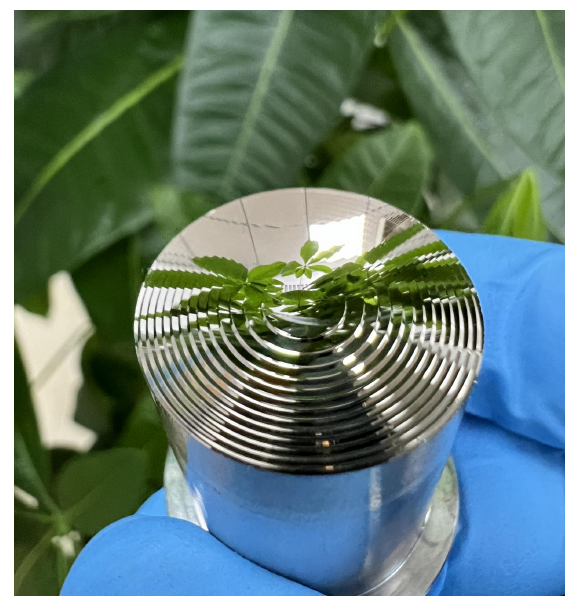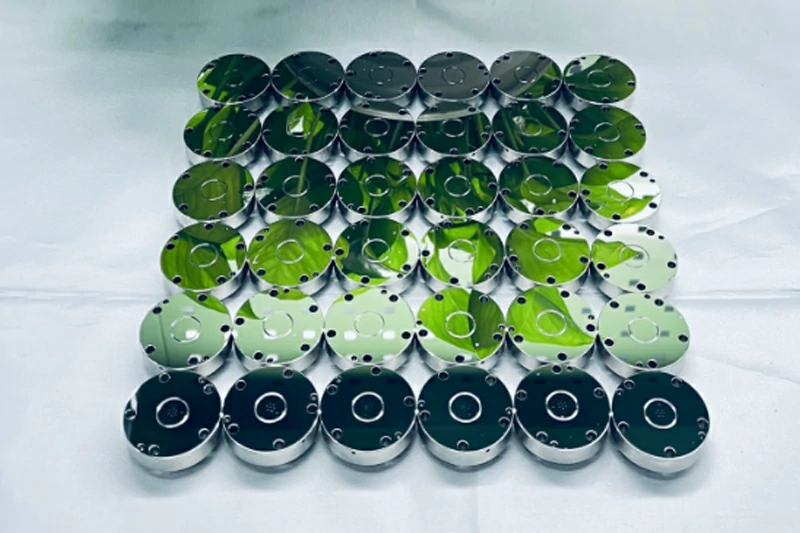
A mirror mold insert can get stuck in a very expensive loop.
CNC leaves tool marks. The part goes to polishing. The marks do not come out evenly. More material is removed. A critical dimension moves. The part goes back for machining or EDM. Then the surface has to be finished again.
By the time the insert is finally acceptable, several departments or suppliers may have touched it.
That is the real problem with mold insert rework.
It is rarely just one bad polishing step or one bad machining pass. More often, the whole process was not planned as one complete route from the beginning.
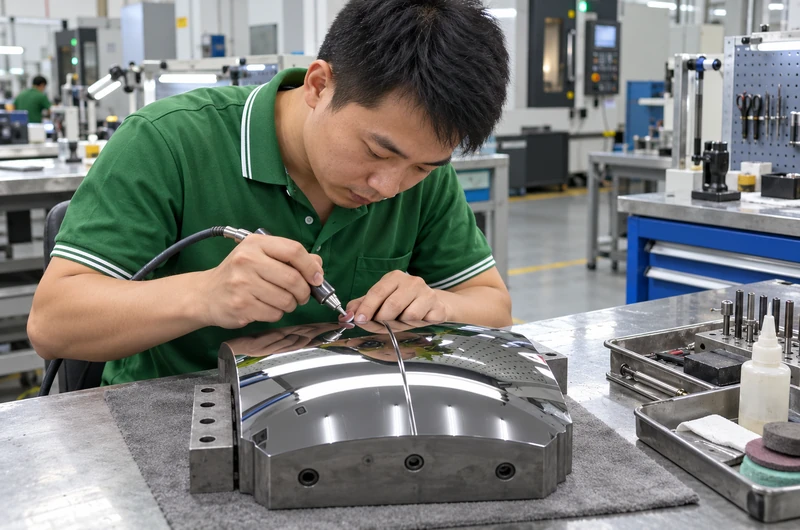
Rework Usually Starts With a Small Problem
Most rework does not begin with a completely failed part.
It often starts with something that looks manageable:
- tool marks on a side wall
- EDM texture that is deeper than expected
- one corner that is difficult to reach
- a polished area that still shows waviness
- a dimension that is getting close to its limit
The first reaction is often:
“We can fix that in the next step.”
That sounds reasonable, but this is where mold insert rework can start to grow.
A machining problem is passed to polishing.
A polishing problem becomes a dimensional problem.
The dimensional problem then goes back to machining.
Each process is trying to repair something left by the previous one.
Fixing One Process Alone Usually Does Not Solve the Real Problem
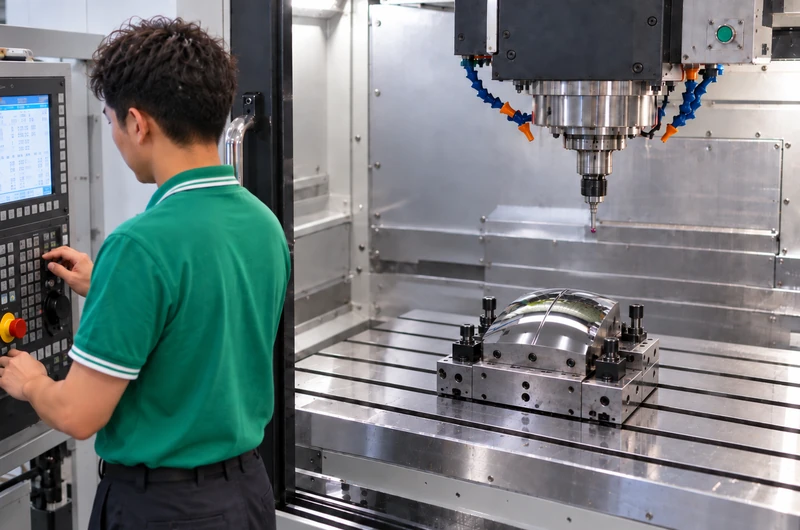
If an insert keeps coming back, changing only one operation may not be enough.
For example, using a more experienced polisher may improve the surface, but it will not solve deep cutter marks.
Changing the milling tool may improve the cut, but it will not help if a narrow internal corner was never reachable by milling in the first place.
So before production starts, we prefer to look at the complete geometry.
We ask a few simple questions:
Which features should be machined?
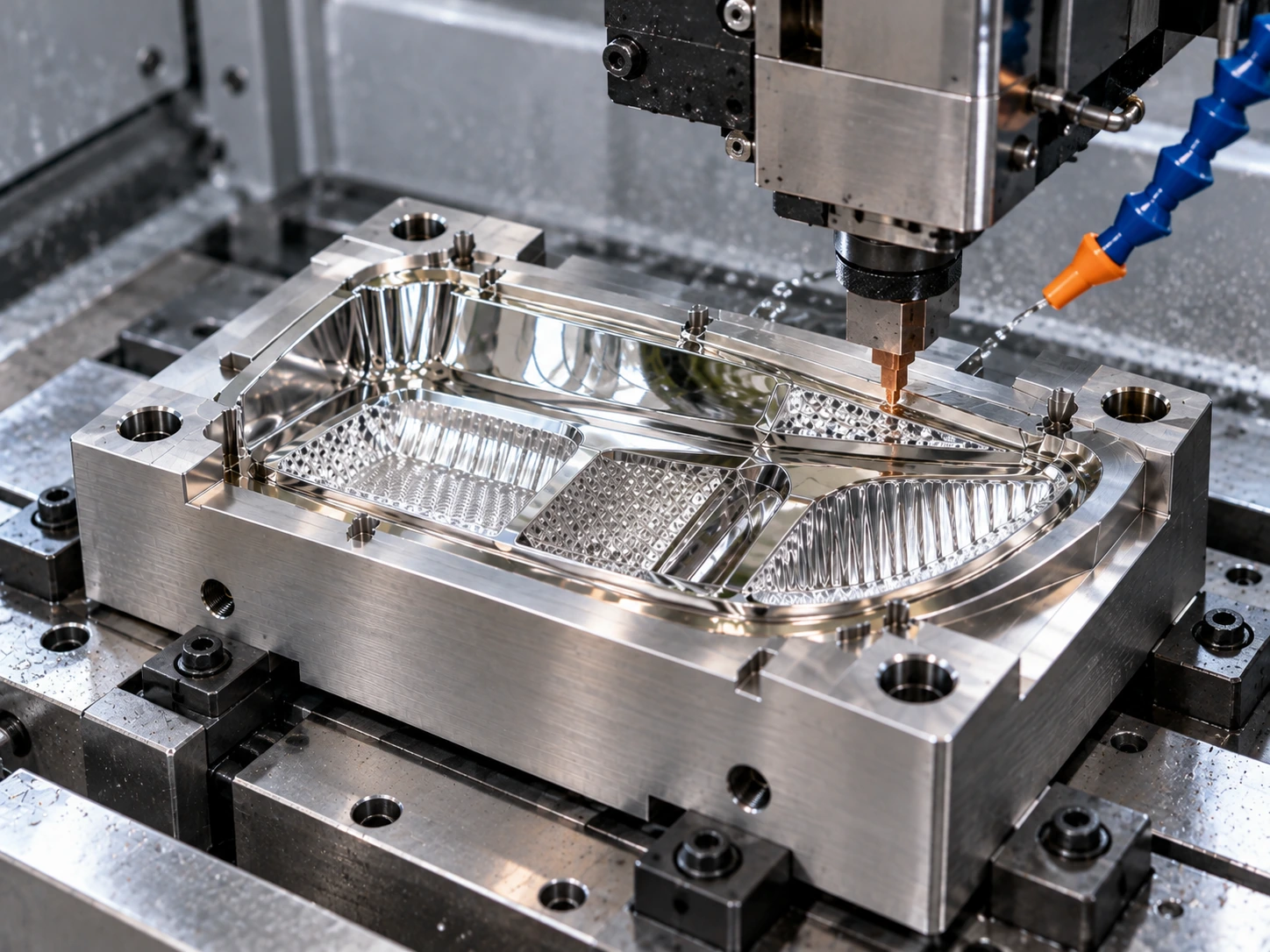
Which areas may need EDM?
Where is polishing really necessary?
And where should we inspect the part before allowing it to move to the next operation?
That process-first thinking is one of the most effective ways to reduce mold insert rework.
One Insert Does Not Need One Process Everywhere
A complex mold insert may contain several completely different machining problems.
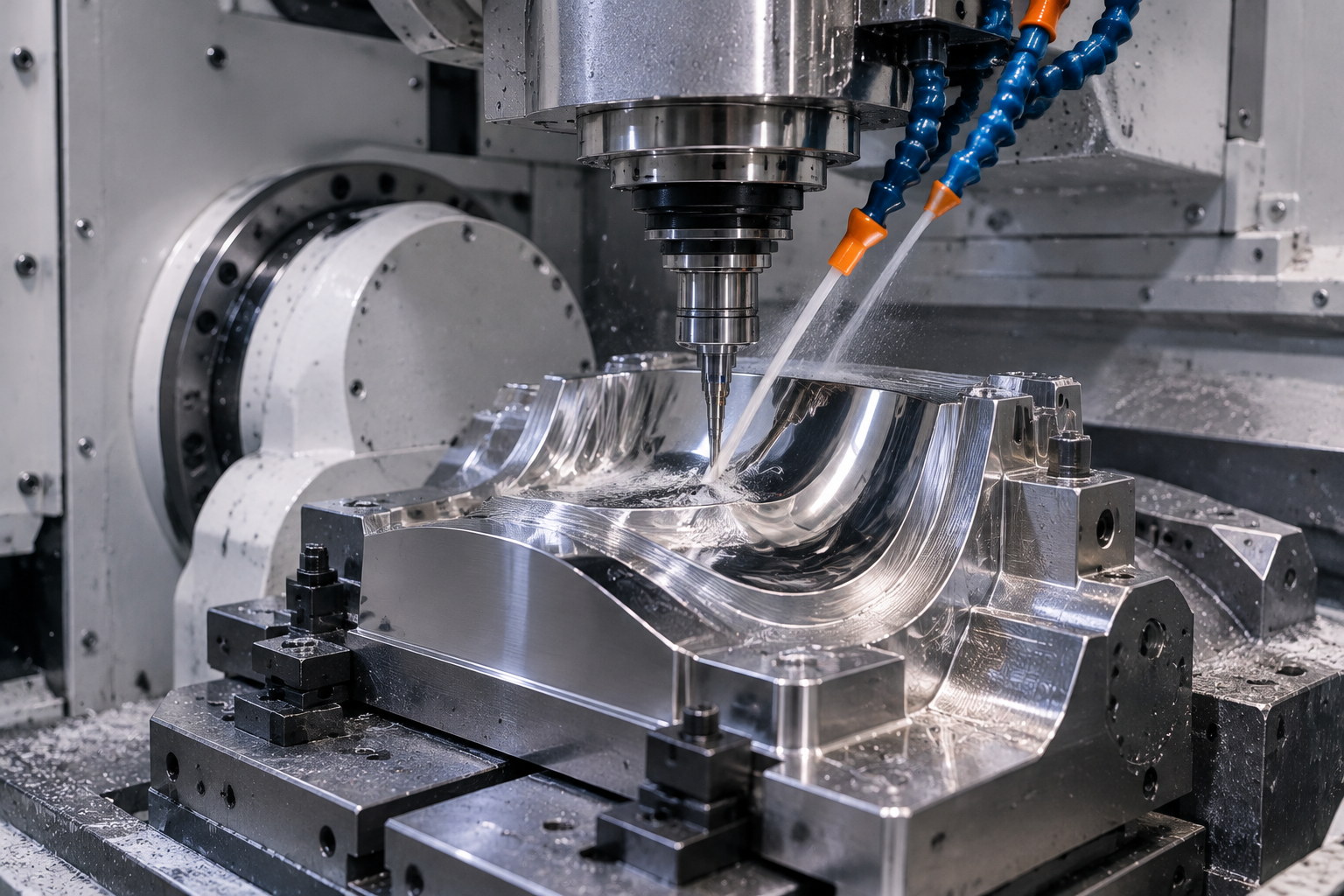
Open surfaces may be suitable for precision CNC machining.
Deep internal corners may need another process.
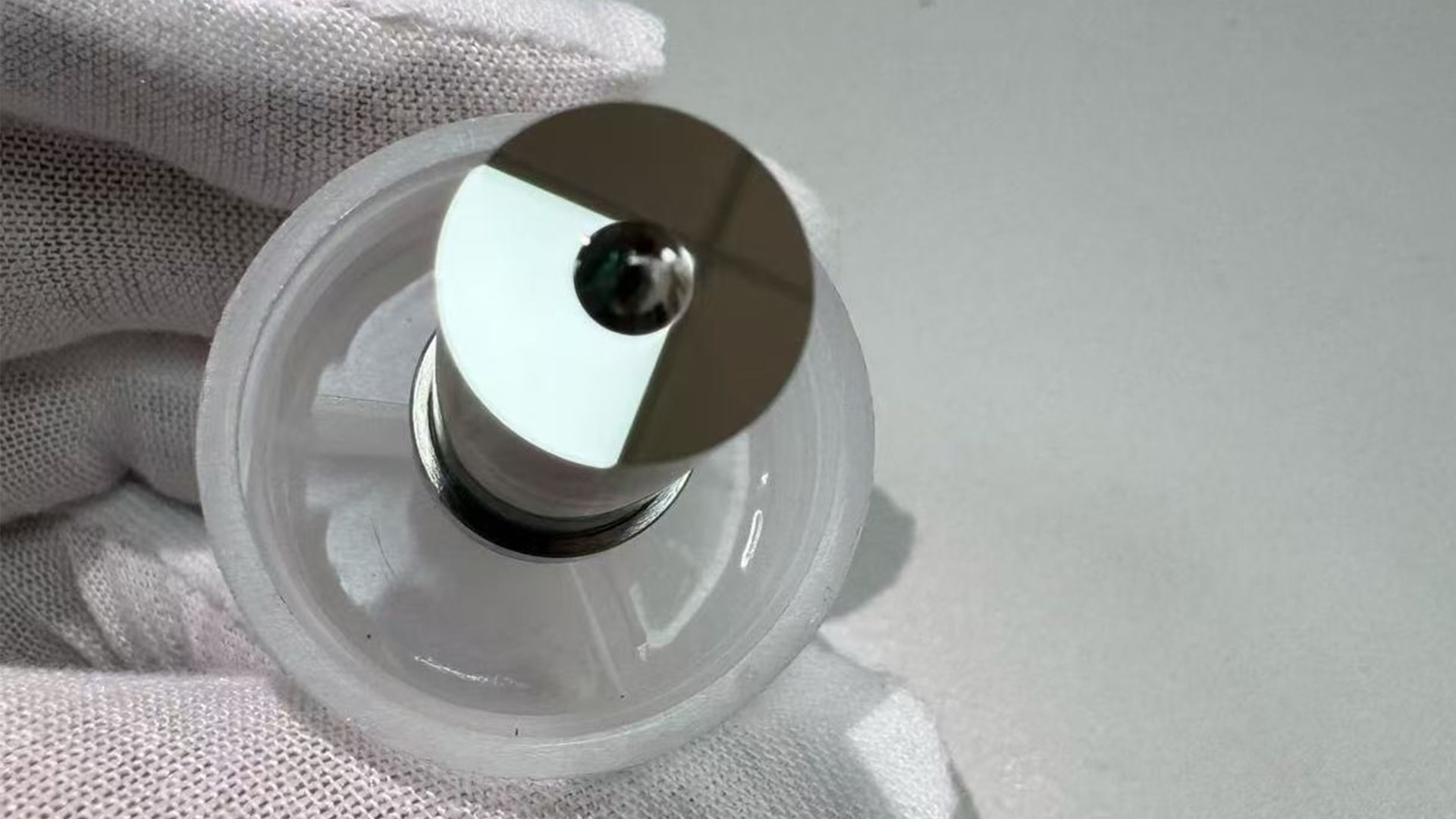
Mirror areas may need controlled finishing.
Critical edges may need almost no polishing at all.
When we review an insert, we prefer to divide the geometry into different process areas.
This is much safer than machining the whole part first and only deciding how to repair difficult areas afterward.
For mold insert rework, the earlier those process boundaries are clear, the fewer surprises usually appear near the end.
Do Not Leave Heavy Tool Marks for Polishing
This is one of the most common reasons a part keeps coming back for finishing.
If the cutter marks are already too deep, polishing has to remove more material.
That takes longer, but time is not the biggest problem.
The bigger problem is geometry.
The more material we remove by hand, the harder it becomes to protect:
- edges
- radii
- cavity depth
- wall position
- local profile
So when the starting surface is poor, the answer is not always:
“Polish it a little longer.”
Sometimes the safer answer is to go back and improve the machining.
We use the same logic in ultra-precision machining: get the geometry and starting surface as stable as practical before finishing begins.
That can prevent a lot of mold insert rework later.
EDM Also Has to Be Planned Around What Comes Next
EDM is very useful when a feature is difficult or impossible to reach with a cutting tool.
But making the feature is only part of the job.
We also have to think about what happens after EDM.
If the EDM texture is heavier than the polishing allowance can safely remove, the problem has simply been moved to the next process.
The same thing happens if the EDM area is very close to a mirror surface or a critical edge.
So we do not only ask:
“Can EDM make this corner?”
We also ask:
“How will we finish it afterward?”
Can polishing reach the area?
How much material can safely be removed?
Is there enough allowance?
Will the nearby geometry still be protected?
Thinking one process ahead is an important part of reducing mold insert rework.
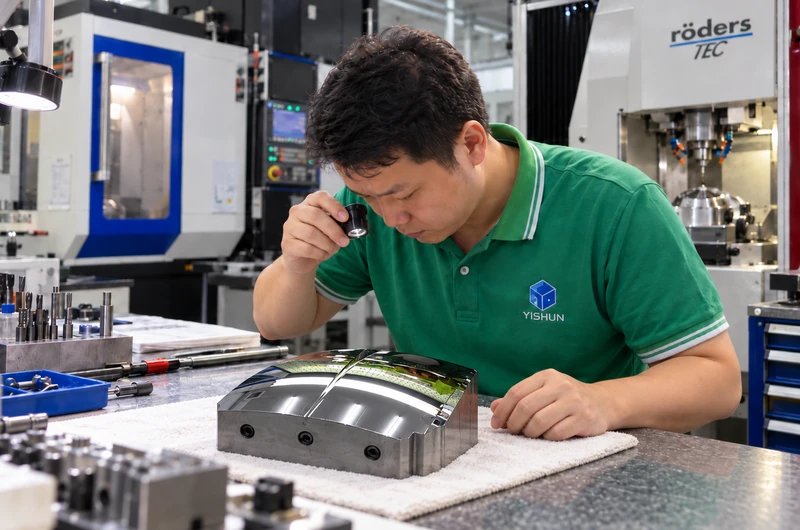
Polishing Needs a Clear Job
Polishing should improve the surface.
It should not be expected to repair everything that happened before it.
When the geometry and starting surface are already under control, optical polishing services can focus on what polishing is actually good at: removing fine residual marks and refining the surface.
The risk becomes much higher when polishing is expected to:
remove deep cutter marks,
clean up heavy EDM texture,
correct local shape,
and somehow keep every critical dimension unchanged.
That is asking too much from one finishing process.
A clearer split between machining and finishing usually makes mold insert rework much easier to avoid.
Do Not Wait Until Final Inspection to Find the Problem
Final inspection is important, but waiting until the very end can be expensive.
If a critical dimension is already wrong after machining, there is little value in spending more time polishing the part first.
If an EDM feature is already outside the required geometry, we want to know before the insert goes into another process.
That is why intermediate inspection matters.
The exact inspection point depends on the part, but the basic idea is simple:
check the important feature before the next process makes the problem more expensive.
At final inspection, dimensional accuracy and surface quality should still be treated separately.
Our quality management process follows this logic because a very bright surface does not automatically mean the geometry is correct.
Early verification is one of the most practical ways to reduce mold insert rework.
Rework Gets Harder When Too Many Suppliers Are Involved
This is another situation we see quite often.
One company machines the insert.
Another does EDM.
Another handles polishing.
Then the insert comes back somewhere else for measurement.
When something goes wrong, it becomes difficult to identify where the problem actually started.
Everyone is looking at a different stage.
There can also be differences in:
- datum setup
- fixturing
- drawing interpretation
- inspection method
- polishing allowance
This does not mean every project has to stay with one supplier.
But if several suppliers are involved, the datum, process handoff and quality responsibility need to be very clear.
Otherwise, the customer ends up managing the entire process instead of simply buying a finished result.
The Cheapest Individual Process Is Not Always the Lowest-Cost Solution
A low machining price can become expensive if the part later needs repeated polishing.
A low EDM price can become expensive if the surface requires much more finishing afterward.
A cheap polishing step can become very expensive if it changes the geometry and sends the insert back for machining.
When we look at mold insert rework, we prefer to look at the total cost.
That includes:
machining,
EDM,
polishing,
inspection,
repeated setup,
transport,
waiting time,
and the risk of delaying the mold trial.
That usually gives a much more useful picture than comparing the price of one process by itself.
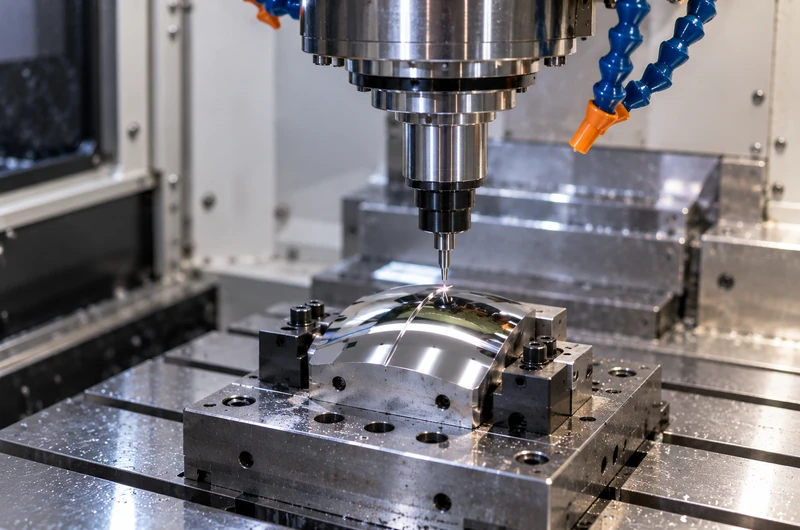
Sometimes Another Repair Is Not the Best Decision
If an insert has already been reworked several times, the first decision should not automatically be:
“Polish it again.”
We first need to understand the current condition.
How much material has already been removed?
Which dimensions are still within tolerance?
Where is the actual defect?
Can the problem be corrected locally?
Would repairing one area create another problem nearby?
This is closely related to the issue we discussed in mirror mold polishing and dimension change.
Once too much material has already been removed from a critical area, polishing cannot put that material back.
Sometimes recovery makes sense.
Sometimes re-machining is safer.
And sometimes starting again is actually the lower-risk option.
Knowing when to stop is also part of controlling mold insert rework.
The Best Time to Reduce Rework Is Before the First Cut
For a complex mirror insert, we want to understand the full drawing before production starts.
That includes:
- critical dimensions
- mirror areas
- small radii
- difficult internal corners
- EDM areas
- polishing access
- functional edges
- inspection requirements
Then we can decide which process should handle each feature and where inspection should happen.
This does not mean difficult parts suddenly become easy.
But it does prevent one process from blindly passing its problem to the next one.
The best way to reduce mold insert rework is not to become better at repairing parts.
It is to reduce how often the part needs repairing in the first place.
If your insert has already gone through machining, EDM and polishing several times and the result is still unstable, send us the current drawing, photos, inspection information and the areas that have already been reworked.
We can review where the process loop may be starting and whether recovery is still practical.
Can a Mold Insert Be Reworked More Than Once?
Sometimes, yes.
But every repair changes the condition of the part or removes more material.
The decision should be based on the remaining tolerance and geometry, not simply on whether the surface can still be polished.
When Should We Stop Polishing and Go Back to Machining?
When removing the remaining surface defect begins to create a serious risk to dimensions, edges or form, it is worth stopping and reassessing the part.
Continuing to polish is not always the safest option.
Is EDM Always the Cause of Extra Polishing?
No.
EDM can be the right process for difficult internal features.
The important thing is making sure the EDM condition, finishing allowance and next process are planned together.
What Should We Send for a Rework Review?
Send the current 2D drawing, 3D model, photos of the insert and any inspection results you have.
It also helps to mark which areas have already been machined, EDM-finished or polished.
The more we understand the current condition, the easier it is to judge whether the insert can still be recovered.